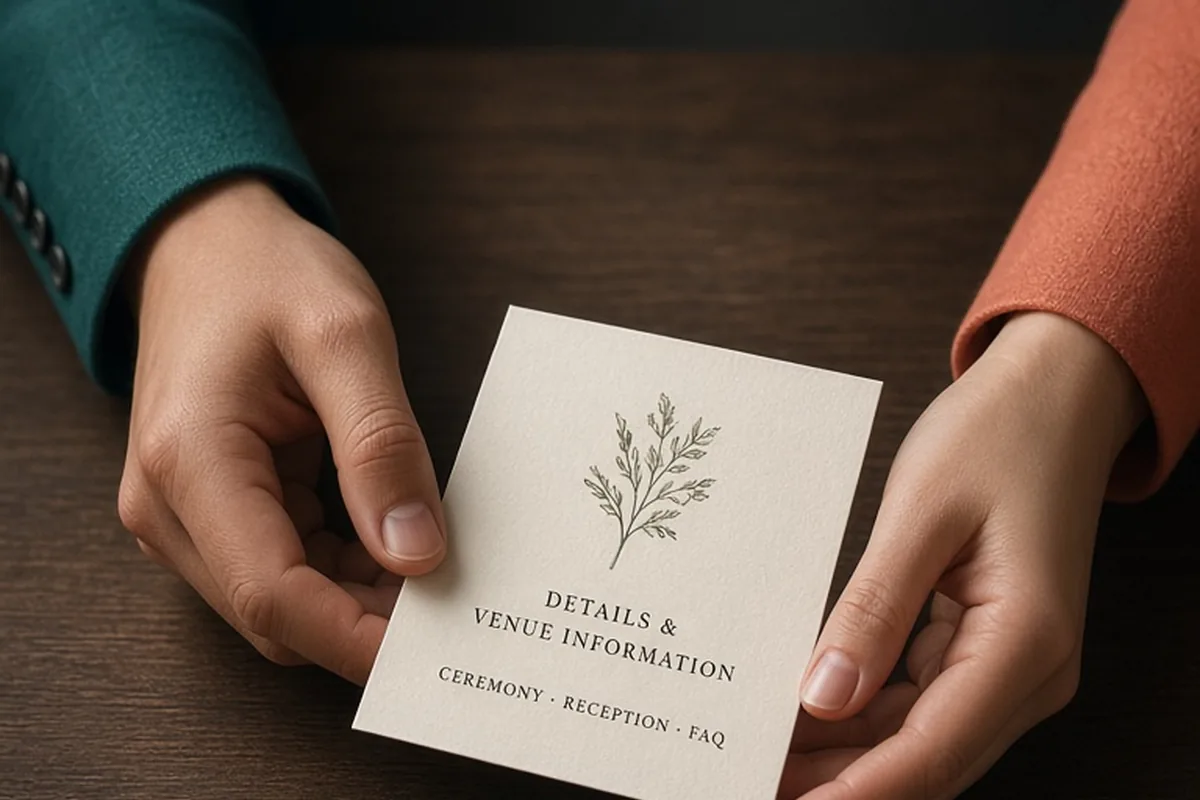
When couples establish a cocktail dress code, guests commonly ask about acceptable hemline lengths, suit jacket requirements, footwear choices for outdoor surfaces, and whether dark denim or casual sundresses qualify. Couples can resolve these uncertainties by defining cocktail attire as midi- or knee-length dresses, tailored dark or mid-tone suits, and dress shoes, while proactively sharing venue-specific guidance on their wedding website and details card to minimize individual questions.
Planning a wedding wardrobe guideline requires balancing personal style with hospitality so guests feel confident, comfortable, and appropriately dressed for the celebration. Setting clear expectations early prevents confusion and saves couples from fielding repetitive outfit questions as the ceremony date approaches.
Defining Cocktail Attire Clearly for Your Specific Wedding Setting
Cocktail attire bridges the gap between formal black-tie-optional events and relaxed daytime celebrations. For modern couples, the main challenge is that cocktail carries different meanings depending on regional customs, social circles, and personal backgrounds. Without context, some guests might envision formal floor-length evening gowns while others assume a casual collared shirt without a jacket is sufficient. Establishing a baseline definition helps everyone understand that cocktail attire centers on elevated tailoring, polished fabrics, and refined party wear.
When explaining cocktail attire to guests, specify standard garments rather than relying solely on fashion terminology. Encourage knee-length, tea-length, or midi dresses, structured jumpsuits, dressy separates, and tailored suits paired with collared shirts and dress shoes. Clarify that neckties or bow ties are customary but optional depending on personal style. By grounding the description in concrete clothing choices, you remove guesswork and allow guests to select appropriate outfits from their existing wardrobes or purchase suitable options with confidence.
Setting Season, Time of Day, and Venue Expectations on Your Details Card
The physical environment of your ceremony and reception shapes what cocktail attire looks like in practice. An open-air garden gathering in July calls for breathable linens, lighter suit shades, and airy chiffon fabrics, whereas a late-autumn ballroom reception naturally lends itself to heavier wools, rich jewel tones, and velvet accents. Noting these environmental elements on your invitation insert or details card gives guests necessary context to match their clothing to the ambient temperature and venue style.
If parts of the celebration take place outdoors on grass, gravel, or historic stone pathways, explicitly mention these walking surfaces on your stationery. Recommend block heels, wedges, or polished dress flats over stilettos to prevent guests from sinking into the lawn or risking ankle injuries. Similarly, mention whether evening temperatures drop significantly so guests can plan wraps, shawls, or tailored overcoats that coordinate with their outfits without feeling unprepared when the sun sets.
Drafting Exact Wording for Your Wedding Website FAQ Section
Your wedding website serves as the primary hub where guests seek answers to specific wardrobe questions before shopping or packing. Providing a dedicated FAQ section with concise, welcoming language prevents a barrage of individual text messages asking for outfit approvals. State the dress code prominently under the event schedule and expand upon it in the FAQ with clear examples of what works well and what falls outside the requested aesthetic.
Useful phrasing can follow simple formulas such as stating that cocktail attire is requested, defining what that includes for men, women, and non-binary guests, and gently outlining items to avoid, like jeans, athletic sneakers, and casual daytime tees. Providing a direct link to an optional visual mood board or Pinterest page can also help visual learners without imposing restrictive color palettes or mandatory purchases.
Navigating Guest Inquiries About Suit Colors, Dress Lengths, and Separates
Once invitations arrive in mailboxes, couples often receive specific questions about acceptable variations within cocktail attire. Common inquiries involve whether a floor-length maxi dress is overly formal, whether lighter tan or olive suits are acceptable, or if a dress shirt without a sport coat meets the standard. Communicating flexibility around color and silhouette while upholding the general standard of refinement reassures guests who may already own suitable garments.
For dress lengths, reassure guests that midi and knee-length cuts are standard, but tasteful maxi dresses in lightweight fabrics are completely acceptable as long as they do not mimic formal evening ballgowns. Regarding men's tailoring, explain that classic navy, charcoal, and black are timeless, but seasonal shades like sage, slate blue, and rich earth tones fit cocktail settings beautifully. Emphasize that a tailored jacket or blazer is typically expected for the ceremony, even if guests choose to remove it during the reception dance party.
Managing Footwear, Outerwear, and Changing Weather Conditions
Footwear and layering choices are frequent sources of stress for guests trying to balance formality with physical comfort. High heels on soft lawns, hard cobblestones, or rustic decking present both safety concerns and potential wardrobe damage. When couples address these venue realities upfront, guests can choose appropriate dress loafers, structured block heels, or elegant dress flats without worrying about feeling underdressed.
Outerwear requires equal consideration, especially for events spanning afternoon sunshine to cool evening breezes. Encourage guests to plan structured blazers, tailored trenches, pashminas, or formal wraps rather than casual athletic jackets or oversized parkas. For destinations known for sudden microclimates or coastal winds, a brief note advising guests to bring an elegant top layer demonstrates thoughtful hosting and prevents attendees from shivering during your vows.
Addressing Cultural Traditions, Family Preferences, and Budget Sensitivities
Cocktail attire expectations often intersect with diverse cultural traditions, multi-generational family perspectives, and varying personal financial circumstances. In many cultures, celebratory traditional attire—such as formal sherwanis, saris, barongs, or lehengas—carries significant honor and fits seamlessly alongside standard Western cocktail wear. Reassuring guests that traditional cultural attire is welcomed ensures all attendees feel respected and embraced.
Financial accessibility is another critical consideration for couples to navigate with empathy. Purchasing a brand-new outfit can create financial strain for some attendees. By highlighting classic closet staples, rental services, and versatile combinations, couples help guests participate fully without feeling pressured into high-cost purchases. Emphasize that the spirit of celebration and clean, elevated presentation matters far more than designer labels or rigid luxury requirements.
Handling Inevitable Dress Code Deviations and Last-Minute Inquiries with Grace
Despite thorough website notes and clear invitations, a few guests may still arrive in outfits that lean slightly too casual or overly formal. A guest might arrive in khakis with an open collar, or an older relative might choose a formal sequined ballgown. As hosts, the best approach is warmth and gracious hospitality; pointing out a guest's dress code deviation creates unnecessary embarrassment and disrupts the joyful atmosphere of your wedding day.
To handle inevitable last-minute text messages asking whether a specific outfit is acceptable, prepare a brief, friendly, standardized response you can copy and paste or delegate to a wedding coordinator or trusted wedding party member. A simple reply assuring the guest that their choice sounds lovely as long as it feels polished for a cocktail party resolves the question swiftly without adding stress to your wedding week schedule.
Frequently asked questions
What is the primary difference between cocktail attire and semi-formal attire for a wedding?
Cocktail attire is slightly dressier than semi-formal wear, requiring tailored suits, dress shoes, and structured party dresses or elegant jumpsuits. Semi-formal attire allows for slightly more relaxed options, such as dress shirts with slacks and no jacket, or casual daytime sundresses.
Can female wedding guests wear black to a cocktail attire wedding?
Yes, wearing black to a cocktail wedding is entirely acceptable and widely considered chic and modern across North America. As long as the dress or jumpsuit features an elevated silhouette suited for a celebratory evening, classic black remains a versatile choice.
Is it appropriate for guests to ask the couple directly if their outfit meets the dress code?
While guests often reach out for peace of mind, couples appreciate it when guests first review the wedding website FAQ and venue details. If uncertainty remains, asking the wedding party or adhering to standard cocktail guidelines is preferable to messaging the couple during wedding week.
Should couples include visual examples of cocktail attire on their wedding website?
Including a short descriptive guide or linking to an optional mood board is helpful, provided it serves as inspiration rather than a strict requirement. Clear descriptions of fabric types, hemline ranges, and suit styles usually provide enough direction without overwhelming guests.
Your next step
Draft your wedding website FAQ section with explicit examples of cocktail attire, add venue terrain notes, and publish the guidance before your invitation RSVP deadline.