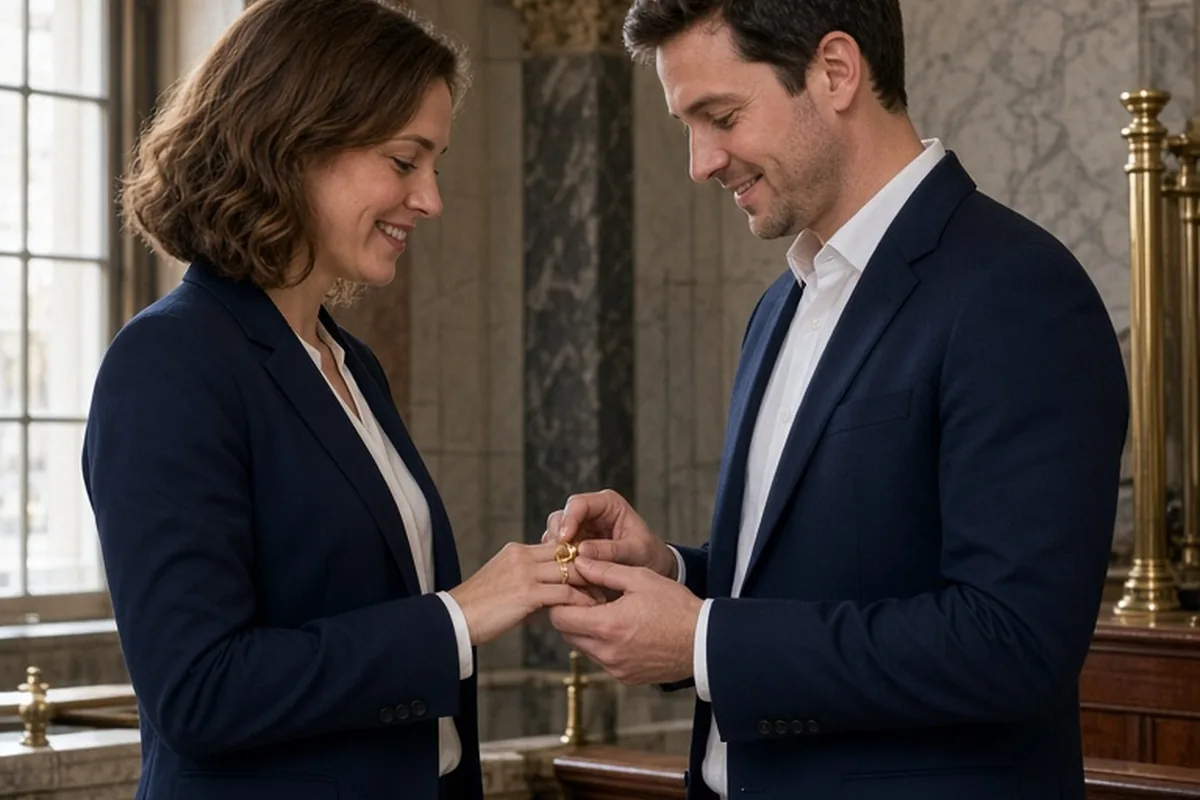
To make a courthouse wedding uniquely yours, infuse personal intention into every detail you control: write private vows to exchange immediately before or after the civil service, wear an outfit that reflects your personal style rather than standard formalwear, hire a dedicated documentary photographer, and plan a tailored post-ceremony celebration like a private chef dinner, rooftop picnic, or retro cocktail lounge gathering with close friends.
A civil ceremony at city hall or your local municipal court does not mean settling for a sterile, bureaucratic experience. While the legal proceedings are brief, the day itself carries the exact same emotional weight as a large celebration, offering complete freedom to design an itinerary centered entirely on what matters most to you as a couple.
Handling the Marriage License and Municipal Rules Before You Plan the Fun
Before selecting outfits, reserving restaurants, or booking a photographer, you must understand your specific jurisdiction's legal workflow. Marriage laws and courthouse procedures vary significantly by state, county, and municipality. Some city clerks require an appointment booked weeks or months in advance for both the license application and the ceremony, while others operate on a first-come, first-served walk-in basis. Many jurisdictions mandate a statutory waiting period between issuing the marriage license and performing the ceremony, ranging from twenty-four hours to several days, whereas others allow same-day ceremonies. Call or check your local county clerk's official portal to confirm whether you need a separate appointment for the civil ceremony, what identification documents are required, and whether you must bring your own adult witnesses.
Municipal courtrooms and clerk chambers often enforce strict physical guidelines that dictate how your service can unfold. Security protocols usually prohibit open flames, confetti, rice, large floral installations, or certain types of audio equipment. Knowing the exact room capacity in advance is essential; some historic city halls welcome up to twenty guests, while compact municipal offices may restrict attendance to the couple and two witnesses. Clarifying these logistics early prevents stressful surprises on the wedding day and gives you clear parameters around which to build your creative, personal details.
Choosing Outfits That Reflect Your Style Outside Traditional Bridal Expectations
A civil ceremony removes the rigid expectations often associated with large formal venues, allowing you to dress in whatever makes you feel confident, comfortable, and authentic. You can embrace high fashion, retro aesthetics, minimalist tailoring, or vibrant colors. A tailored pantsuit, an architectural jumpsuit, a tea-length vintage dress, or a sharply cut blazer in velvet or tweed all look striking against the marble, brick, and limestone architecture common in civic buildings. If you still want a traditional floor-length gown or classic tuxedo, you can wear it with pride; the contrast between grand formalwear and a low-key city backdrop often creates an effortlessly chic aesthetic.
Accessories provide an easy avenue for self-expression. Consider bold footwear, such as customized sneakers, designer heels in a vibrant pop of color, or polished leather boots suited for walking city sidewalks. Incorporate a birdcage veil, a felt fedora, heirloom jewelry, or an embroidered leather jacket draped over your shoulders. For florals, carry a compact, structured bouquet or wear an artistic lapel arrangement created by a local florist who specializes in seasonal blooms. Because you are not managing a massive bridal party, you can focus your floral budget on one or two exquisite, statement pieces that look stunning in close-up photographs.
Bringing Personal Vows and Meaningful Rituals into a Fast Civil Ceremony
Standard civil ceremonies are typically concise, lasting between five and ten minutes. Officiants or judges read standardized legal text designed to satisfy statutory requirements. However, many officiants are happy to accommodate brief personal touches if you ask beforehand. Inquire whether you may recite short personal vows, exchange rings, or have a loved one share a brief one-minute reading before the final declaration. Even if the court schedule is running on a tight timetable, simply taking a collective breath, holding hands, and exchanging deliberate eye contact can transform a rapid legal proceeding into a deeply emotional milestone.
If your local court does not allow custom vows during the formal appointment, design a dedicated private ritual right before walking in or immediately after exiting the building. Find a quiet corner of the courthouse rotunda, an adjoining city park, or the steps of the municipal building to read handwritten letters to one another from pocket vow books. This private vow exchange removes public performance pressure and ensures your personal promises to each other are spoken without feeling rushed by a busy court calendar.
Framing the Moment with Intentional Photography Around City Hall
Investing in a professional photographer is one of the most impactful choices you can make for a courthouse wedding. Because civil ceremonies are shorter, you often need only two to four hours of documentary coverage rather than a standard eight-to-ten-hour wedding package. Look for a photographer experienced in working with civil ceremonies and urban environments. They will know how to navigate variable courthouse interior lighting, manage municipal security rules, and pinpoint architectural backdrops like grand marble staircases, brass elevators, columned porticos, and arched entryways.
Treat your photography session as a romantic walking tour of the city. After documenting the ceremony and the signing of the register, step outside to explore nearby neighborhoods that hold personal meaning. Walk past your favorite local coffee shop, hail a yellow cab, stroll through an art district, or stop at a favorite neighborhood bodega for a celebratory snack. These candid, street-style images capture the genuine energy of your wedding day and turn familiar urban scenery into a visual narrative of where your shared life actually happens.
Organizing an Intimate Guest Experience When Capacity Is Capped
Managing guest logistics for a civil service requires clear communication, particularly if courtroom capacity is strictly limited. If you can only bring two witnesses inside the chamber, explain this constraint clearly to close family and friends well ahead of time. You might invite a small circle to gather on the courthouse steps for a joyful grand exit with ribbon wands or handheld banners as you emerge, or host a casual pre-ceremony breakfast at a nearby cafe before heading to the clerk's office with your designated witnesses.
For loved ones who cannot attend in person due to distance or room limits, consider setting up an unobtrusive virtual livestream, provided court security permits recording devices in the room. Alternatively, send out printed announcement cards immediately after the ceremony featuring a favorite photograph from the day. Framing your decision around personal preference for intimacy and practical municipal caps prevents hurt feelings while keeping the atmosphere low-stress and centered on your partnership.
Designing a Memorable Post-Courthouse Celebration for Any Budget
Without the logistical burden and high venue rental fees of a traditional banquet hall, your post-ceremony celebration can take almost any form you envision. Tailor the gathering to match your personalities and financial comfort zone. For a culinary-focused experience, reserve a private dining room at a high-end restaurant, hire a private chef to prepare a multi-course tasting menu in your home, or book a chef's table at your favorite neighborhood eatery. Because you are hosting fewer people, you can elevate the food, wine, and dessert quality significantly without exceeding a modest budget.
If you prefer a relaxed or festive vibe, transition from the courthouse to a vintage cocktail bar for champagne and oysters, arrange a luxury picnic in a scenic public park with charcuterie boards and blankets, or rent a boutique bowling lane or private karaoke suite for an evening of lighthearted fun. You can also transition straight into a mini-moon by booking a suite at a historic boutique hotel in the city, enjoying room service, and spending your first evening as a married couple relaxing without hosting duties.
Crafting Keepsakes and Sharing the News with Long-Distance Loved Ones
A courthouse wedding generates fewer physical artifacts than a massive production, making deliberate keepsakes especially meaningful. Request an extra ceremonial copy of your marriage certificate or have an artist hand-calligraph your vows alongside an architectural sketch of the courthouse. Keep the physical pen used to sign the register, press flowers from your bouquet inside a heavy book, or compile your professional photos into a premium heirloom album. These tangible tokens serve as lasting markers of the day you officially formalized your commitment.
Sharing the announcement can also be an intentional celebration in itself. Design modern, stylish 'We Tied the Knot' or 'We Eloped' postcards to mail to extended family, colleagues, and acquaintances. If you plan to host an informal backyard barbecue, a casual brewery gathering, or an open house months down the road to celebrate with a broader network, include a note inviting them to the upcoming party. This clear communication celebrates your milestone while maintaining complete control over your actual wedding day.
Frequently asked questions
Can we bring our own officiant to perform our ceremony at the courthouse?
Courthouse policies vary widely. Most municipal courts use on-duty judges, magistrates, or city clerks, but some jurisdictions allow an ordained third-party officiant or friend to perform the ceremony in a designated civil room if booked in advance. Check with your specific county clerk's office to learn their rules.
How far in advance should we schedule a courthouse wedding?
Lead times depend entirely on the jurisdiction and season. Small towns may allow walk-ins or same-week appointments, while popular historic city halls in major metropolitan areas often release appointment slots several weeks to months in advance. Review your local clerk's scheduling calendar as soon as you have a target date.
Do we need witnesses for a civil ceremony?
Witness requirements depend on your state and local marriage laws. Some states do not require any witnesses, while others mandate one or two adult witnesses over the age of eighteen to sign the marriage license during or after the service. If you do not have local guests, your photographer can frequently serve as a legal witness.
Your next step
Contact your local county clerk's office today to confirm your jurisdiction's appointment process, mandatory waiting periods, and witness requirements before setting your wedding date.