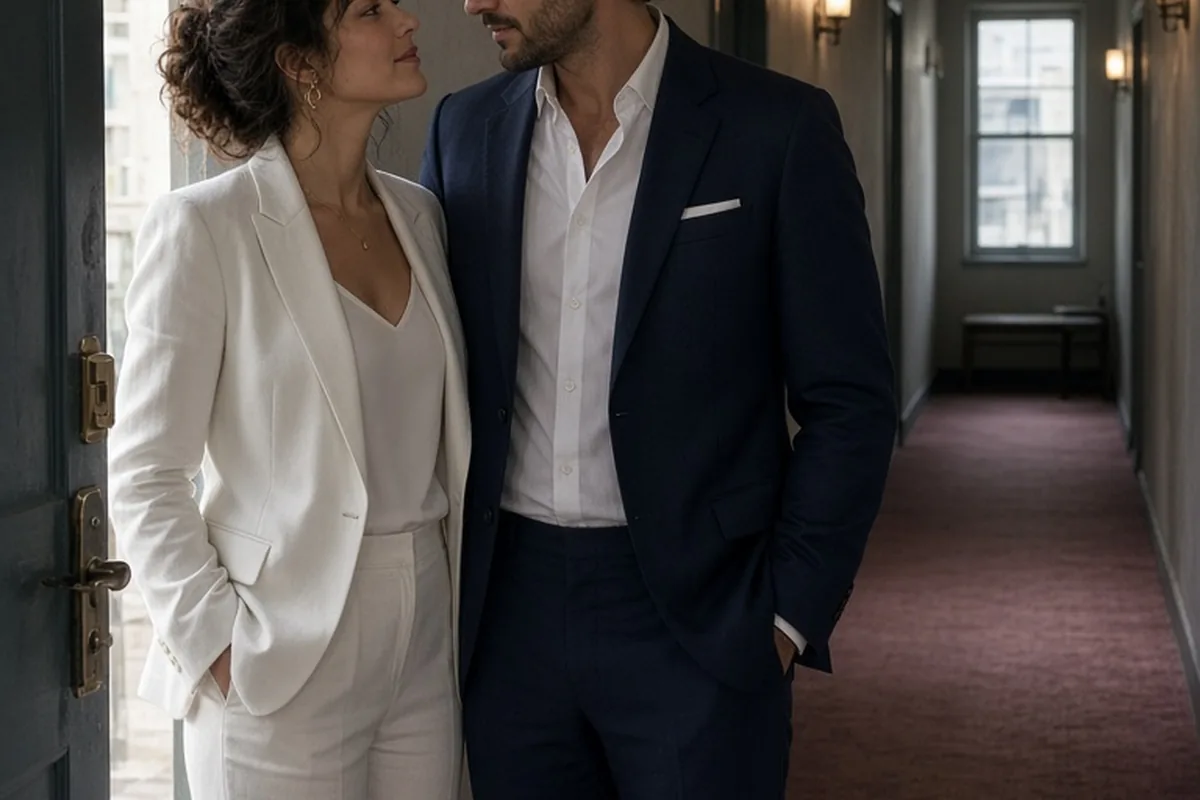
For a courthouse wedding, wear attire that matches your personal aesthetic while remaining comfortable for municipal building logistics. Popular options include tailored white or colorful pantsuits, midi and knee-length dresses, modern jumpsuits, or classic two-piece suits with dress shirts. Because civil ceremonies involve security checkpoints, public hallways, and walking between municipal offices, prioritize wrinkle-resistant fabrics, weather-appropriate outerwear, and supportive footwear over floor-length trains or cumbersome layers.
A civil ceremony offers couples the freedom to bypass traditional wedding conventions and choose an outfit that feels genuine, stylish, and practical. Whether your ceremony is an intimate elopement with two witnesses or a streamlined gathering with close family, dressing for the courthouse requires balancing celebration with the unique physical demands of a public municipal building.
Navigating Courthouse Environments and Setting Your Dress Code
Civil ceremonies take place in working government buildings where marriage bureaus share corridors with traffic courts, administrative offices, and public records departments. This setting creates a distinctive atmosphere that blends everyday civic business with profound personal milestones. Unlike a private wedding venue with dedicated dressing suites and controlled guest flow, a city hall or county courthouse requires moving through public metal detectors, waiting in shared administrative lobbies, and standing before a judge or clerk in functional office chambers.
Because there is no universal dress code enforced by municipal clerks beyond standard public decency rules, you have complete latitude to establish your own level of formality. Some couples lean into sleek, high-fashion minimalism, while others embrace relaxed casualwear, vintage romance, or bold non-traditional colors. The key is establishing a shared aesthetic between partners so your clothing feels cohesive in photographs and comfortable throughout the administrative process.
When deciding how formal to dress, consider the schedule of your day beyond the ten-minute ceremony itself. Many couples pair a courthouse ceremony with walking city portraits, a celebratory brunch, an intimate dinner at a favorite restaurant, or an evening party with friends. Your clothing should transition smoothly between a government office and your subsequent hospitality venues without requiring extensive mid-day wardrobe changes.
Courthouse Wedding Outfit Comparison: Suits, Midi Dresses, and Jumpsuits
Choosing an outfit silhouette involves comparing aesthetic appeal against functional mobility. A tailored pantsuit or tuxedo separate represents one of the most popular civil ceremony choices for brides and grooms alike. Tailored suiting offers sharp architectural lines that stand out beautifully against marble courthouse steps, provides practical pockets for holding vows or marriage licenses, and functions well across varying indoor office temperatures. Furthermore, high-quality suiting separates can easily be styled into everyday or formal wardrobes after the wedding day.
Midi dresses, tea-length skirts, and knee-length shift dresses offer a classic bridal silhouette while eliminating the hazards of trailing hems on public floors. A shorter hemline keeps your garment clean when walking across city sidewalks, ascending granite steps, and riding public transit or rideshares. Midi lengths also showcase distinctive footwear choices, making shoes a central design element of your overall look rather than an afterthought hidden under yards of tulle.
Bridal jumpsuits and tailored rompers provide a contemporary alternative that combines the elegance of a dress with the mobility of trousers. A well-structured jumpsuit with wide legs, an asymmetrical neckline, or an open back creates an effortless, fashion-forward statement. The primary trade-off with a jumpsuit involves restroom logistics in municipal facilities, so look for designs with accessible zippers or button closures that you can manage independently without complicated assistance.
Separates, such as a silk camisole paired with a pleated midi skirt or high-waisted trousers with an embellished blazer, give you maximum flexibility. This modular approach lets you mix textures, adjust for unpredictable room temperatures, and invest in versatile individual items rather than a single-use garment.
Partner and Groom Styling for Civil Ceremonies
Grooms and partners dressing for a courthouse ceremony can move well beyond traditional black-tie expectations, tailoring their garments to the season, venue architecture, and their partner's chosen aesthetic. A well-fitted two-piece suit in navy, charcoal, olive green, taupe, or houndstooth provides a sophisticated foundation that feels intentional without looking overly rigid in a clerk's office. Pairing a suit with a crisp white dress shirt and a knit silk tie delivers timeless polish, while an open-collar linen shirt or fine-gauge merino knit underneath creates a modern, relaxed elegance.
For couples seeking a less formal look, combining structured blazers with tailored chinos or wool trousers offers an elevated smart-casual approach. Textural contrast plays an important role in civil ceremony photography: fabrics like flannel, hopsack wool, brushed cotton, and linen add visual depth in standard municipal fluorescent lighting. Ensure trousers are hemmed cleanly with minimal break so they sit neatly above polished leather shoes or loafers.
Coordination between partners does not require matching colors exactly; instead, aim for complementary tones and shared formality levels. If one partner wears an ankle-length ivory crepe dress, the other partner might select a mid-grey wool suit with an ivory pocket square or lapel floral rather than casual denim or an ultra-formal morning suit. Small details, such as matching metal tones across watches, belt buckles, and jewelry, create subtle visual cohesion.
Selecting Practical Footwear and Fabrics for Municipal Facilities
The physical layout of government buildings demands thoughtful footwear decisions. Historic courthouses and modern municipal centers commonly feature slick polished terrazzo, smooth marble stairways, security line standing areas, and extended concrete outdoor plazas. Sky-high stilettos or stiff, slick-bottomed dress shoes can quickly become uncomfortable or hazardous when walking briskly between clerk offices and exterior photo locations.
Consider supportive footwear options that complement your attire while providing stability. Block heels, low kitten heels, pointed-toe slingbacks, elegant dress flats, tailored loafers, and dress boots all pair exceptionally well with shorter hemlines and cropped trousers. If you prefer high heels for ceremony photos, carry them in a tote bag and wear comfortable walking shoes while navigating transit, security checkpoints, and waiting rooms.
Fabric selection also directly influences your comfort during the inevitable waiting periods of a civil ceremony. Heavy ballgown satins or multi-layered crinolines can feel stifling in warm offices, while thin, 100-percent silk charmeuse or unlined linen wrinkles dramatically after sitting on municipal waiting room benches. Look for medium-weight fabrics with natural drape and wrinkle resistance, such as stretch crepe, structured jacquard, bonded satin, wool-silk blends, or high-twist worsted wools. These textiles maintain a clean, pressed appearance from the initial security check through the final reception toast.
Courthouse Wedding Attire Budget Planning and Expense Breakdown
Budgeting for courthouse wedding attire involves looking beyond the garment's purchase tag to account for the complete ensemble, including alterations, base layers, accessories, and aftercare. Because civil ceremony attire encompasses everything from off-the-rack department store pieces to custom tailoring, identifying your total expenditure categories early ensures you allocate funds effectively across every component.
The primary cost tiers for civil ceremony garments generally divide into three approaches: off-the-rack high-street or ready-to-wear pieces, contemporary mid-tier designer and specialized elopement brands, and custom or bespoke tailoring. High-street dresses and ready-to-wear suits offer accessible upfront price points, but they often require professional tailoring to achieve a polished fit. Specialized bridal separates and contemporary designer pieces offer distinct styling and higher-grade textiles, while bespoke tailoring delivers a customized fit built to your exact measurements.
Alterations represent an essential budget consideration that many couples overlook. Hemming trousers or skirts, shortening sleeves, taking in the waist, or adjusting shoulders can range from modest adjustments to substantial expenses depending on garment construction, lining complexity, and local labor rates. Additional essential budget line items include specialized undergarments, comfortable shoes, outerwear for outdoor transitions, express dry cleaning, and professional garment steaming. Always verify tailoring turnaround times and request comprehensive itemized quotes from local tailors before finalizing garment purchases.
Outerwear, Accessories, and Styling for City Hall Photography
Because civil wedding photography often captures your arrival, courthouse steps, and strolls through surrounding neighborhood streets, your outerwear is an active part of your ceremony outfit rather than a functional afterthought. A tailored wool trench coat, structured overcoat, cropped boucle jacket, capelet, or leather moto jacket frames your look and keeps you warm during unpredictable seasonal weather transitions.
Accessories for a courthouse wedding should remain proportional to the smaller, more personal setting. Large, dramatic cathedral veils can easily snag on office chairs or drag through security lines, making birdcage veils, pillbox hats, embellished headbands, pearl barrettes, or minimalist silk ribbons popular alternatives. A compact clutch or small crossbody bag is crucial for securely holding essential items, including government-issued identification cards, marriage licenses, payment methods for document fees, and wedding rings.
When choosing jewelry and florals, aim for streamlined elegance. A petite posy bouquet, single-stem calla lily, or boutonniere is easy to hold while signing official paperwork and fits comfortably within administrative chambers. Keep jewelry balanced: bold architectural earrings work well with clean neckline suits and jumpsuits, while delicate pendant necklaces and classic studs complement textured or lace-detailed dresses.
Navigating Security Checkpoints and Building Logistics on Ceremony Day
Municipal buildings operate with strict security regulations that directly influence what you can wear and bring inside. Almost all city halls and county courthouses require passing through metal detectors and scanning bags through X-ray machines. Garments with extensive metal corsetry boning, metallic hardware embellishments, or heavy metal chains may trigger security alarms and cause unnecessary delays at the entrance.
Most government facilities do not have public dressing rooms, private green rooms, or bridal suites available for civil ceremony participants. You should plan to arrive at the courthouse fully dressed, with hair and makeup complete, leaving only minor touch-ups for the public restroom mirror. If you are traveling via car, train, or rideshare, hang your jackets and lay dresses flat across the back seat whenever possible to prevent deep sitting creases.
Check your specific municipal building's rules regarding prohibited items before finalizing your accessories. Many historic courthouses prohibit real flower petals, confetti, rice throwing, sparklers, and open flames on their steps or interior spaces. Ensuring your ensemble and personal items comply with local government building ordinances guarantees a smooth, low-stress experience as you celebrate your marriage.
Frequently asked questions
Can I wear a traditional white wedding dress to a courthouse wedding?
Yes, you can wear a traditional white wedding dress if you choose. While many couples prefer shorter hemlines or suits for practicality, municipal buildings welcome traditional wedding gowns. Consider selecting a silhouette without a long train or heavy multiple petticoats to make moving through public security lines and narrow office hallways easier.
Are there any clothing items that are prohibited at a courthouse wedding?
Most courthouses do not enforce strict aesthetic dress codes for civil ceremonies, but general public building rules apply. Avoid excessively casual beachwear, swimwear, or clothing with offensive language. Garments containing extensive metal boning or heavy hardware may also require manual security screening at the building entrance.
What colors are appropriate for a civil ceremony?
Any color that matches your personal taste is appropriate for a civil ceremony. While white, ivory, and champagne remain popular choices, many people wear navy, blush, emerald, bold jewel tones, or subtle pastels. Choosing non-traditional colors allows you to re-wear your outfit easily for future formal events.
Do I need to carry a bouquet at a courthouse wedding?
A bouquet is entirely optional for a courthouse ceremony. If you choose to bring flowers, a small posy, petite hand-tied bouquet, or single statement stem is easiest to hold while you navigate municipal lines, present your identification, and sign legal marriage certificates.
Your next step
Review your local city hall or county clerk building guidelines online today to confirm security checkpoint rules and document requirements before choosing your final ceremony outfit and accessories.