To craft a meaningful marriage proposal with poetry, select a form that suits your communication style—such as unrhymed free verse, a classic sonnet structure, or an excerpt from an established poem—and anchor it in concrete memories rather than generic flattery. Keep your composition between eight and twenty lines so nerves do not derail delivery. Read it aloud multiple times, print a clean keepsake copy on heavy paper, and conclude with the direct spoken question: Will you marry me?
Proposing marriage is an emotionally charged milestone, and weaving verse into the moment adds an intimate, lasting dimension when done with care. Poetry works best when it reflects how you genuinely speak to one another, translating private routines, shared hardships, and mutual hopes into language that feels authentic rather than theatrical.
Deciding Between Writing an Original Poem and Reading an Established Classic
The first choice you face when incorporating poetry into an engagement proposal is deciding whether to write original lines or curate an excerpt from a published poet. An original poem offers complete personalization. You can reference the specific kitchen where you first burned dinner together, the quiet drives across state lines, or the idiosyncratic gestures that signify safety in your relationship. However, writing from scratch requires vulnerability and comfort with creative phrasing. If the prospect of generating rhymes or rhythmic cadence triggers intense anxiety, the stress of authorship can overshadow the joy of the proposal itself.
Choosing an established work, by contrast, connects your partnership to timeless literary tradition while relieving you of the pressure of line composition. Works by writers such as Pablo Neruda, Mary Oliver, or e. e. cummings capture devotion with precision and nuance. The trade-off is relevance: reading a famous sonnet about eternal beauty can feel distant if your partner prefers grounded, unpretentious communication. A balanced approach involves pairing a brief two-to-four-line published stanza that holds mutual meaning with your own short, heartfelt spoken introduction explaining why those specific words mirror your journey together.
Selecting the Right Poetic Structure for Your Voice and Comfort Level
Poetic form dictates the rhythm of your delivery, and matching the structure to your conversational cadence prevents the moment from feeling unnatural. Rhyming couplets—where every two lines end with matching sounds (AABB)—offer familiarity and charm, but they carry a distinct hazard: forced rhyme. When writers prioritize matching sounds over emotional truth, lines quickly degenerate into nursery-rhyme sing-song patterns or uninspired fillers such as rhyming 'wife' with 'life' or 'heart' with 'never part.' If you enjoy structured rhyme, alternate schemes such as ABAB or ABCB allow more conversational flexibility and feel less rigid when spoken aloud.
Free verse is often the most forgiving and expressive structure for a marriage proposal. Free verse does not follow set metrics, syllable counts, or end rhymes, allowing you to focus purely on imagery, pacing, and sincere emotional declarations. You can vary line lengths to create deliberate pauses, giving your partner room to absorb what you are expressing. Another structured option is a sequence of three or four haiku stanzas, which provide compact five-seven-five syllable snapshots of your past, present, and shared future. Whichever structure you choose, limit the overall length to between eight and twenty lines. Anything shorter risks feeling perfunctory, while anything longer increases the likelihood that emotional overwhelm or memory lapses will interrupt your cadence.
Mining Shared Memories for Grounded Imagery Instead of Generic Clichés
A compelling proposal poem earns its emotional resonance through specific, observable moments rather than lofty generalities. Abstract declarations such as 'you are my entire universe' or 'our love is written in the stars' provide little for your partner to hold onto because those phrases could apply to anyone. In contrast, invoking tactile sensory details—the scent of rain on the tent during an interrupted camping trip, the quiet routine of sharing coffee on Saturday mornings, or the way they stood by you during a difficult career transition—proves that you see and cherish the reality of who they are.
To gather material, spend an evening writing down concrete memories across three distinct categories: beginnings, challenges overcome, and quiet ordinary days. Look for sensory anchors like physical objects, weather, specific street corners, or phrases unique to your shared shorthand. For example, instead of writing 'We survived tough times together,' consider an image like 'We learned to measure patience by the flicker of hospital waiting-room lights and late-night highway exits.' Contrast these grounded vignettes with simple forward-looking statements about what partnership means to you. Grounding verse in lived truth ensures the poem feels like a mirror of your actual bond rather than a greeting card.
Drafting and Refining Marriage Proposal Poetry Line by Line
The drafting process should move through distinct phases of brainstorming, arrangement, and ruthless trimming. Begin by assembling your raw memories into a three-part narrative arc. The opening movement establishes where your connection took root or captures a quintessential image of your partner. The middle movement acknowledges the growth, trust, and resilience that formed between you as daily life unfolded. The closing movement pivots toward intention, framing marriage not as an idealized fantasy, but as a deliberate, daily commitment to navigate the unknown together.
Once your rough draft is on paper, read it aloud repeatedly with a pencil in hand. Spoken language behaves differently than written language; syllables that look elegant on a page often trip the tongue when spoken aloud under the influence of adrenaline. Listen for clunky consonant clusters, unintentional tongue twisters, and rhythms that rush you forward. Strip away decorative adjectives that do not add clear meaning, and replace passive constructions with direct, active verbs. Most importantly, ensure the final line of your poem serves as an organic bridge to the proposal question rather than trying to replace it entirely. Concluding the verse on an anticipatory thought makes dropping to one knee or presenting the ring feel like the natural culmination of the text.
Choosing Practical Delivery Formats: Recitation, Written Keepsakes, and Letters
How you deliver the poem matters as much as the text itself, because intense emotion frequently impairs recall and breath control. If you have confident public speaking habits and want to recite the poem from memory, memorize it weeks in advance using spaced repetition. Even so, carry a neatly handwritten or printed version in your pocket. Knowing you have a physical safety net eliminates the panic of a sudden mental block, allowing you to stay present in the emotional connection rather than desperately hunting for the next line in your head.
Reciting from memory is not inherently superior to reading from a tangible page. Reading from a beautifully bound notebook, heavy archival cardstock, or a calligraphed letter introduces an authentic, reverent atmosphere to the moment. Your partner sees the care invested in crafting the artifact, and having an object in your hands helps anchor physical shaking caused by adrenaline. Furthermore, a written poem becomes an enduring keepsake that can be framed, kept in a wedding memory box, or referenced during your future vows. If your partner tends to feel self-conscious in public settings, handing them the letter to read quietly to themselves before you ask the question can provide a gentler, more intimate experience.
Managing Setting, Logistics, and High-Emotion Complications
Environmental acoustics and privacy levels directly determine whether your poem will be heard and felt. An ocean bluff or windy mountaintop sounds picturesque, but ocean surf and gusts can easily drown out spoken verse, turning an earnest reading into an awkward struggle to project your voice. Similarly, bustling restaurants or scenic tourist landmarks involve background chatter, unexpected foot traffic, and visual distractions that break intimate focus. Choose a location where ambient noise is minimal and you can maintain eye contact without competing against outside interruptions.
Emotional factors also require flexibility. It is entirely normal for you, your partner, or both of you to cry during the reading. If tears make speaking difficult, pause completely, take a deep breath, hold their hand, and let the moment settle before continuing. If your partner becomes overwhelmed with emotion and cuts in with an embrace before you reach the final stanza, do not force the performance to continue like a rigid script. Embrace them, speak the essential question clearly, and give them the written poem afterward to read when their emotions have settled. The ultimate goal is connection, not theatrical perfection.
Illustrative Scenarios
Navigating Stage Fright with a Handcrafted Keepsake Book
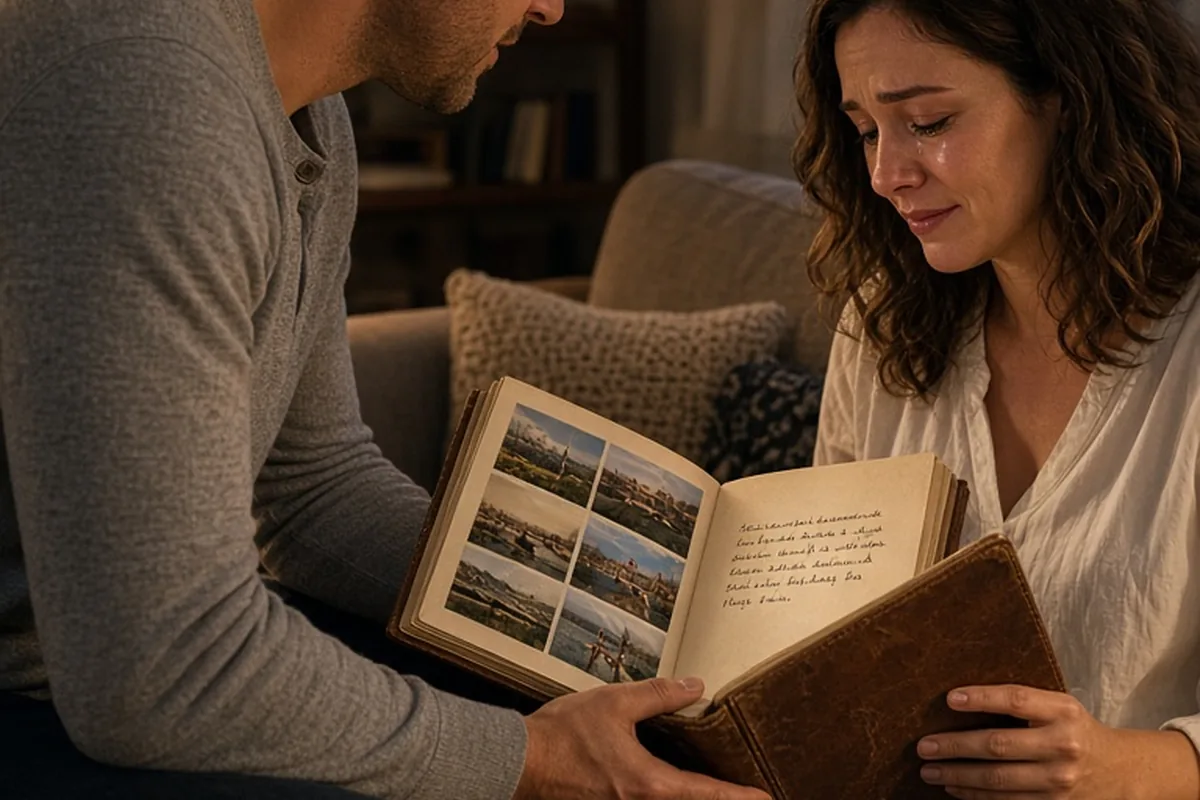
Marcus wanted to propose to his partner, Elena, using an original twelve-line poem about their shared cross-country move. Initially, he planned to memorize the verses and recite them while standing in an illuminated botanical garden. During dry runs at home, however, his heart pounded so rapidly that he repeatedly forgot his stanzas and felt overwhelmed by performance anxiety. Recognizing that memorization was creating undue panic, Marcus transcribed the poem by hand into a leather-bound journal filled with small photos from their travels. On the evening of the proposal, he presented the book, invited Elena to read the final page where the poem ended, and spoke the proposal question once she looked up through happy tears.
Key point: A tangible, written delivery protects the integrity of the proposal from performance anxiety while creating an enduring keepsake your partner can revisit for decades.
Adapting Spoken Verse to an Unpredictable Outdoor Setting
Taylor composed a short, rhythmic free-verse piece to propose to Jordan during a quiet sunset hike. When they arrived at the overlook, strong coastal wind gusts and a gathering group of sightseers made intimate recitation impossible without shouting. Taylor recognized that projecting spoken verse in that environment would feel forced and awkward. Instead of pushing through the planned speech, Taylor suggested sitting on a bench slightly away from the crowd, handed Jordan the card containing the poem, and held their hand in silence while Jordan read. Once Jordan finished the final stanza, Taylor knelt in the quiet pocket of the trail and asked the question directly.
Key point: Flexibility matters more than rigid execution; adapting your delivery format to real-time ambient conditions preserves the intimacy of your message.
Frequently asked questions
Can I use poetry if neither of us reads poetry regularly?
Yes, provided the language matches how you naturally speak to each other. Focus on honest, unrhymed free verse grounded in concrete memories rather than attempting archaic phrasing or complex meter that feels foreign to your relationship.
Should the poem replace the question 'Will you marry me?'
No, the poem should build anticipation toward the question rather than replacing it. Even if your final poetic lines clearly imply marriage, conclude by pausing, making clear eye contact, and asking the direct question so there is absolute clarity in the moment.
How long should a marriage proposal poem ideally be?
Between eight and twenty lines is an ideal length, taking roughly sixty to ninety seconds to deliver aloud. This provides enough space to develop meaningful imagery without testing your partner's concentration or your own ability to manage adrenaline.
Is it acceptable to hire a professional writer to compose my proposal poem?
While ghostwriters exist, an imperfect poem written from your own heart carries far more emotional weight than polished prose from a stranger. If you struggle with phrasing, you can instead curate an established published poem that captures your mutual sentiments and add your own brief spoken reflection.
Your next step
Draft three short vignettes of specific, meaningful memories from your relationship today, and read them aloud to see which rhythm best reflects your natural voice.