To craft a memorable and funny wedding toast, build around a brief personal story that illustrates a positive trait of the person you know best, show how their partner complements them, and close with an earnest blessing. Genuine humor comes from specific, endearing observations—such as peculiar hobbies, stubborn quirks, or harmless misadventures—rather than canned internet one-liners, embarrassing secrets, or inside jokes. Keep the delivery between three and five minutes, pause deliberately for laughs, and balance every tease with heartfelt sincerity.
Standing up before a room of family members, colleagues, and longtime friends to give a wedding speech can feel intimidating, particularly when you want to make people laugh without turning the moment into an awkward roast. A successful speech does not require professional comedic talent; it requires a clear structure, thoughtful boundaries, and a sincere focus on the couple.
Structuring a Wedding Toast That Balances Humor and Heart
A compelling wedding toast relies on an intentional narrative arc rather than an unstructured collection of memories. The most dependable structure follows three distinct movements: an inviting opening, a lighthearted central story, and an earnest conclusion. In the opening thirty seconds, state your name, explain your connection to the couple, and establish a warm tone. Starting with a brief, gracious acknowledgment of the hosts sets the audience at ease and signals that your speech is designed to celebrate the gathering rather than command the spotlight.
The middle section carries the primary narrative weight. This is where you introduce a single, focused anecdote illustrating who your friend or family member is when they are at their best, followed directly by how their life shifted upon meeting their partner. The structural secret to wedding humor is contrast. If your friend was historically chaotic, fastidious, or fiercely independent, the comedy emerges naturally when you describe how their new spouse brought balance, patience, or shared joy into their world. By grounding the laughter in their personal growth, you ensure that every joke moves the narrative forward.
The conclusion must deliberately shift away from humor into unreserved warmth. Many speakers make the mistake of ending on a punchline, which can leave the emotional tone feeling shallow. Instead, use the final sixty seconds to speak directly to the couple, address the partner with welcoming affection, and invite the room to stand. A clean verbal signal—such as 'Please join me in raising a glass to...'—alerts guests to reach for their drinks and brings the speech to a polished, unified close.
Finding Humor in True Anecdotes Rather Than Canned Internet Jokes
Generic wedding one-liners found on search engines—such as jokes about marriage being an institution, ball-and-chain remarks, or tired tropes about losing freedom—almost always fall flat. Modern wedding audiences are quick to recognize recycled internet material, which feels impersonal and dated. Real humor comes from hyper-specific, recognizable human behavior. Think about the quirky routines, harmless obsessions, or peculiar problem-solving methods that define your friend. The humor works because the guests in the room nod along and think, 'Yes, that is completely true.'
Consider an example that highlights a specific character quirk rather than an insult. If the groom is notorious for an exhaustive research process before buying even basic household goods, you might say: 'When Marcus bought a toaster four years ago, he built a comparative spreadsheet with seventeen columns, tracking wattage, cord length, and crumb tray accessibility. So when he announced after three weeks of dating that he was going to marry Sarah, I knew she had to be extraordinary, because Marcus skips the vetting process for nothing and no one.' This approach draws laughter from a genuine personal trait while paying an enormous compliment to the partner.
To mine your own memories for material, ask yourself a few diagnostic questions. What was the couple's first argument about, assuming it was trivial and absurd like how to load the dishwasher or the correct route to the grocery store? What did your friend do immediately after their very first date that signaled this relationship was different? How has your friend's daily behavior changed for the better since being together? These real-life details provide authentic comedic material that no pre-written script can duplicate.
Lines and Topics That Consistently Backfire in Front of Wedding Guests
The quickest way to derail a reception is to treat a wedding toast like a celebrity roast. A room full of grandparents, young cousins, coworkers, and in-laws has vastly different comfort thresholds, and jokes that get big laughs in a private group chat often generate painful silence in a banquet hall. Any reference to past relationships, former engagements, or dating history should be completely excluded. Even a seemingly benign comment like 'After all the terrible people you dated before' introduces negative imagery and makes the audience uncomfortable.
Private intimacy, bodily functions, arrests, and reckless behavior should also remain off-limits. If an anecdote relies on someone being excessively intoxicated, making a poor moral decision, or suffering genuine distress, it belongs in private conversation, not at a formal banquet. Similarly, inside jokes between two people are rarely humorous to the other ninety-eight guests in the room. When you share a reference that requires extensive explanation, the audience feels excluded rather than entertained. A good standard is to ask: if a guest who has never met your friend hears this story, will they understand the joke without additional context?
Financial commentary and family tensions require strict boundaries as well. Jokes about the cost of the reception, the size of a wedding ring, or awkward dynamics between in-laws consistently cause friction. If you find yourself wondering whether a particular line crosses the line of good taste, that hesitation is your answer. In public speaking, caution protects the mood of the event. Cut the questionable line immediately and replace it with an observation about kindness, patience, or shared values.
Adapting Your Tone for Maid of Honor, Best Man, or Parent Roles
Different speakers face distinct expectations based on their relationship to the couple. The Maid of Honor or Matron of Honor speech frequently leans heavily into emotional nostalgia, which can sometimes turn into an exclusionary timeline of childhood friendship. To elevate this speech, balance the sentiment with playful, sharp observations about your dynamic. Describe how you two tackle challenges together, poke gentle fun at your shared teenage phases, and highlight the exact moment you watched her guard drop when she fell in love. Giving equal stage time to how remarkable her partner is prevents the toast from feeling like a private tribute to your friendship alone.
Best Men often face intense self-imposed pressure to be the funniest speaker of the night. This pressure is precisely what drives speakers to overstep boundaries with aggressive teasing. A great Best Man speech succeeds when it blends light, self-effacing humor with genuine admiration. If you joke about your friend's questionable fashion phases or his inability to assemble flat-pack furniture, balance it by describing his steadfast reliability, his loyalty as a friend, and his clear devotion to his spouse. Showing sincere emotion does not diminish your humor; it gives it weight and credibility.
Parents and guardians carry a different mandate: their role is to offer generational wisdom, express family pride, and officially welcome the new spouse. Parental humor works best when reflecting on the passage of time—the transition from teaching a toddler to ride a bicycle to watching an adult navigate a household. Parents should avoid long chronological biographies that detail every academic or athletic achievement. Focus instead on character traits: generosity, resilience, and the noticeable joy their child exhibits in the presence of their new partner.
Delivering Under Pressure: Pacing, Pausing for Laughs, and Handling Notes
Even brilliant writing will fail if the delivery is rushed. Public speaking anxiety commonly causes people to speak at nearly twice their normal conversational speed, which ruins comedic timing. Humor relies on anticipation and rhythm. When you deliver a setup, allow a micro-pause before the punchline. When the audience responds with laughter or applause, freeze your speech completely. If you speak over the laughter, half the room will miss your next sentence, creating confusion. Stand upright, smile, maintain comfortable eye contact, and let the laughter dissipate before you resume.
Handling unexpected audience reactions is a skill every speaker can prepare for. If a joke receives a roaring laugh, take a breath and enjoy the moment. If a joke lands with polite silence or a quiet chuckle instead of the explosive reaction you imagined, do not apologize, repeat the punchline, or say 'Well, that was funnier in my head.' Those defensive reactions highlight the silence and create tension. Simply smile and transition smoothly into your next thought as if that was your intended pacing all along. Audiences mirror the speaker's emotional state; if you remain relaxed, they stay comfortable.
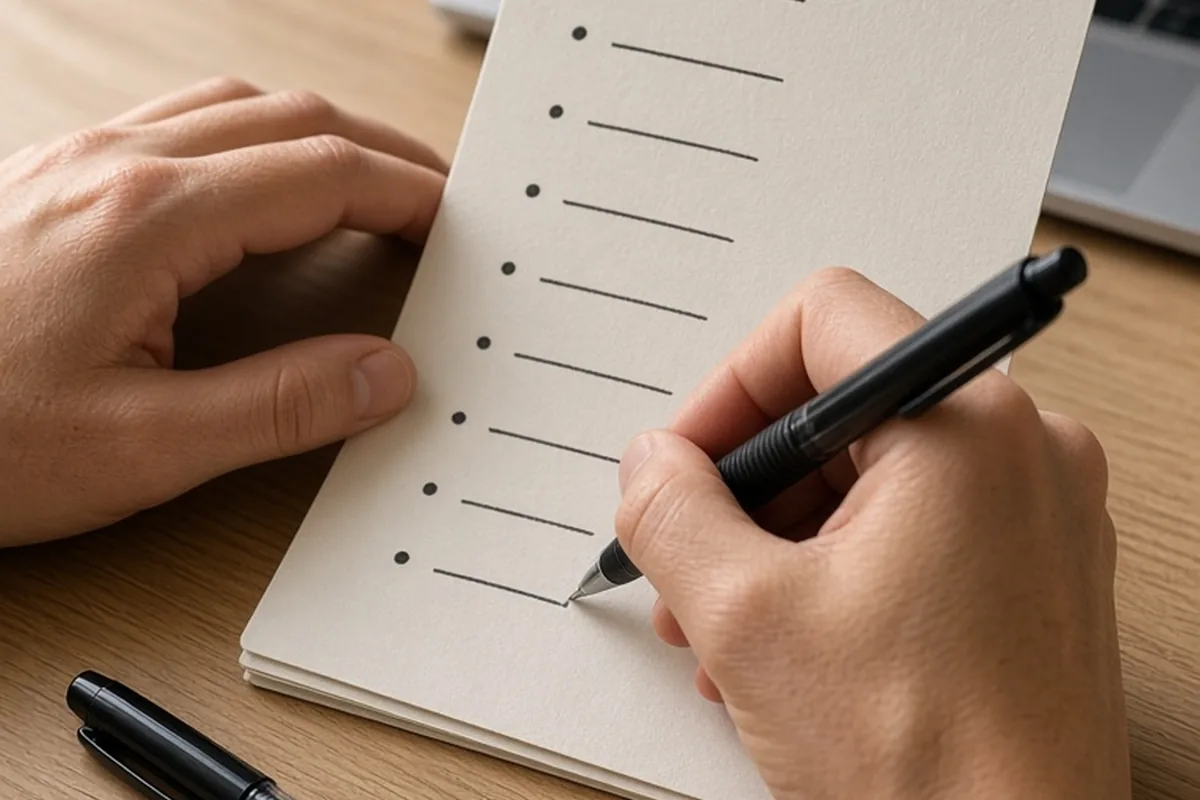
The physical format of your notes significantly influences your presence. Avoid reading directly from a smartphone. Illuminated phone screens cast unflattering light on your face, encourage rapid scrolling, and make you appear as though you are reading an email. Instead, print your speech or write it clearly on sturdy, matte index cards using large print and wide spacing. Write out bullet points rather than full, dense paragraphs whenever possible. Bullet points force you to look up, engage the room, and speak in natural conversational cadences rather than sounding like an audio recording.
Polishing the Final Toast: How to Edit for Timing and Emotional Impact
The difference between a toast that guests remember fondly and one that tests their patience almost always comes down to length. The optimal duration for a wedding speech is between three and five minutes. In written form, this translates to roughly 450 to 650 spoken words. Once a speech crosses the six-minute mark, audience attention drops dramatically, dinner service can get delayed, and guests begin checking their watches. Editing is not about stripping away your personality; it is about distilling your stories so that every single sentence earns its place.
To refine your draft, read it aloud with a stopwatch at least four times. Reading silently in your head takes roughly half the time of reading out loud to a room, which leads many speakers to vastly underestimate their running time. Practice in front of a neutral listener who does not know the couple intimately. Ask them two specific diagnostic questions: Did any joke feel confusing or unearned, and did the ending leave you feeling warm? If a joke requires two background sentences just to make sense, eliminate the joke entirely.
Your final closing words should leave an unmistakable emotional impression. Transition from your narrative into your blessing with clarity and poise. A strong closing formula acknowledges the road ahead while celebrating the present: 'May your shared home be full of laughter, may your patience outlast any ordinary challenge, and may you always look at each other with the same unshakeable joy that we see in this room tonight. Everyone, please raise your glasses to Alex and Taylor.' Clear, heartfelt, and memorable, this ending provides the perfect bridge back to the celebration.
Frequently asked questions
How long should a funny wedding toast be?
A wedding toast should ideally last between three and five minutes, which corresponds to roughly 450 to 650 spoken words. Keeping your speech within this window ensures your jokes land with punchiness, your message remains focused, and the reception schedule stays on track.
What should I do if a joke falls flat during my speech?
If a joke does not get the laugh you anticipated, keep your composure, smile, and continue directly to your next sentence without pausing or commenting on the silence. Never scold the audience or explain the punchline, as moving forward with confidence immediately restores the room's comfort.
Is it acceptable to mention an ex-partner if it highlights how great the new spouse is?
No, you should never mention previous relationships, ex-partners, or past dating misadventures during a wedding toast. Introducing former partners introduces unnecessary awkwardness into a celebratory space; highlight the new spouse's wonderful qualities entirely on their own merits.
Should I memorize my wedding toast or read from index cards?
Using clean, printed index cards with bullet points is the most reliable approach. Attempting to memorize the entire speech adds unnecessary stress and risks sudden memory lapses, while cards give you a reliable safety net while allowing you to maintain natural eye contact.
Your next step
Open a blank document today and write down three specific, endearing quirks about your friend, select the single story that highlights their best qualities, and edit the draft down to under 600 words on physical index cards.