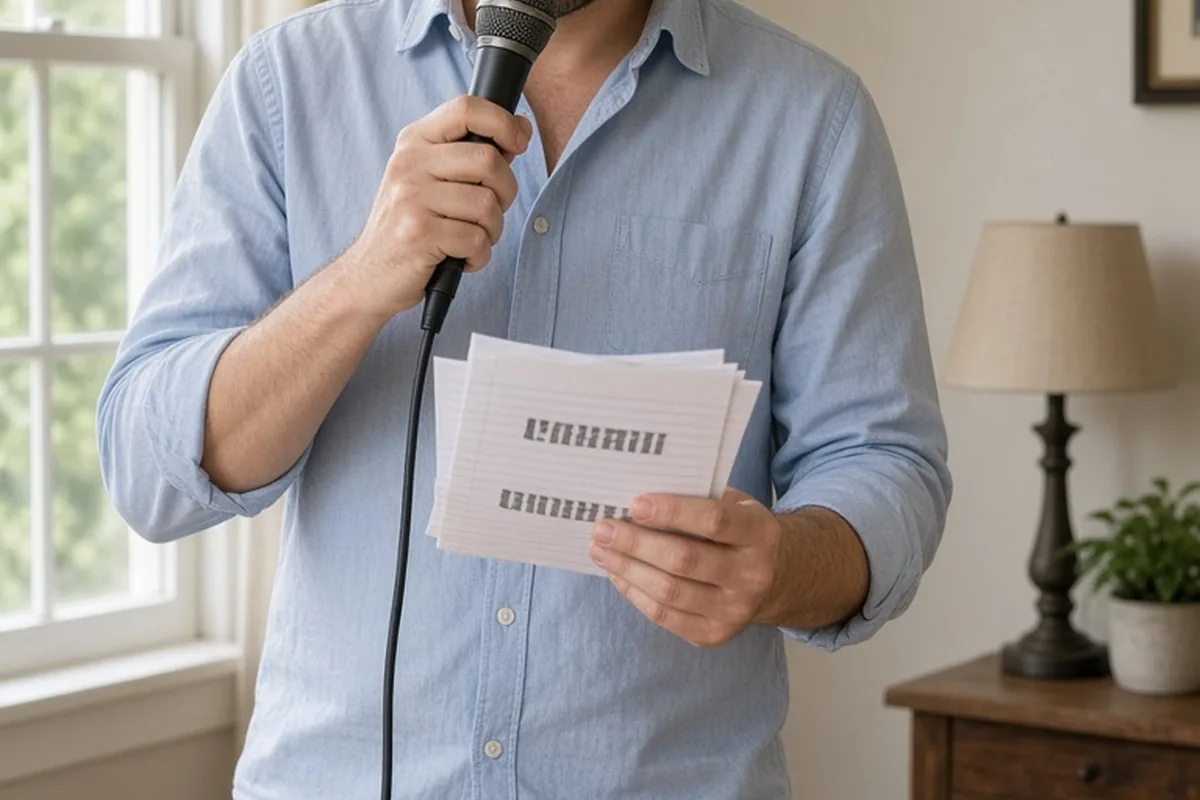
To craft a great best man toast, keep your speech between three and five minutes, balancing lighthearted humor with sincere appreciation. Focus on a brief self-introduction, one or two stories illustrating the groom's positive qualities, specific praise for his partner, and an uplifting toast to their shared future. Avoid private jokes, mentions of past relationships, and drinking heavily before taking the microphone.
Standing up to speak as best man can feel intimidating, particularly when trying to balance humor with emotional honesty before a room of family, colleagues, and lifelong friends. A successful speech does not require professional comedic timing or theatrical delivery; it simply demands thoughtful preparation, clear respect for the occasion, and an authentic focus on celebrating the couple.
Setting the Foundation: Length, Tone, and Audience Awareness
The ideal best man toast typically runs between three and five minutes, which translates to roughly 400 to 650 spoken words. Speaking for less than two minutes can make the tribute feel rushed or perfunctory, while stretching past six or seven minutes risks losing the attention of guests who are eager to eat, socialize, or hit the dance floor. Pacing yourself comfortably at around 120 to 140 words per minute ensures your words remain intelligible across a banquet hall or outdoor venue.
Understanding your audience is just as important as monitoring your timing. A wedding reception gathers diverse generations, including grandparents, coworkers, young children, and extended family members who may not know your shared history. While a quick, gentle tease about the groom's minor quirks can warm up the room, the overarching tone should remain warm, gracious, and celebratory. If a joke relies on private context that only two people at a ten-person table would understand, cut it in favor of an observation that everyone in the room can appreciate.
Selecting Stories That Showcase Character Rather Than Wild Antics
When brainstorming material, look for anecdotes that reveal who the groom is at his best. The most engaging stories illustrate consistent personality traits—such as his fierce loyalty, his quiet generosity, his peculiar organizational habits, or his steadfast dependability during challenging moments. A story about how he spent three hours helping you fix a broken car engine in the pouring rain reveals far more warmth and character than an anecdote about a chaotic college party.
Keep the narrative arc of each story straightforward and brief. Introduce the premise clearly, describe the defining moment or funny obstacle, and immediately link the outcome back to his suitability as a loving partner and friend. Limit yourself to one main story or two short vignettes that complement each other. Jumping rapidly between disconnected memories makes a speech feel fragmented and prevents the audience from emotionally investing in the message you are sharing.
Bringing the Partner and Relationship Warmth to Center Stage
A common pitfall in best man speeches is focusing exclusively on the groom and treating his new spouse as an afterthought in the final sentence. A well-rounded toast actively celebrates the union, giving equal honor to the partner who has chosen to build a life with your friend. Take time to describe the observable, positive changes you noticed in the groom once the relationship began, such as a renewed sense of purpose, a brighter outlook, or simply a persistent, unmistakable smile.
Highlight specific qualities you admire about the partner, such as their kindness, patience, welcoming nature, or how effortlessly they fit into the groom's existing community. If you know the partner well, share a brief memory that solidified your appreciation for them. If you do not know them intimately, speak to how clearly happy they make your friend and express your gratitude for the warmth they bring into his life. This inclusion honors the foundational purpose of the day: celebrating two people joining their futures.
Structuring the Best Man Speech with a Proven Four-Part Framework
A structured outline keeps your thoughts organized and prevents rambling when nerves arise. The opening section should welcome the guests, state your name, and briefly explain your connection to the groom. You can open with an expression of gratitude toward the hosts or a light, self-aware observation about the honor of standing by the groom's side. This establishes rapport with the room and gives you a steady, confident rhythm right out of the gate.
The second phase transitions into your central story about the groom, highlighting his qualities as a friend, brother, or companion. From there, move seamlessly into the third phase: introducing his partner and describing the dynamic between them. Conclude with the fourth phase, which consists of sincere well-wishes, practical wisdom or encouragement for their marriage, and a direct invitation for everyone in the room to raise their glasses. Moving deliberately through these four checkpoints ensures a complete, emotionally satisfying narrative.
Full Best Man Toast Scripts for Different Friendship Dynamics
Adapting your delivery to your natural voice makes speaking significantly easier. For a lifelong friend or sibling, a classic and sentimental approach works wonderfully. Consider an example like this: 'Good evening, everyone. My name is David, and I have had the privilege of being Marcus's brother and friend for over twenty-five years. Growing up, Marcus was always the person who thought three steps ahead—the one making sure we had a flashlight, a map, and a plan whenever we ventured outside. That steady reliability hasn't changed. When he met Elena, though, I saw a new side of him emerge—one that was ready to embrace spontaneity, joy, and openhearted laughter. Elena, you bring an incredible warmth into his world, and seeing the two of you together makes it clear why you belong by each other's side. Please raise your glasses with me to Marcus and Elena: may your life together be filled with adventure, deep laughter, and unwavering partnership.'
For a friendship defined by light humor and shared camaraderie, a witty yet balanced approach hits the right notes: 'Hello, everyone. I'm Sam, Marcus's college roommate. When Marcus first asked me to be his best man, I promised him I would keep my remarks completely honest, which meant I had to rewrite my speech three times. In all seriousness, living with Marcus taught me two things: he is fiercely loyal, and he will never admit when he is lost without checking his map five times. When he started dating Elena, however, he stopped pretending he had everything figured out and simply let himself be completely happy. Elena, you bring out the very best in him, and our entire circle of friends is so grateful to welcome you into our lives. Let's raise a glass to the newlyweds: may your love grow stronger with every passing year, and may Marcus always remember to take out the recycling.'
Delivering with Poise: Microphones, Notes, and Managing Nerves
Delivery often matters as much as the written text. Hold the microphone approximately two to three inches away from your mouth, speaking directly into the capsule rather than talking over the top of it. If you turn your head to look at the couple, ensure the microphone moves with your chin so your volume remains consistent through the venue speakers. Keep your shoulders relaxed, plant your feet firmly at shoulder-width, and take a steady breath before uttering your first sentence.
Relying on physical note cards is completely acceptable and far preferable to reading from a bright smartphone screen, which can reflect harsh glare onto your face in wedding photography. Write your key bullet points or full sentences in clear, large print on sturdy index cards. Practice reading your speech aloud at least four or five times in the days leading up to the wedding. This vocal rehearsal helps you identify awkward phrasing, plan natural pauses for laughter, and develop muscle memory that counteracts nervous adrenaline.
Content to Cut: Avoiding Landmines and Inappropriate Themes
A successful toast avoids subjects that create discomfort, tension, or embarrassment for the couple or their guests. Never reference past relationships, dating histories, or previous engagements, even in passing or as a comparative compliment. Similarly, leave out stories involving illegal activities, excessive drinking, bail money, or private disputes. If a story requires you to say 'you had to be there' or 'don't tell your parents,' it belongs in private conversation, not at a wedding reception.
Resist the urge to turn the toast into a harsh roast. While a brief, affectionate jab can demonstrate closeness, consecutive insults quickly sour the mood and place the groom in an awkward position. The focus should always return to celebration, admiration, and shared joy. Keeping your remarks clean, respectful, and focused on love ensures that both the couple and their guests look back on your contribution with genuine gratitude.
Frequently asked questions
How long should a best man toast be?
A standard best man toast should last between three and five minutes. This window provides ample time to share a personal story, praise the partner, and offer a toast without losing audience engagement or slowing reception momentum.
Is it acceptable to read the toast from note cards?
Yes, using neat note cards is standard practice and helps keep your thoughts organized under pressure. It is generally better to use printed index cards than a smartphone screen, which can create awkward reflections in photos and introduce notification distractions.
How do I write a toast if I do not know the groom's partner well?
Focus on the visible positive impact the partner has had on the groom's life, such as his happiness and growth since they met. Express sincere gratitude for how warmly they treat your friend and offer an enthusiastic welcome to the family or social circle.
When is the best time to practice delivering the speech?
Begin practicing out loud several days before the event to test your pacing and flow. Speaking the words aloud in front of a mirror or recording yourself on your phone helps pinpoint awkward transitions and ensures your delivery feels natural.
Your next step
Draft your core story and outline on index cards today, then read the draft aloud with a stopwatch to confirm it falls comfortably within the three- to five-minute window.