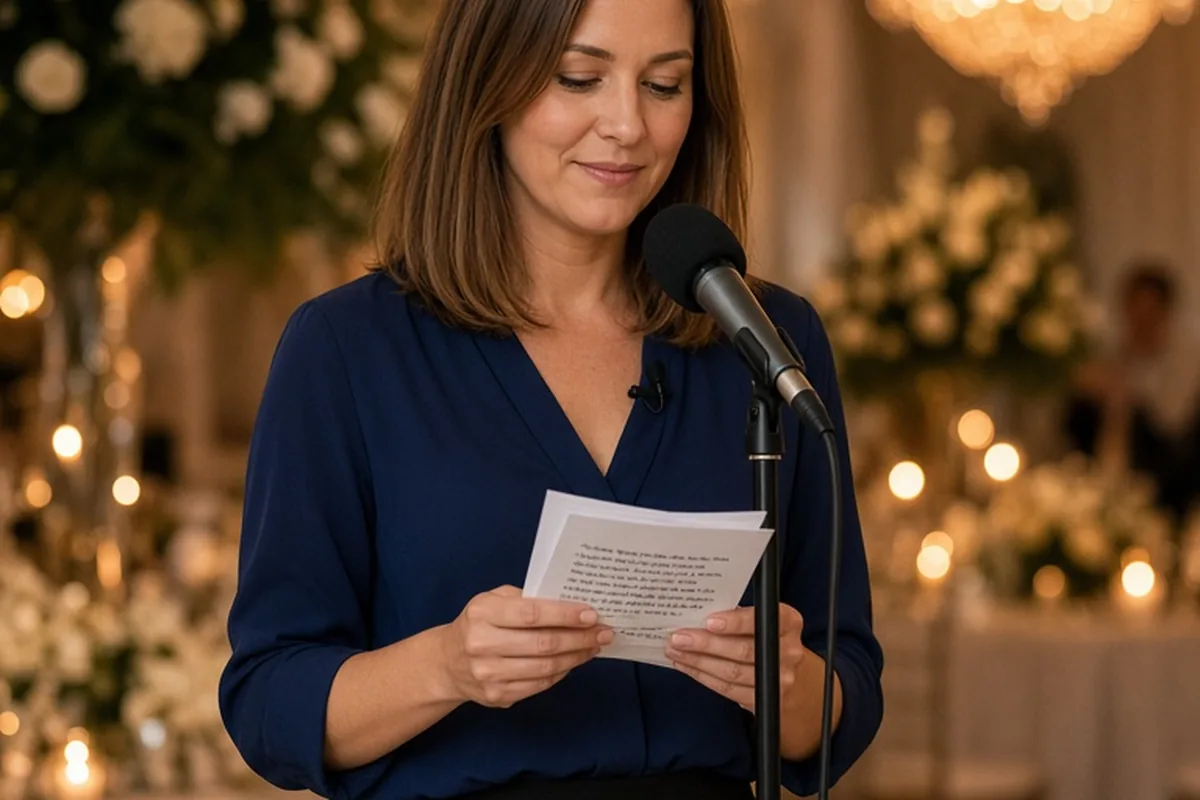
To craft a memorable Maid of Honor toast, follow a clear four-part structure: introduce yourself and your connection to the bride, share one focused story highlighting her character, describe the positive impact of her partner, and conclude with a warm, celebratory wish to the couple. Aim for a length between three and five minutes, which translates to roughly 400 to 650 spoken words, ensuring your delivery remains engaging, heartfelt, and respectful of the reception schedule.
Standing up to give a speech at a wedding can feel daunting, whether you are speaking in front of forty close relatives or two hundred acquaintances. Balancing humor, sentimental reflection, and genuine well-wishes requires deliberate preparation, but following a structured approach makes the writing and delivery process manageable and rewarding.
The Core Architecture of an Engaging Maid of Honor Speech
A successful wedding speech relies on a simple, proven framework that holds the audience's attention while keeping the spotlight where it belongs: on the couple. Most speeches derail when the speaker attempts an exhaustive biographical overview of their entire friendship. Instead of a chronological summary, an effective toast functions like a short, focused story with a clear beginning, middle, and end. The opening section introduces who you are, establishes your relationship to the bride, and expresses gratitude to the hosts or guests for coming together.
The middle section carries the emotional weight of your remarks. It should center on a single, well-chosen anecdote that illustrates the bride's personality, loyalty, humor, or generosity. Rather than listing adjectives about her character, let one specific memory demonstrate those traits in action. From there, transition seamlessly to her partner. Describe how the bride changed, blossomed, or found grounded happiness after they met, highlighting specific observations that show why they complement one another so well.
The closing section shifts the focus from individual reflections to the unified couple. This is where you bring the entire room into the moment by inviting everyone to raise their glasses. A strong conclusion offers an earnest wish for their future together, punctuated by a clear, decisive final sentence that signals to the room and the audio team that the toast has concluded.
Finding the Right Length, Word Count, and Pacing
Timing is one of the most critical elements of reception etiquette. A speech that is too brief can feel perfunctory or unprepared, while one that runs too long risks losing the room's energy and throwing off the caterer's dinner service. The sweet spot for a Maid of Honor toast is between three and five minutes. When speaking at a deliberate, conversational pace of roughly 120 to 130 words per minute, this translates to a written draft of approximately 400 to 650 words.
When rehearsing, it is common to speak significantly faster than you will on the wedding day due to adrenaline. A draft that takes three minutes to read quietly at your desk will easily stretch to four or five minutes when you account for pauses, audience laughter, emotional moments, and intentional breathing. Marking deliberate pause points on your written copy helps prevent rushing through meaningful lines or stepping over audience reactions.
If you find your draft exceeding 700 words, edit aggressively by trimming secondary details. You do not need to explain every logistical element of a past trip or introduce five different mutual friends to make an anecdote work. Cut setup details down to the bare minimum necessary for a stranger in the back row to understand the humor or sentiment of the moment.
Step-by-Step Writing Process: Brainstorming to First Draft
Staring at a blank document is often the hardest part of speechwriting. To bypass writer's block, start with a guided freewriting exercise focused on specific prompts rather than trying to write polished sentences right away. Ask yourself concrete questions: What was your genuine first impression of the bride? What is a quirky habit or steadfast quality that defines her? When did you first realize she was truly in love with her partner? What does her partner bring out in her that you have never seen before?
Once you have a list of memories and observations, select the single strongest theme. A speech built around one clear concept—such as the bride's adventurous spirit, her fierce loyalty, or her quiet thoughtfulness—feels far more cohesive than a disconnected string of random memories. Choose stories where the bride remains the hero or the endearing focus, ensuring the narrative reflects her in a positive light even when sharing lighthearted moments.
After selecting your core story, assemble your first draft out loud. Speaking your sentences as you write them ensures the language sounds natural rather than overly formal or literary. Sentences that look elegant on a page often sound stiff when spoken into a microphone. Use conversational phrasing, short sentences, and everyday vocabulary that reflects how you naturally speak with the bride.
Maid of Honor Toast Templates for Different Relationships
Different friendships and family relationships call for distinct emotional tones. Below are three adaptable templates designed to serve as foundational structures for various dynamics, which you can customize with your specific stories and memories.
Template 1: The Lifelong Best Friend 'Good evening, everyone. For those I haven't had the pleasure of meeting yet, I'm [Your Name], and I have had the privilege of being [Bride's Name]'s best friend for the past [Number] years. When [Bride] and I first met in [Year/Setting], I quickly learned two things about her: she is fiercely loyal, and she never does anything halfway. Over the years, I've watched her tackle [mention a relatable goal or shared memory] with that exact determination. But the happiest I have ever seen her was shortly after she met [Partner's Name]. I remember [Bride] telling me about their [first date/early conversation], and for the first time, she had that unmistakable glow of someone who had found their equal. [Partner], thank you for loving her so completely, making her laugh every day, and fitting so effortlessly into our lives. May your life together be filled with shared adventures, patience, and endless joy. Everyone, please raise your glasses to [Bride] and [Partner]!'
Template 2: The Sister or Relative 'Hello everyone. I'm [Your Name], [Bride's Name]'s [sister/cousin]. Growing up with [Bride], our days were filled with [shared childhood dynamic or humorous habit]. Watching her grow into the remarkable, compassionate woman standing before us today has been one of the greatest joys of my life. She has always been the person who [mention a defining strength, like listening or bringing people together]. When [Partner's Name] entered the picture, our family immediately noticed the calm, steady happiness [Bride] carried with her. [Partner], seeing the respect and devotion you show my sister makes it an absolute honor to welcome you into our family. You two bring out the absolute best in each other. Let's raise a glass to a lifetime of health, happiness, and deep love for [Bride] and [Partner]!'
Template 3: The Short, Sentimental Toast for Nervous Speakers 'Good evening. I'm [Your Name], [Bride's Name]'s close friend. I've known [Bride] through many chapters of life, and she has always been a steadfast source of kindness, humor, and support to everyone around her. When she met [Partner's Name], it was obvious to everyone who loves her that she had found her true counterpart. [Partner], the way you support and cherish [Bride] means the world to all of us. Seeing the two of you together today makes it clear that true partnership is built on mutual respect and shared joy. Please join me in raising a glass to [Bride] and [Partner]—may your love continue to grow with every passing year.'
Striking the Balance Between Humor, Sincerity, and Boundary Setting
Humor adds warmth and energy to a wedding reception, but it must be handled thoughtfully. The most effective humor in a wedding speech is gentle, self-deprecating, or lightly affectionate toward the bride. Avoid inside jokes that only three people in the room understand. If an anecdote requires two minutes of background explanation just to set up a punchline, it will alienate the rest of the guests. Instead, choose humor that touches on universal quirks that everyone in the room recognizes.
Certain topics should remain entirely off-limits. Never mention ex-partners, past relationship drama, wild partying, financial stress, or awkward family tensions, even in jest. A joke that causes momentary discomfort to the couple or their families can overshadow the sincere well-wishes that follow. A good rule of thumb is to ask yourself: Would the couple's grandparents or employers feel comfortable hearing this story? If there is any hesitation, leave it out.
Testing your material beforehand is an effective way to safeguard your speech. Read your draft to an objective friend or family member who knows the couple. Ask them to identify any lines that feel confusing, flat, or overly sharp. Their feedback will help you fine-tune the delivery and ensure the emotional tone lands exactly as intended.
Practical Delivery Strategies to Manage Stage Fright and Emotion
Experiencing physical nervousness before public speaking is entirely normal. Your body releases adrenaline, which can cause a racing heartbeat, shaky hands, or shallow breathing. To manage these physiological reactions, prepare a practical medium for your notes. Avoid reading your speech directly from a smartphone screen; notifications can disrupt your flow, screens can lock unexpectedly, and backlighting can look unflattering in photographs. Instead, print your speech on sturdy, non-rustling index cards in a large, readable font with generous line spacing.
When you step up to the microphone, take three seconds before speaking to settle your feet, look up at the room, take a deep breath, and smile. Hold the microphone roughly two to three inches from your mouth at a consistent angle, rather than pointing it toward your chest or moving it around as you gesture. If your hands shake, hold the cards with both hands or rest one hand lightly on a podium or table to steady yourself.
Plan your eye contact ahead of time. Divide your gaze naturally: spend roughly half your time looking directly at the bride and her partner, and the remaining time scanning the audience to include them in the story. If you feel yourself becoming overwhelmed by tears, simply pause, take a slow sip of water, breathe through your nose, and continue when you are ready. Audiences are naturally supportive and will gladly wait for you to collect your thoughts.
Day-of Coordination with the Wedding Planner and Audio Team
Technical hitches can disrupt an otherwise wonderful toast, so taking a few minutes to coordinate with the event team before the reception begins is invaluable. Locate the DJ, audio technician, or emcee during the cocktail hour. Confirm the order of speeches, identify which microphone you will be using (wired, handheld wireless, or lapel), and ask where you should stand when your name is called.
Find out whether there is a dedicated spotlight or designated area near the head table where the photographer and videographer have set up their framing. Standing in the designated spot ensures that your face is properly lit and that the camera captures both your expressions and the couple's candid reactions simultaneously.
Lastly, confirm that you have a fresh beverage in hand before you are called to speak so you do not have to scramble for a glass when it is time for the final toast. Once your speech ends, give the couple a warm hug, hand the microphone back to the emcee or audio assistant, and return to your seat to enjoy the rest of the celebration.
Frequently asked questions
How long should a Maid of Honor speech typically last?
A standard Maid of Honor speech should last between three and five minutes. This timeframe translates to approximately 400 to 650 spoken words, allowing enough room for a meaningful story and toast while maintaining guest engagement.
Is it acceptable to read from note cards during the toast?
Yes, using neat, printed index cards is widely accepted and recommended over memorization or reading from a phone. Index cards keep you focused, prevent forgotten lines caused by nerves, and look clean in event photos.
Should the Maid of Honor focus only on the bride or include the partner?
While the speech naturally centers around your bond with the bride, it is essential to dedicate a meaningful portion to her partner and their relationship together. Acknowledging their positive dynamic and welcoming them makes the toast inclusive and celebratory for the entire marriage.
What should I do if I start crying while giving the speech?
If emotions run high, pause speaking, take a deep breath, and take a sip of water from your glass. The audience will support you patiently while you steady your voice, and you can resume reading your prepared notes once you feel composed.
Your next step
Open a blank document today and write down three specific memories of the bride along with one observation about how her partner enriches her life, then select the single clearest story to build your opening draft.