A classic wedding ceremony order follows eight sequential stages: the prelude and processional, the welcome and opening remarks, selected readings or rituals, the officiant address, the exchange of vows and rings, the formal pronouncement, the first kiss, and the recessional. Couples can adjust this outline by shortening spoken segments, adding cultural customs, or repositioning readings to match their personal style.
A well-planned ceremony order balances meaningful personal moments with clear transitions so guests remain engaged from the first processional note to the final recessional walk.
Standard Processional and Seating Arrangements
The processional establishes the visual and emotional pacing of the entire event. As guests settle into their seats during the musical prelude, the official movement begins. In conventional western setups, the officiant, the groom, and the best man often enter first from the side of the altar area, followed by grandparents and parents who are seated in the front rows. Next, the groomsmen and bridesmaids enter, walking either individually or paired together. The ring bearer and flower girl follow immediately before the final entrance. Lastly, the bride enters, accompanied by one or both parents, an escort of choice, or walking independently.
Modern couples frequently adapt this sequence to better reflect their relationships and blended family dynamics. For instance, both partners may choose to walk down the aisle accompanied by their respective parents, or they might walk down the aisle together side by side. If you have a large wedding party, pairing attendants can keep the entry moving smoothly and avoid dragging out the processional music. It is helpful to mark designated standing spots at the altar with small, discreet markers so the wedding party naturally spaces out evenly without bunching together near the officiant.
- Traditional order: Officiant and partner one enter, followed by immediate family seating, wedding party pairs, ring bearer and flower child, and partner two with escort.
- Contemporary dual entrance: Both partners make individual grand entrances, each escorted by family members or walking solo.
- Partner walk-in: Both individuals walk down the aisle arm in arm, signaling an intentional shared entrance.
Welcoming Guests and Setting the Tone With Opening Remarks
Once everyone reaches the altar and takes their places, the officiant delivers the opening words. This segment transitions the room from the excitement of the arrival to a shared, attentive atmosphere. The officiant typically thanks guests for traveling, acknowledges loved ones who could not attend, and invites the audience to be fully present. If the couple is hosting an unplugged ceremony, this is the exact moment for the officiant to give a warm, polite reminder asking everyone to silence and put away phones and cameras so the professional photographer can work uninterrupted.
The welcome often flows directly into a short statement on community support or a brief framing of what the marriage represents to the couple. Some couples include an escort acknowledgment here, where the officiant asks who presents or supports the individuals entering the marriage. Rather than using outdated language, modern ceremonies often invite all parents or families to stand briefly and give their collective blessing. This keeps the opening welcoming, inclusive, and grounded in mutual respect.
Selecting Readings, Reflections, and Officiant Addresses
Following the welcome, the ceremony shifts into thematic storytelling through spoken readings and the officiant address. This part gives depth to the event, offering space to reflect on commitment, partnership, and shared values. Couples can invite one or two close friends or family members to read a meaningful passage, poem, or literary excerpt. Choosing readers who are comfortable speaking in public ensures the words are delivered clearly and with genuine emotion.
The officiant address—often called the homily in religious services or the reflection in secular ceremonies—usually lasts between three and seven minutes. During this address, the officiant might share anecdotes about how the couple met, the hurdles they navigated together, or the everyday qualities that make their bond strong. Keeping this address focused and personal prevents the middle portion of the ceremony from feeling repetitive or overly drawn out.
- Poetry and literature: Select passages that express enduring partnership rather than idealized romance.
- Personal letters or blessings: Ask a close friend or mentor to share a brief, pre-approved reflection.
- Officiant reflection: A curated narrative celebrating the couple's history and shared future vision.
Structuring the Declaration of Intent, Vows, and Ring Exchange
The declaration of intent and the exchange of vows form the legal and emotional core of the ceremony order. The declaration of intent consists of the classic 'I do' questions, where each person affirms their voluntary commitment to enter the marriage. This formal confirmation can take place either right before the vows or immediately following them, depending on the officiant's script and local legal guidelines.
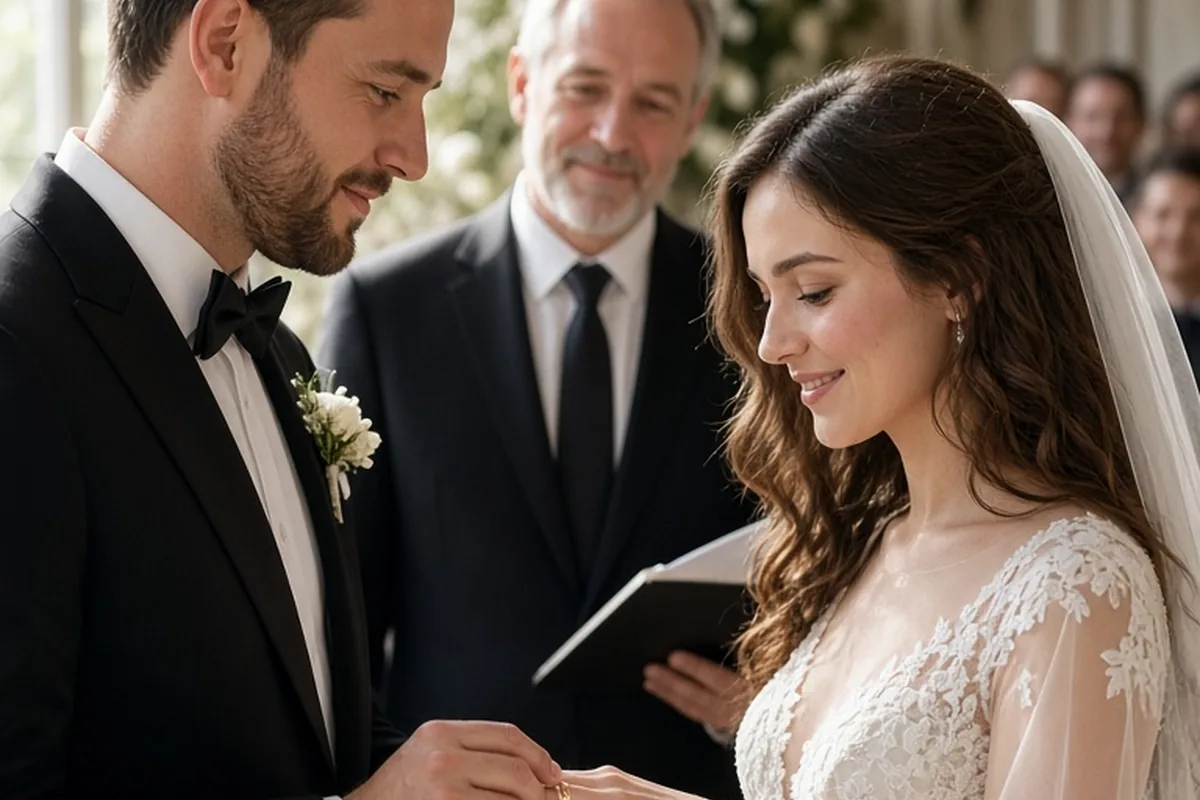
For the vows themselves, couples generally choose between traditional repeating vows, custom written personal vows, or a hybrid of both. When writing personal vows, aim for a length of roughly one to two minutes per person, focusing on specific promises, shared inside jokes, and long-term commitments. After the spoken promises, the best man or designated attendant hands the wedding bands to the officiant. As each partner places the ring on the other's finger, they repeat a short sentence cementing the ring as an outward symbol of their lifelong promise.
Incorporating Unity Traditions and Cultural Custom Elements
Unity rituals and cultural traditions provide visual variety and honor heritage within the ceremony flow. These elements fit most naturally between the vows and the final pronouncement, serving as a symbolic physical representation of the spoken commitments. Common rituals include unity candle lighting, handfasting cord ceremonies, blending colored sands, or planting a sapling together in soil brought from family homes.
Cultural traditions bring distinct rhythm to this portion of the timeline. For example, in a Jewish ceremony, this is where the seven blessings (Sheva Brachot) and the breaking of the glass take place. In Filipino ceremonies, the blessing of the veil, cord, and coins (arras) is woven into the liturgy. When planning these elements, confirm who will hold props, ensure table surfaces at the altar are stable, and verify that any open flames comply with venue fire safety policies.
- Unity candle: Both partners take individual candles lit by family members to ignite a single center pillar candle.
- Handfasting: An ancient Celtic tradition where ribbons or cords are bound around the couple's joined hands.
- Glass breaking: A meaningful closing custom where a wrapped glass is crushed underfoot, followed by celebratory cheers.
- Cord and veil ritual: Symbolic draping of fabric and a cord over the couple to represent protection and oneness.
Managing the Pronouncement, First Kiss, and Recessional Exit
The conclusion of the ceremony happens quickly and carries the highest energy of the entire gathering. After the rings and rituals are complete, the officiant delivers the official pronouncement of marriage, declaring the couple legally and publicly united. This leads directly into the invitation for the first kiss. To ensure great photos, it helps if the officiant steps slightly to the side before announcing the kiss so they do not appear directly between the couple in the photographer's central frame.
Following the kiss, the officiant introduces the newly married couple to the guests using their preferred names and titles. Upbeat recessional music begins immediately as the couple walks back up the aisle together, smiling and greeting their cheering guests. The wedding party follows in reverse order of how they entered, followed by immediate family rows. The couple should walk completely past the back row and into a private staging area before stopping to hug friends, preventing an immediate bottleneck in the aisle.
Tailoring Timelines for Non-Denominational, Religious, and Micro Ceremonies
The ideal length and structure of your ceremony order depends largely on the format of your wedding. A standard non-denominational or civil ceremony typically runs between 15 and 25 minutes, providing ample time for personal vows, two readings, and music cues without causing guest restlessness. Micro-weddings and elopements often streamline this to 10 to 15 minutes by focusing exclusively on the personal promises, ring exchange, and pronouncement.
In contrast, formal religious ceremonies, such as a traditional Catholic Nuptial Mass or an elaborate Hindu wedding ritual, can range from 45 minutes to over an hour and a half. These ceremonies contain specific liturgical elements, communion rites, or multi-step ancestral blessings that must follow strict theological orders. When coordinating a longer service, consider providing printed programs so guests unfamiliar with the specific customs or languages can follow along comfortably.
- Elopements and micro-weddings: 10 to 15 minutes; streamlined structure focused on vows and intent.
- Standard civil or secular ceremonies: 15 to 25 minutes; balanced flow with readings, stories, and personal vows.
- Formal religious services: 45 to 90 minutes; includes choral pieces, sacred texts, communion, or multi-stage blessings.
Ceremony Rehearsal Logistics and Vendor Cue Sheets
A flawless ceremony order requires active coordination among your officiant, musician or DJ, coordinator, and photographer. During the rehearsal, run through the full entrance and exit at least twice. Have attendants practice their walking pace, spacing, and hand placement when holding bouquets or rings. Verify where parents sit and who will take the bride's bouquet before the vow exchange so hands are free for the ring placement.
Create a simple one-page cue sheet for your sound engineer, musicians, and officiant. This document should list exact musical cues for the seating of parents, wedding party entrance, partner entrance, and the celebratory recessional. It should also note whether the marriage license signing takes place publicly during the service or privately right after the recessional, ensuring the necessary witnesses and legal documents are organized in advance.
- Music cue sheet: List the specific song, timing, and visual entrance cue for each transition.
- Microphone plan: Decide whether the officiant wears a lapel mic and whether a handheld mic on a stand is available for readers.
- License coordination: Assign a reliable attendant to bring the legal marriage license, blue or black pens, and coordinate the required witnesses.
Frequently asked questions
How long should a standard wedding ceremony last?
Most modern civil and non-denominational ceremonies last between 20 and 30 minutes from the start of the processional to the recessional. Religious or formal liturgical services typically run between 45 and 60 minutes depending on musical performances and sacraments.
When should the marriage license be signed during the ceremony order?
In most western weddings, signing the marriage license occurs immediately after the recessional in a quiet side room with the officiant and legal witnesses. However, some couples choose to incorporate the signing into the live ceremony on a small decorative table before the final pronouncement.
Can we write our own vows and still use traditional vows?
Yes. Many couples choose to read their personal vows to each other first, followed immediately by the traditional repeating vows guided by the officiant during the ring exchange. This combines heartfelt individuality with classic formal commitments.
What is the best way to handle uncooperative flower girls or ring bearers in the order?
Have young children walk down the aisle holding an older sibling or parent's hand, and seat their parents near the front aisle seat so the child can go directly to them rather than standing at the altar for the full ceremony.
Your next step
Draft a personalized ceremony timeline with your officiant and distribute an annotated musical cue sheet to your wedding coordinator and musicians before the rehearsal.