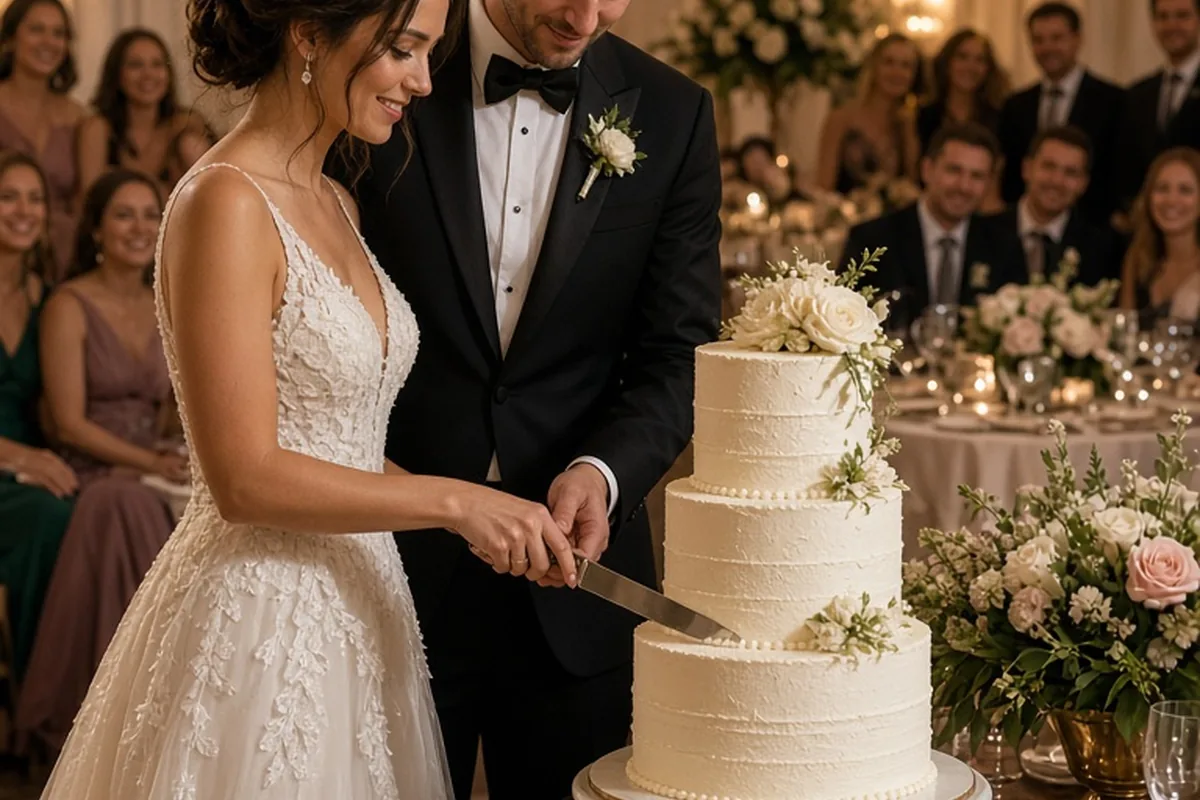
Crafting the perfect wedding reception program requires balancing structured formal moments with unhurried social time. A standard four-to-five-hour reception typically flows from cocktail hour into grand entrances, followed by a welcome, dinner service interspersed with toasts, traditional formal dances, cake cutting, and open dance floor sets. The key to a seamless event is assigning realistic time windows, capping speeches at three to five minutes, and building fifteen-minute buffers so minor kitchen or transport delays never derail the evening.
A well-structured reception program gives guests a clear sense of progression while protecting the couple from feeling rushed through their own celebration. When the timeline balances dining, entertainment, and personal traditions, the evening feels effortless, engaging, and memorable for everyone in the room.
Standard Reception Sequence and Realistic Time Allocations
A traditional evening reception lasts between four and six hours, depending on venue curfews and catering packages. The celebration begins immediately following the ceremony with a cocktail hour, which typically runs for sixty minutes. This window serves two essential functions: it allows catering staff to circulate drinks and hors d'oeuvres to arriving guests, and it gives the couple, wedding party, and immediate family dedicated time for formal photography without leaving attendees waiting in an empty room. If family portraits take longer than expected, extending cocktail hour beyond seventy-five minutes often leads to restless guests and depleted bar supplies, so keeping this segment strictly within sixty to seventy minutes is ideal.
Once cocktail hour concludes, guests are invited into the main dining area, an operational step that routinely takes fifteen to twenty minutes for a room of one hundred to two hundred people. The master of ceremonies or band leader then announces the grand entrance of the couple and optional wedding party, which takes approximately five minutes. Moving directly from the entrance into a brief two-minute welcome or a combined first dance sets an immediate celebratory tone before dinner service begins.
The dining portion of the evening generally commands ninety minutes to two hours, depending heavily on the meal format. Toasts are often woven into the later stages of dinner when guests already have food and a fresh drink. Following the meal, formal traditions such as parent dances and the cake cutting occupy ten to fifteen minutes, opening the dance floor for the remaining one and a half to two hours of the night. Scheduling a clear last call fifteen to thirty minutes prior to the grand exit ensures a smooth wrap-up.
Balancing Plated Dinners, Buffets, and Meal Service Timing
The catering style chosen dictates the entire middle block of the reception schedule. A multi-course plated dinner requires precise coordination between the kitchen, banquet servers, and the master of ceremonies. Plated service generally takes longer from first plate dropped to final dessert cleared, averaging forty-five to seventy minutes depending on guest count and staffing ratios. Scheduling speeches during the transition between salad and the main entree, or between the entree and dessert, keeps the energy alive and prevents long periods where guests sit waiting without entertainment.
Buffet and family-style meals require a completely different timeline strategy. Releasing tables to a buffet line takes time; sending one hundred and fifty guests through two double-sided buffet lines typically requires thirty to forty-five minutes. If speeches are attempted while half the room is standing in line or walking with full plates, the room becomes noisy and distracted. For buffet formats, it is far more effective to let every table retrieve their food and eat for at least fifteen minutes before tapping a microphone for formal remarks.
Late-night food stations, if included, should be timed approximately sixty to ninety minutes before the reception concludes. Introducing sliders, pizza, or taco stations too early can interrupt dinner digestion, while serving them too late risks significant food waste as guests begin leaving. Announcing late-night snacks through the DJ ensures that active dancers refuel without requiring a formal pause in the music.
Structuring Welcomes, Toasts, and Speeches Without Guest Fatigue
Speeches are often the emotional centerpiece of a reception, but unchecked toast lengths represent the most common reason reception schedules collapse. Three to four speakers is standard: typically the host or parents giving a brief welcome, followed by the maid of honor and best man, and concluding with a short thank-you from the newlyweds. Setting clear expectations with each speaker in advance—specifically requesting that remarks remain between three and five minutes—keeps the total speaking block under twenty minutes.
Placement within the program directly affects how toasts are received. Grouping all speeches into one long block before dinner starts risks losing the attention of hungry guests who have already been standing during cocktail hour. Conversely, holding all speeches until after dinner delays the open dance floor. Splitting speeches into two short pairs—such as parental welcomes during the first course and wedding party toasts right after main course plates are cleared—maintains momentum while giving speakers an attentive audience.
Equally important is microphone management. Handing a wireless microphone to an unvetted guest for an open-mic format carries high risks of rambling anecdotes and schedule delays. Designate the master of ceremonies or DJ to retain control of the microphone, introducing each scheduled speaker by name and stepping in smoothly to transition back to background music as soon as a toast concludes.
Managing the Transition from Formal Traditions to Open Dancing
The shift from formal seated programming to open dancing is a critical hinge point in the evening. If the formal dances, such as the couple's first dance, father-daughter dance, and mother-son dance, are scattered across multiple hours, the room continually resets between high energy and seated observation. Grouping these moments strategically allows the energy to build naturally toward a packed dance floor.
One popular approach is hosting the couple's first dance immediately upon entering the room, while all eyes are already focused on the newlyweds. Parent dances can then be staged immediately following the conclusion of dinner and toasts. Once the final parent dance concludes, the DJ or band can immediately transition into a high-energy, multi-generational dance track that invites everyone onto the floor, eliminating any awkward lull where guests wonder whether they are permitted to stand.
Secondary traditions like the bouquet toss, garter toss, anniversary dance, or cultural circle dances should be placed carefully within the dance sets. Dropping a bouquet toss twenty minutes into the first dance set breaks up early momentum. A better approach is placing optional traditions midway through the open dance portion, roughly forty-five minutes after dancing begins, when guests naturally appreciate a short pause to refresh their drinks.
Coordinating the Master of Ceremonies, DJ, and Venue Coordinator
A written reception program is only as effective as the communication between key operational leads: the venue banquet captain, the lead caterer, the photographer, and the master of ceremonies or DJ. The DJ or band leader acts as the public timekeeper, guiding guest attention with announcements, while the banquet captain manages food temperature and bar queues behind the scenes. If the DJ announces the cake cutting before the catering team has brought out dessert plates and cutting utensils, the program stalls visibly.
To prevent missteps, the couple or their planner should distribute a unified, minute-by-minute timeline to all vendors at least one week prior to the event. This document should highlight vendor trigger cues rather than just clock times. For example, the timeline should specify that the DJ checks with the photographer to ensure they are in position with fresh camera batteries before introducing the first dance or toast.
Similarly, the catering lead must signal when the kitchen is ready before the DJ announces transitions between courses. Establishing a quick five-minute vendor check-in during the tail end of cocktail hour allows the coordinator, DJ, photographer, and catering manager to sync watches, review any last-minute adjustments, and confirm who will cue the couple for upcoming moments.
Building Buffer Time for Inevitable Delays and Logistics
Almost every live event encounters minor delays, such as a traffic slowdown on the shuttle route between ceremony and reception, a bustling bustle that takes ten minutes longer than anticipated, or a kitchen course that requires an extra five minutes under heat lamps. A rigid program with zero margin for error forces couples to rush through meaningful moments or pay costly overtime fees to venue staff and photographers.
Strategic buffering involves building implicit flex time into the schedule without labeling it as downtime. Adding five extra minutes to room transitions, allocating ten minutes more than strictly necessary for dinner clearance, and scheduling photo groupings with small cushions creates fifteen to twenty minutes of hidden elasticity. If the reception runs precisely on time, that extra buffer simply translates to more open dancing time for guests.
Couples should also establish a prioritized list of expendable elements with their coordinator. If the timeline is compressed due to external factors, knowing in advance whether to skip the formal cake cutting announcement or shorten a background music set allows decisions to be made smoothly without causing stress during the party.
Adapting Reception Programs for Cultural Traditions and Multi-Course Feasts
Reception programs must remain flexible when incorporating distinct cultural, religious, or culinary traditions that deviate from standard Western timelines. For example, traditional Chinese wedding banquets featuring eight to ten distinct courses require deliberate pacing to allow guests to savor each dish, with the couple frequently visiting each table for individual toasts between courses. In these formats, open dancing is often secondary to social dining and tabletop engagement.
Similarly, Greek, Jewish, Indian, or Italian receptions often feature high-energy dancing and cultural rituals—such as the Hora, Baraat receptions, money dances, or the Tarantella—early in the evening before food is served. In Jewish weddings, launching into an energetic Hora immediately after the grand entrance sets a communal tone, followed by dinner service once guests have caught their breath. When planning these celebrations, program designers should consult family elders or experienced cultural coordinators to understand the customary order and expected duration of each ritual.
Regardless of the specific cultural elements included, the golden rule of timeline design remains constant: communicate expectations clearly to all guests. If a reception involves extended standing rituals, multi-hour dining courses, or distinct regional customs, providing a brief printed outline on the menu card or wedding website ensures guests understand the flow of the evening and feel included throughout the event.
Frequently asked questions
How long should a standard wedding reception last?
Most standard wedding receptions last between four and five hours, typically broken down into a one-hour cocktail period, roughly two hours for seating, dining, and toasts, and one to two hours of open dancing. Extended celebrations of six hours or more usually require additional late-night catering and bar extensions to sustain guest energy.
When is the best time to cut the wedding cake?
The most practical time to cut the cake is toward the end of dinner service, right before or immediately following the formal dances. Cutting the cake at this point gives the catering staff sufficient time to slice and plate the dessert in the kitchen so it can be served as dancing gets underway.
Should the couple's first dance happen before or after dinner?
Both options work well depending on the desired tone. Performing the first dance immediately after the grand entrance capitalizes on the room's undivided attention and transitions quickly into dinner. Placing the first dance after dinner acts as a natural kickoff to open dance floor sets.
How do you handle wedding toasts that run over their time limit?
Preventing long toasts starts with clear pre-wedding communication, asking speakers to prepare remarks of three to five minutes. On the day of the event, the master of ceremonies or DJ can politely guide the speaker back toward concluding their toast and smoothly transition music back on if a speaker wanders excessively.
Your next step
Draft an initial chronological outline of your reception segments and share it with your caterer and DJ to verify kitchen prep times and musical pacing before finalizing printed schedules.