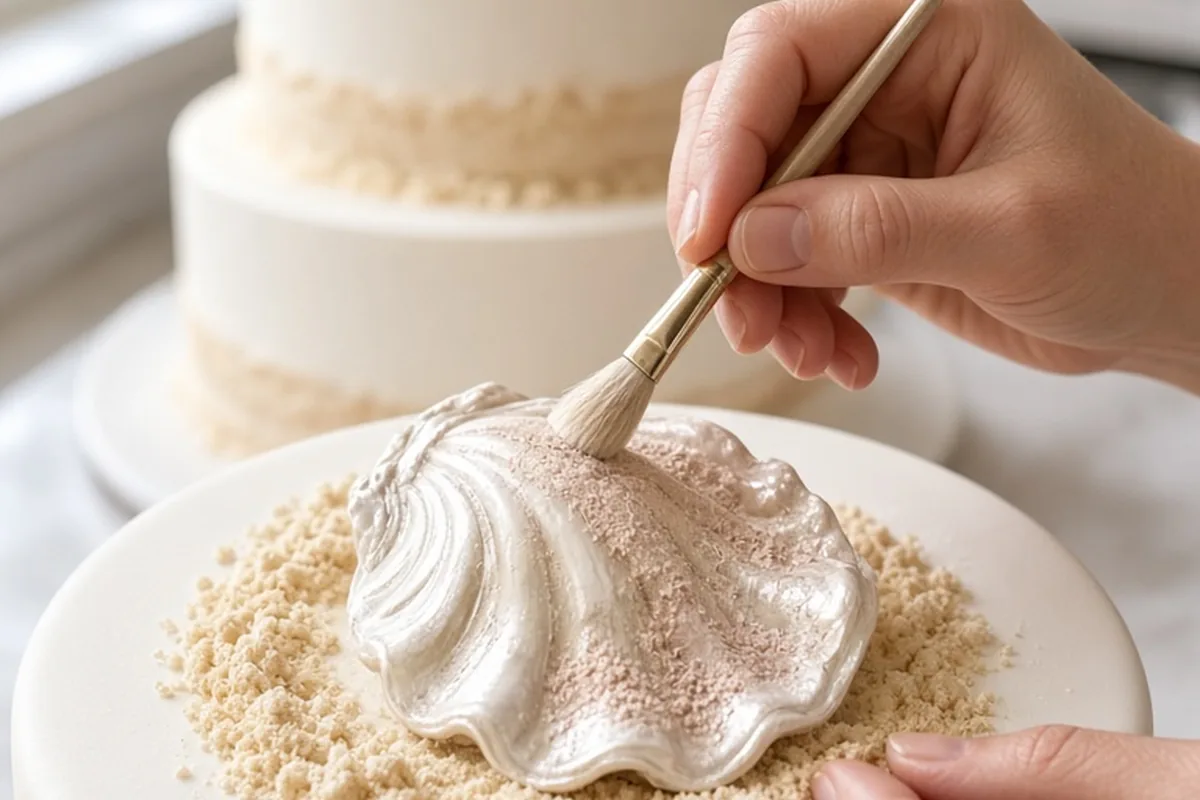
To create a stunning seashell wedding cake for a beachside celebration, sculpt or cast edible shells using tempered white chocolate, fondant, or gum paste, accented with edible luster dust. Pair these accents with a heat-stable base frosting like Italian meringue buttercream or white chocolate ganache to withstand coastal humidity. Incorporate realistic textures like crushed wafer sand and isomalt sea glass, ensuring delicate decorative pieces are placed on-site away from direct sunlight.
A coastal wedding provides a naturally scenic backdrop, but outdoor conditions like ocean breezes, direct sun, and high humidity require careful planning when designing a centerpiece cake. Balancing realistic maritime artistry with structural reliability ensures your dessert looks striking in photographs and stays pristine until the final slice.
Choosing the Best Medium for Edible Seashell Accents
The medium you select for your seashell accents directly affects both the realistic detail of the cake and its durability in warm weather. Tempered white chocolate and candy melts are popular choices because they capture micro-textures from silicone molds with exceptional clarity, producing a natural gloss that mimics wet sea life. White chocolate holds up moderately well in mild temperatures, but it can soften if exposed to direct sunlight or ambient heat above seventy-eight degrees Fahrenheit. For cooler seaside evenings or indoor coastal ballrooms, chocolate shells provide rich flavor and crisp detail.
Gum paste and pastillage offer superior structural rigidity when dried thoroughly, making them ideal for delicate, thin structures like scallop edges, fragile sand dollars, or branching sea coral. Because gum paste dries hard and retains its shape without melting, it eliminates the risk of sagging under warmth. However, sugar pastes absorb ambient moisture quickly in damp coastal air; if left exposed to ocean mist or severe humidity, they can lose their firmness and become tacky. Modeling chocolate presents a forgiving middle ground that allows seamless hand-blending of shell ridges, though it benefits from being blended with a small portion of fondant to increase heat resistance.
Molding, Texturing, and Painting Realistic Shell Details
Achieving an authentic coastal look relies on subtle color variation and organic imperfections rather than uniform, solid-colored pieces. High-grade food-safe silicone molds created from real sea shells, starfish, and conches provide deep grooves and crisp ridges that flat cutters cannot replicate. Lightly dust your molds with cornstarch or powdered sugar before pressing in your fondant or gum paste to ensure clean release without warping the intricate hinge markings or spiral tips. For chocolate shells, tap the filled silicone mold firmly against your work surface to eliminate tiny air bubbles that disrupt the surface sheen.
Once your shells are formed and set, painting brings them to life. Instead of applying heavy wet food coloring, use dry petal dusts and pearlescent luster dusts applied with soft, dry pastry brushes. Layer shades of ivory, soft taupe, pale blush, and sandy beige into the natural crevices of the shells, buffing off excess powder from the high points to create realistic depth. A final dusting of edible pearl sheen replicates the iridescent interior of oyster and abalone shells, catching the venue lighting without looking artificial or overly synthetic.
Crafting Complementary Textures: Edible Sand, Sea Glass, and Coral
A cohesive seashell wedding cake extends beyond individual shells to include surrounding beach textures that tie the design into the cake tiers. Edible sand is easily created by pulsing vanilla wafers, graham crackers, or shortbread cookies in a food processor alongside a hint of golden brown sugar and raw turbinado sugar. The varied grain sizes of crushed biscuit and crystal sugar mimic the uneven texture of natural shoreline sand. This mixture can be adhered around the tier bases or cascaded across diagonal ledges using a light brush of edible piping gel or clear confectioner glaze.
To introduce maritime color contrast, incorporate edible sea glass and branching sea fans. Sea glass is made by boiling sugar syrup or melting isomalt nibs, adding a drop of turquoise, seafoam, or pale amber gel color, pouring the liquid onto a silicone mat to cool, and breaking it into irregular shards. Tumble the shards in powdered sugar and brush away the excess to achieve the frosted, wave-worn patina of true beach glass. Branching coral can be piped using royal icing or melted candy coating onto parchment paper, allowed to set completely, and gently embedded behind clusters of shells to add vertical dimension.
Selecting Frostings and Foundations for Coastal Weather
Outdoor seaside celebrations present environmental challenges that can compromise standard cake finishes. Traditional American buttercream, which relies heavily on powdered sugar and butter, easily forms a crust that cracks in coastal wind and melts under strong sunlight. Swiss meringue buttercream offers a silkier, sophisticated finish, but its high butter content still leaves it vulnerable to temperatures exceeding seventy-five degrees. For warm or humid beachside marquees, Italian meringue buttercream provides enhanced heat stability because the sugar syrup is cooked to the soft-ball stage before whipping, yielding a denser, more resilient structure.
Firm white chocolate ganache or smooth fondant over ganache provides the strongest defense against outdoor elements. A ganache base seals in the cake layers, creating a firm barrier that prevents tiers from shifting, bulging, or sweating when moved between chilled prep kitchens and ambient outdoor air. If you choose a fondant exterior, ensure the cake is kept in a climate-controlled room until shortly before presentation, as rapid temperature transitions can cause condensation to bead on the sugar paste surface.
Color Palettes That Elevate Coastal Elegance
A stunning beachside cake balances oceanic inspiration with classic bridal elegance by avoiding overly bright, cartoonish tropical tones. Soft neutral palettes combining ivory, cream, muted beige, and champagne allow the intricate sculpting of the shells to remain the focal point while harmonizing with coastal surroundings. Monochromatic white-on-white designs, where white chocolate shells rest against textured white buttercream or stucco-finished fondant, offer a sophisticated look suited for upscale oceanfront resorts.
If you want to incorporate coastal colors, consider a subtle ombré transition or watercolor wash. Soft seafoam green, misty ocean blue, or muted slate gray can be airbrushed or sponged lightly onto the lower tiers, fading gradually into crisp white near the top. Metallic accents, such as edible gold leaf or rose gold edges on oyster shells and edible pearls, add a refined shimmer that elevates the design from casual beach party to formal wedding centerpiece.
Flavor Pairings Inspired by Seaside Settings
The interior flavor profile of your wedding cake should complement the breezy, refreshing ambiance of a coastal gathering. Heavy, dense options like spiced molasses or heavy chocolate fudge can feel rich for a warm outdoor reception. Instead, opt for bright, citrus-infused sponges like lemon zest butter cake, key lime chiffon, or orange blossom genoise, paired with fruit curds or berry compotes that provide a refreshing, palate-cleansing contrast.
Tropical and coastal-themed flavors can also be introduced through subtle fillings without overwhelming traditional wedding tastes. Coconut sponge cake layered with passion fruit curd and white chocolate mousse offers a balanced flavor profile, while a classic vanilla bean sponge enhanced with salted caramel buttercream nods subtly to maritime ocean salt. Light almond cake layered with raspberry preserve and subtle elderflower syrup remains a timeless favorite that holds up well across varying weather conditions.
Transport, On-Site Assembly, and Reception Display Safety
Safely moving a multi-tiered coastal cake requires a structured delivery strategy. Assemble and dowel the core cake tiers in a commercial kitchen, chilling the entire structure thoroughly so the buttercream or ganache is fully set before loading into a climate-controlled vehicle. Delicate protruding elements, such as brittle sugar coral, large conch shells, and delicate sea glass shards, should be transported separately in padded, moisture-proof containers to prevent breakage caused by vehicle vibrations or road bumps.
Schedule the cake arrival to allow thirty to forty-five minutes for final on-site decorating inside a shaded, climate-controlled space near the reception area. Attach the exterior shells, dust on the edible sand, and place your focal topper using a small dab of royal icing or melted chocolate. Position the display table completely out of direct sunlight, away from uncovered open-air wind corridors where ocean breezes can blow airborne sand or dust onto the frosting, and ensure the table stands on a level, solid subfloor rather than unstable loose sand or soft grass.
Illustrative Scenarios
Mitigating High Humidity at an Oceanfront Resort Reception
A couple planning a midsummer beachside reception in Florida chose a three-tier seashell wedding cake with delicate gum paste starfish and hand-painted oyster shells. Recognizing the ninety-degree heat and ocean humidity, the baker swapped standard buttercream for a white chocolate ganache foundation covered in thin fondant. The delicate sugar shells were pre-dusted in the bakery, stored in airtight containers with food-grade desiccant packets, and attached to the cake only after the display table was positioned beneath an air-conditioned shaded tent thirty minutes before guest arrival.
Key point: Using humidity-resistant structural mediums and deferring final placement of delicate sugar decor until setup prevents melting, drooping, and moisture absorption in coastal climates.
Frequently asked questions
Can I use real seashells to decorate a wedding cake?
Real seashells are not recommended for direct contact with edible surfaces because their porous structure can harbor bacteria, sand particles, and marine residues that cannot be fully sanitized. If you choose to display real shells, they should be thoroughly boiled, sanitized, sealed with a food-safe barrier, and placed on non-edible cake boards or tier separators rather than pressed into the frosting.
How far in advance can I make edible chocolate or sugar shells?
Tempered white chocolate and candy melt shells can be made up to three weeks ahead when stored in an airtight container at cool room temperature away from light. Gum paste and fondant shells can be shaped up to a month in advance, provided they are dried completely and kept in a sealed, moisture-free container with food-safe silica gel packets to prevent them from softening.
How do I prevent my beach wedding cake from melting outdoors?
Keep the cake indoors in an air-conditioned room for as long as possible before the reception begins. Use a firm Italian meringue buttercream or white chocolate ganache foundation, place the display table in full shade under a tent or canopy, and avoid cutting the cake in direct sunlight.
What is the best way to stick edible sand to the sides of a cake?
Apply a thin layer of piping gel, clear corn syrup, or freshly applied buttercream to the specific areas where you want the sand to adhere. Gently press the crushed biscuit mixture against the surface using a small offset spatula or clean parchment paper before the adhesive sets.
Your next step
Sketch your desired tier layout and test your chosen shell medium in a silicone mold this week to confirm drying times, color palettes, and structural stability before final assembly.