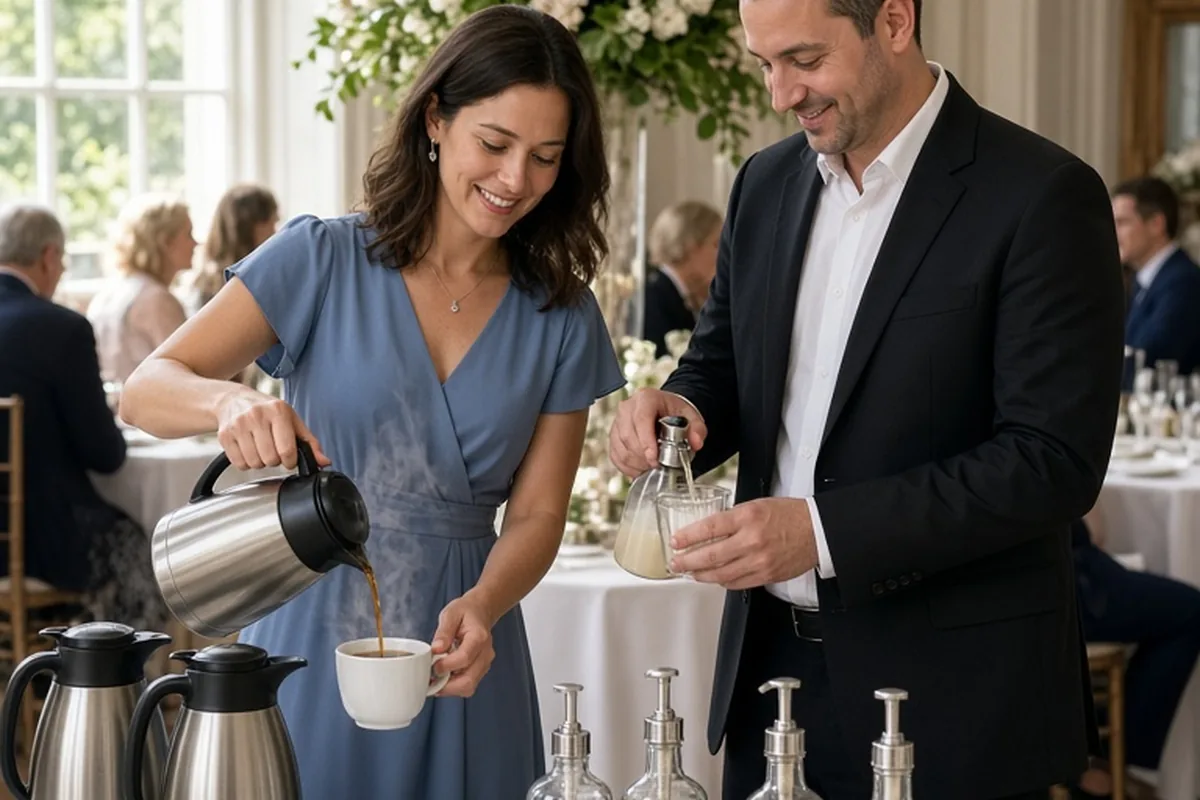
To create the perfect wedding coffee bar, decide between a full-service mobile barista cart and a self-serve beverage station, then secure your venue's electrical and space approvals. Offer a balanced menu featuring regular drip coffee, decaf, cold brew, two dairy milks, one plant-based milk, and three signature flavored syrups. Position the station away from dinner buffet lines to avoid bottlenecks, schedule service during dessert and dancing, and rent dedicated brewing equipment to keep beverages consistently fresh and hot.
A dedicated coffee station brings hospitality and energy to a wedding reception, offering warm comfort for non-drinkers and a welcome pick-me-up for guests hitting the dance floor. Whether you design a casual self-serve nook or hire an artisanal mobile espresso cart, thoughtful planning ensures seamless service that complements your timeline, budget, and reception layout.
Deciding Between a Mobile Barista Cart and a Self-Serve Station
The first major decision when planning a reception coffee service is choosing between a fully staffed espresso cart and a self-serve beverage bar. A hired mobile cart comes with trained baristas who grind beans to order, pull fresh espresso shots, steam custom milks, and handcraft lattes or cappuccinos on demand. This setup delivers an upscale cafe ambiance and guarantees drink quality, but it requires greater physical space, dedicated electrical capacity, and a vendor fee that covers labor and equipment transport.
A self-serve station, by contrast, relies on high-capacity thermal carafes, insulated cambros, or commercial percolators filled with pre-brewed hot coffee and cold brew dispensers. Guests pour their own beverages and customize them at a condiment table featuring sweeteners, creamers, and syrups. While this model is significantly more economical and fits easily into compact venues, it lacks the theater of made-to-order latte art and demands regular monitoring from catering staff to replenish milk, replace empty pots, and wipe up counter spills.
Choosing between these models hinges on your reception timeline, guest count, and service priorities. If your wedding emphasizes an extended cocktail lounge or an energetic late-night dance party where custom drinks serve as a focal point, a professional cart offers unmatched interactive appeal. If coffee serves primarily as an accompaniment to the wedding cake or late dessert buffet, a well-curated self-serve station delivers convenience without stretching your budget.
Designing a Versatile Wedding Coffee Bar Menu
A successful coffee menu satisfies both traditional coffee drinkers and adventurous guests without overwhelming the service line. For hot selections, provide one medium or dark roast drip coffee alongside a quality decaf option. Many couples overlook decaf, yet evening receptions see significant demand from older guests, pregnant attendees, and anyone sensitive to caffeine before bedtime. If you are hosting an outdoor celebration or a warm-weather reception, add kegged or pitcher-poured cold brew concentrate diluted over ice, which serves quickly and cools down dancers.
Milk and alternative dairy choices should reflect common dietary preferences. Supply whole milk and half-and-half for guests who prefer traditional richness, alongside at least one dependable plant-based alternative such as oat milk or almond milk. Oat milk is generally the most versatile choice for espresso bars because it steams smoothly without curdling and offers a neutral, creamy texture that pairs naturally with light roasts.
Flavor enhancements give the station a festive, celebratory identity. Offer three classic syrup options such as vanilla, salted caramel, and hazelnut, or introduce seasonal profiles like brown sugar cinnamon for autumn or lavender vanilla for spring. Keep unsweetened options accessible by supplying granulated sugar, raw turbinado sugar, and zero-calorie packets. If your venue permits alcohol service and you wish to offer boozy coffee drinks, coordinate with your bartending team to provide Irish cream, coffee liqueur, or spiced rum nearby rather than leaving open bottles on an unmonitored self-serve table.
Managing Venue Power, Water Access, and Space Requirements
Espresso machines and commercial coffee warmers draw substantial electrical loads that can quickly trip venue breakers if not planned in advance. Commercial single-boiler and dual-boiler espresso setups frequently require dedicated 20-amp, 110-volt or 220-volt circuits that cannot share a line with the DJ's sound system, catering warming ovens, or uplighting. Contact your venue manager early to confirm exact outlet locations and breaker panel capacities, and share these specifications with your coffee vendor before signing a contract.
Water supply is equally crucial for smooth service and equipment safety. Mobile carts generally operate on internal freshwater tanks plumbed to 12-volt water pumps, but the barista will still need access to a nearby utility sink to refill containers and dump wastewater. If you are building a DIY self-serve station in a rustic barn or outdoor tent without running water, calculate your total water volume in advance and bring dedicated five-gallon carboys of filtered water to brew fresh batches without relying on untreated outdoor spigots.
Physical footprint planning prevents crowd congestion. A mobile cart usually requires a flat, level surface measuring at least eight feet wide by six feet deep to accommodate the espresso machine, grinder, knock box, and serving ledge. For self-serve tables, allocate a six-foot banquet table for beverage dispensers and an adjacent, separate four-foot table for cups, sleeves, stirrers, and condiments so guests can customize their drinks without blocking the pouring area.
Timing the Service and Preventing Reception Bottlenecks
Coffee consumption peaks at specific windows during a wedding, particularly immediately following the meal and during late-night dancing. Opening the coffee station as dinner plates are cleared allows guests to grab warm drinks alongside wedding cake or plated desserts. If you offer a mobile barista cart with custom made-to-order drinks, opening the bar too early during dinner can result in half-empty tables as guests abandon their seats to wait for lattes.
Drink preparation speed directly affects line length. A skilled barista operating a dual-group commercial machine can produce roughly 40 to 60 made-to-order milk drinks per hour. For a wedding of 150 guests, a sudden rush after cake cutting can create a twenty-minute queue if all guests seek handcrafted lattes simultaneously. To mitigate this delay, ask the mobile vendor to brew carafes of drip coffee or batch cold brew before opening, allowing hurried guests to grab a quick cup while espresso orders are prepared.
Station placement within the reception space plays an essential role in traffic flow. Position the coffee setup away from both the main alcohol bar and the dinner buffet entrance to prevent competing queues from colliding. Placing the station near the dessert table or just outside the dance floor entrance encourages guests to grab a cup on their way back to their tables while keeping circulation pathways clear.
Organizing Cups, Condiments, and Aesthetic Details
The small practical items on your coffee bar determine whether the setup feels intentional or chaotic. Select heavy-duty double-walled paper cups or ceramic mugs, depending on your event formality and dishwashing arrangements. If you choose paper cups, eight-ounce and ten-ounce sizes are ideal; twelve-ounce cups encourage excessive volume that cools down before guests finish drinking and causes your coffee supply to deplete twice as fast. Provide matching heat sleeves, recyclable sip lids, and compostable wooden stir sticks.
Keep condiments organized in designated trays rather than scattered across the linen. Syrups dispense cleanest from pump bottles equipped with drip trays to catch stray drops before they stain tablecloths. Place open dairy containers inside bowls filled with crushed ice to keep milk safely chilled below 40 degrees Fahrenheit throughout a multi-hour reception. Replenish ice reservoirs periodically, particularly during warm outdoor gatherings, to maintain health safety standards.
Clear signage prevents confusion and keeps the line moving briskly. Display a neatly lettered menu board listing available beans, roasts, milk alternatives, and syrup options so guests can decide their order before reaching the counter. If you are offering signature beverages—such as a spiced mocha named after your dog or a honey-vanilla latte inspired by your first date—highlight them prominently with their exact ingredients to minimize questions.
Coordinating With Caterers and Managing Total Costs
Before booking an outside specialty coffee vendor, review your venue and catering contracts for exclusive vendor clauses or outside food and beverage fees. Some full-service caterers include standard drip coffee in their dinner packages and may charge a corkage or plating-style fee if you bring in an independent mobile cart. Alternatively, your caterer may be willing to upgrade their baseline coffee package with premium beans, specialty syrups, and upgraded display wares for a modest fee, saving you the expense of hiring a third party.
If you do contract an independent mobile coffee company, review the quote breakdown carefully. Estimates typically encompass a flat setup and travel fee, an hourly service rate covering baristas, and a per-guest or per-cup ingredient charge. Confirm whether the vendor provides all cups, lids, napkins, and power extension cords, or if those items fall under your rental order. Clarify disposal procedures as well; mobile carts generate spent coffee grounds and gray water that must be discarded according to venue waste rules.
For couples managing a self-serve coffee station independently, sourcing commercial-grade equipment rentals is preferable to borrowing home-use countertop coffee makers. Standard domestic machines brew too slowly and lack the heating elements necessary to keep large volumes warm for hours. Renting two 55-cup insulated percolators and four stainless-steel thermal pump pots from a local event rental company ensures fast batch brewing, consistent serving temperatures, and a cohesive, professional tabletop presentation.
Frequently asked questions
How much coffee should I prepare for a wedding reception?
Plan for approximately one to one-and-a-half cups per guest when serving coffee alongside evening dessert. If your guest list includes 120 people, prepare enough beans and supplies for 120 to 180 total servings. Expect around 60 to 70 percent of guests to choose caffeinated options, while 30 to 40 percent will prefer decaf or herbal alternatives.
Can I set up a wedding coffee bar outdoors without electrical outlets?
Yes, but you will need non-electric brewing and holding solutions or a quiet commercial generator. Pre-brew hot coffee in an indoor kitchen and transport it to the outdoor site in insulated commercial beverage dispensers, which maintain drinking temperatures for up to six hours without power. Cold brew is another excellent outdoor option that requires zero electricity to dispense over ice.
What is the best time during the reception to open the coffee bar?
Open the coffee station approximately thirty minutes before cake cutting or dessert service begins. This allows guests who do not drink alcohol to enjoy a warm beverage during dinner toasts while ensuring the station remains hot and active as the dance floor opens. Keeping the bar open for two to three hours typically covers peak demand without incurring unnecessary vendor overtime.
Your next step
Contact your venue coordinator today to verify available electrical circuits, dedicated table space, and water access points before finalizing your coffee vendor contract or equipment rental order.