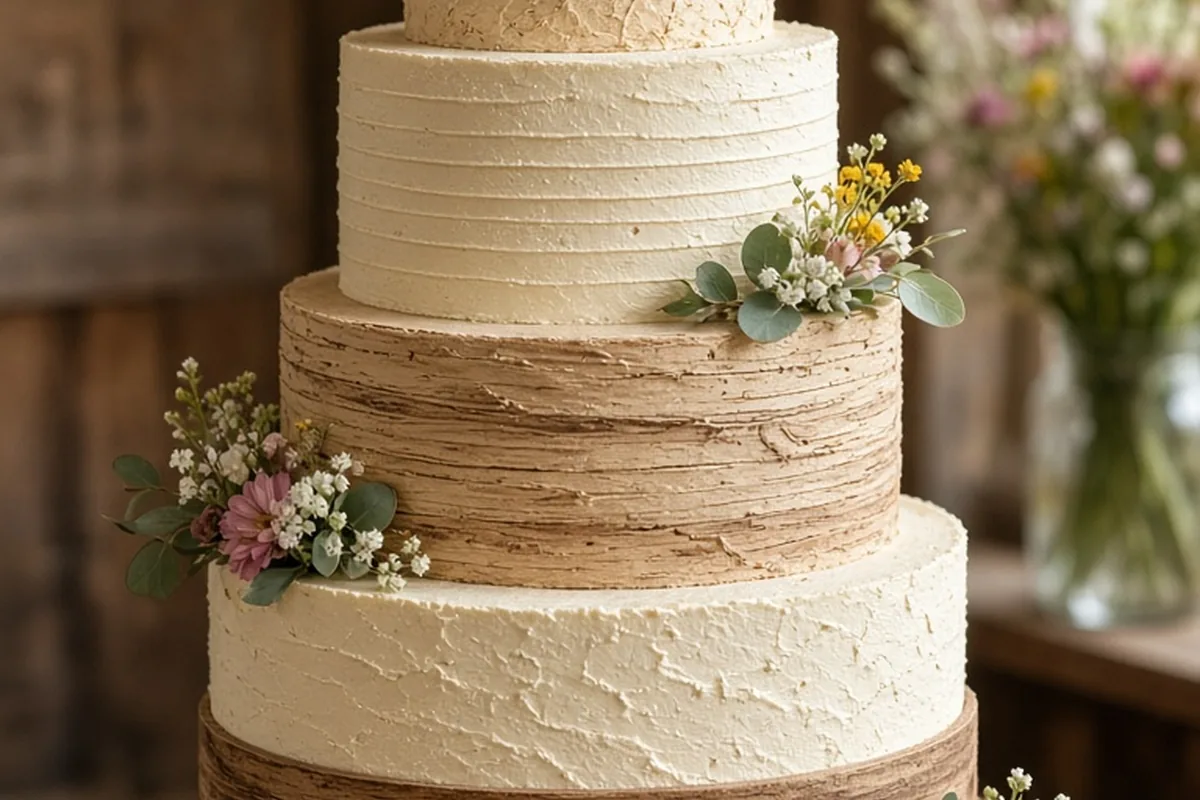
Creating the perfect country western wedding cake involves balancing rustic textures with reliable pastry architecture. Choose stable finishes like semi-naked buttercream, textured spatula frosting, or wood-grain fondant that withstand barn or outdoor temperatures. Complement these surfaces with purposeful accents, such as edible leatherwork, miniature cattle brands, fresh wildflowers, or natural wood rounds. Prioritize internal support dowels for tiered cakes, pair your design with regionally grounded flavors, and coordinate delivery timing around venue heat to ensure the display remains pristine throughout your reception.
A country western wedding celebrates personal history, warmth, and land-centered traditions, and the centerpiece confection should mirror that grounded elegance. Rather than relying on rigid ballroom confectionery conventions, couples planning a rustic ceremony benefit from designs that embrace organic textures, natural materials, and flavors inspired by home cooking.
Selecting Frosting Styles That Withstand Rustic Venue Conditions
The environment of a country wedding directly influences the decorative medium you choose for your cake exterior. Barn venues, open-air ranches, and pavilion settings rarely feature the airtight climate control of traditional banquet halls. High heat and fluctuating humidity can cause delicate whipped icings or soft Italian meringue buttercreams to soften, sag, or slide down the cake tiers. For these environments, American buttercream, crusting buttercream, or sculpted fondant provide greater stability. A semi-naked cake, where thin layers of frosting scrape back against the sponge to reveal the crumb beneath, minimizes heavy outer fat layers while naturally fitting the unfinished aesthetic of a rural setting.
If you prefer an entirely covered cake, consider textured spatula finishes such as bark grooves, horizontal ridges, or stucco swoops rather than mirror-smooth royal icing. Texturing offers two functional benefits: it mimics raw cedar, stucco, or weathered barn boards, and it easily conceals minor temperature-induced expansions during outdoor display. When opting for fondant to achieve intricate leather-tooling patterns or wood-grain painting, verify that your baker uses a moisture-resistant formulation and seals the cake board properly. Fondant can sweat when brought rapidly from an air-conditioned prep kitchen into a warm summer breeze, so keeping the cake shaded and in a well-ventilated staging area until cutting time is essential.
Country Western Wedding Cake Flavors Inspired by Rural Traditions
A country western celebration calls for cake flavors that feel comforting, generous, and rooted in seasonal agricultural staples. While standard white almond or vanilla sponge remains a reliable choice, rustic gatherings provide an ideal backdrop for earthy, spice-forward profiles. Spiced carrot cake with cream cheese filling, rich southern hummingbird cake packed with bananas, pineapple, and pecans, or a bourbon-infused brown sugar sponge instantly establish a cohesive culinary narrative for the evening. When using cream cheese fillings in warmer settings, discuss heat-tolerant substitutions with your baker, such as a white chocolate cream cheese emulsion, which maintains its structure better than standard softened dairy under ambient warmth.
Fruit pairings also bridge the connection between the dessert table and rural homestead heritage. Wild blackberry preserves, spiced apple compote, roasted peach compote, or dark cherry reductions paired with vanilla or buttermilk cakes introduce refreshing tartness against sweet butter icings. If your reception takes place in autumn, maple-soaked sponge paired with toasted pecan praline provides a deep, warming profile. For late spring or midsummer barn receptions, a light lemon cornmeal cake layered with local honey buttercream delivers a subtle, pleasant grain texture that aligns beautifully with an unpretentious, country-inspired menu.
Balancing Rustic Accents Without Overcrowding the Tiers
The boundary between authentic western style and an overcomplicated novelty cake comes down to restraint in your accent selection. A successful western cake highlights one or two thematic elements rather than piling on every available motif. For instance, if you love the look of tooled leather, commission an edible hand-painted sugar belt that wraps around the bottom tier, leaving the upper tiers finished in understated textured ivory buttercream. Similarly, if you want to feature miniature branding irons or customized initial brands, set them against a clean, wood-grain fondant tier where the mark stands out as an intentional focal point.
Natural botanical elements offer another subtle way to ground your cake design in regional flora. Sunflowers, seeded eucalyptus, thistle, dried wheat sheaves, spray roses, and sprigs of lavender soften the strong architectural lines of a tiered cake. Always confirm that any fresh foliage used on the cake is food-safe and grown organically without systemic pesticides. Your florist and baker should collaborate closely, wrapping stems in floral tape or inserting them into food-grade floral water tubes before sliding them into the sponge. Avoid plastic horseshoes, unsterilized metal hardware, or raw burlap ribbons placed directly against edible surfaces, as direct contact can transfer lint, chemical treatments, or industrial oils to the frosting.
Structural Stacking and Transport for Rural and Ranch Deliveries
Transporting a tiered wedding cake down gravel driveways, cattle grates, and winding ranch roads presents unique physical challenges. Cake decorators rely on internal doweling systems, central wooden or plastic support rods, and thick composite baseboards to ensure tiers do not shift laterally during transit. For cakes taller than three tiers, consider asking your baker to transport the tiers in separate insulated carrying boxes and assemble the stack on-site. This modular approach significantly lowers the risk of structural collapse caused by rough vehicle vibration or steep ranch topography.
Once the cake arrives at the venue, its physical placement demands careful planning. Ensure the display table rests on an even surface, especially if your reception is housed in an older barn with wide-plank floorboards or on an outdoor lawn under a pavilion tent. Uneven floorboards can cause high-center-of-gravity tiers to lean subtly over several hours. Position the cake table far away from direct afternoon sunlight, open barn doorways prone to sudden wind gusts, and proximity to portable space heaters or buffet chafing fuel, which can warm the display stand from below and weaken the foundational frosting.
Display Surfaces, Staging, and Groom Cake Complements
How you stage your cake is just as important as how it is baked. Country western themes lend themselves naturally to organic, tactile cake stands. Solid hardwood rounds cut from fallen cedar, oak, or walnut provide sturdy, wide pedestals that visually anchor tall cakes. If using a raw wood slice, ensure it has been thoroughly dried, sanded, and sealed with a food-safe matte polyurethane or mineral oil to prevent loose bark or wood dust from drifting onto the lowest tier. Vintage silver trays, repurposed galvanized metal pedestals, or antique weathered end tables also create compelling presentation platforms that harmonize with rustic decor.
The tradition of the groom's cake provides an extra creative outlet that fits seamlessly into a western wedding. While the main wedding cake might display elegant lace-piping, wildflowers, and ivory textures, the groom's cake can lean playfully into traditional ranch culture, sporting themes, or rich dark chocolate profiles. A sculpted armadillo, a chocolate-dusted cowboy hat, a faux tackle box, or a confection shaped like a classic pickup truck allows couples to showcase individual passions without altering the refined aesthetic of the primary tiered cake. Staging these two cakes side by side on coordinated wooden displays adds depth and visual interest to the dessert station.
Collaborating With Your Baker on Sizing, Portions, and Clear Specifications
Clear communication with your baker ensures your aesthetic vision aligns with your guest count and budget. When requesting a quote, start by providing your confirmed guest tally alongside an honest appraisal of your dessert service plan. If your country wedding includes a broader dessert table with fruit hand pies, cobbler, or cookies, you can often order a smaller two-tier display cake for photographs and tradition, supplementing it with unadorned kitchen sheet cakes kept in the venue prep area to serve the crowd. Sheet cakes offer the identical flavor and crumb of the main cake at a noticeably lower labor and decoration charge.
Bring visual reference photos that clearly separate your preferred cake textures, floral treatments, and color palettes. Be explicit about which elements you want translated into edible art and which are meant strictly as staging accents. Establish clear agreements in your contract regarding delivery timing, on-site setup protocols, floral application responsibilities, and the return of display hardware like cake platters or specialty stands. By laying out these logistical details weeks in advance, you remove last-minute guesswork and give your baker the parameters needed to deliver a durable, stunning centerpiece on your wedding day.
Frequently asked questions
Can I use real burlap and twine directly on my wedding cake?
You should avoid placing raw burlap directly against frosting because it sheds loose fibers and may carry processing chemicals. Instead, ask your decorator to pipe edible burlap textures with royal icing, use food-grade faux-fabric ribbons, or place clean parchment collars behind real textiles to separate them from edible areas.
How long can a buttercream cake sit outside at a summer barn wedding?
In moderate indoor temperatures around 70 degrees Fahrenheit, a buttercream cake can remain displayed for several hours without issue. However, if ambient outdoor temperatures exceed 80 degrees, display time should be restricted to one hour or less, keeping the cake refrigerated or in an air-conditioned room until immediately before the cutting ceremony.
What is the best way to clean and prep a natural wood slice cake stand?
Select thoroughly seasoned, dry wood that will not weep sap or contract as humidity changes. Sand the top surface smooth, seal it with a food-grade mineral oil or clear matte coat, and place a custom-cut round of parchment or a glass plate between the wood surface and the bottom cake board.
Are fresh wildflowers safe to press directly into wedding cake icing?
Only edible, pesticide-free blooms should ever touch your cake. Many common field flowers and wild greenery, such as buttercups, wild calla, or certain ferns, are toxic if consumed, so work closely with your florist and baker to choose safe species and ensure every stem is wrapped before insertion.
Your next step
Review your venue setup conditions and draft a list of two signature rustic design elements to share with your chosen baker during your initial flavor consultation.