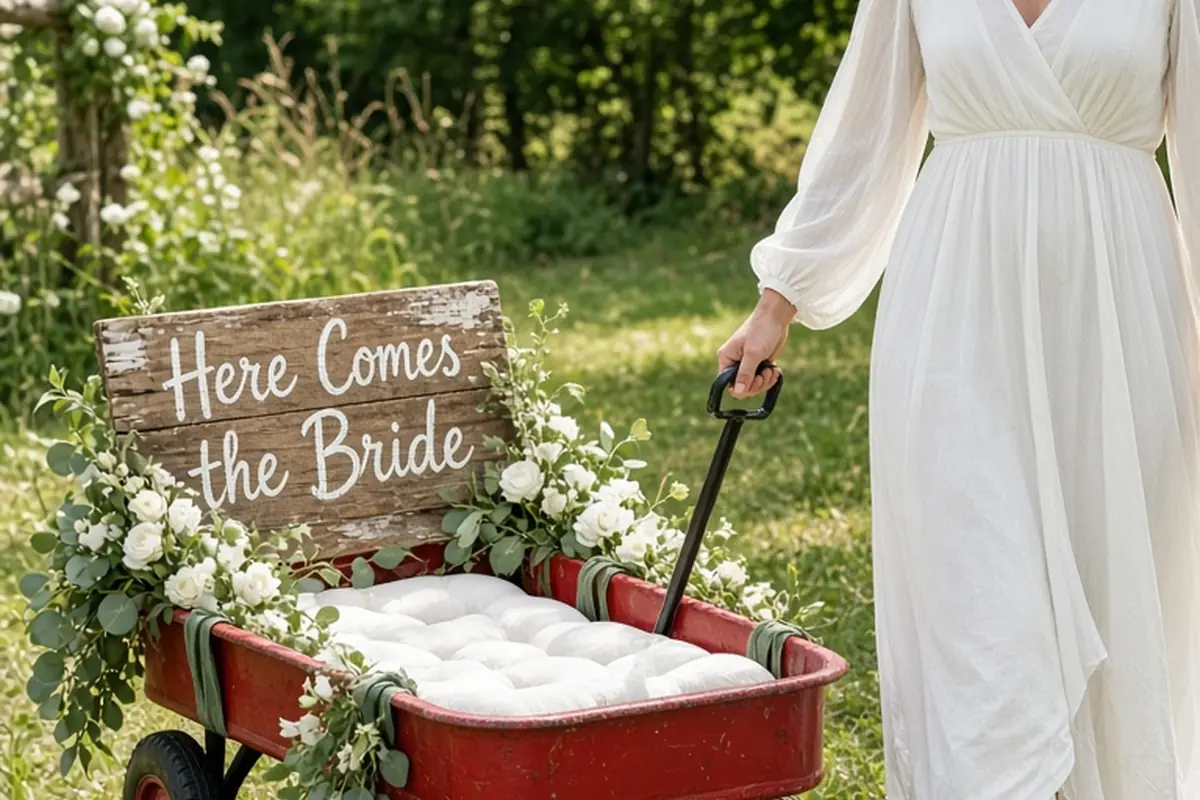
To decorate a red wagon for your wedding, choose whether to highlight its vibrant red finish with complementary greenery or conceal it with neutral linen wraps and floral garlands. Secure fresh flowers and greenery using zip ties padded with felt to protect the paint, add a thick base cushion for toddler or pet comfort, and attach a customized wooden or fabric sign to the back panel while keeping wheels and steering mechanisms completely unobstructed.
Using a classic red wagon to bring young flower girls, ring bearers, or beloved pets down the aisle adds warmth and charm to a wedding ceremony. Transforming an everyday wagon into an elegant ceremony centerpiece requires balancing visual design with practical mechanical safety.
Deciding Whether to Highlight or Conceal the Classic Red Finish
The bright cherry finish of a traditional metal or wooden wagon makes a bold statement that sets the tone for your styling strategy. Before purchasing supplies, decide whether the iconic red hue will serve as an intentional accent in your wedding color palette or if you prefer to disguise it to match softer tones like ivory, sage, dusty blue, or blush. If you embrace the red, pair it with lush botanical elements such as silver dollar eucalyptus, olive branches, and creamy white garden roses. The natural contrast between deep green foliage and crimson metal creates a timeless, vintage aesthetic that works particularly well in garden, farm, and holiday celebrations.
If the red clashes with your wedding colors, you can soften or completely camouflage the exterior without permanently altering a rented or heirloom wagon. Tailored fabric slipcovers, heavy ivory linen drapes, or gathered cheesecloth can be wrapped around the exterior tub and pinned securely beneath the lip. Another effective option is creating a full-coverage floral skirt using chicken wire or floral foam netting shaped around the exterior panels. Wrapping the side railings with broad velvet ribbon or neutral faux leather strips can also break up the expanse of bright metal while adding rich, tactile texture to the wagon body.
Securing Fresh Florals and Greenery Without Damaging the Wagon Frame
Attaching fresh botanical arrangements to a moving metal or wooden cart requires stable mechanics that will not slip loose during the processional. Green zip ties, floral wire, and padded cable clamps are the most reliable fasteners for securing stems and garlands along the perimeter railing. To avoid scratching painted steel or finished wood, wrap electrical tape or self-adhesive felt around the contact points of the wagon frame before tightening zip ties or wire over them. For large, dimensional arrangements, use cage-enclosed floral foam blocks soaked in water and secured to the wagon corners with heavy-duty ties, ensuring the foam is drained thoroughly so excess water does not pool in the wagon bed.
Clearance is the most critical mechanical factor when arranging greenery around the wagon. Trailing vines such as Italian ruscus, ivy, or jasmine must remain trimmed at least three inches above the ground to prevent them from catching under the rolling wheels or wrapping around the front axle pivot. Before the ceremony, pull the wagon through several sharp turns to ensure that leafy boughs and hanging ribbons stay entirely clear of the wheel hubs, steering joint, and undercarriage brake mechanisms.
Styling Themes for Rustic, Romantic, and Modern Ceremonies
A rustic farmhouse wagon design highlights natural textures and understated materials. Line the bottom of the wagon with a folded natural burlap runner topped by a thick cotton canvas pad. Arrange clusters of baby's breath, seeded eucalyptus, and dried wheat stalks along the upper wooden side slats using natural jute twine. Add a distressed wood plaque to the rear tailgate inscribed with a simple phrase like 'Here Comes the Bride' in white chalk lettering, and wrap the metal pull handle in thick braided manila rope to give the escort a comfortable, textured grip.
For a romantic garden or black-tie celebration, replace rustic textures with delicate textiles and lush, formal blooms. Drape several layers of soft ivory tulle, organza, or pleated chiffon across the wagon frame, allowing the fabric to billow slightly around the sides while anchoring it tightly at the corners with satin ribbons. Fasten full clusters of open garden roses, ranunculus, and spray roses at the front corners, mirroring the bride's bouquet. A monogrammed linen banner or an arched acrylic sign with gold calligraphy can be suspended from the back rim with wide silk ribbon.
A contemporary minimalist setup focuses on clean lines, architectural foliage, and restrained color. Wrap the wagon railings in matte neutral tape or custom-cut blonde wood panels to cover bright hardware. Attach asymmetrical arrangements of monstera leaves, white anthuriums, or bleached pampas grass to just one front corner and the opposite rear corner, leaving the remaining edges clean. Use a sleek, geometric acrylic sign with simple block typography fastened flush against the back panel for an uncluttered silhouette.
Safety, Comfort, and Restraint Systems for Toddlers and Pets
Transporting infants, toddlers, or pets down the aisle requires prioritizing physical stability over visual styling. A standard metal wagon floor is hard, slick, and unforgiving, which can cause little passengers to slide around or feel insecure as the cart starts and stops. Cut a piece of high-density upholstery foam to fit the exact dimensions of the wagon interior, then cover it in a washable, non-slip cotton fabric. Position firm bolster pillows or rolled towels along the interior sides to support younger toddlers who may wobble when the wagon navigates uneven grass or patio stones.
For active toddlers or nervous pets, built-in safety restraints are necessary to prevent unexpected attempts to climb out mid-aisle. Many contemporary wagons include integrated three-point lap belts, but if you are using a vintage flatbed model, you can install a sturdy nylon luggage strap underneath the base cushion and loop it securely around the child's waist. For pets, clip a short, secure harness lead directly to a low, central tie-down point inside the wagon bed so the animal cannot jump over the side rail while in motion. Provide a familiar soft toy, blanket, or quiet treat to keep young occupants calm during the processional.
Designing and Mounting Custom Wedding Wagon Signage
Signage mounted to the wagon adds an expressive focal point that guests can read clearly as the procession approaches and departs. Popular phrases include 'Here Comes the Bride,' 'Just Wait Until You See Her,' or the couple's shared surname and wedding date. When selecting sign materials, choose lightweight options such as 1/8-inch plywood, lightweight foam-core board, flexible linen pennants, or thin acrylic blanks. Heavy wooden plaques or thick framed signs can tilt backward, bounce loose, or add unnecessary weight to the rear axle.
To mount a sign securely, drill two small holes near the upper corners of the plaque and thread sturdy ribbon, leather cord, or zip ties through the holes, binding them tightly to the wagon's top rear rail. If your wagon has solid metal sides without top railings, apply heavy-duty removable hook-and-loop strips or magnetic mounting brackets designed for automotive applications. Always place a buffer of felt between the sign back and the wagon wall to eliminate rattling noises as the wagon rolls down the ceremony aisle.
Ceremony Day Logistics: Tire Selection, Terrain, and Handler Rehearsal
A beautifully decorated wagon will only succeed if it rolls smoothly across the actual ceremony terrain. Standard vintage red wagons often feature narrow, hard rubber or stamped metal wheels that easily bog down in loose beach sand, thick lawn turf, or deep pea gravel. If your ceremony takes place outdoors, inspect the ground surface weeks in advance and consider swapping the wagon body onto an all-terrain chassis equipped with wide, air-filled pneumatic tires that absorb bumps and roll effortlessly over grass and roots.
Designate a responsible older child or adult wedding party member to handle the wagon during both the processional and recessional. Run a full rehearsal during the wedding walk-through, pulling the decorated wagon along the exact aisle route at the intended pace while loaded with the actual child or pet. Confirm where the wagon will be parked once it reaches the altar; it should be steered smoothly off to the side or retrieved by an assigned parent sitting in the front row so it does not block the view of the couple during the vows.
Frequently asked questions
What type of wagon wheels work best on outdoor ceremony surfaces?
Wide pneumatic air-filled rubber tires perform best on outdoor surfaces like grass, dirt, gravel, and sand because they absorb bumps and roll without sinking. Standard narrow metal or hard plastic wheels work adequately on flat, hard surfaces such as church tile, concrete terraces, or paved walkways.
How can I temporarily change the color of a borrowed red wagon without damaging it?
You can wrap the outer panels in removable peel-and-stick vinyl wrap, tailored fabric slipcovers, or wide decorative ribbons fastened with low-tack tape. Avoid spray paint or aggressive adhesives that could strip or discolor the original factory finish of a borrowed or vintage wagon.
When should fresh floral arrangements be attached to the wedding wagon?
Attach hearty greenery garlands and floral cages containing hydrated floral foam 2 to 3 hours before the ceremony begins to keep the blooms crisp. Keep the decorated wagon stored in a cool, shaded staging area until it is lined up for the processional.
What size should the decorative wagon sign be?
A sign measuring between 8 by 12 inches and 10 by 14 inches fits standard wagon rear panels comfortably without extending past the wheel width or dragging along the ground during movement.
Your next step
Measure the interior dimensions and rear railing of your wagon this week, then test-fit a foam cushion and mock up your sign dimensions before purchasing floral stems.