You can creatively include children in your wedding by matching responsibilities to their developmental stage rather than defaulting to traditional roles. Meaningful options include involving them in family vows, having them carry custom ribbon wands or banner signs, assigning older children as junior ushers or guest book attendants, dedicating a reception music set to them, and setting up interactive kid lounges. Always assign a dedicated adult handler and remove performance pressure so participation remains a positive experience.
Inviting young family members and children of close friends into your celebration adds warmth and spontaneity, but it also introduces real logistical variables. A successful wedding day balances meaningful inclusion with realistic expectations about children's attention spans, emotional comfort, and sensory limits.
Tailoring Ceremony Roles to Child Developmental Stages
A child's developmental readiness determines whether a wedding role feels like an exciting adventure or an overwhelming ordeal. Toddlers between ages two and four generally lack the impulse control and spatial awareness needed to walk down a long aisle unaccompanied. Instead of expecting solitary processionals, pair very young children with an older sibling, a parent who is already in the wedding party, or seat them in an open wagon decorated with greenery that a trusted adult pulls. Simple tasks like holding a lightweight felt flag, waving a wand adorned with satin ribbons, or blowing bubbles avoid the pressure of carrying valuable items or maintaining strict timing.
Children between the ages of five and eight often welcome concrete assignments that make them feel trusted. Traditional flower scatterer and ring bearer tasks can be reimagined to reduce anxiety. Supply the ring bearer with an ornate locked lockbox containing faux rings while the real wedding bands stay safely in the best man's pocket, giving the child an imaginative security assignment without catastrophic stakes. Alternatively, energetic early-elementary children can serve as celebratory bell ringers who ring a small brass handbell to signal the start of the processional or lead the recessional with miniature tambourines.
Older children and preteens between ages nine and thirteen occupy an awkward middle ground where toddler-oriented roles feel patronizing while full adult wedding party duties may feel intimidating. This age group thrives when assigned functional agency. Appoint them as ceremony program hosts, personal attendants who manage the guest book Polaroid camera, or junior ushers who walk grandparents and special guests to their reserved rows. Involving tweens in technical cues, such as signaling musicians or releasing biodegradable confetti during the outdoor recessional, grants them visible respect without public performance anxiety.
Symbolic Unity Rituals for Blended Families and Children
When bringing children into a blended marriage, the ceremony represents the formation of an entire household rather than just a legal union between two partners. Designing a unity moment that explicitly honors children validates their status in the new family framework. A multi-color sand pouring ceremony offers a visual, permanent metaphor where each child selects an individual hue representing their personality. The family pours their sand simultaneously into a central glass vessel, demonstrating that while the family blends inextricably, each individual layer and color remains distinct and valued.
Physical keepsakes can extend this symbolism during the vows. Many couples choose to present stepchildren with a personalized pendant, an engraved watch, or a simple band bracelet immediately following the partner ring exchange. Accompanying this presentation with brief, spoken promises reassures the child of continuous care, security, and patience. These declarations must focus on parental commitment to the child rather than demanding obedience, filial affection, or premature titles such as mom or dad.
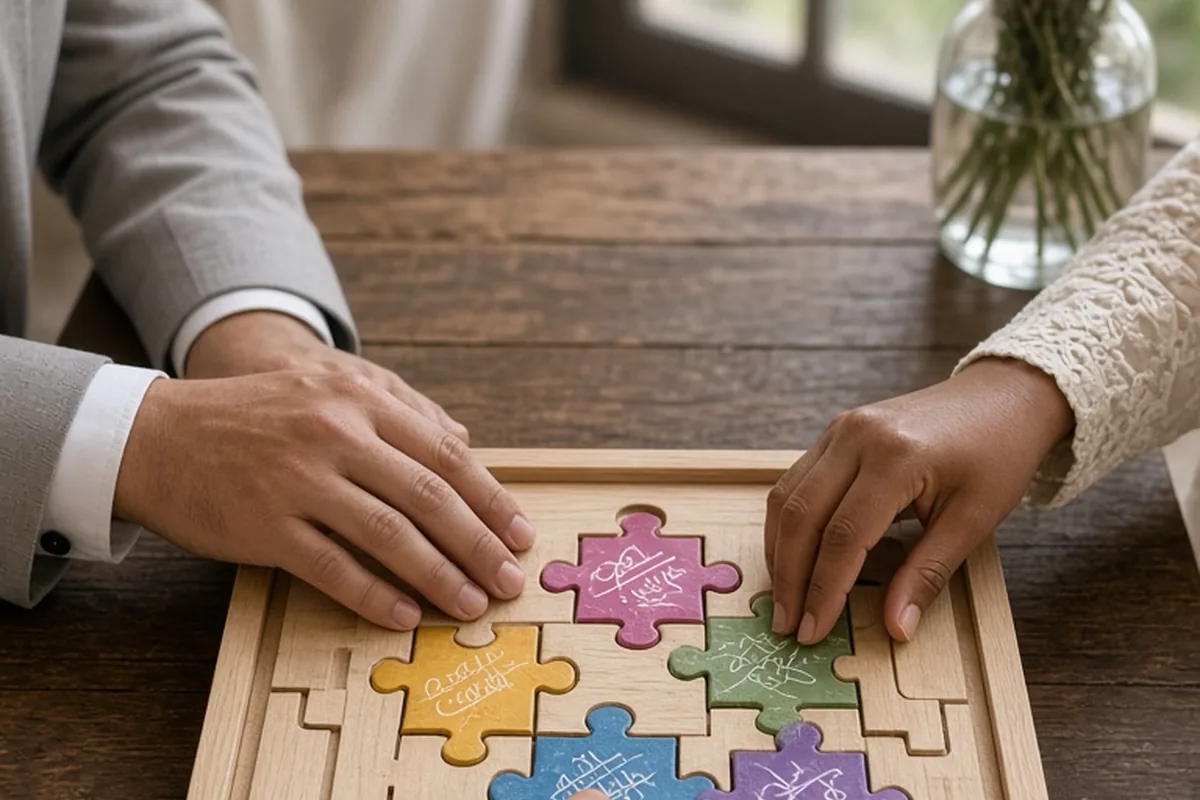
For older children who prefer not to stand front and center, quiet collaborative rituals work well. Consider commissioning a custom wooden family puzzle where the couple places the foundation frame on the altar table and each child places an interlocking, signed puzzle piece during the ceremony. This approach keeps physical contact brief, avoids requiring speeches from introverted children, and yields an enduring art piece for your shared living room wall.
Behind the Scenes Assignments for Shy Children and Preteens
Not every child wants all eyes on them in an aisle, and forcing a stage-frightened child into the spotlight can turn a festive day into a distressing memory. Children who decline to walk in the processional can still participate behind the scenes in ways that feel vital to the celebration. Prior to the ceremony, creative children can design hand-drawn illustrations for the cocktail napkins, hand-letter place cards, or curate the wedding favor packaging. Acknowledging their artistic contributions on the back of the printed program gives them public recognition without physical exposure.
During pre-ceremony preparations, shy children make excellent companions for low-stress tasks. A preteen can serve as the wedding party's official social media chronicler or instant photo documentarian, armed with a vintage instant camera to capture candid dressing room moments. This assignment gives self-conscious young people a constructive purpose and a social shield, letting them interact behind a lens without feeling awkward in adult-heavy conversations.
Animal-loving preteens can also be given responsibility for family pets participating in the day. If your dog is scheduled for formal photographs or a brief aisle appearance, an older child can hold the leash, distribute treats, and manage the water bowl during pre-ceremony setups. Caring for a beloved pet channels nervous energy into grounded, compassionate action that keeps the child calm and meaningfully engaged.
Interactive Reception Activities to Keep Children Happily Engaged
Wedding receptions are notoriously adult-centric events featuring prolonged speeches, intricate sit-down dinners, and hours of socializing. Without deliberate planning, boredom sets in quickly, resulting in wandering, whining, or meltdowns. One effective solution is creating a dedicated children's activity table positioned near the main dining area so parents can monitor their kids without feeling detached from the main party. Cover the table with plain kraft butcher paper instead of linen, and furnish it with buckets of dust-free crayons, washable markers, and customized activity booklets.
Personalized activity books can incorporate scavenger hunts that encourage children to observe the celebration politely. Tasks might include finding someone wearing a yellow dress, counting how many people are dancing, spotting three varieties of flowers in centerpieces, or sketching their favorite dessert. For older children, set out quiet board games, card decks, or building bricks that do not produce disruptive sound. Providing child-safe, non-staining crafts keeps young minds occupied through extended dinner courses and formal toasts.
Food timing requires special coordination with your caterer. Children operate on earlier eating schedules and lower blood-sugar thresholds than adults. If your reception dinner starts later in the evening, arrange for kid-friendly passed appetizers during the cocktail hour, such as fruit skewers, pretzel bites, or cheese cubes. Request that children's entrees be served at the very beginning of the dinner service rather than alongside adult multi-course entrees, ensuring youngsters are fed and settled before speeches begin.
Wardrobe Comfort and Sensory Planning for Young Attendants
Elaborate formalwear is one of the primary drivers of behavioral challenges for children at weddings. Stiff tulle, coarse lace, itchy wool trousers, tight collars, and brand-new patent leather shoes create sensory overload for sensitive youngsters. When choosing outfits for flower girls and ring bearers, prioritize soft, breathable fabrics with cotton linings and tagless seams. Allow children to break in their shoes around the house for several weeks prior to the event, or pair formal attire with clean, matching dress sneakers that offer familiar comfort.
Consider temperature extremes and physical movement when approving wardrobe selections. Outdoor summer weddings demand lightweight cotton shirts, linen blends, and sun protection, whereas winter services call for velvet capes, warm knit tights, and soft cardigans. Avoid complicated ties or suspenders with sharp metal clasps that dig into shoulders or pinch fingers during bathroom breaks. Simple, comfortable silhouettes let children walk, sit, and play without constant physical agitation.
Pack an emergency sensory and comfort kit for the wedding suite. Include a complete change of comfortable clothing for the reception, damp wipes for sticky hands, duplicate pairs of socks, familiar light snacks, and pediatric pain relievers approved by their parents. For neurodivergent children or toddlers prone to sensory overload from loud brass bands and thumping subwoofers, provide stylish, noise-reducing ear protection so they can enjoy the dance floor without audio distress.
Designating Adult Handlers and Establishing Realistic Contingencies
The single most critical operational choice when involving children in a wedding is assigning dedicated adult supervision. Never expect the parents of participating children to handle supervision while they are simultaneously fulfilling wedding party duties or getting married themselves. A mother walking down the aisle as a bridesmaid cannot soothe a crying toddler who refuses to release her skirt, nor can a groom monitor bathroom runs from the altar. Appoint an off-duty adult—such as a trusted babysitter, an organized family friend, or a hired wedding day childcare professional—whose sole responsibility is the children's welfare.
The dedicated handler needs clear guidelines, emergency supplies, and explicit permission to execute exit plans. If a flower girl freezes at the threshold of the aisle, the handler should gently guide her to a seat rather than pushing her down the walkway. If a toddler begins screaming during sacred vows, the handler should swiftly and discreetly escort the child outside without hesitating or looking for approval from the couple. Having an established protocol transforms an awkward incident into an unnoticeable, handled transition.
Embracing imperfection is essential when children share your wedding stage. A ring bearer who wanders off course, a flower girl who sits down mid-aisle to inspect her petals, or a junior attendant who makes an unexpected funny face creates spontaneous charm rather than catastrophe. Prepare yourself mentally to smile, acknowledge the unpredictability, and keep the ceremony moving forward smoothly regardless of what young attendants do.
Frequently asked questions
What is the best age for a child to be a flower girl or ring bearer?
Children between four and seven years old typically perform best in traditional flower and ring roles. They generally possess the motor skills and focus needed to walk the aisle independently while remaining excited about participating. Younger toddlers require close adult accompaniment or an alternative role.
How do you handle a child who refuses to walk down the aisle at the last minute?
Accept the refusal immediately without coaxing, bribing, or pushing them forward in front of the crowd. Have your designated adult point person gently guide the child to their seat in the audience. Your wedding party can simply continue the processional without missing a beat.
How can we include our own children during the reception without boring them?
Give them an active spotlight moment, such as introducing the wedding party, announcing the cake cutting, or co-hosting a five-song dance block curated with their favorite songs. Pair that visibility with a quiet lounge corner equipped with hands-on activities when they get tired.
Should children stand at the altar for the entire ceremony?
Children under eight years old should generally not be expected to stand through a full ceremony. Allow them to walk down the aisle, complete their task, and immediately sit in the front row with a designated family member so they remain comfortable.
Your next step
Sit down with the children you plan to include and ask them directly whether they prefer being in the spotlight or helping behind the scenes before assigning any ceremony or reception roles.