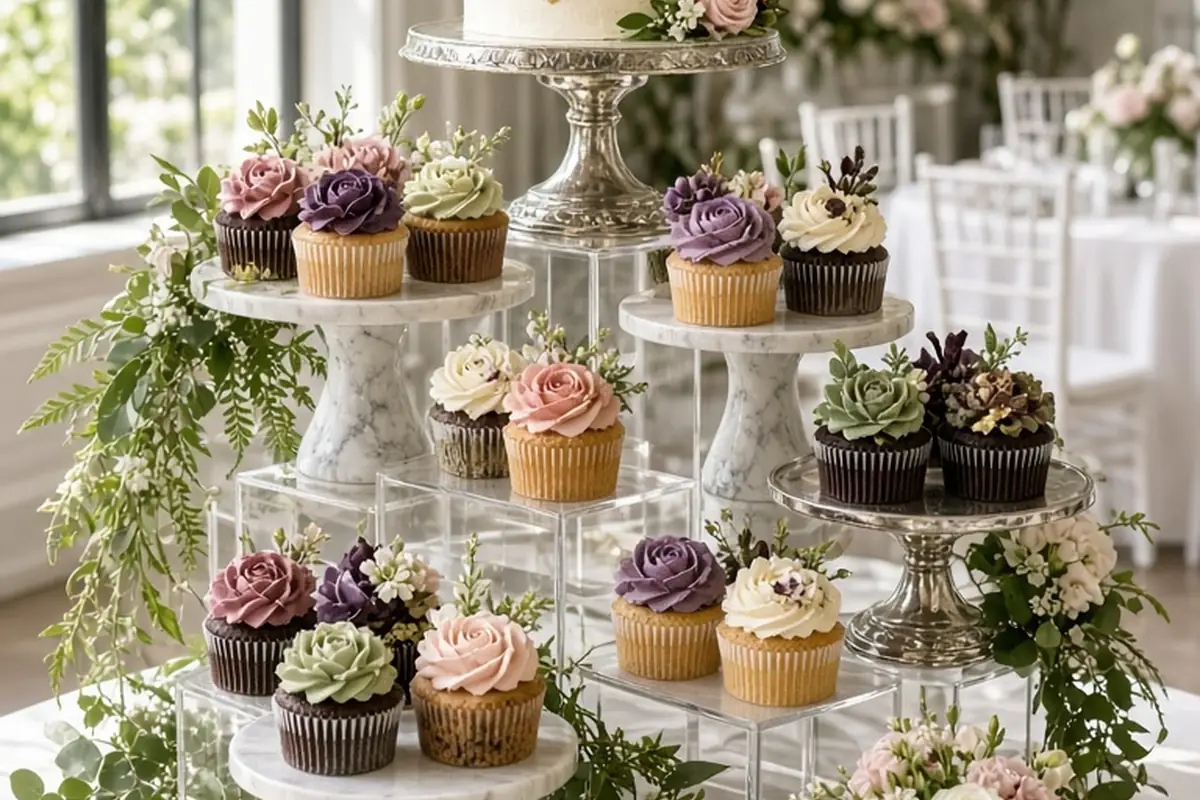
Creative wedding cupcake ideas focus on combining distinctive flavor profiles with intentional presentation methods that match your wedding aesthetic. Couples often replace traditional sheet cake with tiered displays featuring artisanal sponge-and-filling combinations, botanical buttercream piping, edible pressed florals, and miniature tasting flights. Incorporating varied textures, customized favor boxes, and a coordinating cutting tier allows cupcakes to deliver elegance, dietary versatility, and straightforward portion control across any reception style.
Modern wedding receptions increasingly trade standard multi-tier cakes for versatile dessert spreads that reflect personal taste, regional ingredients, and relaxed guest interaction. A well-designed cupcake assortment provides an adaptable centerpiece that suits intimate garden gatherings, formal ballroom dinners, and casual outdoor receptions alike.
Flavor Pairings That Move Beyond Traditional Vanilla and Chocolate
Elevating a wedding cupcake menu begins with deliberate flavor architecture that balances sweet sponges with tart curds, fragrant herbs, or toasted elements. Instead of relying exclusively on plain yellow cake or standard fudge, bakers often build layered experiences using unexpected flavor pairings. Bright spring and summer combinations might feature Meyer lemon sponge with lavender-infused syrup and elderberry curd, or sweet blackberry compote paired with goat cheese buttercream. Autumn and winter menus transition smoothly into spiced poached pear with ginger buttercream, brown-butter cardamom sponge, or rich apple cider reduction layered inside cinnamon sponge.
Texture plays an equally vital role in making handheld desserts feel sophisticated rather than mundane. Incorporating crunchy praline layers, shortbread crumble bases, or hidden molten centers turns a familiar treat into a restaurant-quality plated dessert. For rich profiles, dark chocolate sponge paired with smoked sea salt caramel, espresso mousse, or toasted hazelnut crunch prevents the sugar level from overwhelming the palate during a multi-course dinner.
Regional and beverage-inspired reductions can also anchor your menu to a specific locale or shared memory. Sponge cakes soaked in reduced dry champagne, Earl Grey tea, or local bourbon peach syrup introduce subtle aromatics without creating soggy crumb structures. When choosing these complex blends, schedule a thorough tasting with your baker to confirm that the filling remains stable at room temperature and complements the sweetness of the frosting rather than competing against it.
Architectural Tiering and Display Structures for Wedding Cupcake Tables
The visual impact of a cupcake spread depends heavily on the structure used to present it. A standard plastic concentric tower can sometimes feel informal, whereas a curated tablescape of varied elevations creates an architectural focal point. Utilizing mismatched vintage silver pedestals, fluted marble cake stands, or custom acrylic geometric risers allows the dessert spread to mirror the design language of your wider reception decor. Staggering heights draws the eye across the table while making individual items easily reachable for guests without accidental sleeve contact.
Surrounding the display with intentional styling bridges the gap between bakery items and wedding floristry. Cascading greenery, loose floral blooms that match your bridal party arrangements, linen runners, and battery-operated pillar candles soften the edges of multi-tiered displays. Ensure that display styling leaves adequate negative space between items; crowded stands often lead to smudged frosting when guests reach across lower tiers to grab their preferred flavor.
Many couples still value the symbolic cake-cutting ritual while serving cupcakes to their guests. Positioning a petite six-inch cutting cake atop a central tiered tower, or on a coordinating pedestal directly beside the cupcakes, satisfies traditional expectations without requiring a massive sculpted cake. This two-tier hybrid design gives you the ceremonial photo moment while preserving the speed and simplicity of cupcake service for your catering crew.
Decorating Techniques from Botanical Piping to Handcrafted Sugar Details
Artisanal piping styles have evolved far beyond standard swirl tops, allowing bakers to replicate textile textures, floral arrangements, and architectural details. Using Russian piping tips, ribbon nozzles, and flat palette knives, skilled decorators can sculpt realistic buttercream roses, ranunculus, and succulents directly onto each cupcake surface. Lambeth-style piping, characterized by intricate over-piping and delicate scrollwork, lends a romantic vintage look that complements historical venue settings.
Botanical elements provide another organic avenue for decorating that feels effortlessly refined. Culinary-grade pressed edible flowers—such as violas, pansies, cornflowers, and borage blossoms—pressed flat against smooth swiss meringue buttercream deliver vivid color without heavy food dye. For rustic or outdoor weddings, accents like dried citrus rounds, fresh rosemary sprigs, freeze-dried fruit dust, or roasted cocoa nibs hint at the interior flavor profile while adding visual depth.
Modern minimalist celebrations often favor sleek geometric accents, delicate metallic touches, or sculpted wafer paper. Delicate touches of edible gold or silver leaf, translucent sugar sails, and chocolate geometric shards create sculptural visual interest. When selecting intricate toppers, confirm that all decorative components are fully edible and safely secured, avoiding unanchored wire, plastic picks, or toxic real flowers that could endanger guests.
Coordinating Cupcakes with Dietary Needs and Guest Preferences
One of the strongest practical arguments for choosing cupcakes over a monolithic wedding cake is the ability to accommodate varied dietary requirements without compromising the main design. Guests with gluten sensitivities, dairy intolerances, or vegan diets often feel overlooked when standard wedding cake is served. A cupcake spread allows you to offer dedicated, allergen-safe varieties made with certified alternative flours, oat or coconut buttercreams, and aquafaba meringues that taste indistinguishable from traditional recipes.
Safe execution requires strict protocols to prevent accidental cross-contact. Never place gluten-free or nut-free cupcakes directly on the same serving tray as traditional flour-based items, where crumbs can easily transfer. Instead, designate separate pedestals or glass-domed cloches for specialized dietary selections, accompanied by clear, beautifully designed allergen labels that outline ingredients and preparation safeguards.
Gathering dietary counts via your RSVP process ensures you order the exact proportion of specialty cupcakes needed rather than guessing. Clearly communicate to your venue staff or wedding coordinator that these items should be protected from premature consumption by guests without dietary restrictions, ensuring that those who depend on alternative recipes actually receive them.
Managing Outdoor Receptions, Heat, and Buttercream Stability
Outdoor summer celebrations and tented receptions present significant structural challenges for frosted desserts. The choice of frosting base directly dictates how well your cupcakes survive ambient heat and humidity. Swiss and Italian meringue buttercreams are loved for their silky texture and balanced sweetness, but their high butter content causes them to soften rapidly and lose structural definition in temperatures above comfortable room thresholds. In warm settings, American buttercream crusts more effectively, while bakers frequently utilize adjusted butter-to-shortening emulsions to maintain decorative stability without sacrificing flavor.
Logistical timing is your primary defense against melted or sliding displays. Work with your caterer or venue manager to keep all dessert platters stored inside climate-controlled walk-in coolers or air-conditioned prep rooms throughout dinner. The cupcake display should only be set out immediately prior to the start of the reception or as dinner service winds down, minimizing exposure to heat, wind, and insects.
Table positioning within your venue layout requires equal care. Even under an open tent, shifting sun angles can project direct heat onto dessert tables late in the afternoon. Position your display away from tent perimeters, outdoor grills, and humid breeze paths, using protective mesh cake cloches or acrylic food shields if local insects or windborne debris pose a potential risk.
Estimating Quantities and Portion Sizes for Varied Reception Schedules
Accurate portion planning prevents both costly dessert surpluses and the embarrassment of empty platters early in the evening. Calculating how many cupcakes you need depends primarily on cupcake size, the total variety of flavors offered, and the rest of your dinner timeline. When serving standard bakery-sized cupcakes as the sole dessert, planning for one to one-and-a-quarter cupcakes per confirmed guest covers normal consumption while accounting for occasional seconds.
If you opt for miniature cupcakes, consumption behavior shifts dramatically. Guests naturally view mini desserts as tasting opportunities and frequently sample two to three distinct flavors over the course of the evening. Mini cupcakes require a baseline calculation of two to three pieces per attendee, but they offer the distinct benefit of allowing friends and family to experience your entire flavor menu without committing to a single full portion.
Your overall catering timeline also influences final consumption numbers. If dessert immediately follows a heavy, multi-course plated dinner with late-night savory snacks scheduled later, guest appetite for sweets remains moderate. Conversely, cocktail-style receptions with light passed appetizers naturally encourage higher dessert consumption throughout the evening, making a slightly larger buffer practical.
Take-Home Favor Packaging and Interactive Dessert Stations
Cupcakes double effortlessly as thoughtful wedding favors, solving dessert service and guest gifting in a single coordinated effort. To pull this off smoothly, provide individually sized favor boxes featuring internal die-cut inserts that lock the cupcake base in place, preventing the frosting from colliding with the container walls during transport. Custom printed labels, satin ribbons, or calligraphy thank-you tags transform simple food-safe kraft boxes into elegant takeaways.
Another engaging approach transforms the dessert display into an interactive tasting station. Couples can provide simply frosted neutral cupcakes alongside an array of gourmet dessert sauces, toasted nuts, edible sprinkles, candied ginger, and fruit compotes. An interactive topping station invites guests to personalize their treat while creating an enjoyable social moment during the reception lull between dinner and dancing.
For couples worried about food waste, coordinating with venue staff to package remaining unconsumed cupcakes at the end of the evening provides a welcome surprise. Arranging takeaway boxes near the coat check or shuttle boarding area allows departing guests to grab a late-night treat, ensuring that your investment in artisanal baking is fully enjoyed rather than discarded after the lights come up.
Frequently asked questions
How many cupcake flavors should we offer at a wedding?
Offering three to four distinct flavors provides sufficient variety without overwhelming your guests or complicating bakery logistics. A balanced menu typically includes one universally popular crowd-pleaser, one fruit or citrus profile, one rich chocolate or caramel option, and one specialized dietary choice such as gluten-free or vegan.
Can wedding cupcakes be delivered and set up the day before?
Cupcakes should generally be delivered and arranged on the day of the wedding to maintain optimal sponge moisture and frosting texture. Refrigerating fully decorated cupcakes overnight can dry out the cake crumb and cause condensation to bead on delicate sugar decorations once brought to room temperature.
Do wedding cupcakes cost less than a traditional tiered wedding cake?
Cupcakes can offer cost savings by eliminating catering cake-cutting and plating fees, which venues often charge per slice for traditional cakes. However, highly intricate hand-piped designs, specialty fillings, individual favor packaging, and custom display rentals can raise the total expenditure to a level comparable with standard bakery cakes.
How do we keep cupcakes fresh during an outdoor reception?
Keep the cupcakes in a refrigerated or air-conditioned staging area until approximately thirty to forty-five minutes before serving. Position the display table in deep shade away from direct sunlight, and consult your baker about utilizing a heat-tolerant frosting formulation if your region experiences high humidity or summer temperatures.
Your next step
Schedule a tasting consultation with a local baker to sample three contrasting flavor combinations and review display stand rental options that match your venue layout.