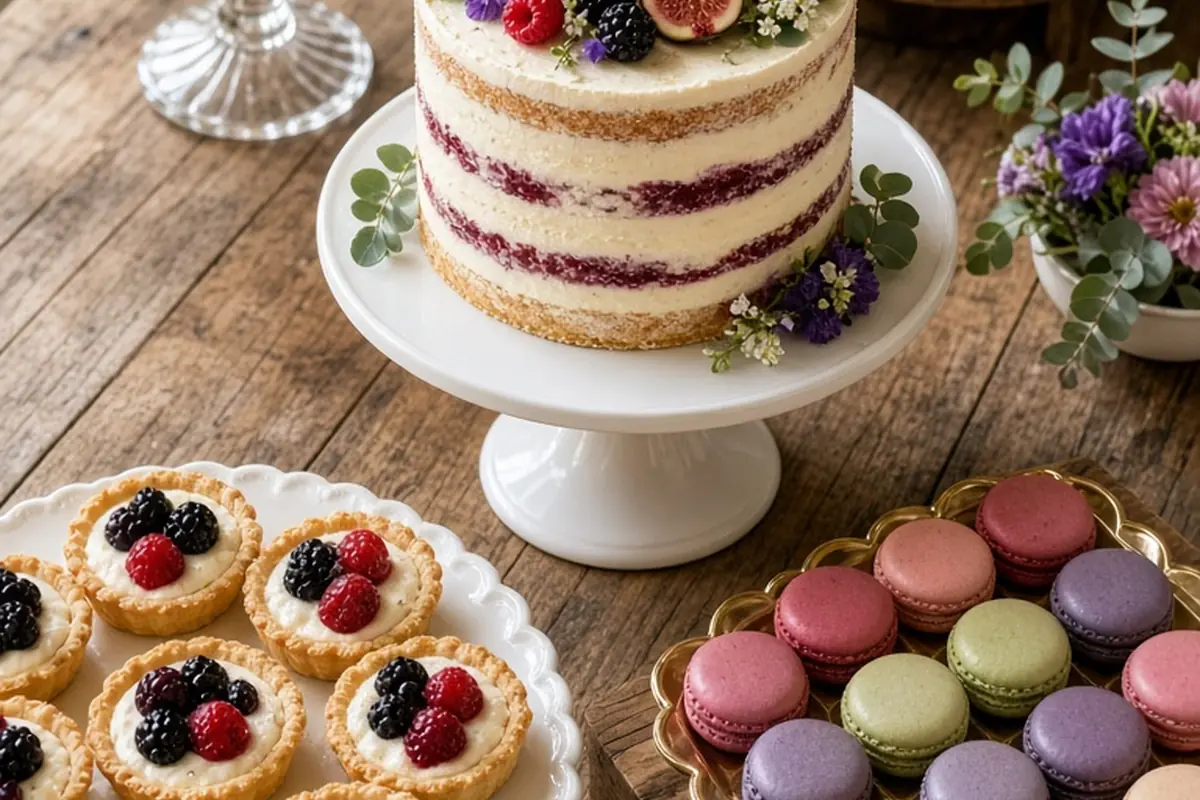
A successful bridal shower sweets table combines one central showpiece, such as a floral cutting cake or naked berry sponge, with four to six bite-sized options like French macarons, mini fruit tarts, mousse cups, and glazed madeleines. Planning three to four individual pieces per guest ensures generous variety without excessive leftover waste. Balancing rich chocolate, bright citrus, and crisp textural elements delivers an appealing presentation that suits diverse palates and stays tidy while guests mingle.
Designing a dedicated dessert spread creates a celebratory focal point that naturally draws guests together during a bridal shower. Choosing the right mix of flavors, textures, and portion sizes ensures the table looks lavish, tastes balanced, and remains easy to navigate throughout the event.
Bite-Sized Finger Sweets That Keep Mingling Effortless
Finger sweets form the backbone of an accessible sweets table because they allow attendees to sample multiple flavors without committing to a single heavy slice of cake. Mini pastry shells filled with vanilla bean pastry cream and topped with glazed blackberries, raspberries, or kiwi slices offer a refreshing, tart burst that balances richer confections. French macarons in coordinating pastel or jewel tones provide a crisp outer shell with a chewy ganache or buttercream center, naturally offering a gluten-friendly option when made with traditional almond flour. French madeleines dusted with powdered sugar, miniature éclairs filled with chocolate cream, and bite-sized cake truffles rolled in toasted coconut or freeze-dried strawberry powder add varied textures that make browsing the table an engaging experience.
Choosing handheld formats also keeps socializing smooth and prevents common party mishaps. When guests hold a beverage in one hand, managing a full-sized plate, fork, and napkin can feel clumsy and discourage mingling. Individual two-bite treats eliminate the need for cutlery, minimize crumbs on formal attire, and move lines quickly so guests spend less time waiting and more time celebrating. Selecting treats with sturdy bases, such as tart shells, dense cookies, or firm cake pops, ensures that items retain their structural integrity at room temperature rather than softening into a sticky mess before the shower concludes.
Showpiece Central Desserts to Anchor the Bridal Shower Sweets Table
Every visually compelling dessert table benefits from a primary focal point that establishes the event's aesthetic theme and draws the eye. A single-tier or petite two-tier semi-naked cake decorated with edible flowers, fresh eucalyptus sprigs, or fresh figs serves as a classic centerpiece without requiring extensive cutting during the party. Alternatively, a tiered croquembouche dusted with spun sugar, a rustic naked cake with visible berry compote layers, or a tiered tower of glazed artisan donuts provides height, architectural interest, and clear visual hierarchy. Placing this central item on a tall pedestal in the center or back-third of the table establishes a natural anchor around which lower platters and risers can be symmetrically or organically arranged.
When selecting the anchor dessert, prioritize the bride's personal favorite flavor rather than trying to please everyone with this single item, since the surrounding bite-sized assortment will cover broader taste preferences. If the guest of honor loves Earl Grey lavender cake, spiced carrot cake with cream cheese frosting, or salted caramel buttercream, the centerpiece cake offers the ideal place to feature that specialty profile. You can reserve this dessert purely for a ceremonial cake-cutting moment, or pre-slice half of it behind the scenes right before serving so guests can easily pick up a plated portion without causing a bottleneck at the display.
Individual Glass and Cup Delicacies for a Polished Touch
Single-portion dessert shooters and clear glass or acrylic verrines introduce sophisticated layering, vibrant colors, and creamy textures that cannot be achieved with dry finger foods alone. Clear mini cups displaying alternating strata of dark chocolate silk mousse, whipped espresso mascarpone, and chocolate biscuit crumbs create an instant impression of craftsmanship. Citrus panna cotta topped with a glistening passionfruit gelée, layered key lime pie shooters with crushed graham cracker bases, and classic berry trifles finished with micro mint leaves bring brightness and shine to the tabletop.
Beyond their visual appeal, single-serving cups solve practical hygiene and service challenges. Enclosed portions prevent the common cross-contact issues that happen when multiple guests use shared serving tongs or cake servers on open platters. Outfitting each cup with an embedded mini wooden spoon or acrylic dessert paddle lets guests pick up their portion in one fluid motion. To maintain ideal presentation, chill these dessert cups thoroughly until thirty minutes before guests arrive, which allows the custards and mousses to soften slightly for the best mouthfeel without losing their defined structural layers.
Balancing Rich, Fruity, and Crisp Flavor Profiles
A common misstep in dessert planning is selecting an assortment consisting entirely of heavy chocolate, butter, and vanilla options, which quickly leads to palate fatigue. A well-rounded sweets table creates intentional contrast between sweet, acidic, nutty, and creamy elements. Pair deep, decadent offerings like fudge brownie bites or salted caramel tartlets with sharp, refreshing counterpoints like lemon curd shortbread bars, raspberry macarons, or blood orange mousse. Incorporating botanical accents, such as rosemary shortbread, elderflower glazes, or matcha-dusted truffles, introduces refined aromatic notes that feel celebratory and distinct from ordinary everyday treats.
Texture plays an equally critical role in guest satisfaction. An array composed solely of soft sponge cakes and smooth mousses can feel one-dimensional, whereas combining crisp, crunchy, chewy, and melt-in-the-mouth components keeps the tasting experience dynamic. Contrast the delicate crunch of crisp meringues and toasted hazelnut biscotti with the pillowy softness of choux pastry and the silky richness of baked cheesecake bites. Offering a thoughtful spectrum of densities and sweetness levels ensures that guests who prefer light, tart flavors find treats they enjoy just as much as those seeking rich, indulgent chocolate.
Accommodating Dietary Preferences with Inclusive Labeling
Bridal shower guest lists frequently include people navigating gluten sensitivities, dairy intolerances, nut allergies, or vegan lifestyles. Addressing these requirements seamlessly does not mean you must convert the entire menu into specialty baking; instead, select naturally inclusive options and deliberately planned alternative recipes. Pavlova nests topped with whipped coconut cream and fresh berries are naturally gluten-free and can easily be made dairy-free. Coconut flour brownies, vegan dark chocolate truffles, and almond meal citrus financiers deliver exceptional flavor and texture without signaling to guests that they are eating an inferior compromise.
Clear and legible labeling is essential for guest safety and comfort, sparing attendees from having to track down the host to ask about ingredients. Use small calligraphy place cards, mini acrylic stands, or embossed chalkboard signs positioned directly in front of each platter, clearly noting designations like Gluten-Free, Dairy-Free, Vegan, or Contains Nuts. To prevent accidental allergen contamination, group sensitive items on dedicated pedestals with separate serving tongs rather than scattering them haphazardly across the main platters where loose cookie crumbs or spilled frostings could touch them.
Calculating Quantities and Serving Ratios by Guest Count
Estimating accurate dessert quantities requires evaluating the shower's timeline, the preceding meal, and the overall style of service. When the sweets table follows a full seated luncheon or substantial savory brunch, plan for roughly three bite-sized desserts per guest. If the shower is hosted during a mid-afternoon cocktail hour where sweets serve as the primary food offering alongside light appetizers, increase your planning baseline to four or five individual pieces per person. For a gathering of thirty guests following this guideline, aim for ninety to one hundred and twenty total bite-sized pieces distributed across four or five distinct dessert varieties.
Offering variety without overcomplicating preparation means balancing batch sizes across your chosen categories. A reliable distribution for a medium-sized party involves selecting one showpiece cake, two handheld finger pastries, one chilled shooter or mousse cup, and one dry cookie or macaron option. Preparing modest excess—approximately ten to fifteen percent beyond your base calculation—protects against accidental drops or unexpected extra guests. Having decorative bakery boxes and wax paper sheets ready at the end of the shower allows you to invite attendees to pack a personalized take-home treat box, eliminating food waste while sending guests home with a delightful favor.
Styling, Elevation, and Tabletop Setup Logistics
The visual impact of a sweets table depends heavily on intentional layering and variable heights rather than placing every dish flat on the tabletop. Use a combination of tiered pedestals, wooden crates, marble slabs, and acrylic risers covered with clean fabric runners to create multiple elevation tiers. Place the tallest items and the centerpiece cake toward the back and center, stepping down in height toward the front edge where low platters, trays, and individual cups sit. This tiered arrangement ensures that every treat remains visible from across the room and easy for guests to reach without knocking over adjacent displays.
Environmental conditions and table flow require proactive logistical management. If the shower takes place outdoors or in a warm conservatory, avoid uncovered buttercreams, delicate chocolate ganaches, and whipped cream toppings that weep or melt quickly in heat; instead, prioritize glazed loaf cakes, fruit tarts, macarons, and cookies. Position the dessert table out of direct sunlight and away from drafty doorways or heavy foot-traffic paths like restrooms and the gift table. Place small dessert plates, cocktail napkins, and tongs at the leading end of the table so guests can comfortably load their plates in a natural, one-way progression.
Frequently asked questions
How many different dessert varieties should be on a bridal shower table?
For most gatherings of twenty to forty guests, offering four to six distinct dessert types creates visual abundance without overwhelming preparation. This allows you to include a balanced mix of chocolate, fruit, creamy, and crisp textures while accommodating common dietary needs.
Can sweets table desserts be prepared or purchased ahead of time?
Yes, many desserts hold up exceptionally well when prepared in advance. French macarons, dry cookies, and sturdy tart shells can be baked two days ahead or frozen weeks early, while delicate items like filled mousses, fresh fruit arrangements, and whipped toppings should be assembled the morning of the shower.
What is the best way to handle dessert leftovers?
Set out small personalized bakery boxes, glassine favor bags, or customized tins near the dessert station toward the end of the party. Invite guests to pack their favorite confections to take home, which provides an edible favor and ensures no food goes to waste.
Should the bridal shower dessert table match the wedding cake flavors?
It is generally better to choose different flavors for the shower to give the bride and her guests a fresh culinary experience. Reserve the official wedding cake flavor for the wedding day, using the shower to showcase seasonal fruits, specialty pastries, or alternative personal favorites.
Your next step
Draft your bridal shower dessert menu by choosing four complementary flavors across chocolate, fruit, and cream profiles, then confirm your guest count to calculate exact piece counts.