Dip powder nails offer a durable, chip-resistant manicure ideal for a wedding weekend and honeymoon. By bonding colored acrylic powder with resin adhesives rather than curing under UV lamps, dip nails provide structural strength that lasts three to four weeks. They suit brides seeking flawless gloss and reinforced natural nails, though they require careful salon hygiene and patient soaking for safe removal.
Wedding preparations place exceptional demands on your hands, from greeting guests and adjusting delicate fabrics to close-up ring photography. Choosing a manicure that withstands daily tasks without dulling or chipping ensures peace of mind throughout the entire celebration.
How Dip Powder Works and Why It Suits Bridal Needs
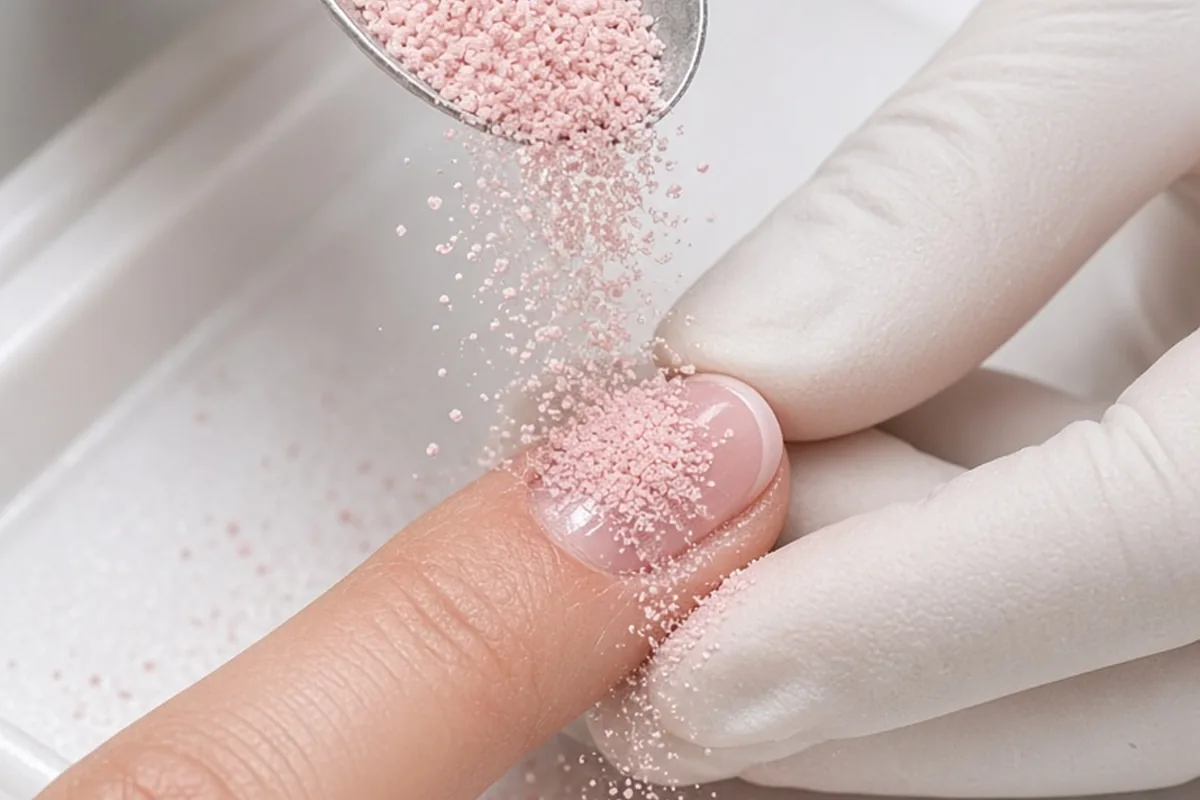
A dip powder manicure combines finely milled acrylic powder with a medical-grade resin adhesive containing cyanoacrylate. During application, a nail technician applies a clear bonding base coat to the natural nail plate or tip extension, then dips the finger into pigmented powder or pours the granules over the nail surface. This process is repeated two to three times to achieve balanced opacity and structure. An activator liquid is then brushed over the powder layers to trigger a polymerization reaction, curing the formula rock-hard in minutes without ultraviolet (UV) or LED light exposure. A dedicated sealant top coat completes the process, providing a high-gloss finish that locks in the color.
For brides, the practical appeal lies in structural reinforcement. Unlike standard polish, which often chips within forty-eight hours of setup and packing, dip powder forms an impenetrable barrier that resists dulling, water exposure, and edge fractures. It adds notable rigidity to brittle or peeling nails, preventing breaks during gown fittings, luggage handling, and ring adjustments. Additionally, because the formula air-dries through its chemical activator, brides avoid the skin dryness or heat spikes sometimes associated with UV curing lamps. The trade-off is rigidity: dip powder offers less mechanical flex than soft gels, meaning improper pressure or blunt impacts can cause cracking across the nail body rather than a simple chip.
Dip Powder Versus Gel and Acrylic for Wedding Events
Evaluating bridal nail options requires balancing longevity, flexibility, aesthetic profile, and removal effort. Soft gel manicures provide a lightweight, flexible feel that mimics natural nail elasticity, but they can peel or lift prematurely if your hands are frequently submerged in water or exposed to oils during pre-wedding beauty treatments. Hard acrylic extensions provide exceptional sculpting control and dramatic length, yet their distinct chemical odor during application and heavier weight can feel cumbersome for brides unaccustomed to enhancements. Dip powder occupies an effective middle ground, combining the resilience of acrylic resin with a lighter footprint that sits smoothly on the nail plate.
When planning a wedding celebration that stretches into a multi-week honeymoon, the choice between these systems comes down to lifestyle and personal preference. The following comparison highlights key practical distinctions for brides weighing their options:
- Durability: Dip powder typically lasts three to four weeks without chipping; soft gel averages ten to fourteen days; traditional acrylic lasts two to three weeks before requiring a fill.
- Flexibility: Soft gel flexes naturally with the nail; dip powder and acrylic are rigid, offering strong defense against bending breaks but transferring blunt impacts directly to the nail bed.
- Application Experience: Dip powder requires no UV lamps and creates minimal odor; acrylic produces strong chemical vapors; gel requires repeated UV or LED lamp exposures.
- Removal Process: Soft gel soaks off in ten to fifteen minutes; dip powder requires twenty to thirty minutes of pure acetone immersion; acrylic demands thirty to forty-five minutes of filing and soaking.
Selecting Bridal Shades and Finishes for Wedding Photography
Nail shades read differently under commercial salon lighting, natural outdoor sunlight, and indoor camera flashes. Highly opaque chalk-white polishes, while striking in person, can appear excessively stark or flat in high-resolution wedding photographs, drawing visual focus away from the wedding band and gown detailing. Soft, translucent neutrals—such as milky ivories, sheer blush tones, and warm alabaster hues—provide an elegant foundation that complements lace, satin, and diverse skin tones. Brides wearing warm champagne or off-white dresses often prefer warm nude or beige-pink bases, while cool-toned bright white gowns harmonize with crisp, cool-toned baby pinks or semi-sheer alabaster.
Specialty finishes also require strategic testing. The classic French ombré, often called a baby boomer fade, blends soft white tips seamlessly into a neutral pink nail bed without a harsh dividing smile line. This gradient effect softens regrowth lines and looks effortless in close-up ring portraits. Glazed or chrome overlays applied over a neutral dip base provide an ethereal pearl sheen, but they require a gel top coat layer over the dip foundation to adhere properly. If you choose a chrome finish, confirm with your technician that your service includes a durable sealant that prevents the mirrored pigment from rubbing off the free edges before the reception.
The Bridal Manicure Timeline from Trial to Wedding Day
Executing a flawless bridal manicure requires proactive calendar planning rather than a last-minute salon drop-in. Scheduling an initial dip powder trial four to six weeks prior to the wedding allows you to evaluate how the formula wears on your nails, how comfortable the thickness feels during daily tasks, and how the chosen shade photographs under varying light conditions. Aligning this trial appointment with your final gown fitting or bridal shower offers a practical rehearsal for how your hands will look alongside your wardrobe and accessories.
Your official wedding manicure should be completed two to three days before the ceremony. Booking on this timeline gives the dip powder formula time to settle, ensures peak gloss, and allows any minor cuticle redness from trimming to resolve completely. Getting your nails done the morning of the wedding creates unnecessary scheduling stress, introduces risks of oil transfer onto delicate dress silks, and leaves zero margin for correcting an uneven shape or accidental shade mismatch. If your event involves travel, having your nails finished two days beforehand ensures they remain pristine throughout airport transit and rehearsal dinners.
Salon Hygiene Standards and Nail Plate Safety
While dip powder provides lasting aesthetic benefits, sanitation practices vary across salons. Traditional dipping methods involve submerging a client's finger directly into a shared communal jar of powder. If a previous client had a micro-tear in their cuticle or an active fungal issue, communal jars can theoretically harbor pathogens. Responsible salons mitigate this risk by pouring powder over the nail with a sterile spoon over a disposable tray, or by portioning a small amount of powder into individual disposable cups that are discarded after each client.
You should also pay attention to how your natural nail is prepped. Aggressive mechanical drilling with rough-grit sanding bands can thin the dorsal layer of the natural nail plate, leading to painful sensitivity, peeling, and long-term weakness. Request gentle hand-buffing to remove surface shine rather than heavy electric filing. If you experience irritation or respiratory sensitivity from standard adhesives, ask your technician about low-odor dip liquids, as cyanoacrylate resin can occasionally trigger allergic contact dermatitis or mild respiratory irritation in sensitive individuals.
Budgeting, Salon Costs, and Bridal Party Logistics
Understanding salon pricing structures helps prevent surprise expenses during a costly wedding planning season. A full dip powder manicure generally ranges from $45 to $75 for a single color on natural nails, depending on geographical location and salon prestige. Additional services will adjust the baseline cost. Adding artificial tip extensions for added length typically adds $15 to $25, while specialized designs such as French fades, micro-nail art, or chrome dustings range between $10 and $30. Safe removal of an existing set before a new application usually incurs an additional $10 to $15 fee.
When coordinating appointments for bridesmaids, mothers, or attendants, factor in service durations. A proper dip powder manicure takes between forty-five and seventy-five minutes per person. Salons with limited dip-certified technicians cannot always accommodate large groups simultaneously. To avoid logistical delays, book well in advance, request dedicated technicians for each participant, and assemble a small emergency touch-up kit containing a glass nail file, high-grit buffer, cuticle oil, and clear nail adhesive for fast fixes during the wedding weekend.
Safe Removal and Post-Wedding Nail Recovery
The most significant risk of nail damage associated with dip powder occurs during the removal phase. Because the acrylic resin cross-links tightly to the nail plate, prying, peeling, or forcing the enhancement off tears away superficial layers of natural keratin. This leaves nails thin, brittle, and sensitive to touch. Proper removal requires patience: a technician will gently file down the glossy, impervious top coat with a medium-grit file, breaking the seal, before wrapping each fingertip in pure acetone-soaked cotton balls secured with aluminum foil.
After soaking for fifteen to twenty-five minutes, the softened product should wipe away easily with an acetone-dampened pad or slide off under gentle pressure from an orangewood stick. If residue remains stubborn, re-soak the nails for another five minutes rather than scraping forcefully. Following your honeymoon or post-wedding celebrations, give your natural nails time to recover by applying daily jojoba-based cuticle oil and rich ceramide hand creams, replenishing moisture stripped away by acetone exposure.
Illustrative Scenarios
Illustrative Trial Scenario: Refining Shade and Thickness
A bride planning a garden ceremony scheduled a dip powder trial five weeks before her wedding day, selecting a popular sheer pink tone. During the trial wear period, she noticed the shade leaned noticeably peach in warm outdoor sunlight and felt slightly bulkier on her nail tips than she preferred for typing. She returned to her salon two days before the wedding, where her technician applied two fine coats of a cooler, translucent alabaster pink and carefully hand-filed the free edges for a slimmer profile.
Key point: Scheduling a trial run several weeks ahead reveals how custom pigment layers behave across varied lighting and allows technicians to calibrate thickness to personal comfort.
Frequently asked questions
Can I add tips or extensions with dip powder for my wedding?
Yes, technicians can adhere standard ABS plastic tips to your natural nail edges before applying the dip powder base. The resin and powder layers bond over the tip seam, creating a smooth, strong extension that looks natural and holds its shape through the wedding festivities.
How far in advance of the ceremony should I get my dip manicure done?
Two to three days before the wedding is the ideal window. This timing preserves maximum gloss, allows the skin around your cuticles to settle from any maintenance, and ensures you do not waste valuable time on salon appointments on your wedding morning.
What should I do if a dip powder nail cracks during the wedding weekend?
Do not attempt to peel or rip the cracked section, as this will damage the natural nail plate underneath. Instead, gently smooth any snagging edge with a fine-grit glass file, apply a dab of clear nail resin or brush-on glue across the fissure, and conceal the line with a drop of clear top coat.
Your next step
Book a dip powder trial appointment four to six weeks before your wedding day to test your preferred shade, confirm comfortable thickness, and verify your salon's hygiene protocols.