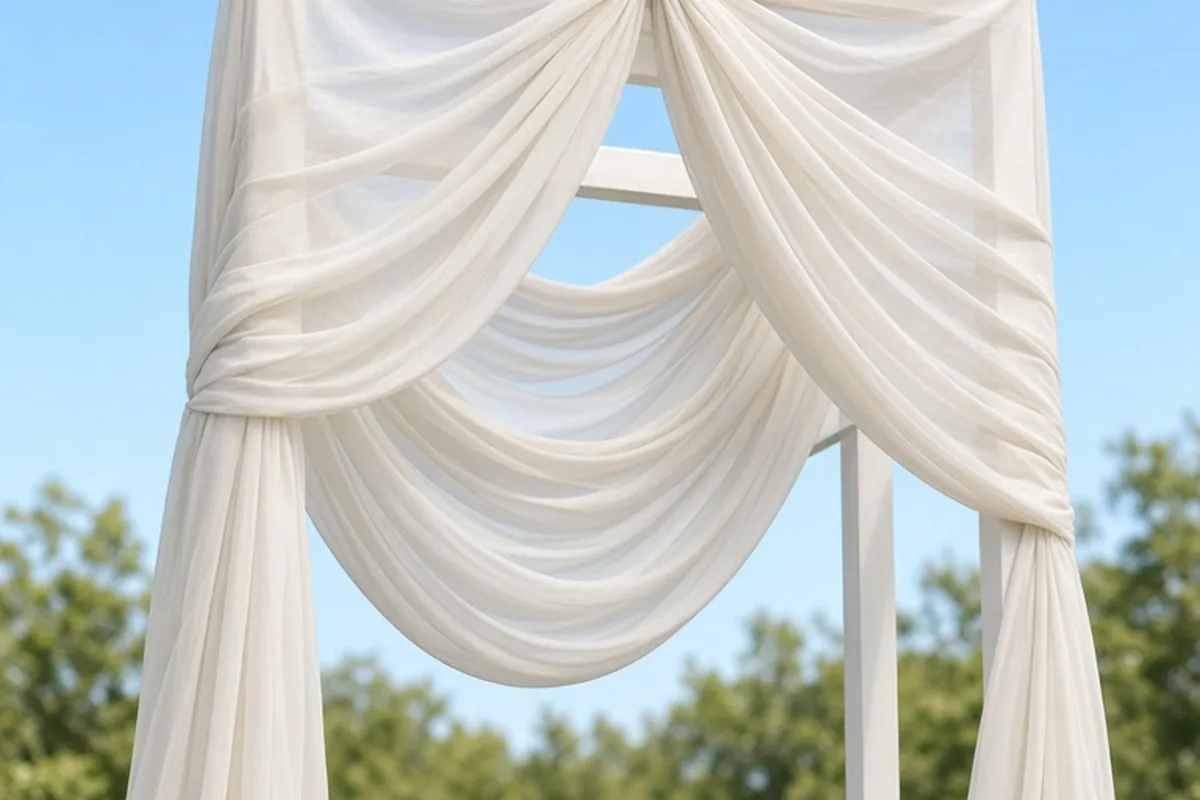
Decorating a wedding with tulle is cost-effective because the lightweight netting delivers high-volume softness without requiring expensive hardware or structural framing. To keep costs low and installation simple, purchase standard 54-inch or 108-inch fabric bolts rather than small craft spools, gather rather than pull the netting taut, and secure swags using clear zip ties or floral wire. Pair layered tulle with warm fairy lights or clipped greenery to transform ceremony arches, aisle chairs, banquet tables, and overhead beams quickly.
Tulle remains a wedding styling staple because it bridges the gap between grand visual scale and modest decor budgets. When handled with deliberate draping techniques, this sheer mesh softens sharp architectural lines, disguises plain venue rentals, and builds romantic focal points without demanding professional floral design fees.
Selecting the Right Bolt Widths, Fibers, and Finishes
The first step in stretching your decorating budget is buying tulle in the correct format for your specific venue projects. Tulle is sold in three common retail formats: narrow six-inch ribbon spools, standard 54-inch dressmaker bolts, and wide 108-inch bridal or ceiling netting. While small ribbon spools work well for tiny accents like favor boxes or ribbon wands, using narrow spools for aisle markers or arches creates a spindly, cord-like appearance that requires dozens of passes to look full. For arches, tables, and swags, purchasing 54-inch or 108-inch bolts yields far greater surface coverage per yard and cuts down your assembly time drastically.
You will also encounter differences in fiber type and surface finish that influence both the budget and the final aesthetic. Nylon tulle is softer, drapes with a fluid hand, and resists static better than stiff polyester, making it ideal for head table swags, bridal photo backdrops, and places where guests will brush against the fabric. Polyester tulle tends to have a crisper, stiffer hand that holds structural puffs, voluminous balloon garlands, and wide ceiling canopy sweeps exceptionally well. Whenever possible, choose a soft matte finish over high-sparkle or glitter tulle. Glitter tulle sheds microscopic particles across dinner plates and rental table linens, while excessive plastic shine can reflect camera flashes harshly in ceremony photographs.
To calculate your fabric requirements accurately before placing an order, map out your designated installation zones rather than guessing a flat total. A single straight measurement along a beam, arch bar, or banister should be multiplied by roughly one and a half to two times to account for the physical fabric lost to dips, knots, and pleats. When ordering online or through wholesale craft warehouses, request a physical fabric swatch first so you can verify that the ivory or white undertones match your tablecloths and bridal attire in natural daylight.
Draping Ceremony Arches and Altars Without Structural Sag
Ceremony backdrops, chuppahs, and geometric arches demand volume, but improper attachment can leave your fabric looking limp or sliding down the frame midway through your vows. The key to creating an opulent arch on a budget is layering gathered folds rather than stretching individual sheets flat. Begin by folding a wide bolt lengthwise into gathered pleats, creating an accordion-style ribbon about ten to twelve inches wide. This concentration of layers creates rich opacity against bright outdoor backgrounds, preventing the arbor frame from looking bare or exposed under bright sunlight.
Securing the fabric securely requires mechanical fasteners that stay hidden from your guests. Clear plastic zip ties, pliable chenille stems, and fabric-covered florist wire are far more reliable than standard double-sided tape or delicate ribbon ties. Loop your gathered tulle around the top apex of the arch, secure it tightly with a clear zip tie, and clip the zip tie tail completely flush so it cannot snag the mesh. Allow the fabric to swag gently toward the outer shoulder of the arch before fastening a secondary anchor point, letting the remaining fabric trail downward in a generous floor puddle.
Outdoor weddings require additional wind management to prevent your arch from acting as a giant sail in sudden gusts. Leave the central backdrop opening slightly wider to allow airflow, and drop smooth ground anchors, such as flat decorative paving stones or small sandbag weights, inside the hem pools at the base of the uprights. You can tuck clean floral clusters, salal leaf bundles, or faux boxwood sprigs directly over the zip ties to conceal the hardware while keeping the overall arrangement elegant and secure.
Styling Ceremony Aisle Chairs and Pew Markers
Aisle markers frame the procession and appear in nearly every photo taken from the rear of the ceremony, yet decorating every individual chair row with fresh flowers can quickly inflate your floral invoice. Tulle allows you to dress ceremony seating at a fraction of that expenditure by focusing on clean geometric shapes. One of the most timeless treatments is the vertical drop sash, where a length of 54-inch tulle wraps horizontally around the top rail of an aisle-facing chair, cinches in the center with floral wire, and cascades straight down behind the seat back to graze the floor.
If you are decorating church pews or banquet chairs connected in long continuous banks, consider a linked scallop swag along the aisle perimeter. Run a continuous line of gathered tulle along the outer aisle chairs, securing the fabric at every second or third chair back with a soft, natural drop in between. Ensure the lowest point of each scallop sits at least twelve inches above the carpet or aisle runner. Swags that hang too low present an immediate tripping hazard for wedding party members carrying bouquets or guests stepping into rows to find their seats.
For outdoor lawn ceremonies, folding wooden chairs or resin bistro chairs can be accented using asymmetrical gathered rosettes. Gather an eight-foot piece of tulle into a cloud-like cluster, tie off the center with matching floral wire, and pin a single real or artificial stem, such as eucalyptus, olive branch, or baby breath, directly to the knot. Fasten the cluster to the outer corner of the chair back rather than dead center. This asymmetrical placement creates modern visual interest and stays completely out of the way of guests sitting down.
Pairing Tulle With Warm Fairy Lights for Overhead Displays
Illuminating sheer netting transforms basic party fabric into an ethereal focal point, making it one of the most cost-effective methods for disguising high metal beams, exposed ceiling rafters, or drab venue wall partitions. When light passes through several layered folds of translucent mesh, the netting diffuses the individual pinpoints of light into a continuous, soft glow. This diffusion softens camera shadows during evening toasts and eliminates the need for expensive uplighting rentals around your key stages.
Safety is the primary consideration when combining fabric and electric light fixtures. Always use cool-to-the-touch LED string lights or commercial copper-wire micro fairy lights rather than older incandescent light strings, which generate concentrated heat capable of melting or discoloring synthetic nylon and polyester fibers. Inspect the light sets for legitimate safety certification marks before hanging them, and choose warm white or soft amber tones over cool daylight blue, which can appear sterile and harsh inside indoor dining spaces.
To construct a lit ceiling canopy or head table backdrop, hang your light strings first on stable overhead supports, such as venue-approved magnetic ceiling hooks, high-load tension wires, or pipe-and-drape uprights. Once the light drops are spaced evenly, layer your wide tulle netting across the front of the lights rather than weaving the cords back and forth through the mesh. Hanging the tulle in front creates a uniform diffusion layer, hides the tangled power cords, and makes teardown at the end of the night dramatically faster.
Dressing Reception Tablescapes, Head Tables, and Dessert Bars
Reception tables require decor that is durable enough to withstand drink glasses, serving utensils, and constant guest movement throughout the dinner hour. For standard guest tables, skip bulky gathered skirts and instead use soft tulle runners layered over standard linen tablecloths or bare polished wood farm tables. Cut a 54-inch wide strip of matte tulle to twice the table length, gently gather it down the center line of the table, and let the ends pool gracefully onto the floor at each short end. Weave battery-operated votives and low greenery garlands along the gathered spine for a luxurious centerpiece base.
Head tables, sweetheart tables, and cake displays benefit from fuller structural skirts that completely conceal table legs, electrical wiring, and under-table storage boxes. You can create a rich ruffled skirt without sewing by anchoring gathered swags to the table edge using commercial plastic linen clips equipped with hook-and-loop fasteners. Loop lengths of tulle through the clips in repeating folds, ensuring the fabric hangs evenly to the floor. For an elevated dimensional look, layer a neutral ivory or champagne tulle over a white base tablecloth to produce subtle color depth under ambient banquet lighting.
Keep practical food safety and service flow in mind around self-serve buffets and dessert stations. Never drape billowing fabric swags along the front edge of a buffet table where guests reach across open chaffing dishes or dessert platters, as loose mesh can easily snag plates or drift dangerously close to open Sterno flames. Confine your tulle treatments on food stations to elevated backdrop displays, sign frames, or cleanly pinned front aprons that sit entirely flat against the banquet cloth.
Prep Work, Wrinkle Removal, and Installation Logistics
Synthetic tulle straight off a retail bolt often holds deep packing creases, creases that will look unkempt under venue spotlighting if left untreated. Because synthetic fibers melt quickly under direct heat, never touch a hot household iron directly to the mesh. The safest and most effective way to relax tulle creases is with a handheld garment steamer held three to four inches away from the suspended fabric. If you lack a portable steamer, hang your pre-cut lengths on plastic coat hangers in a closed bathroom while running a hot shower, allowing the ambient steam to release tension in the fibers naturally.
Preparation before wedding morning makes the difference between an effortless setup and a stressful race against the clock. Pre-cut and measure your fabric lengths at home several days in advance, roll each section around empty wrapping paper tubes or clean pool noodles to prevent fresh wrinkles, and label each roll clearly with painter tape indicating its destination, such as Arch Swag, Head Table, or Aisle Chairs. Pack a dedicated installation kit containing heavy-duty fabric scissors, clear zip ties, floral wire, removable adhesive hooks, painter tape, and a static-guard spray to counteract dry indoor air.
Coordinate your setup and teardown plan with your venue manager before buying attachment supplies. Many historical properties, hotels, and municipal halls prohibit staples, nail fasteners, metal wire, or high-tack tape on their architectural woodwork, painted drywall, and ceiling beams. Verify what hanging methods are permitted, such as spring tension rods, weighted base plates, or removable damage-free hooks. Pack wire snips in your teardown bin so your cleanup crew can simply cut zip ties cleanly without tearing the fabric or scratching the venue property during midnight exit.
Frequently asked questions
How much extra tulle should I buy for draping projects?
Plan to order roughly one and a half to two times the straight linear measurement of your installation area. The extra yardage accommodates natural downward swags, decorative attachment knots, and soft pooling on the floor without leaving the fabric looking stretched tight.
Can I wash or iron tulle if it gets dirty or wrinkled?
Do not use a standard dry iron directly on synthetic netting, as nylon and polyester melt under high heat. Hand wash small sections in cool water with gentle detergent if needed, air dry flat, and remove creases using a handheld fabric steamer held several inches away.
How do I stop tulle from catching static and clinging awkwardly?
Lightly mist the hung fabric with an anti-static spray or a DIY solution of water mixed with a few drops of fabric softener. Let the mist settle naturally before guests arrive to keep the layers floating freely rather than bunching together.
What is the best way to secure tulle without damaging venue walls or arches?
Use clear plastic zip ties, fabric-wrapped chenille stems, or heavy-duty removable adhesive hooks designed for temporary event decorating. These fasteners hold substantial tension without scratching painted finishes or leaving sticky tape residues on venue woodwork.
Your next step
Measure the linear dimensions of your ceremony arch and head table today, then order a small fabric sample to verify color match and drape before purchasing full bolts.