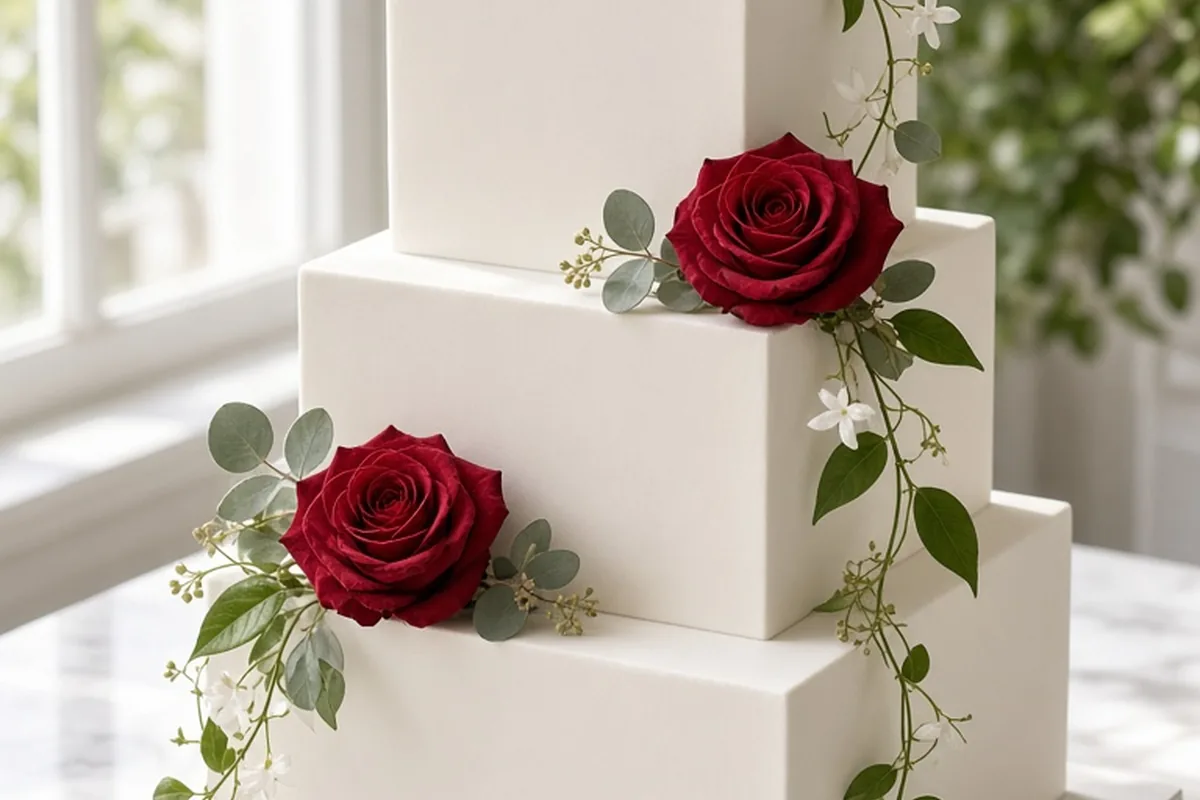
To design an elegant wedding cake featuring red roses, balance the bold floral color against clean fondant, smooth buttercream, or subtle textured finishes. Elegant styles include a cascading spiral of deep crimson blooms down multiple tiers, minimalist single-stem focal points on modern geometric tiers, or dark romantic arrangements paired with moody metallic accents. Always use food-safe stem preparation or handcrafted sugar roses to protect cake surfaces from moisture and contaminants while preserving a refined visual presentation.
Red roses remain one of the most recognizable symbols of romance, but translating their classic look into a contemporary wedding cake requires deliberate choices in color contrast, flower placement, and surface texture.
Styling Arrangements: Cascades, Clustered Groupings, and Minimalist Focal Points
The way you position red roses on a cake dictates whether the finished confection looks grandly traditional, sleek and modern, or richly dramatic. A continuous cascade is the most traditional approach, where blooms wind in an organic S-curve from the top tier down to the cake board. To keep a cascade looking sophisticated rather than overcrowded, professional cake artists vary bloom sizes. Placing fully open garden roses near the bottom tiers creates visual weight, while tighter buds and small spray roses wind toward the crown to guide the eye upward naturally.
For couples seeking a more contemporary aesthetic, asymmetrical clustering offers an intentional, sculptural feel. Rather than trailing flowers down the entire height of the cake, the designer places one lush cluster at the base of the top tier and balances it with a wider, offset cluster anchored along the bottom ledge. This technique leaves large expanses of smooth frosting visible, allowing crisp architectural tier lines to shine through while still delivering rich floral impact.
Minimalist styling takes restraint even further by featuring single, statement-sized red roses positioned with deliberate precision. On a tall, two-tier or three-tier design with extended tier heights, one pristine, open rose resting at the offset junction of each layer creates a striking gallery-style centerpiece. Minimalist arrangements benefit from pairing the roses with subtle textural elements like delicate sprigs of seeded eucalyptus, dark olive foliage, or fine trailing jasmine vine, which soften the geometry without cluttering the silhouette.
Pairing Red Roses with Frosting Textures and Reception Color Palettes
Because deep red is an intense, saturated color, the background finish on the cake tiers establishes the entire mood of the dessert table. Crisp white or warm ivory fondant delivers the highest contrast, evoking timeless black-tie elegance. When working with smooth fondant, the sharp right-angle edges of modern tiers prevent the design from looking dated. If pure white feels too stark, warm alabaster, soft champagne, or pale stone-colored icing provides a gentler transition that flatters deep velvet petals.
Textured finishes offer an entirely different design direction. Soft horizontal ribbed buttercream, subtle stucco spatula sweeps, or a delicate deckled edge on fondant give the cake tactile warmth that complements the organic softness of rose petals. On semi-naked tiers, where thin layers of frosting let the golden sponge peek through, red roses introduce an earthy, rustic romance. For autumn and winter celebrations, moody aesthetics can be achieved by pairing dark crimson blooms with charcoal-tinted fondant, deep navy accents, or brushed antique gold leaf, creating a dramatic chiaroscuro effect under ambient candlelight.
Color harmony within the floral selection itself is equally critical. Incorporating a single shade of uniform bright red can sometimes photograph flat. Layering shades such as deep bordeaux, dark burgundy, classic ruby, and soft blush creates depth, making the entire composition appear dimensional and painterly across different lighting conditions throughout the evening.
Fresh Red Roses Versus Handcrafted Sugar Flower Artistry
Choosing between fresh botanical roses and handcrafted sugar paste flowers is one of the most significant decisions in cake design, affecting appearance, longevity, and overall budget allocation. Fresh roses offer genuine botanical scent, natural petal variations, and an organic presence that matches bridal bouquets seamlessly. However, fresh flowers are living elements subject to wilting, temperature sensitivity, and bruising, especially in warm ballrooms or outdoor summer tents.
Sugar flowers, crafted petal by petal from gumpaste and colored with cosmetic-grade luster and petal dusts, provide complete artistic control. A skilled sugar artist can replicate specific rose varieties, custom-match rare shades of crimson, and thin petal edges until they are translucent. Crucially, sugar flowers will never wilt during long photography sessions or warm afternoon receptions. Couples can also preserve their sugar rose arrangements as keepsake display pieces inside glass cloches for years after the wedding celebration.
The primary trade-off lies in labor, production timelines, and cost variables. Fresh roses involve lower material costs but require careful day-of refrigeration, stem sterilization, and precise timing during installation. Sugar flowers eliminate refrigeration challenges and food-safety chemical concerns, but they require many hours of delicate manual sculpting per bloom. If you are uncertain which path fits your priorities, discuss whether a hybrid design might work, such as using handcrafted sugar flowers for delicate focal blooms while arranging fresh stems around the cake stand base.
Food Safety and Stem Preparation for Real Red Roses
Fresh flowers should never be inserted directly into edible cake sponge or frosting without protective barriers. Most commercial florist roses are grown with systemic fertilizers, pest repellents, and chemical preservatives designed to prolong vase life rather than support culinary safety. Even untreated or organic garden roses can carry soil particles, pollen, and natural plant sap that degrade frosting stability and introduce moisture risks directly into edible layers.
Professional cake decorators employ several reliable barrier methods to ensure fresh stems never touch the cake interior. One common approach involves wrapping each individual stem tightly with florist paraffin tape, followed by dipping the wrapped base into melted food-grade cocoa butter or edible wax to form a sealed moisture shield. Another industry-standard method utilizes plastic flower picks or food-safe wide drinking straws inserted into the cake tier, with the trimmed rose stem seated securely inside the hollow sleeve.
Clear coordination between your cake baker and wedding florist prevents confusion on the wedding day. While florists often supply matching blooms from the bridal order, many cake designers prefer to handle floral placement personally to protect structural dowels, maintain balance, and guarantee food-safe isolation. Clarify in writing during vendor consultations whether the florist will deliver pre-trimmed, pesticide-free blooms to the baker, or if the baker will supply and insert sanitized flowers on-site during final setup.
Architectural Tier Shapes and Structural Supports for Rose Arrangements
The physical architecture of your cake tiers heavily influences how red roses can be anchored without risking structural shifts. Traditional round stacked cakes offer soft curves that allow organic floral cascades to drape comfortably along exterior ledges. However, modern square or hexagonal tiers introduce crisp geometric lines, where positioning roses along alternating corners creates high-contrast visual framing that feels structured and deliberate.
Separated tier architectures have surged in popularity for floral-heavy presentations. Acrylic spacer blocks, open metal pedestals, or hidden floating risers placed between tiers create distinct open chambers. These spaces allow a decorator to build dense, 360-degree beds of red roses that encircle the central pillar without resting directly on cake surfaces. This approach showcases full-bodied floral volume while keeping the edible tiers clean, distinct, and easy to disassemble during reception service.
Because large rose arrangements add significant physical weight, adequate interior support within the cake is non-negotiable. Soft fillings like whipped cream or loose mousses can compress under the weight of heavy blooms, moisture tubes, and foundational doweling. Firmer fillings like dark chocolate ganache, stabilized Italian meringue buttercream, or dense fruit preserves provide the structural rigidity needed to keep tiers level and prevent exterior cracking around stem insertion points.
Display Table Presentation, Reception Lighting, and Cake Cutting Logistics
The elegance of a red rose cake extends beyond the frosting to how the display table is positioned within your reception venue. Direct sunlight streaming through windows can soften buttercream, melt fondant adhesives, and cause fresh cut roses to open prematurely or droop before the reception begins. Place the cake table in a climate-controlled area away from direct heat registers, drafty exterior doors, and direct sunlight paths.
Reception lighting fundamentally alters how red roses appear in photography and video. Deep crimson hues absorb light, which can cause dark red roses to look almost black in dimly lit reception halls. Requesting a dedicated pin spot from your lighting vendor illuminates the cake from an elevated angle, highlighting the velvety texture of the petals and revealing delicate details in the frosting. Avoid colored accent uplighting near the cake table, as purple, blue, or green spotlights can distort red floral tones into muddy shades.
Plan practical logistics for the ceremonial cake cutting well ahead of the event. Ensure your caterer or coordinator knows which floral elements are purely decorative before slicing begins. Sugar flowers anchored on internal wires and fresh roses held within protective picks must be extracted carefully tier by tier in the catering kitchen before portions are plated for guests, ensuring a seamless, safe dining experience.
Frequently asked questions
Can I use real red roses from my florist on an edible wedding cake?
Yes, but they must be prepared with proper food-safe barriers before touching the cake. Commercial florist roses often carry systemic pesticides and moisture treatments, so stems should be trimmed, sealed with florist tape, dipped in food-safe wax, or inserted inside food-grade plastic picks or straws.
How do sugar red roses compare in durability to fresh blooms during a warm wedding?
Handcrafted sugar roses are far more durable in warm reception environments because they will not wilt, drop petals, or brown around the edges. However, they are sensitive to high humidity and direct water contact, which can soften gumpaste, so they should be stored in cool, dry conditions until service.
What colors pair best with red roses on a wedding cake?
Warm ivory, soft champagne, and clean porcelain white provide classic, high-contrast backdrops that let crimson petals stand out. For rich, modern palettes, pairing red roses with brushed gold leaf, deep forest green foliage, soft blush accents, or matte charcoal tiers creates dramatic depth.
Who should place the fresh red roses on the cake during wedding setup?
Most professional cake artists prefer to place the flowers themselves during on-site delivery to safeguard structural stability and maintain sanitary standards. You can have your florist deliver untreated, un-wired stems directly to the venue cake table so the baker can inspect, seal, and arrange them.
Your next step
Schedule a joint design conversation with your cake baker and florist to confirm whether you will use fresh or sugar roses, and establish who will prepare the stem barriers during on-site reception setup.