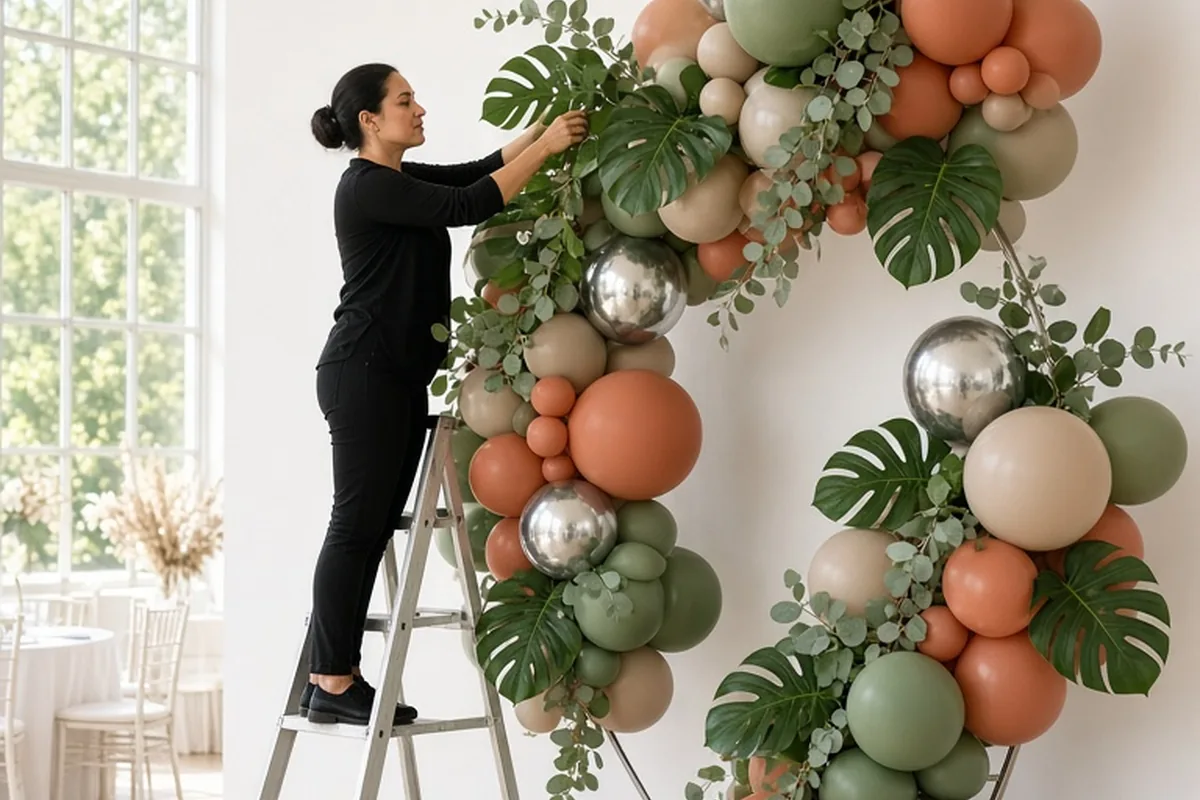
To elevate your wedding reception with stunning balloon decor, pair tailored color palettes with modern organic styling rather than rigid, traditional arches. Focus high-density arrangements on primary focal zones—such as the sweetheart table, photo backdrop, or venue entrance—and combine matte or double-stuffed latex with fresh florals or architectural framing. Prioritizing air-filled structural designs over helium-filled bundles ensures stability throughout the celebration while allowing seamless coordination with your venue rules, lighting layout, and overall wedding aesthetic.
Modern wedding decor has redefined balloon styling from playful party accents into sophisticated, sculptural installations that complement high-end floral design and architecture.
Selecting Sophisticated Palettes with Matte, Chrome, and Double-Stuffed Finishes
The difference between a casual birthday garland and an elevated wedding installation begins with texture, opacity, and color formulation. Standard party balloons often have a semi-translucent, shiny sheen that reflects flash photography in a harsh, unintended manner. To achieve a luxurious, contemporary look, professional balloon artists frequently rely on double-stuffing, a technique where one colored balloon is placed inside another before inflation. This layering eliminates translucency, mutes synthetic tones into nuanced earth shades, and allows designers to produce custom hues—such as dusty rose, muted terracotta, warm cashmere, or sage—that match your wedding paper goods and linen rentals precisely.
Balancing distinct finishes across an installation adds visual depth and prevents large arrangements from reading as a flat, single-tone mass. Matte finishes typically serve as the primary visual foundation because they absorb ambient lighting softly and blend effortlessly with natural floral arrangements. Introducing secondary finishes, such as mirror-like chrome accents or subdued luster pearls, creates intentional focal points that catch evening candlelight or warm pin-spot lighting. When selecting finishes, review physical samples under both daylight and dim reception lighting, as artificial room illumination can shift yellow undertones in lighter creams and whites.
Designing Organic Installations for High-Impact Reception Zones
Rather than scattering small clusters of balloons across every corner of a banquet hall, wedding designers achieve maximum visual return by concentrating volume in high-impact zones. Organic balloon installations work best when they frame moments that guests naturally pause to photograph or gather around. High-priority locations include the main venue entryway, the blank wall behind the sweetheart table, the perimeter of the primary bandstand or DJ booth, and dedicated photo lounge areas. Framing these specific backdrops allows you to transform plain drywall, exposed pipe, or utilitarian venue dividers into cohesive artistic statements.
Organic styling relies on deliberate asymmetry, varying balloon diameters from tiny five-inch accents to sweeping thirty-six-inch visual anchors. Unlike the uniform grids of traditional corporate arches, an organic installation mimics natural botanical growth, tapering gently at the floor line and swelling where it anchors to architectural surfaces. Placing an expansive garland along the curve of an existing architectural feature, like an industrial staircase railing, exposed timber beam, or historic masonry archway, integrates the decor directly into the venue rather than making it feel like an isolated, temporary insert.
Blending Fresh Floral Stems, Greenery, and Custom Architectural Frameworks
Pairing balloons with organic botanical elements bridges the gap between classic wedding floristry and modern sculptural styling. Fresh foliage like Italian ruscus, silver dollar eucalyptus, and broad monstera leaves can be woven directly into the valleys of an installation, disguising attachment points and softening outer silhouettes. To keep live stems hydrated without puncturing latex, experienced stylists use water tubes secured with floral tape or mount foam cages directly to the underlying framework rather than attempting to pin stems directly to the balloons.
Sturdy backdrops and free-standing armatures allow installations to stand securely without relying on venue walls. Curved acrylic display boards, open metal grid arches, and painted wooden partition flats provide solid surfaces that support the structural weight of large installations while incorporating signage, neon monograms, or printed seating charts. When designing a mixed-media display, ensure that floral densities transition smoothly into the balloon clusters, clustering fresh garden roses or orchids where the installation meets eye level so guests can appreciate their fragrance and delicate texture up close.
Managing Environmental Conditions: Climate, Direct Sun, and Air Versus Helium
Environmental exposure plays a decisive role in whether balloon installations maintain their appearance through a full reception. Standard latex reacts quickly to heat, ultraviolet radiation, and humidity. In outdoor settings or sun-drenched glass atriums, direct sunlight causes latex to oxidize within a few hours, creating a chalky, velvety haze over the surface. While a velvety matte patina is often desirable for rustic or boho color schemes, oxidation will dull glossy finishes and chrome accents. If a polished look is vital, installations must be sheltered under patio canopies or treated with dedicated silicone balloon coating sprays designed to delay oxidation.
Air-filled constructions are substantially more durable and reliable for modern reception design than helium-filled alternatives. Helium molecules escape through latex pores quickly, particularly in fluctuating temperatures, leading to sagging arrangements by late evening. In contrast, air-filled latex balloons attached to aluminum framing, Dacron monofilament, or heavy-gauge conduit can withstand hours of celebration without losing structural tension. Furthermore, air-filled floor-based or wall-mounted designs eliminate the environmental hazards of accidental releases associated with floating ribbons and outdoor helium balloons.
Weighing Professional Installation Logistics Against DIY Assembly Realities
Assembling wedding balloon installations requires an honest assessment of labor, transport, and day-of timing. Crafting a full organic arch typically demands hundreds of individual balloons inflated to graduated sizes, tied off, bundled into clusters, and strapped onto rigid structures. While purchasing bulk latex and electric pumps appears cost-effective online, assembling arrangements on the morning of a wedding introduces intense time pressure. Transporting pre-inflated garlands requires large cargo vans with clean, lined interiors to prevent static popping, meaning couples handling their own decor must coordinate dedicated transport vehicles and loading assistance.
Professional balloon stylists bring specialized rigging hardware, color formulation experience, and rapid troubleshooting tools that protect couples from day-of stress. A professional team arrives with heavy cast-iron base plates, specialized rigging clamps, ladder systems, and reserve inventory to replace popped elements immediately during installation. If you choose to tackle smaller elements on a DIY basis, restrict personal projects to manageable, non-critical items—such as a welcome table garland or low dessert bar display—and complete the assembly inside the venue during scheduled setup access windows rather than attempting to transport fragile, voluminous garlands across town.
Navigating Venue Rigging Rules, Ceiling Attachments, and Takedown Contracts
Before finalizing design concepts or signing vendor proposals, couples must thoroughly review their venue contract regarding allowable attachment methods. Historic venues, boutique hotels, and industrial warehouse spaces often have strict preservation covenants that prohibit adhesive hooks, gaffer tape, nails, or staples on interior surfaces. In these spaces, balloon designers must use entirely free-standing support systems, such as weighted telescopic pipes and drape uprights, heavy cross-bases, or non-marking magnetic attachments compatible with structural steel beams.
Clear post-event logistics are equally important and must be agreed upon in writing with both the venue and the styling vendor. Reception contracts routinely require that all decorations, including rigging lines and frame armatures, be completely removed within an hour or two of the event ending. Professional decor contracts should explicitly indicate whether teardown service is included in the quoted fee or if personal bridal party members are responsible for popping latex, packing down metal frames, and hauling debris away. Clarifying disposal protocols upfront prevents unexpected venue cleaning penalties or forfeiture of your security deposit.
Budget Variables and How to Request Transparent Decor Quotes
Pricing for wedding balloon styling varies widely based on geographic market, installation scale, design complexity, and venue access schedules. Rather than a flat per-foot rate, professional quotes are built on multiple operational components: specialized materials, labor hours for custom color pairing and inflation, on-site rigging crew size, travel logistics, and midnight strike fees. Custom double-stuffed palettes and the integration of delicate fresh floral stems naturally demand higher material allowances and specialized handling than single-layer monochrome installations.
To obtain accurate, transparent proposals from local event designers, provide clear logistics at the initial consultation. Send high-resolution photos of the targeted installation space, exact ceiling height measurements, the scheduled vendor access window, and inspiration imagery highlighting the density and textures you prefer. Ask prospective decorators whether their written estimate includes structural frame rental, weighting materials, delivery mileage, and post-event removal. Receiving itemized estimates enables you to modify installation scale—such as concentrating resources on one striking focal wall rather than dividing your budget across three smaller displays—without sacrificing overall visual quality.
Frequently asked questions
How far in advance can air-filled balloon decor be set up for a wedding?
Air-filled installations can comfortably be built 24 to 48 hours in advance if they remain in an indoor, climate-controlled venue away from heat vents and direct sunlight. Outdoor installations should always be assembled as close to guest arrival as possible to avoid premature latex oxidation or weather-related popping.
Can balloon decor look elegant alongside formal black-tie wedding aesthetics?
Yes, balloon decor pairs seamlessly with formal aesthetics when designed with restrained color palettes, rich matte textures, and architectural framing. Using double-stuffed neutral shades, monolithic color blocks, and fresh floral integrations creates a sculptural art piece rather than a party novelty.
What is the best way to clean up and dispose of balloons after the reception?
Balloons must be deflated with a safety cutter, gathered into heavy-duty disposal bags, and disposed of according to venue waste management rules. Never release latex into the open air outdoors, and ensure all supporting wire, zip ties, and frames are separated for reuse or recycling.
Your next step
Request your venue's decor guidelines and ceiling rigging restrictions today, then gather targeted photos of your desired display wall before reaching out to local balloon designers for itemized proposals.