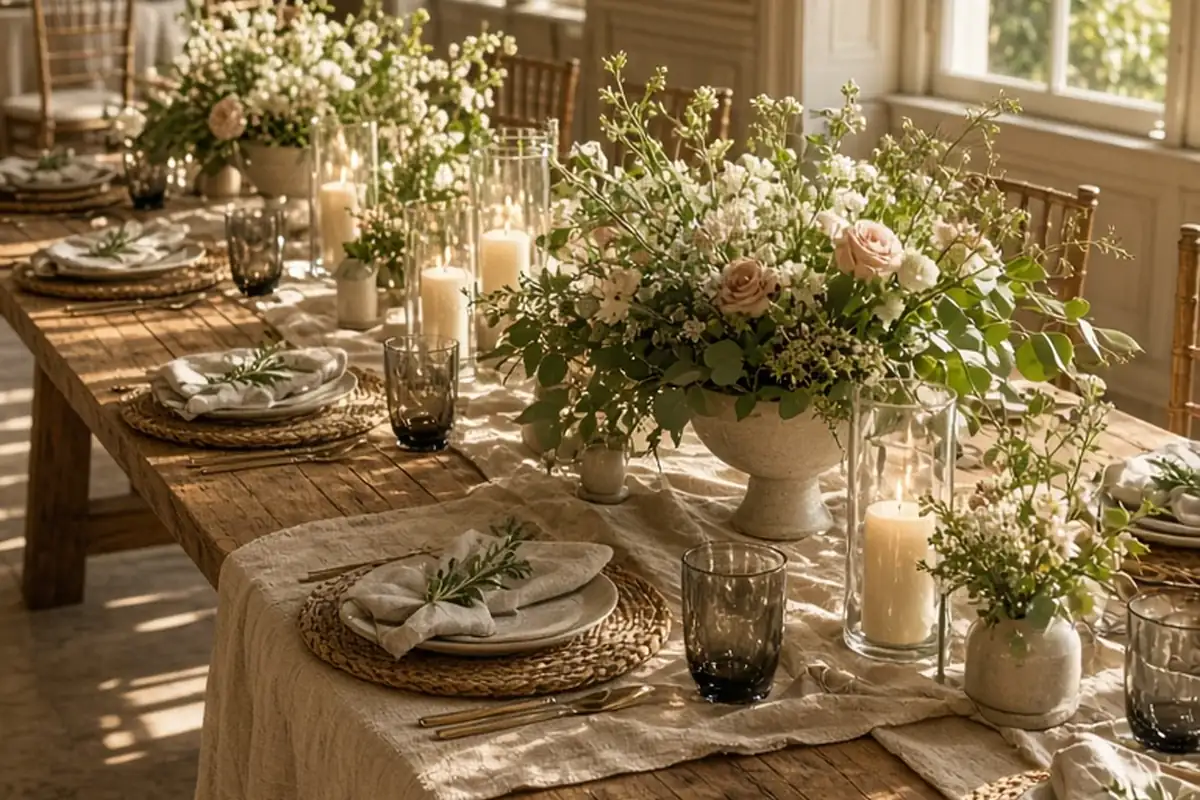
To elevate your wedding reception table decorations, create visual depth through layered textures, intentional lighting, and balanced heights rather than overcrowded arrangements. Combine textured linens or raw wood with curated charger plates, colored glassware, and varied taper or pillar candles. Keep floral arrangements either below fourteen inches or elevated above twenty-four inches on slender stands so guests can easily converse across the table.
Your reception tables serve as the visual and social anchor of your wedding celebration, where guests spend hours dining, talking, and celebrating. Designing an elevated tablescape goes beyond setting down flowers; it involves balancing proportion, ambient light, tactile materials, and functional space for food and beverage service.
Balancing Floral Centerpiece Heights to Protect Guest Sightlines
A common oversight in wedding reception styling is placing centerpieces directly in the primary sightline of seated guests. When arrangements stand between fifteen and twenty-two inches tall, they create a physical and visual barrier that obstructs cross-table conversations. To maintain an open, welcoming environment while still achieving dramatic visual impact, focus your floral strategy around either low compote arrangements or high elevated structures on slim risers.
Low floral centerpieces, ideally measuring ten to twelve inches from the tabletop to the top of the blooms, allow guests to make natural eye contact across banquet or round tables. Use footed ceramic compotes, shallow stone vessels, or textured metal urns that anchor lush, spreading greenery and seasonal flowers. For rooms with soaring ceilings or large footprints where low flowers might get visually lost, incorporate tall elevated installations using slender metal pedestals or clear acrylic stands that lift the floral mass above twenty-four inches, well above seated eye level.
Mixing table shapes and arrangement styles across the reception room adds visual interest and prevents a repetitive, banquet-hall appearance. For instance, you can place tall, architectural floral installations on select central round tables while lining long wooden feasting tables with low, sprawling garden-style bowls and clusters of bud vases. This intentional contrast creates movement throughout the venue while ensuring practical comfort for every seated guest.
Layering Linens, Textured Runners, and Tactile Fabrics
Textiles form the canvas of your entire tablescape and set the baseline mood for the room. Standard poly-cotton rental tablecloths can look flat under reception lighting, whereas introducing natural fabrics with distinct grain, weave, and drape instantly elevates the space. Consider stone-washed Belgian linen, crinkled cotton gauze, raw silk dupioni, or heavyweight matte velvet depending on the season and overall venue aesthetic.
On solid farm tables or finished hardwood surfaces, you do not need a full-drop tablecloth. Instead, run an organic fabric runner down the center, allowing the edges to pool gently on the floor at each end for an effortless, romantic drape. Leaving the warm wood exposed provides rich contrast against delicate china and polished glassware. If you are working with standard folding tables, select floor-length base linens with zero break at the floor, topped with a narrower runner or layered overlay in an accent tone to add dimension.
Napkin styling offers another immediate tactile opportunity to elevate each place setting. Rather than stiff, upright fan folds or traditional corporate folds, choose relaxed styling that emphasizes fabric quality. A soft organic knot resting in the center of the charger plate, a clean waterfall drape hanging off the edge of the table beneath the dinner plate, or a crisp triple fold holding a printed menu and a sprig of fresh herb provides an understated, tailored finish.
Designing Tabletop Lighting With Hurricane Lamps, Tapers, and Pillars
Lighting transforms the atmosphere of a reception more dramatically than almost any other decorative component. Relying solely on overhead venue dimmers often leaves tables looking shadowy or washed out. Incorporating diverse candle heights across the table surface creates a warm, flattering golden glow that moves dynamically throughout the evening as daylight fades.
Combine slender taper candles in glass hurricane sleeves with low votives and sturdy pillar candles clustered at varying levels. Glass hurricane chimneys are not only an elegant design feature; they are frequently required by venue fire regulations to enclose open flames, especially in historic buildings or outdoor tented spaces where breezes can cause unshielded wax to drip onto linens. For a modern, organic look, mix candle holders made of varied materials such as matte ceramic, turned brass, and fluted glass.
If your venue prohibits open flames altogether, look for premium wax-coated LED candles with warm, realistic 3D flicker wicks rather than cool-toned plastic alternatives. Placing LED tea lights inside frosted or amber glass votive holders diffuses the artificial light source, producing a soft illumination that mimics real candlelight closely without violating safety protocols.
Curating Place Settings With Mixed Dinnerware, Glassware, and Flatware
Individual place settings are where your guests interact with your design up close for the longest period. Moving beyond the standard white round plate and basic utility flatware allows you to establish a cohesive design narrative. Start with a distinctive charger plate or base plate that frames each course; options include natural woven rattan, glazed terracotta, scalloped ceramic, or metallic-rimmed glass.
Flatware finishes should complement your broader palette without needing to match every metallic accent in the room exactly. Brushed champagne gold, matte black, antiqued pewter, and polished copper flatware bring texture and weight to the table. Pair your flatware selection with specialty glassware, incorporating at least one colored or textured glass—such as an amber water goblet, a smoke-gray wine glass, or a vintage pressed-glass coupe—alongside crystal clear stemware to catch candlelight.
When planning curated place settings, coordinate directly with your caterer to ensure each piece fits the planned menu progression. Confirm whether chargers will remain on the table during dinner service or be cleared after the first course, and verify that the rim width of rental plates leaves sufficient room for glassware groupings and bread plates without crowding the guest's personal dining zone.
Styling Continuous Greenery and Fruit Runners on Long Banquet Tables
Long rectangular banquet or feasting tables benefit from horizontal movement rather than isolated round arrangements. A continuous garland or loose foliage runner running down the center spine creates a lush, cohesive focal point that draws the eye down the entire length of the room. Italian ruscus, seeded eucalyptus, silver dollar eucalyptus, olive branches, and bay leaf provide durable foundations that resist wilting over long receptions.
To elevate a foliage runner beyond plain greenery, weave in whole and halved fresh fruits for rich organic texture, color saturation, and seasonal authenticity. Pomegranates, dark mission figs, bosc pears, blood oranges, and clusters of deep purple grapes lend an opulent, still-life painting aesthetic to autumn and winter tables. In spring and summer, whole peaches, Meyer lemons, and green plums add vibrant, fresh tones.
Leave practical breathing room around the base of foliage runners to accommodate wine bottles, salt and pepper cellars, and water carafes. If you are serving family-style dining where large platters must sit on the table, keep the foliage footprint narrow (under eight inches wide) or swap continuous garlands for clusters of petite bud vases that catering staff can easily work around.
Integrating Personalized Paper Goods and Custom Calligraphy Details
Stationery and day-of paper goods serve as functional navigational tools while offering some of the most intimate aesthetic touches on the table. Elevating these elements involves selecting paper with rich tactile qualities, such as handmade cotton rag paper with deckled edges, thick letterpress cardstock, or smooth matte vellum overlays.
Individual place cards can double as memorable design moments when crafted from unexpected materials that match your theme. Consider personalized escort cards written on polished sea glass, thin slices of veined marble, terracotta tile fragments, torn linen ribbon, or wax-sealed mini envelopes containing a handwritten note from the couple to each attendee.
Custom menu cards placed at each seat set dining expectations and complete the visual stack of the plate setting. You can tie the menu to the napkin with hand-dyed silk ribbon, secure it under a personalized place card with a bespoke wax seal, or print personalized guest names directly at the top of each individual menu card, eliminating the need for separate place cards altogether.
Coordinating Table Dimensions With Catering Service Styles
The most visually breathtaking table design fails if it interferes with dining comfort or catering execution. The width of your tables directly dictates how much decor you can safely place down the center. Standard six-foot and eight-foot banquet tables are typically thirty inches wide; placing a twelve-inch centerpiece runner down the center leaves only nine inches of depth for each guest's plate, glassware, and flatware.
If you plan to use substantial tabletop decor, ask your rental supplier for 'queen-width' (thirty-six inches wide) or 'king-width' (forty-two to forty-eight inches wide) banquet tables. The extra six to eighteen inches down the center spine provides ample real estate for full floral bowls, pillar candle clusters, bread baskets, and wine carafes without crowding dinnerware into the guest's lap.
Service style also dictates decor density. Plated dinners require the least table surface during the meal, allowing for richer floral and candle arrangements. Family-style meals, where large sharing platters and bowls rest directly on the table, require extensive open space; opt for elevated arrangements on slender risers or petite, easily movable bud vases so service staff can set down hot platters safely.
Frequently asked questions
How do you prevent reception tables from looking cluttered?
Maintain clear functional zones by limiting centerpieces and candles to the middle third of the table width. Choose one dominant visual focal point—such as a continuous floral runner or clustered taper candles—and keep secondary accents minimal so dinnerware and glassware have comfortable breathing room.
Can you mix round and long banquet tables in the same reception space?
Yes, mixing round and rectangular tables creates visual depth and helps break up large ballroom spaces. To maintain cohesion, use the same linen tones, candle materials, and floral color palette across both shapes while varying the arrangement style—such as low compotes on rounds and lush greenery runners on long tables.
What is the most cost-effective way to make standard rental tables look high-end?
Focus your budget on upgraded napkins and specialty candlelight rather than full linen upgrades or oversized floral arrangements. High-quality textured linen napkins folded over basic rental tablecloths paired with abundant, varied-height taper candles and petite bud vases create a polished, romantic look at a fraction of the cost.
What safety rules apply when using taper candles on guest tables?
Most reception venues require all open flames to be enclosed in glass hurricane sleeves that extend at least one to two inches above the candle wick. Ensure candle bases fit snugly into sturdy holders to prevent tipping, and avoid placing live flames directly beneath hanging floral installations or near breezy doorways.
Your next step
Request table dimension schematics from your venue and do a physical place setting mock-up at home or at your rental showroom to test spacing before finalizing floral orders.