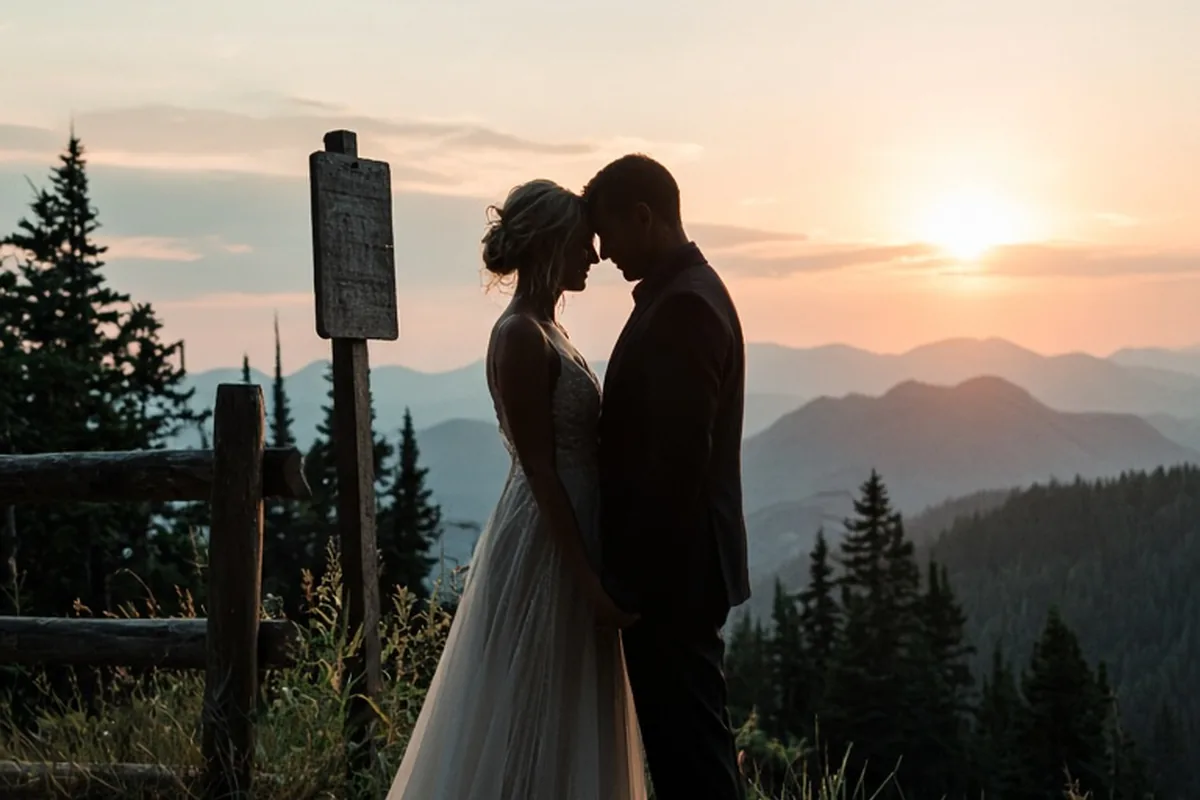
An elopement photographer cost depends primarily on coverage duration, travel logistics, location difficulty, and whether the professional provides planning assistance like permit guidance and location scouting. A brief courthouse ceremony or local park session requires only a few hours of standard coverage, while full-day backcountry adventure elopements demand wilderness preparedness, custom timelines, and extensive travel. Because rates vary by region, season, and photographer experience without standard fixed figures, couples should compare detailed itemized proposals.
Choosing an intimate elopement shifts the focus of your wedding day away from managing hundreds of guests and toward creating a deeply personal experience in a setting you love. Because the ceremony and location take center stage, photography is often the primary financial investment in an elopement budget, making it essential to understand what goes into every quote.
Hourly Coverage Versus Multi-Day Adventure Elopement Packages
Elopement photography pricing is built around the scope and format of your celebration. At the most streamlined end of the spectrum is short-duration coverage, typically lasting between two and four hours. This format suits couples marrying at a city hall, local chapel, or easily accessible scenic overlook where minimal transit is required. The photographer arrives shortly before the vows, captures the ceremony, directs a set of couple portraits, and documents a small champagne toast or family gathering before concluding their coverage.
In contrast, half-day, full-day, and multi-day adventure packages are designed for couples who want their entire story documented in remote or dynamic landscapes. A full-day elopement often spans eight to twelve hours, allowing the photographer to capture morning preparations at a cabin, a strenuous hike to a mountain ridge, vows exchanged at peak light, and an evening campfire under the stars. Multi-day packages extend this approach across two consecutive days or split sessions between sunrise and sunset across different geographical regions. Because extended coverage requires continuous physical stamina, safety oversight, and thousands of captured frames, these comprehensive packages command substantially higher rates than standard hourly events.
Travel Fees, Lodging Stipends, and Remote Access Surcharges
When an elopement takes place away from a photographer's home market, travel expenses become a significant component of the overall proposal. Photographers handle travel in one of two ways: an all-inclusive package price that factors in anticipated transit, or an itemized fee structure billed on top of the base creative rate. An itemized travel quote typically includes round-trip airfare or standard per-mile driving reimbursement, rental vehicles capable of handling unpaved roads, airport parking, lodging for one or two nights, and a modest daily meal stipend.
Remote backcountry destinations introduce specialized transit logistics that can affect your final invoice. If your chosen ceremony spot requires four-wheel-drive access, boat charters, snowmobile rentals, or helicopter transport to reach a glacier or alpine plateau, the couple is generally expected to cover the photographer's transit ticket or charter share. To prevent surprises, ask prospective photographers whether their quote represents an all-inclusive travel rate or an estimated travel allowance that could fluctuate based on seasonal flight and lodging prices.
Location Scouting, Permit Guidance, and Timeline Coordination
Modern adventure elopement photographers frequently perform duties that blur the line between visual artist and elopement coordinator. Capturing stunning imagery in untamed environments requires hours of advance preparation long before the camera shutter clicks. A seasoned elopement specialist often constructs customized location dossiers featuring trail difficulty ratings, seasonal foliage trends, sunrise and sunset sun angles, and elevation profiles tailored to your physical preferences and attire.
Beyond finding picturesque viewpoints, experienced elopement photographers help couples navigate bureaucratic and environmental requirements. They research public land ownership across National Park Service, U.S. Forest Service, and Bureau of Land Management jurisdictions to determine if your guest count triggers specific staging restrictions. They also develop detailed timeline alternatives that incorporate safety buffers for sudden mountain weather, shifting tidal charts, or unexpected road closures, ensuring the day remains relaxed and manageable.
Deliverables, Image Licensing, Turnaround Time, and Print Rights
The creative fee you pay an elopement photographer encompasses extensive post-production labor alongside the day-of shooting hours. A full day of elopement coverage yields thousands of raw digital files. The photographer spends dozens of unseen hours culling the images, correcting exposures, adjusting color balance to match their signature artistic aesthetic, and applying light retouching. Every quote should clearly state the expected turnaround time for the final gallery, which commonly ranges from four to twelve weeks depending on the photographer's seasonal workload.
Your contract should also define your legal rights regarding the finished files. Most professional elopement photographers provide high-resolution, watermark-free digital files via a secure online gallery, accompanied by a non-commercial print release. This release allows you to print personal photo albums, frame wall art, and share images on personal social media accounts. However, the commercial copyright remains with the photographer, meaning you cannot sell the images or license them to commercial apparel brands without separate written agreements. Physical leather-bound albums, fine art prints, and rushed gallery delivery options are usually offered as optional add-ons that increase the total project cost.
Practical Methods to Reduce Elopement Photography Expenses
If you want to secure a high-caliber elopement photographer while keeping your overall wedding budget balanced, several strategic adjustments can reduce your expenses. The most effective method is scheduling your elopement on a weekday between Monday and Thursday. Because weekend dates are in high demand for traditional weddings, many photographers offer reduced rates or lower hourly minimums for midweek celebrations. Choosing a weekday also provides the added benefit of emptier trails and quieter scenic locations.
Another way to control expenses is to select a location within driving distance of a photographer's primary residence to eliminate flight and car rental fees. If you have your heart set on a specific destination, look for photographers who have already published travel schedules showing they will be in that region around your preferred date. Booking an artist who is already on-site allows you to share or completely eliminate their standard travel surcharges. Finally, consider prioritizing continuous four-to-six-hour golden hour coverage that focuses exclusively on the ceremony, personal portraits, and a celebratory activity, rather than paying for full sunrise-to-stargazing coverage.
Commercial Permits, Park Surcharges, and Equipment Policies
Overlooked regulatory expenses can quickly inflate the total cost of an elopement if not identified early in the planning process. Most national parks, state conservation areas, and municipal reserves require a Special Use Permit (SUP) for wedding ceremonies, accompanied by a separate Commercial Use Authorization (CUA) or film permit for the professional photographer. While the couple is responsible for their own event permit application fee, some public land agencies charge photographers an annual or daily commercial operating fee that may be passed along to the client.
Inclement weather clauses and equipment redundancy are critical technical considerations that influence pricing and contract security. Elite adventure photographers invest in professional-grade weather-sealed camera bodies, redundant dual card slots, high-speed lenses, and backup gear suitable for sub-freezing or wet alpine conditions. Review your contract carefully to see how the photographer handles severe weather cancellations, sudden park closures due to wildfires, and rescheduling policies, as some retainers are strictly non-refundable even when outdoor circumstances force a postponement.
Contract Terms and Detailed Questions for Prospective Photographers
Before paying a deposit or signing an elopement photography agreement, conduct a thorough consultation to clarify the exact terms of service. You should establish how the photographer divides their time on-site, what happens if trail transit takes longer than estimated, and whether overtime rates apply if your hike runs behind schedule. Clarifying these parameters upfront ensures both parties share identical expectations regarding the timeline and financial boundaries.
Take the time to evaluate the professional's risk management protocols and legal protections. Ask whether the photographer carries active commercial general liability insurance, which is frequently mandated by park rangers before issuing photography permits. Inquire about their emergency certifications if you plan to venture into rugged backcountry terrain, and confirm whether they carry satellite communication devices in areas without cellular reception. Understanding these operational safeguards helps you evaluate whether a higher quote reflects superior expertise and safety readiness.
How to Compare Full Galleries and Finalize Your Booking
Evaluating an elopement photographer solely on curated social media highlights can be misleading, as those feeds display only the single best frame from ideal lighting conditions. To make an informed decision, request to view at least two to three complete client galleries from elopements that took place in environments similar to your planned setting. Look closely at how the photographer handles harsh midday sun, dense cloud cover, heavy rain, dim cabin lighting, and dusk portraits to verify that their editing consistency and technical execution remain high across the entire day.
Once you select your preferred photographer, examine the payment schedule and retainer terms in the written contract. Standard booking processes require an initial retainer fee—often ranging from twenty to fifty percent of the total package price—to lock in your date on their calendar, with the remaining balance due between thirty and fourteen days before the event. Ensure the contract includes an explicit breakdown of included hours, deliverable quantities, resolution standards, and cancellation provisions before transferring any non-refundable funds.
Frequently asked questions
Why do elopement photographers charge similar rates to traditional wedding photographers?
Elopement photographers often spend an equal or greater number of hours planning custom locations, coordinating timelines, monitoring weather and permits, and scouting remote trails compared to traditional venue-based photographers. The physical demands of backcountry trekking and specialized gear requirements also contribute to their overall service value.
Who is responsible for purchasing elopement photography park permits?
The couple is generally responsible for securing and paying for the Special Use Permit that authorizes the wedding ceremony on public lands. The photographer is responsible for holding the appropriate Commercial Use Authorization or commercial photography permit, though the cost of single-use commercial permits is sometimes billed to the client.
How many edited images should we expect from an elopement gallery?
Image counts depend on the total hours of coverage and the pacing of your day, but photographers typically deliver between forty and seventy edited images per hour of coverage. A short four-hour session usually yields roughly two hundred to three hundred photos, while a full-day adventure can result in four hundred to eight hundred finished images.
What is the standard payment timeline for an elopement photographer?
Most elopement photographers require an initial non-refundable retainer fee when the contract is signed to reserve the date, followed by the remaining balance paid one to four weeks prior to the elopement. Some photographers also offer multi-part installment plans upon request.
Your next step
List your target elopement locations and preferred season, then reach out to three specialized photographers to request their itemized pricing guides and full client galleries for direct comparison.