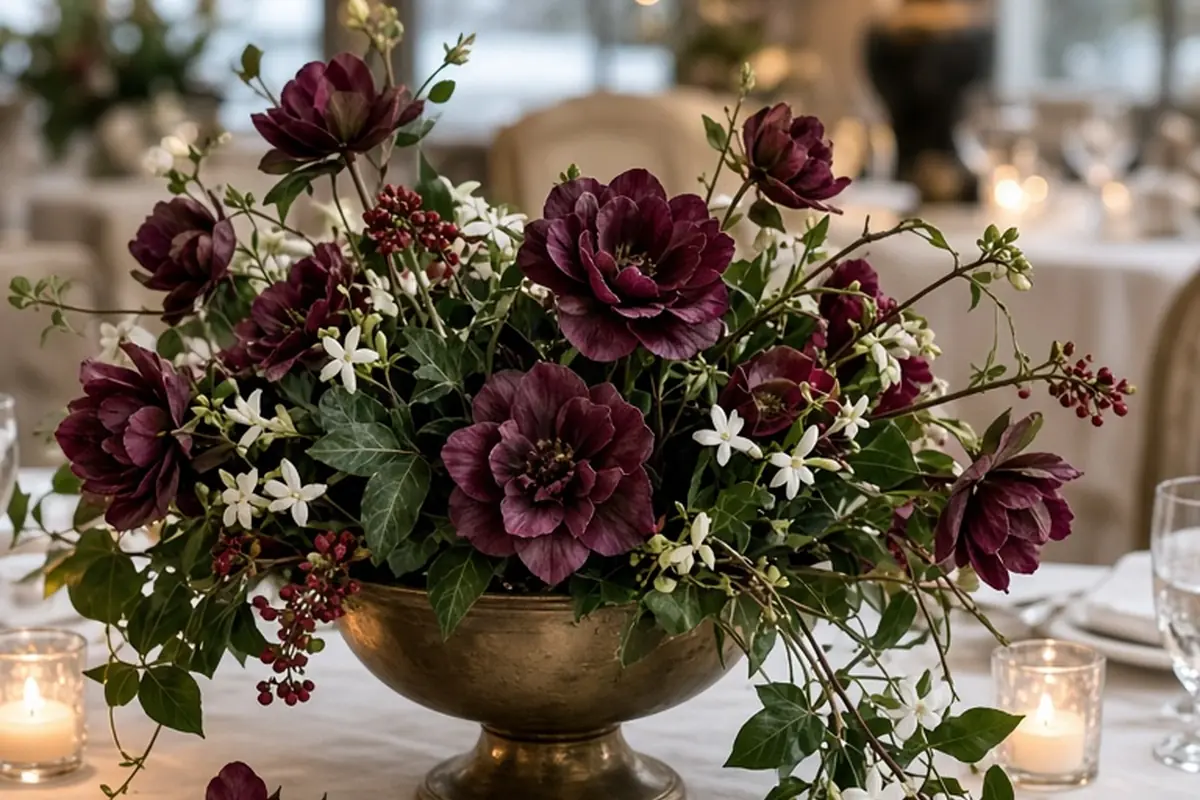
Enchanting winter wedding florals balance cold-resilient blooms with rich botanical textures, dramatic seasonal foliage, and intentional lighting. Popular designs incorporate winter focal flowers like amaryllis, ranunculus, hellebores, and anemones paired with velvety evergreens, berry sprigs, and sculptural branches. Whether styling frosted minimalist neutrals, deep jewel tones, or lush monochromatic whites, winter arrangements thrive when paired with ambient candlelight and protected from thermal shock caused by drafty outdoor photography and dry indoor heating systems.
Winter offers an atmosphere that no other season can duplicate, lending weddings a distinct blend of intimacy, moody romance, and crisp elegance. Designing florals for cold-weather celebrations requires looking beyond standard seasonal conventions to create multidimensional arrangements that embrace organic winter textures while holding up flawlessly against fluctuating indoor and outdoor temperatures.
Winter Wedding Color Palettes That Elevate Seasonal Florals
A winter wedding floral palette can establish the entire aesthetic tone of your event, moving far past generic holiday motifs when thoughtfully composed. One enduring direction is the frosted monochromatic scheme, which uses varying shades of pure white, cream, alabaster, and soft ivory. Rather than feeling flat, an all-white winter palette gains dimension through contrasting petal structures, combining the ruffled folds of garden roses, the papery layers of ranunculus, and the velvety petals of white cyclamen or hellebores. Accents of frosted silver foliage, dusty miller, and pale eucalyptus bring a soft, wintry haze that reflects indoor candlelight beautifully.
Couples seeking richer contrast often gravitate toward deep jewel tones that ground a winter setting in warmth. Saturated hues like oxblood, midnight plum, forest green, and dark sapphire create an opulent, romantic mood inside historic venues, barns, or modern industrial spaces. To execute this look organically, florists blend dark focal blooms—such as black baccara roses, chocolate cosmos, and deep burgundy amaryllis—with textured seasonal accents like privet berries, dark scabiosa, and copper-tinted foliage. This contrast prevents dark flowers from disappearing into low-lit reception spaces.
Another modern alternative is the earthy woodland winter palette, which focuses on muted taupes, warm toffee tones, smoky mauve, and deep moss greens. This palette leans heavily into natural botanicals, dried seed pods, magnolia leaves with velvet brown undersides, and structural elements like birch bark and wild smilax vines. It creates a cozy, grounded atmosphere that complements modern rustic or minimalist contemporary venues without relying on bright seasonal cliches.
Cold-Resilient Blooms and Botanical Textures for Winter Bouquets
Selecting the right flower varieties for a winter bridal bouquet requires balancing aesthetic delicacy with physical stamina. Unlike summer blooms that wilt quickly under intense heat, winter flowers must withstand brisk outdoor drafts during portrait sessions and dry, parched air inside heated reception halls. Hellebores, frequently referred to as winter roses, are natural seasonal stars that showcase subtle speckles, muted undertones, and nodding stems that impart organic movement to hand-tied bouquets.
Anemones, especially varieties with stark black or deep navy centers, offer crisp visual contrast that feels inherently modern and architectural. Pairing them with cold-hardy Dutch ranunculus and standard roses provides structural stability, as both species possess dense petal counts that tolerate temperature transitions better than delicate field flowers. Garden amaryllis, with its commanding trumpet shape, can serve as a striking focal bloom in larger bouquets or ceremony installations, while pieris japonica and sweet pea vines add trailing softness without collapsing.
Foliage and textural botanicals do heavy lifting in winter floral design, lending depth and woodland charm. Conifers like cedar, noble fir, and blue spruce introduce clean woodland fragrances and feathery silhouettes, while broadleaf greens like camellia foliage and southern magnolia offer glossy surfaces that catch reception lighting. Berries—such as snowberry, hypericum, pepperberry, and tallow berries—act as miniature sculptural accents, breaking up dense floral groupings and reinforcing the wild, seasonal character of the arrangements.
Ceremony Floral Installations, Arches, and Aisle Styling
Ceremony backdrops in winter benefit from substantial framing that creates a sense of warmth and intimacy in expansive indoor spaces. Grounded floral arches—arrangements that emerge directly from the venue floor rather than a free-standing metal frame—are particularly effective for winter ceremonies. By building upward with structured evergreens, bare birch poles, curly willow branches, and dense clusters of focal blooms, florists can create a natural clearing that feels like an enchanted forest glade.
Suspended installations offer another compelling option, drawing the eye upward while conserving floor space in intimate dining rooms or historic chapels. Hanging clouds of textured greenery, dried baby's breath, lunaria seed pods, and hanging glass globes mimic snowfall and soft winter mist. These overhead installations can be anchored with delicate downward-facing blooms or interwoven with micro-fairy lights to cast a flattering, diffused glow over the altar and wedding party throughout the vows.
Aisle styling in winter works best when it incorporates ambient light alongside organic florals. Line the ceremony aisle with clusters of pillar candles housed inside clear glass hurricane cylinders of staggered heights, interspersed with loose boughs of fresh cedar, olive branch, and scattered white rose petals. The glass enclosures are essential for indoor safety and prevent draft-induced flickering, while the warm flame reflection against the greenery creates a clear, inviting path toward the ceremony focal point.
Winter Centerpiece Concepts from Grand Tablescapes to Intimate Compotes
Reception tables require deliberate floral architecture to foster an intimate, inviting ambiance as the sun sets early in the afternoon. Low, sprawling compote centerpieces arranged in aged brass, ceramic, or matte stone vessels allow guests to converse easily across the table while appreciating intricate botanical details up close. These arrangements typically showcase a loose, asymmetrical form, letting trailing ivy, jasmine vine, and hellebore stems spill gently toward the tabletop linen.
For venues with high ceilings or grand architectural details, elevated arrangements on slender metal stands or clear acrylic pedestals bring floral volume into the upper visual field without blocking sightlines across dining tables. Incorporating structural branches like dogwood, frosted manzanita, or blossoming winter branches into tall centerpieces adds height and organic drama without requiring massive quantities of dense, heavy blooms. Intertwining these branches with cascading greenery creates an ethereal canopy effect over each guest table.
Long banquet tables or family-style seating arrangements lend themselves naturally to lush, living garlands. Rather than a flat, two-dimensional runner of greenery, build a dynamic tablescape by layering different foliage varieties—such as silver dollar eucalyptus, rosemary, and fraser fir—with fresh citrus accents, whole pomegranates, or nested seasonal blooms tucked into concealed water tubes. Weaving taper candles in protective glass chimneys throughout the length of the garland introduces height variation and sets a warm, celebratory dining atmosphere.
Protecting Winter Wedding Florals from Cold Shock and Dry Indoor Heat
Winter floral logistics present distinct physical challenges that require careful environmental management from delivery through the final reception dance. Extreme sub-freezing temperatures can cause delicate petals to freeze within minutes during outdoor photography sessions. When frozen petals are brought back into a heated space, their cell walls collapse, causing the blooms to turn translucent, brown, and limp. To prevent this, keep bouquets in protective travel boxes or clear plastic sleeves until the exact moment photos are taken, and limit direct outdoor exposure for fragile varieties like hydrangeas and open garden roses.
Indoor heating systems present the opposite hazard by blowing hot, arid air directly across floral installations and centerpieces. Forced-air blowers and proximity to radiators accelerate moisture loss, leading to premature drooping in foliage and thirsty focal flowers. Florists mitigate this risk by utilizing deep hydration protocols prior to event setup, misting arrangements with anti-transpirant floral sprays that seal in moisture, and ensuring all structural arrangements are built with continuous, concealed water reservoirs rather than dry mechanics.
When finalizing your floor plan with your venue coordinator and floral designer, identify the precise locations of heating vents, drafty entry doors, and air return units. Position head tables, ceremony arches, and delicate cake florals away from direct airflow channels. For personal flowers like boutonnieres and corsages, store them in a cool, insulated cooler or a temperate room away from food refrigerators until they are pinned onto the wedding party just before the ceremony.
Strategic Sourcing, Budget Allocation, and Repurposing Winter Floral Designs
Navigating winter floral budgets requires an understanding of wholesale flower availability and seasonal pricing shifts. Many spring-associated blooms like ranunculus, anemones, and sweet peas are actually at their peak commercial production in winter glasshouses, making them high-quality seasonal choices. However, holidays such as Valentine's Day and major winter holiday weeks create significant spikes in wholesale stem costs and freight demand worldwide. Couples planning dates adjacent to these peak periods can optimize their budget by prioritizing hardy standard blooms, textural evergreens, and architectural branch work over premium long-stem imported red roses.
Maximizing the visual impact of your winter floral investment is easiest when you design arrangements with multiple functional uses across the event timeline. Ceremony ground arches constructed in modular segments can be detached and relocated during cocktail hour to frame the sweetheart table, live band stage, or photo booth backdrop. Aisle marker arrangements placed down the ceremony path can easily be transferred to bar fronts, lounge coffee tables, and dessert displays for the reception.
To ensure seamless transitions without disrupting guests, designate a specific team—whether your floral crew or day-of coordinator—with a defined floor plan and timeline for moving floral pieces. Confirming ahead of time that vessels are lightweight, easily portable, and leak-proof prevents water spills on venue floors during the room turnaround, allowing your floral investment to deliver consistent beauty from the first guest arrival to the final send-off.
Frequently asked questions
Which flowers hold up best for outdoor winter wedding photos?
Sturdy varieties with dense petal structures such as standard roses, carnations, ranunculus, and amaryllis tolerate cold drafts far better than thin-petaled flowers like sweet peas or hydrangeas. Broadleaf evergreens, pine boughs, and sturdy berries also withstand sub-freezing air without wilting or discoloring during outdoor portrait sessions.
How can I incorporate candlelight safely into winter floral centerpieces?
Always enclose open flames inside clear glass hurricane sleeves, tall cylinders, or secure glass votive holders that extend at least two inches above the candle wick. Ensure greenery runners and trailing floral stems are positioned securely on the table surface away from heat plumes and candle rims.
Are winter wedding flowers generally more expensive than summer blooms?
Costs depend primarily on flower selection and event dates rather than the season alone. While winter greenhouse production and international freight can increase baseline prices for out-of-season blooms, utilizing cold-hardy seasonal flowers, evergreens, and branch structures helps maintain a balanced budget outside of major floral holidays.
How can I keep my bridal bouquet fresh between outdoor photos and the ceremony?
Keep the bouquet stems resting in a vase of room-temperature water inside an insulated floral transport box until moments before you step outside. Wrap the stems in a clean towel when carrying the bouquet between photo locations to shield the blooms from freezing wind and temperature shock.
Your next step
Review your venue floor plan to identify heating vents and drafty doorways, then consult your florist to select cold-hardy focal blooms and modular installation designs suited to your space.