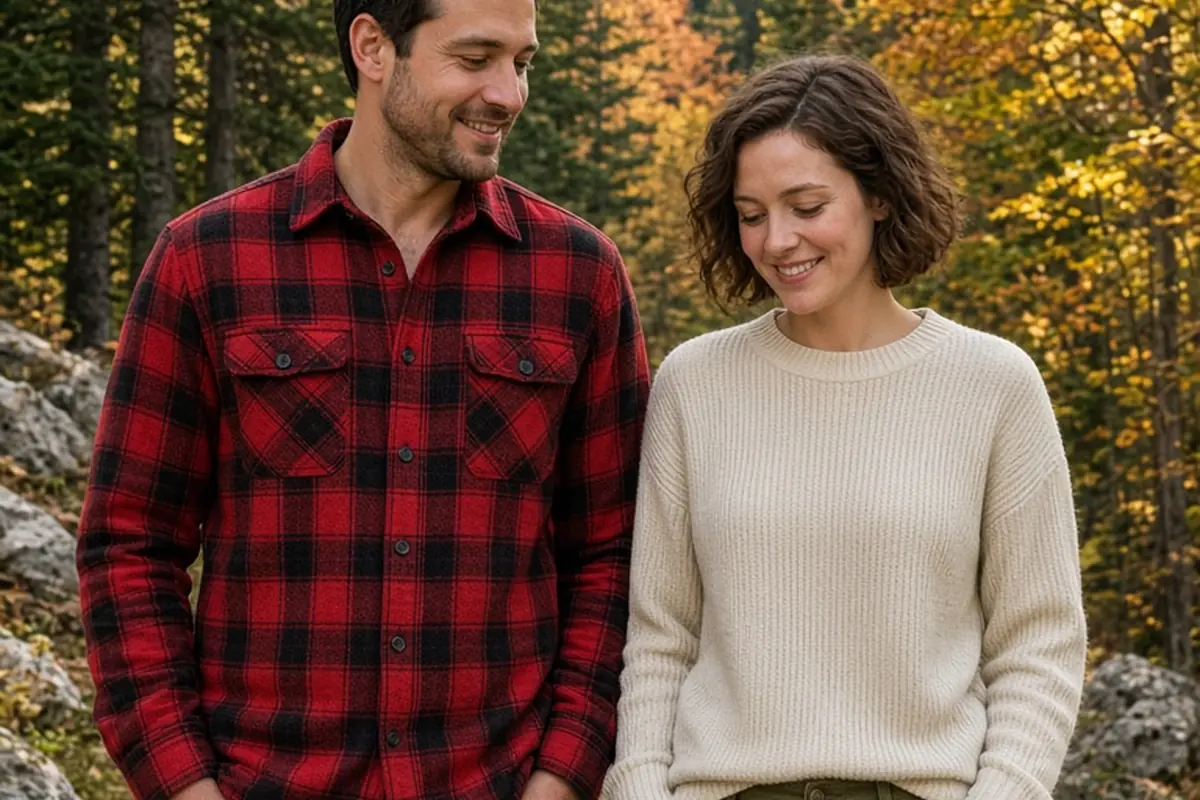
The best engagement photo outfits reflect how you naturally dress while thoughtfully coordinating colors, silhouettes, and fabric textures to match your shoot setting. Instead of wearing identical matching shirts, select a cohesive palette of complementary shades, such as warm neutrals, slate blue, or muted earth tones. Plan two distinct looks: one elevated ensemble and one relaxed casual outfit. Prioritize well-fitted garments that allow comfortable movement, flatter your posture, and feel genuinely like your everyday partnership.
An engagement portrait session captures your commitment without the formal script or hurried schedule of a wedding day. Your wardrobe should celebrate who you are together rather than transform you into people your closest friends barely recognize.
Finding Outfits That Reflect Your Everyday Dynamic Instead of a Costume
The most successful portrait sessions start with clothes that feel authentic to your regular lifestyle. If neither of you ever wears floor-length evening wear or rigid three-piece suits, choosing them for engagement photos can leave you feeling self-conscious and physically restricted. Camera lenses capture emotional tension quickly, and feeling uncomfortable in an unfamiliar silhouette often translates directly into stiff shoulders and forced smiles. Begin planning by identifying the pieces that make you feel confident on a favorite date night or during an easy weekend afternoon together.
Authenticity also requires calibrating your level of dressiness with your partner so you look like you belong at the same event. A common styling mistake happens when one partner chooses an elaborate cocktail dress with high heels while the other wears distressed jeans and canvas sneakers. This visual disconnect makes portraits feel accidental rather than cohesive. Agree in advance on a shared formality level for each look, ensuring neither partner appears noticeably overdressed or underdressed relative to the other.
Color Palettes and Coordination Rules That Avoid Identical Matching
Wearing identical matching shirts and denim flattens visual depth and dates portraits rapidly. Modern coordination focuses instead on building a harmonious color story where both outfits complement each other without competing. A reliable approach is choosing a cohesive palette built around two foundational neutrals, such as oatmeal, charcoal, taupe, or navy, paired with one or two soft accent tones like sage green, terracotta, or dusty blue. When standing close together, your clothes should look naturally harmonious rather than uniform.
Tonal balance also influences how camera sensors render your portraits under natural light. High-contrast extremes, such as stark optical white shirts next to pitch-black trousers, can cause camera sensors to lose detail in direct sunlight. Softer options like warm ivory, cream, washed charcoal, and rich mid-tone neutrals preserve subtle textures and flatter diverse skin tones. Additionally, avoid high-visibility neon hues like electric lime or bright magenta, which cast unnatural color reflections onto your partner's skin in daylight.
Tailoring Your Wardrobe to Your Location and the Season
Your wardrobe should hold a natural dialogue with your chosen setting rather than clash against it. A flowing chiffon dress or sharp tailored wool coat feels right at home among historic city architecture, but it looks out of place on a rugged woodland trail. Take inventory of the dominant colors in your shooting location before locking in your palette. In a lush botanical garden or deep pine forest, wearing bright green causes you to blend into the background, whereas warm cream, camel, or rust provides clear visual separation.
Seasonal weather dictates fabric choices just as heavily as visual style. Shivering through a late-autumn golden hour or sweating through heavy synthetic fabrics during a humid summer sunset instantly diminishes your enjoyment and shows in your posture. Embrace seasonal textures that offer real thermal comfort: breathable linen, lightweight cotton, and flowy crepe for warm months; and textured knitwear, corduroy, suede jackets, and tailored wool coats for cooler dates. Practical layers also allow quick adjustments between setups, creating subtle outfit variety.
Engagement Photo Outfit Ideas Grouped by Couple Aesthetic and Setting
Organizing your wardrobe around a clear shared aesthetic ensures your portraits tell a cohesive story. Whether your relationship thrives on urban gallery openings, relaxed coffee shop mornings, or rugged outdoor walks, aligning your styling concept with your joint personality makes choosing pieces straightforward.
The Refined Metropolitan Aesthetic fits couples capturing portraits in historic downtown districts, art museums, or upscale hotel lounges. For this look, Partner A can wear a tailored midi slip dress paired with a structured wool blazer and pointed slingback flats, while Partner B wears flat-front trousers, a crisp open-collar button-down shirt, a tailored sports coat, and leather loafers. The focus remains on clean silhouettes, solid fabrics like silk, wool, and crepe, and an understated palette of camel, midnight blue, slate, and champagne.
The Cozy Weekend Casual Aesthetic is ideal for couples planning lifestyle sessions in their own neighborhood, an intimate bakery, or at home. Partner A might select dark-wash straight-leg denim paired with a cream ribbed fisherman sweater and ankle boots, while Partner B wears tailored olive chinos, an oatmeal waffle-knit henley, and clean leather boots. This pairing highlights tactile textures over loud graphics, celebrating the genuine ease of your everyday routine.
The Scenic Nature and Coastal Aesthetic suits open landscapes like ocean beaches, windswept grasslands, or desert bluffs. Partner A can choose an ankle-length maxi dress or tiered wrap skirt in breathable cotton or linen that catches the breeze and adds dynamic movement. Partner B balances that fluid motion with grounded staples, such as a breathable linen button-up with rolled sleeves, tan chinos, and durable desert boots. Earthy shades like ochre, dusty blue, sand, and sage blend seamlessly with natural horizons.
Practical Fabric, Pattern, and Movement Decisions for the Camera
How clothing behaves in motion matters just as much as how it looks when standing still. Modern engagement photography rarely involves static poses; your photographer will ask you to walk together, turn, laugh, sit on steps, and embrace naturally. Tight pencil skirts, non-stretch trousers, and dresses with restrictive shoulder seams limit your range of motion and make candid interactions feel awkward. Choose garments with enough flexibility and drape so you can comfortably sit, pivot, and embrace without constantly adjusting your waistband.
Pay close attention to prints and optical distortions before finalizing your choices. Dense micro-patterns, such as pinpoint houndstooth, tight pinstripes, or tiny grids, frequently create a digital artifact known as moiré, resulting in distracting wavy lines on digital screens. If one of you wants to wear a pattern, select a larger, softer scale like a watercolor floral, a muted wide plaid, or classic windowpane checks. To maintain visual balance, only one partner should wear a noticeable pattern at a time, allowing the other partner's solid garments to anchor the composition.
Handling Wardrobe Changes and Footwear Logistics on Shoot Day
Most standard engagement photography sessions last sixty to ninety minutes, which leaves enough time for exactly one smooth wardrobe change without eating into shooting time. Trying to squeeze three or four outfits into a single session rushes the experience, creates unnecessary stress, and burns through golden-hour light. Begin the session in your more formal or tailored outfit while hair and styling are freshest, and switch into your relaxed casual outfit for the final portion of the shoot when you feel completely comfortable in front of the camera.
Footwear requires realistic planning, especially if your shoot involves multiple scenic stops or uneven ground. Pack comfortable slip-on sneakers or slides in a tote bag to wear while walking between photography setups, saving heels or dress shoes from grass stains, gravel scuffs, and sore feet. Prepare an emergency styling kit containing a lint roller, safety pins, garment tape, blotting papers, and a handheld steamer to refresh any travel wrinkles before you step in front of the lens.
Selecting Undergarments and Accessories That Enhance Without Distracting
The foundation beneath your clothing directly influences how your outfits photograph in different natural lighting angles. Backlighting during golden hour can turn semi-sheer fabrics surprisingly transparent, revealing dark undergarments, pocket linings, or prominent bra lines that are invisible under indoor lighting. Test your planned outfits in front of a bright window before the shoot, opting for seamless, flesh-toned undergarments that eliminate harsh demarcation lines and prevent unexpected wardrobe distractions under bright sunshine.
Accessories should serve as subtle accents that complement your personalities rather than loud focal points that draw eyes away from your faces. Dainty jewelry, classic watches, structured hats, or tasteful scarves add depth to simple outfits, but oversized statement pieces can dominate portraits and date your gallery quickly. Ensure both partners coordinate accessory metals and leather tones—such as pairing brown shoes with brown belt straps—to maintain a cohesive appearance that keeps the focus on your partnership.
Illustrative Scenarios
Aligning Wardrobe with Personal Comfort
Maya and Julian scheduled their engagement shoot at an architectural library in Chicago. Maya initially purchased a floor-length formal gown, while Julian ordered a stiff three-piece suit. During their trial try-on at home, both felt awkward, worrying their portraits would look staged rather than affectionate. Instead of forcing heavy formalwear, Maya switched to an ivory tailored pantsuit with a silk camisole, and Julian chose a dark navy blazer over a merino wool sweater and tailored gray trousers. They moved naturally during the shoot, laughing and walking without adjusting uncomfortable hems.
Key point: Dressing slightly elevated within your real comfort zone yields warmer, more authentic portraits than forcing unfamiliar formalwear.
Resolving Clashing Patterns for an Outdoor Session
Derek and Carlos planned an autumn shoot in an alpine state park. Both arrived with their favorite seasonal outfits: Derek packed a bold red-and-black buffalo plaid flannel, while Carlos selected a fine-striped geometric wool sweater. When they laid the garments together on the bed, the two heavy patterns clashed aggressively against the organic woodland backdrop. Carlos swapped his sweater for an oatmeal-colored crewneck, letting Derek's flannel become the lone statement pattern anchored by Carlos's clean neutral knit. The resulting gallery had visual balance, drawing focus to their expressions rather than competing textiles.
Key point: When one partner wears a prominent pattern, the other should anchor the frame with a textured solid neutral.
Frequently asked questions
How many outfit changes should we prepare for an engagement session?
Most standard one- to two-hour engagement sessions accommodate two outfits smoothly without cutting into valuable camera time. A smart framework is pairing one slightly elevated look, such as a tailored dress or blazer, with a relaxed casual ensemble that mirrors your typical date-night wardrobe. Bringing more than two options often creates logistical stress and rushes your photography window.
Should we wear high heels or dress shoes if our shoot is outdoors?
Outdoor locations like parks, rocky beaches, or hiking paths can quickly scuff delicate dress shoes or cause ankle strain in heels. Wear sturdy walking sneakers or slip-on flats while traveling between photo spots, and change into your formal shoes only when you reach the shooting location. Alternatively, select stylish leather boots or low block heels designed to handle uneven ground naturally.
What should we do if our personal styles are completely different?
Partners do not need identical aesthetics, but their levels of formality should align so the photos feel unified. If one partner leans minimalist and the other prefers vintage textures, bridge the gap by choosing a shared, harmonious color palette such as warm earth tones or classic blues and creams. Keep silhouettes balanced so neither partner appears dramatically overdressed relative to the other.
How can we prevent our clothes from wrinkling during travel to the shoot?
Steam or press your garments the evening before the session and transport them inside breathable garment bags rather than folding them into a duffel bag. If your commute involves sitting in the car for more than thirty minutes, consider traveling in loose loungewear and putting on your primary outfit immediately upon arrival at the shoot venue.
Your next step
Lay out your two prospective outfit combinations side by side in natural window light this week, check that the colors complement each other without clashing, and take a quick walk together in your chosen footwear to confirm complete comfort before shoot day.