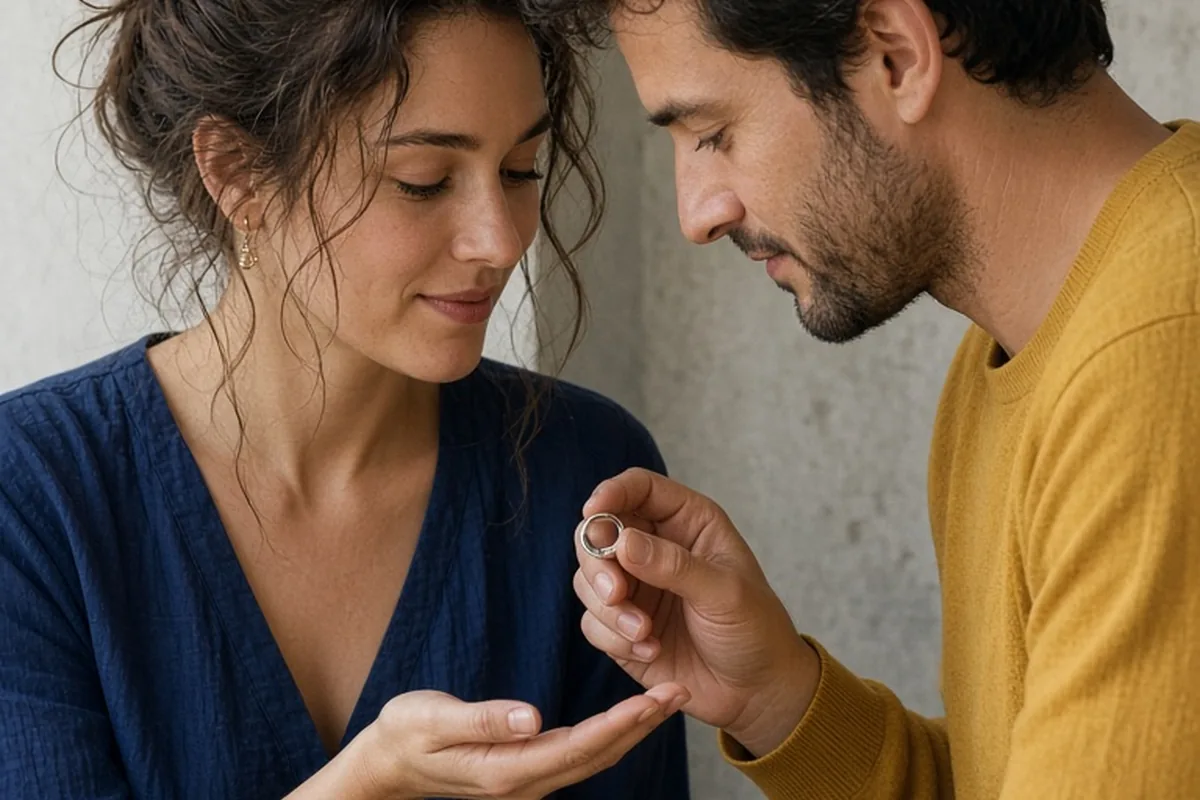
Engagement ring alternatives replace traditional mined diamond solitaires with options that match personal values, style preferences, and financial priorities. Popular physical alternatives include durable colored gemstones like sapphires and rubies, lab-grown stones like moissanite, sculpted solid metal bands, and repurposed vintage or family heirlooms. Non-jewelry alternatives range from matching tattoos to funding shared life experiences, such as home down payments or travel. Selecting the right alternative depends on lifestyle wearability, emotional resonance, and mutual alignment between both partners.
While the classic diamond solitaire has long been viewed as the standard representation of an engagement, modern couples increasingly look for pieces and symbols that reflect their distinct personalities, aesthetics, and everyday routines.
Evaluating Moissanite and Lab-Grown Diamonds for Traditional Brilliance
Couples who love the classic, colorless sparkle of a traditional engagement ring but prefer to avoid mined stones often look first at moissanite and lab-grown diamonds. Lab-grown diamonds are chemically, physically, and optically identical to mined diamonds, meaning they exhibit the exact same hardness of 10 on the Mohs scale, identical crystal structure, and identical light refraction. Moissanite, which is composed of silicon carbide, ranks at 9.25 on the Mohs scale and features a higher refractive index than diamond. This higher refraction produces distinct rainbow-colored flashes, often called fire, which gives moissanite a noticeable, lively brilliance under direct sunlight.
Choosing between these two options usually comes down to personal aesthetic preference and visual characteristics. Lab-grown diamonds appeal to those who want the precise optical performance, white-light scintillation, and grading standards of a diamond without the environmental and supply-chain footprints associated with new mineral mining. Moissanite offers an exceptional degree of durability that easily withstands everyday wear while providing a unique, colorful sparkle. Both stones can be cut into any traditional shape, including round brilliant, oval, emerald, cushion, and radiant cuts, making them effortless to mount in standard or custom settings.
From a long-term care perspective, both moissanite and lab-grown diamonds maintain their clarity permanently and will not become cloudy, dull, or scratched under normal daily conditions. Cleaning requires only warm water, mild dish soap, and a soft-bristled brush to remove body oils and lotion buildup. Additionally, most independent insurance carriers cover both lab-created diamonds and moissanite under standard personal jewelry floaters, provided you retain your purchase receipt and any accompanying gemological grading reports.
Choosing Colored Gemstones Like Sapphires, Rubies, and Emeralds for Durability
Colored gemstones offer an immediate visual departure from standard rings, bringing rich hues and historic significance to an engagement piece. However, hardness and structural stability must serve as your primary selection criteria for any ring intended for daily, lifetime wear. Sapphires and rubies belong to the corundum mineral family, which scores a 9 on the Mohs Hardness Scale. This exceptional hardness places them directly behind diamonds in scratch resistance, allowing corundum stones to maintain their high-gloss facet polish through decades of contact with hard surfaces, textiles, and everyday household items.
Sapphires extend far beyond the traditional royal blue made famous by historic royal engagement rings. Natural and lab-created sapphires occur in a spectrum of colors, including mossy greens, peachy champagne tones, vibrant yellows, soft lilacs, and parti-color varieties that blend teal and yellow within a single crystal. Rubies provide deep crimson tones that contrast strikingly against yellow gold or platinum mountings. When choosing colored corundum, prioritize stones with balanced saturation and good transparency over pure perfection, as natural inclusions often create unique, one-of-a-kind internal patterns.
Softer colored gemstones require more deliberate protection and cautious wear habits. Minerals like beryl, which includes emerald, morganite, and aquamarine, score between 7.5 and 8 on the Mohs scale, while stones like opal, moonstone, and turquoise score significantly lower. Emeralds frequently contain natural internal fractures that make them vulnerable to chipping upon blunt impact. If you select an emerald or a softer semi-precious stone, opt for protective mounting styles such as full bezels or halo designs that shield the outer perimeter of the gem, and commit to removing the ring during rigorous physical activities.
Solid Metal Bands, Hand-Engraved Patterns, and Textured Commitment Rings
Stone-free engagement rings prioritize comfort, understated elegance, and functional durability. For individuals who work in medical fields, culinary professions, fine arts, or heavy manufacturing, elevated gem settings can easily tear latex gloves, scratch delicate surfaces, or collect debris. Solid precious metal bands eliminate these complications entirely by resting flush against the skin, offering a low-maintenance commitment symbol that requires no delicate prong inspections or fear of dislodging an expensive stone.
Choosing a metal band does not mean sacrificing intricate visual artistry. Custom jewelers utilize techniques such as hand engraving, milgrain detailing, hammered finishes, sandblasted textures, and satin brushing to create sophisticated, highly personalized bands. Organic textures inspired by tree bark, mountain ridges, or geometric architecture turn a solid gold, platinum, or palladium band into a bespoke piece of wearable sculpture. You can also incorporate subtle flush-set accent stones or hidden interior engravings that remain visible only to the person wearing the ring.
Metal selection plays a vital role in the longevity and maintenance requirements of a stone-free ring. Platinum is an exceptionally dense metal that naturally resists metal loss over time; when scratched, platinum develops a soft, velvety patina that can be re-polished or left in its natural state. Fourteen-karat gold offers superior scratch resistance compared to softer eighteen-karat gold due to its balanced alloy composition. Alternative metals such as titanium, tantalum, and tungsten carbide provide modern gray and dark-toned options with immense structural strength, though buyers should note that tungsten cannot be resized if finger dimensions change over time.
Repurposing Vintage Estate Jewelry and Family Heirlooms
Using a family heirloom or sourcing an authentic vintage ring from an estate jeweler bridges personal history with sustainable practices. Heirloom jewelry carries deep emotional significance, connecting a new union to generations of family heritage. Estate pieces from distinct design periods, such as Victorian, Edwardian, and Art Deco eras, showcase old-world metalwork techniques, including hand-pierced filigree, platinum lace mountings, and antique diamond cuts like Old Mine and Old European cuts, which were faceted by hand to glow warmly under candlelight.
If an inherited ring does not match your partner's contemporary aesthetic, repurposing the original materials offers an ideal middle ground. A skilled bench jeweler can unmount the central stone or side accents from an older ring, pendant, or brooch and set them into a completely new, custom-designed band. This approach preserves the sentimental link to the original giver while providing the wearer with a fresh, modern mounting that matches their personal taste and lifestyle.
Before wearing any vintage or heirloom piece daily, take it to a qualified independent jeweler for a comprehensive structural evaluation. Decades of wear can thin the ring's shank, wear down prong tips, or weaken the gallery beneath the stones. A jeweler can retip prongs, reinforce worn metal, secure loose gems, and verify that the setting is structurally sound before it enters continuous everyday rotation.
Non-Jewelry Commitments, Symbolic Tattoos, and Experiential Investments
Some couples choose to step away from traditional finger jewelry altogether, channeling their symbolic commitment into alternative physical marks or shared life milestones. Commitment tattoos placed on the ring finger, wrist, or elsewhere represent a permanent, shared expression of devotion that cannot be lost, misplaced, or damaged during manual labor. Fine-line designs, meaningful dates, matching botanical elements, or abstract coordinates are popular tattoo choices for couples seeking an indelible, non-materialistic marker.
When considering a ring finger tattoo, practical physiological factors must be weighed. The skin on the fingers and hands regenerates much faster than skin on other areas of the body, and continuous friction from handwashing, gripping objects, and sun exposure causes finger tattoos to blur and fade more quickly than tattoos placed on flatter, less exposed skin. Preparing for occasional touch-ups and selecting bold, clean linework ensures that a commitment tattoo remains legible and visually crisp over the years.
Alternatively, many couples deliberately reallocate their engagement budget toward major experiential milestones or joint financial stability. Directing those funds into a down payment on a first home, an extended international trip, paying off high-interest personal debt, or funding a shared creative endeavor creates lasting memories and tangible life progress. In place of a ring, some partners exchange alternate physical tokens, such as custom-commissioned fine artwork, heirloom-quality mechanical watches, or dedicated trees planted on shared property.
Setting Styles and Structural Mountings for Alternative Lifestyles
The way a stone or design is mounted dictates how well an engagement ring performs in everyday environments. Traditional high-prong solitaire settings elevate the center stone away from the finger to maximize light entry, but this height makes the ring prone to snagging on clothing, knocking against doorframes, and catching on hair or safety gear. For individuals with active daily routines, low-profile settings that keep the stone close to the finger provide a far more secure, comfortable wearing experience.
Bezel settings represent one of the most durable mounting styles available for alternative engagement rings. A full bezel wraps a solid collar of metal around the entire circumference of the gem, protecting the fragile girdle edge from accidental chips and preventing snagging completely. Half-bezel and flush-set designs offer similar protective qualities while introducing clean, modern architectural lines. These flush mounting techniques are particularly beneficial for softer alternative stones or uniquely shaped geometric cuts with sharp, vulnerable corners.
When planning a custom setting, discuss the proportions of the band and the thickness of the prongs directly with your metalsmith. Rings with ultra-thin bands under 1.5 millimeters in width have gained popularity on social media platforms, but they lack the structural metal volume needed to resist bending under heavy pressure over several decades. Opting for a band width between 1.8 and 2.5 millimeters ensures that the ring retains its circular shape, supports the weight of the mounting securely, and holds up against the stresses of everyday tasks.
Navigating Expectations and Open Communication With Your Partner
Choosing an alternative engagement ring requires honest, open communication between both partners long before any transaction takes place. Assumptions about ring preferences can lead to disappointment if one partner envisions a classic solitaire while the other prefers a minimalist metal band or a vibrant teal sapphire. Discussing design preferences, gemstone ethics, durability requirements, and financial priorities together ensures that the final choice genuinely reflects both individuals' values rather than external peer pressure or commercial marketing.
It is equally important to prepare for reactions from traditional family members and acquaintances. Non-traditional engagement symbols sometimes elicit curious questions or unsolicited opinions from people accustomed to conventional diamond solitaires. Responding with simple, confident explanations about why your chosen alternative fits your lifestyle, aesthetic values, and shared financial goals quickly reframes the conversation around your mutual happiness rather than traditional conformity.
To eliminate guesswork, visit independent jewelry studios or artisanal metalsmiths together to try on various band widths, metal alloys, and stone shapes in person. Seeing how different metals harmonize with skin tones and feeling how low-profile bezels versus higher prong settings feel against the hand provides clarity that online photographs cannot replicate. Trying on mockups or working directly with a designer to create a custom piece transforms the selection process into a collaborative, memorable milestone.
Frequently asked questions
Can alternative gemstones and custom bands be insured like traditional diamonds?
Yes. Most major homeowners, renters, and specialized jewelry insurance companies will insure alternative gemstones, moissanite, and custom metal bands. You will typically need to provide an itemized purchase receipt or an official appraisal from a certified independent gemologist that details the stone's dimensions, metal purity, and replacement value.
Which gemstone alternatives are durable enough for daily, lifelong wear?
Moissanite, sapphires, and rubies are the most durable non-diamond gemstones for daily wear. Moissanite ranks at 9.25 on the Mohs hardness scale, while sapphires and rubies score a 9, making all three highly resistant to surface scratching, chipping, and everyday environmental wear.
Is it rude or bad luck to reset an inherited family heirloom ring?
No, resetting family jewelry is a widely respected practice that honors sentimental heritage while adapting the piece to the wearer's personal taste. It is best to have an open conversation with family members beforehand to ensure they are comfortable with modifying the original mounting.
Are lab-grown diamonds considered genuine engagement ring alternatives?
Lab-grown diamonds are real diamonds that share the exact chemical, physical, and optical properties of mined diamonds. They serve as a popular alternative for buyers seeking traditional diamond performance, hardness, and brilliance without purchasing newly mined natural minerals.
Your next step
Sit down with your partner to identify your daily activity level, design aesthetics, and joint budget before scheduling an in-person consultation with an independent jeweler to view alternative stones and settings together.