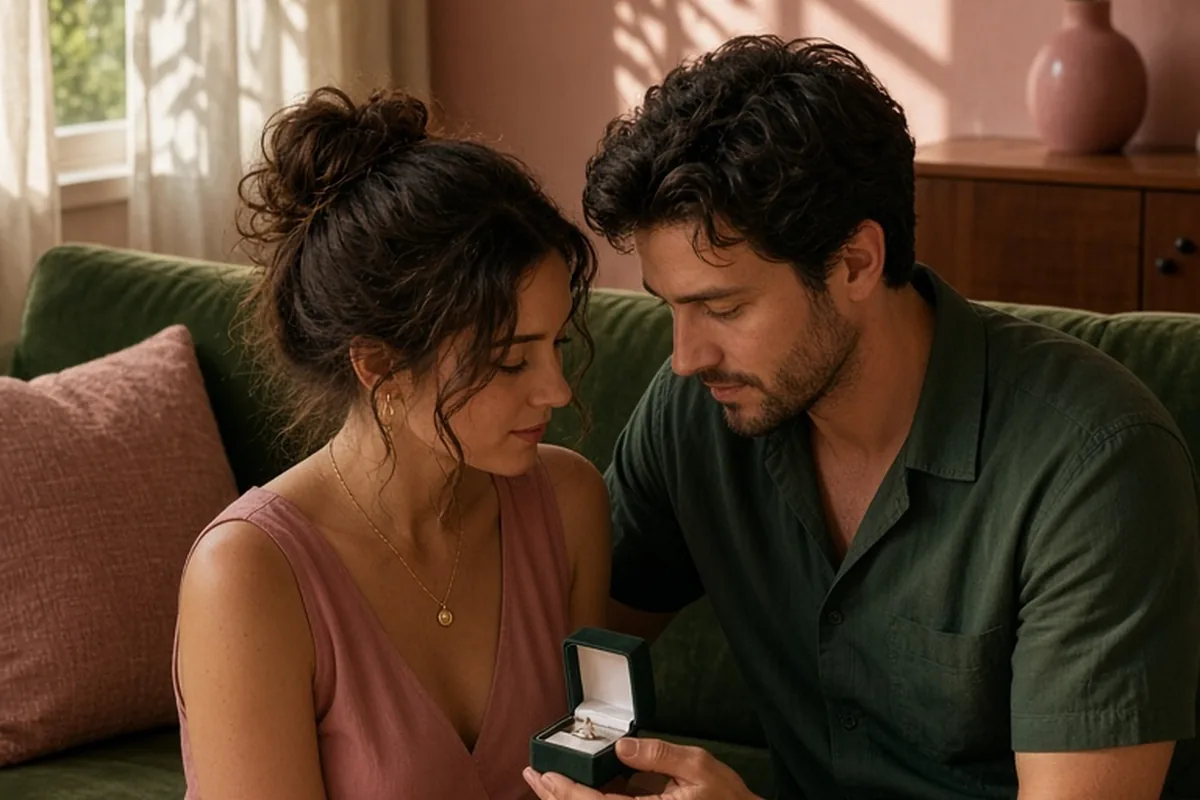
Balancing an engagement ring purchase with a 100-guest wedding requires setting an independent jewelry budget before calculating per-guest venue and catering costs. Focus on stone quality, durable metal choices, and lifestyle practicalities rather than arbitrary spending rules. To protect your overall wedding funds, explore lab-grown diamonds, alternative gemstones, or lower karat metals, and secure third-party grading certificates, independent appraisals, and dedicated jewelry insurance well before booking your 100-person event vendors.
Couples planning a mid-sized wedding often find that purchasing an engagement ring coincides with deposit deadlines for venues, caterers, and photographers. Navigating both milestones simultaneously requires clear financial boundaries, an understanding of fine jewelry craftsmanship, and practical timing to ensure neither the ring nor the celebration compromises your long-term goals.
Balancing the Ring Budget Against a 100-Guest Reception Cost
A 100-guest wedding represents a classic gathering size that balances intimacy with broad family and social circles, but it carries distinct financial thresholds. Catering, bar packages, rentals, and venue minimums scale directly with each seat filled. When an engagement ring purchase takes place in the same financial window as vendor deposits, treating the ring and the wedding reception as completely separate line items prevents cash-flow strain. Setting a firm, standalone ring budget ensures you do not inadvertently pull required funds away from non-negotiable wedding costs such as venue minimum spend requirements, service gratuities, and event liability insurance.
To establish this baseline, calculate your liquid savings and monthly discretionary income after maintaining a standard household emergency fund. Avoid outdated formulas that suggest spending a specific number of months of salary on an engagement ring. Instead, evaluate the jewelry investment through the lens of long-term durability and personal taste, while viewing your 100-guest wedding as a series of per-person operational expenses. By decoupling the ring acquisition from reception headcounts, you retain flexibility when evaluating catering tiers, floral packages, and photography coverage without sacrificing the craftsmanship of the ring.
Choosing Center Stones and Metals That Maximize Ring Value
The center stone typically represents the largest portion of an engagement ring's total expense. Understanding the fundamental characteristics of diamonds and alternative gemstones allows you to optimize appearance while keeping costs manageable. When evaluating natural or lab-grown diamonds, prioritize cut quality above all other factors. An excellent or ideal cut maximizes light return and visual brilliance, which often allows a stone to appear larger and brighter than a poorly cut diamond of heavier carat weight. Color grades in the near-colorless range (G through J) set in yellow or rose gold, or in the F to G range for white gold and platinum, generally appear completely colorless to the unaided eye at a lower price point than top-tier D-color stones.
Clarity is another area where thoughtful selection saves money without compromising beauty. Eye-clean diamonds graded VS1, VS2, or even carefully vetted SI1 contain inclusions invisible without a jeweler's loupe, rendering higher flawless grades an unnecessary expense for most couples. Furthermore, lab-grown diamonds offer identical chemical, physical, and optical properties to mined diamonds at a fraction of the cost, freeing up substantial funds that can be allocated toward reception entertainment, a plated dinner upgrade for 100 attendees, or wedding travel. If you prefer colored gemstones, durable minerals like sapphires, rubies, and moissanite provide high hardness ratings suitable for continuous daily wear.
Setting Styles That Withstand Active Wedding Planning and Daily Wear
An engagement ring must endure decades of daily movement, hand washing, and physical activity. During the months leading up to a 100-guest wedding, couples handle vendor contracts, assemble favor bags, transport decor, and coordinate logistical details. A delicate or poorly engineered setting can snag on fabrics or loosen center prongs during these busy preparations. Classic solitaire settings with four or six prongs elevate the center stone for maximum light penetration, but six-prong configurations offer greater security if a single prong takes an impact.
Bezel settings, which encircle the perimeter of the gemstone in a solid rim of precious metal, offer the highest level of protection against chipping and snagging. This style is especially advantageous for individuals with active professions or hands-on hobbies. Halo settings surround the central stone with a border of smaller accent diamonds, creating substantial visual presence from a distance while keeping the center carat size moderate. Cathedral settings incorporate sloping metal arches that reinforce the mounting structure from beneath, preventing the head from bending when bumped against hard surfaces.
Selecting Metal Alloys for Longevity and Skin Comfort
The choice of band metal directly impacts maintenance schedules, durability, and total ring cost. Platinum is a naturally white, hypoallergenic metal known for its density and secure prong retention. When platinum scratches over time, the metal displaces rather than wearing away, developing a soft satin finish known as a patina that can be buffed smooth if desired. However, platinum carries a premium price point due to its purity and density, which requires more raw weight per piece.
Fourteen-karat and eighteen-karat gold alloys offer reliable structural strength at varied price points. Fourteen-karat gold contains a higher percentage of alloying metals such as copper, silver, or zinc, making it noticeably harder and more scratch-resistant for daily use than 18-karat gold, while also remaining more budget-friendly. White gold alloys require rhodium plating every few years to maintain their crisp, bright finish, representing a minor recurring maintenance task. Yellow gold and rose gold require no secondary plating, making their long-term upkeep straightforward as you prepare your post-wedding finances.
Coordinating the Engagement Ring with Wedding Bands and Ceremony Flow
As your 100-guest wedding timeline approaches, integrating the engagement ring with the wedding band becomes a priority. Many engagement rings feature low-set baskets that prevent a standard, straight wedding band from sitting flush against the engagement band. This results in a noticeable gap, which some wearers love for its eclectic look, while others prefer a seamless, continuous silhouette. To achieve a flush fit, look for high-set engagement heads or pair low-set rings with custom-contoured, chevron, or notched wedding bands that curve gracefully around the center stone.
During a 100-guest ceremony, ring exchange logistics require clear coordination. If the wearer intends to wear both rings after the vows, they can temporarily switch the engagement ring to their right hand prior to walking down the aisle, leaving the left ring finger open for the wedding band. Following the ceremony or during the portrait session, the engagement ring is moved back over the wedding band, keeping the band closest to the heart according to traditional custom. Designate a trusted wedding party member or secure ring pouch to transport the bands safely down the aisle.
Protecting Fine Jewelry with Insurance, Appraisals, and Resizing Before the Big Day
Protecting your engagement ring starts the day the piece is completed or purchased. Never rely on standard homeowners or renters policies without checking their sub-limits; most standard policies cap jewelry loss at modest amounts and frequently exclude accidental loss, mysterious disappearance, or damage during travel. Securing a dedicated jewelry insurance policy or a specific scheduled personal property endorsement provides worldwide coverage against theft, stone loss, and accidental damage with zero or manageable deductibles.
To obtain proper insurance coverage, you need an independent appraisal and a diamond grading certificate from a reputable, non-commercial gemological laboratory. Schedule professional ring sizing at least six to eight weeks before your wedding date. Temperature fluctuations, stress, and seasonal changes can cause finger sizes to fluctuate slightly. Having your jeweler perform a final prong inspection, ultrasonic cleaning, and sizing adjustment well ahead of the rehearsal dinner ensures the ring fits comfortably and sparkles under the venue lighting throughout your 100-person reception.
Smart Shopping Paths: Custom Jewelers, Online Retailers, and Estate Finds
Sourcing an engagement ring involves choosing between independent custom jewelers, direct-to-consumer online platforms, and vintage or estate dealers. Online fine jewelers often maintain lower overhead costs, passing savings along through competitive diamond pricing and extensive digital 360-degree inventory viewings. However, buying online requires careful review of return policies, warranty terms, and local servicing options for future cleanings and repairs.
Local independent bench jewelers provide hands-on tactile evaluation, allowing you to examine stones under magnification and discuss structural nuances in person. Custom design paths permit you to repurpose heirloom diamonds or family gold, saving money on raw materials while creating a deeply meaningful piece. Estate and antique rings provide another cost-effective avenue, offering distinct historic cuts such as Old European or Old Mine cuts that carry unique charm and lower per-carat market pricing compared to modern newly mined inventory.
Frequently asked questions
How far in advance of a 100-guest wedding should we order the engagement ring?
It is best to order the engagement ring at least three to four months before an intended proposal, or six months prior to the wedding date if shopping together. Custom fabrications and specialized stone sourcing require several weeks, followed by potential resizing rounds and formal insurance appraisals before the busy wedding timeline begins.
Does choosing a lab-grown diamond affect the ring's daily durability?
No. Lab-grown diamonds share the identical chemical composition, crystal lattice, optical qualities, and 10 Mohs hardness rating as mined diamonds. They resist scratching and chipping just as effectively and can be cleaned and serviced by any professional bench jeweler.
How can we prevent our wedding budget from encroaching on our ring savings?
Keep your jewelry funds in a dedicated high-yield savings account separate from your wedding operational account. Establish a fixed per-guest catering and venue cap for your 100 attendees so unexpected reception extras do not pressure your long-term fine jewelry purchase.
What is the safest way to clean an engagement ring in the week leading up to the wedding?
Soak the ring in a small bowl of warm water mixed with mild, lotion-free dish soap for ten minutes. Gently brush around the prongs and underneath the stone basket with a soft-bristled baby toothbrush, rinse thoroughly over a plugged sink, and pat dry with a lint-free microfiber cloth.
Your next step
Determine a fixed, standalone ring budget separate from your 100-guest venue deposits, then request independent gemological grading reports and an appraisal before finalizing your ring order.