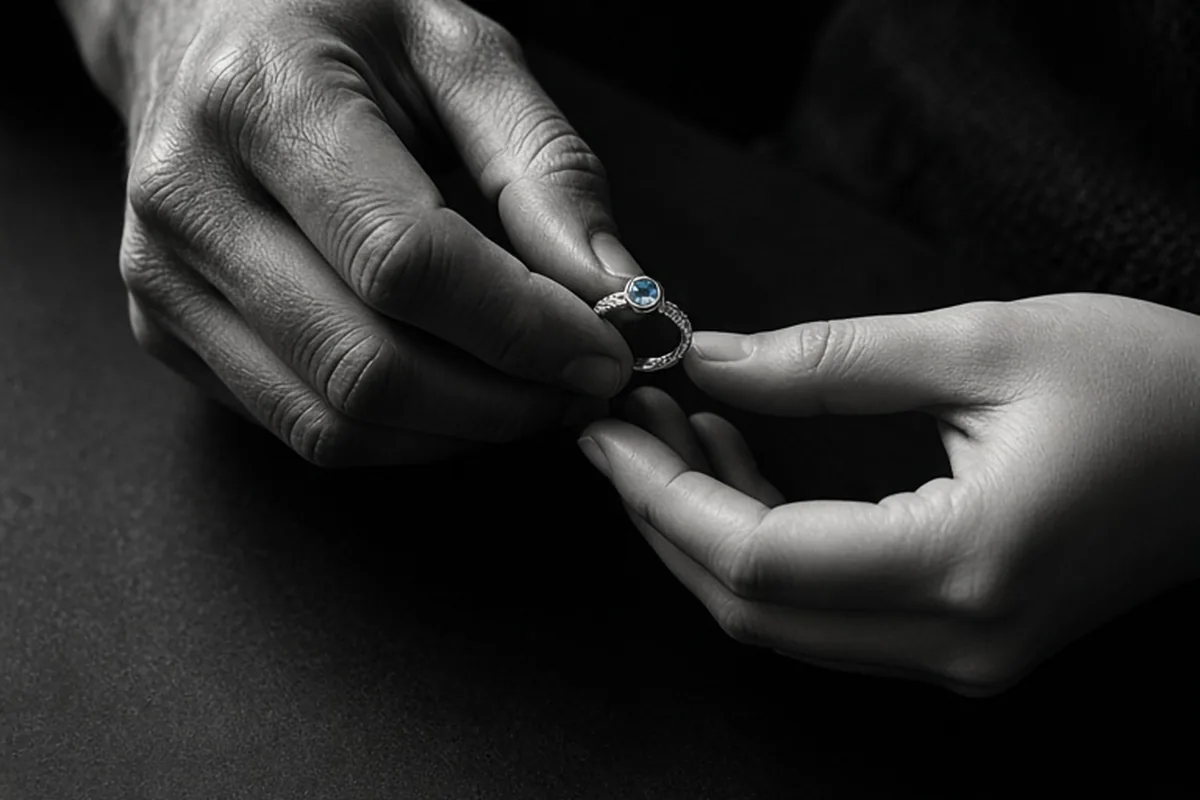
Great engagement ring ideas for small weddings focus on personal connection, comfort, and unique craftsmanship over sheer scale. Popular styles include low-profile bezel settings, antique or repurposed family heirlooms, colorful sapphire or moss agate centerpieces, and textured artisanal gold bands. Couples celebrating with a microwedding or elopement often choose rings that reflect intimate storytelling, seamless daily wear, and individualized design rather than conventional banquet-hall aesthetics.
A small wedding naturally shifts the focus of a marriage celebration from outward spectacle to personal intimacy. When guest lists are trimmed to close family and dear friends, the design priorities across the entire ceremony tend to change. The jewelry you choose to symbolize that commitment can mirror the same intentional, thoughtful energy that guided your ceremony choices.
Aligning Ring Aesthetics with the Intimate Tone of a Microwedding
Small weddings, whether planned as backyard gatherings, city hall elopements, or destination micro-ceremonies, prioritize authentic connection over formal production. An engagement ring for this type of wedding often carries that same quiet confidence. Rather than seeking out towering diamond prongs designed to catch the light across a ballroom, many couples seek designs that feel grounded, tactile, and deeply individual. The ring becomes an extension of personal taste that suits quiet dinners and outdoor excursions alike, reflecting a commitment celebrated in close company.
Choosing an engagement ring for an intimate wedding allows you to redefine traditional jewelry rules. You might skip high-profile commercial solitaires in favor of low-slung geometric stones, subtle pavé accents, or unpolished raw materials. When your celebration is not bound by generic bridal expectations, your jewelry choices are similarly liberated. Couples frequently find that rings chosen through this personal lens integrate more comfortably into their daily wardrobes, functioning as wearable art rather than formal accessories reserved for rare occasions.
Low-Profile Bezel Settings for Understated Elegance and Daily Wear
Bezel settings enclose the circumference of the gemstone in a rim of solid precious metal, creating a modern, sleek outline that sits flush or low against the finger. For small and casual weddings, bezels offer a sophisticated blend of minimalism and rugged reliability. Traditional tall prong settings can snag on knitwear, gloves, and outdoor gear, which can make wearers anxious during everyday tasks. A bezel protects the fragile girdle of the gem, keeping it safe during travel, work, and active hobbies.
A low-profile bezel also balances the scale of a ring when oversized stones feel out of place. Setting an oval, emerald, or cushion-cut diamond into a half-bezel or full bezel accentuates the stone geometry while keeping the silhouette clean and refined. Platinum or yellow gold bezels can make modest stones appear grounded and substantial without introducing unnecessary visual clutter. For couples planning scenic mountain vows or beach elopements, a bezel setting eliminates the worry of loose prongs or lost stones in remote locations.
Vintage and Heirloom Rings That Carry Personal Family History
Small weddings often draw deeply from shared heritage and family ties, making antique and vintage engagement rings a natural match. A genuine Victorian, Edwardian, or Art Deco ring brings distinct historical character that mass-produced contemporary designs cannot easily duplicate. Features such as delicate milgrain borders, hand-pierced filigree galleries, and old mine or European-cut diamonds tell a story of longevity and survival across generations. These rings resonate powerfully in an environment where every guest in attendance shares a close bond with the couple.
If you have access to inherited family jewelry, an intimate wedding presents the perfect reason to restore or reset those pieces. You can wear a grandmother's ring in its authentic antique setting or collaborate with a local bench jeweler to transfer an heirloom diamond into a new, tailored band. This approach honors family lineage while reducing the ecological demand of mining new materials. When working with vintage pieces, make sure to have an experienced jeweler evaluate the prong integrity, metal thickness, and gemstone stability prior to the ceremony.
Alternative Gemstones and Unique Diamonds for Non-Traditional Couples
When an intimate wedding ceremony sets aside traditional conventions, the center stone of an engagement ring can do the same. Many couples exploring rings for small ceremonies gravitate toward colored gemstones that reflect personal significance or favorite landscapes. Sapphires, which occur naturally in hues ranging from deep navy and teal to peach, lavender, and vibrant yellow, offer exceptional hardness that withstands lifelong daily wear. Rich green emeralds, warm rubies, and neutral spinels also provide distinct alternatives that feel personal rather than standard issue.
For those who still appreciate the durability of diamonds but dislike standard white cuts, salt-and-pepper diamonds or champagne diamonds offer striking visual character. Salt-and-pepper stones feature internal inclusions that create smoky, constellation-like patterns inside the crystal, meaning no two stones ever look alike. Similarly, opaque stones like moss agate or rutilated quartz provide organic, earth-toned visuals that complement casual ceremonies. If you opt for softer alternative stones, keep in mind that gems below diamond or corundum hardness require protective settings and gentle cleaning habits to avoid scratches over decades of wear.
Nested Bands and Ceremonial Ring Stacks That Eliminate Extra Jewelry
In many small ceremonies, couples prefer to simplify the exchange of jewelry altogether. Instead of purchasing a towering engagement ring that requires a separate, awkwardly matched wedding band later, a nested bridal stack combines both functions into one cohesive set. A curved, chevron, or contoured wedding band is crafted to wrap flush around the contours of the engagement ring centerpiece, creating a unified composition that feels balanced on the finger.
Some couples choose an all-in-one eternity or textured ceremonial band that serves as both the proposal ring and the wedding band. This approach aligns well with minimalist courthouse ceremonies or simple garden gatherings where having multiple rings feels redundant. A wide, comfort-fit gold band embedded with flush-set gypsy diamonds provides quiet luxury and durability. Stacking sets also allow you to add milestone rings on future anniversaries, letting your jewelry evolve gradually alongside your marriage rather than arriving all at once.
Artisanal Hand-Engraved Metals and Custom Independent Jeweler Work
Couples who choose small weddings often reallocate funds toward thoughtful, boutique artisan experiences, and engagement rings benefit directly from this philosophy. Commissioning an independent bench jeweler allows you to choose every detail, from the exact alloy color to custom surface textures. Instead of high-polish commercial finishes, you might choose a subtle brushed satin, a rugged hammered surface, or an organic bark-like texture that patinas gracefully over years of wear.
Custom work also creates space for subtle, private details that only you and your partner know exist. Jewelers can hand-engrave coordinates, personal motifs, or secret messages inside the ring shank, or set hidden birthstones along the interior under-gallery. Working with an artisan often means you can track the provenance of the materials, using fairmined gold, recycled platinum, or ethically sourced stones. This careful attention to origin reflects the intentionality of a small wedding, ensuring your ring represents your shared ethics and design sensibilities.
Managing Ring Budgets and Ordering Timelines for Smaller Celebrations
Planning an intimate wedding changes how couples manage their overall financial priorities. When you are not paying catering bills for hundreds of distant acquaintances, you have complete freedom to choose whether to save that capital or invest more into bespoke jewelry that lasts a lifetime. Ring costs are shaped primarily by metal weight, stone rarity, carat weight, and the labor required for custom handcrafting. Because independent and vintage jewelers calculate prices differently than commercial department stores, requesting itemized quotes helps you compare metal alloys, lab-grown versus mined stones, and fabrication fees transparently.
Custom jewelry design requires dedicated time, especially when sourcing unusual colored gems or sizing vintage pieces. Begin your search several months before the wedding date to allow adequate time for stone sourcing, computerized rendering or wax carving, casting, setting, and final hallmarking. If you are ordering through an independent studio, seasonal order volume and custom revisions can add weeks to the production schedule. Setting your ring budget and confirming your production timeline early eliminates unnecessary stress as your ceremony date approaches.
Frequently asked questions
Can I use an everyday wedding band as an engagement ring for a small ceremony?
Yes, many couples choose a single, high-quality band that acts as both the engagement ring and the wedding ring. Wide bands with flush-set diamonds, hand-carved textures, or mixed metals provide a substantial, timeless look without the need for a protruding center stone. This simplifies your daily jewelry routine and aligns well with the low-maintenance philosophy of intimate weddings.
Are alternative gemstones like moss agate or opal durable enough for long-term wear?
Alternative gemstones offer unique aesthetics, but their durability varies widely based on mineral hardness. While sapphires and rubies are exceptionally tough and suitable for daily wear, stones like opal, moonstone, and moss agate are softer and can chip or abrade over time. If you select a softer mineral, choose a protective bezel setting and remove the ring during rigorous physical tasks to prolong its lifespan.
How do we find a reputable independent jeweler for a custom ring?
Look for local bench jewelers or small independent studios who showcase their own original metalwork and stone-setting portfolios rather than reseller catalogs. Read verified local client reviews, ask to see examples of their finished prong work and metal casting, and inquire about their stone sourcing policies. A reliable jeweler will clearly explain design limitations, long-term maintenance needs, and itemized fabrication costs before you commit.
Your next step
Schedule an in-person or virtual consultation with an independent jeweler to try on different setting heights and metal finishes in person before finalizing your custom design.