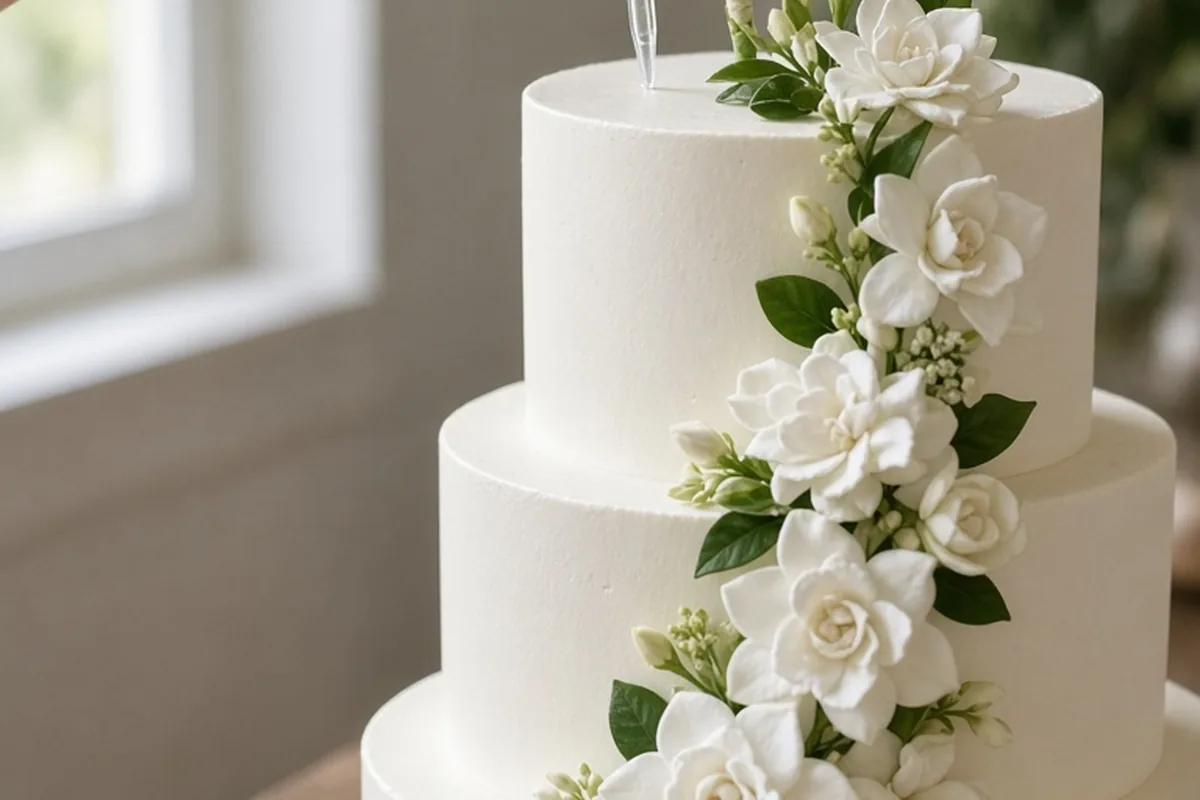
To enhance your wedding cake with fresh floral designs, select untreated, non-toxic blooms and insert them using barrier methods like floral picks, stem wraps, or wax seals rather than placing raw stems directly into frosting. Coordinate delivery timing between your baker and florist so flowers are prepped and attached close to reception time. Match the bloom scale, texture, and color palette to your cake finish to maintain balance, visual harmony, and structural stability throughout the celebration.
Fresh flowers bridge the visual gap between your reception tables and the dessert display, turning a classic tiered cake into a cohesive focal point. While handcrafted sugar flowers offer durability, live blossoms bring organic movement, delicate texture, and seasonal color that directly echo the rest of your wedding decor.
Choosing Non-Toxic, Food-Safe Blooms for Dessert Displays
The most critical decision when using fresh botanicals on a confection is confirming that every petal, leaf, and stem is completely non-toxic. Many common floral shop blooms carry naturally occurring toxins or irritants that make them unsafe anywhere near edible goods. Varieties such as hydrangeas, calla lilies, lily of the valley, oleander, foxglove, and anemones should never touch a cake tier, as even brief contact with moist frosting can allow sap or microscopic residues to seep into the sponge.
Beyond inherent plant toxicity, commercial cultivation practices present another major concern. Standard cut flowers grown for bouquets and decorative urns are routinely treated with synthetic systemic pesticides, chemical fertilizers, fungicides, and post-harvest preserving dips intended to extend vase life. These substances are not approved for human ingestion. When planning floral cake accents, source exclusively from certified organic flower growers, culinary herb farms, or specialty edible blossom suppliers. If you want the visual style of a conventional bloom that cannot be verified as pesticide-free, discuss realistic sugar or silk replicas for the cake while reserving the live stem for surrounding display plates.
Barrier Techniques to Keep Stems Out of Edible Frosting
Even when using non-toxic flowers, a physical barrier must always separate raw vegetative matter from edible buttercream, fondant, or ganache. Plant stems naturally weep moisture, chlorophyll, and bitter fluids once trimmed. Pushing a freshly cut stem directly into a cake tier compromises hygiene and can discolor the surrounding crumb. Professional cake designers utilize specialized barrier tools to secure each blossom securely without allowing plant tissue to touch the dessert.
Plastic posy picks, also known as cake flower spikes, are the standard choice for single blooms or small sprigs. These slender plastic tubes hold the trimmed stem and slide cleanly into the cake structure, creating a sealed plastic shield between the plant and the frosting. For cluster arrangements or delicate stems too thin for picks, florists wrap the lower stem tightly in paraffin-based floral tape, followed by a layer of food-grade plastic wrap, or dip the cut end into melted food-grade paraffin wax or tempered cocoa butter. For larger cascade installations, bakers often place clear acetate collars or tiny clear acrylic mini-ledges between tiers, allowing heavy blooms to rest securely on a protective shelf rather than leaning against soft icing.
Coordinating Roles Between Your Baker and Florist
A seamless floral cake design relies on early, explicit communication between your cake artist and your floral designer. Because these two vendors rarely work in the same studio, miscommunications regarding who supplies the stems, who sanitizes them, and who physically attaches them to the tiers can lead to last-minute confusion in the reception hall. Start by asking your baker if they permit outside fresh flowers on their cakes, as some culinary artists maintain strict insurance policies requiring either sugar flowers or baker-only placement.
Establish a clear division of labor in your vendor contracts. A dependable arrangement involves the florist providing a bucket of pre-cleaned, pesticide-free loose blooms, greenery, and buds labeled specifically for the cake, matching the bridal bouquet palette. The baker, or an experienced florist who has agreed in writing to handle on-site assembly, then trims, wraps, and positions the stems once the cake is fully assembled and chilled on the display table. Determine ahead of time who brings the necessary supplies, including food-safe floral tape, picks, shears, and sanitary wipes, to ensure nobody assumes the other vendor is managing the installation tools.
Selecting a Floral Layout That Complements Cake Architecture
The placement of fresh blooms dictates the silhouette and formal tone of your cake. A classic cascade layout, where blossoms wind diagonally from the crown down to the bottom tier, creates continuous movement and softens rigid tier boundaries. This approach works best on cakes with at least three distinct tiers, as fewer tiers can feel crowded by a dense floral trail. To maintain structural balance, place smaller buds and fine greenery at the top, allowing the cluster to gradually broaden into larger statement blooms near the base.
For couples preferring understated or contemporary design, minimalist clusters or crescent placements offer clean visual impact. A single focal cluster placed off-center on the middle tier, balanced by a delicate two-bloom accent on the cake board, draws the eye without competing with textured frosting techniques like ribbed spatula work or smooth stone finishes. Alternatively, tier-separator wreaths—where dense rings of greenery and blooms encircle the base of each tier—create architectural separation and accentuate tall, clean tiers. Whichever layout you choose, keep the natural weight distribution in mind; anchoring heavy garden roses high on an un-dowelled tier can cause shifting during transport or display.
Balancing Floral Colors and Textures Against Different Frostings
Your cake exterior serves as the canvas for your floral palette, and different frosting mediums react uniquely to color saturation and surface contact. Smooth, ivory fondant provides an even, low-sheen backdrop that highlights intricate petal shapes and high-contrast color schemes, such as deep burgundy dahlias, dusty rose ranunculus, or dark olive foliage. Soft American or Swiss meringue buttercream has a natural sheen and higher fat content; light-colored petals can absorb grease spots if they press directly against buttercream for hours, making protective wrapping even more essential.
Semi-naked cakes, which feature thin layers of scraped frosting exposing the golden or chocolate sponge underneath, pair exceptionally well with textural, earthy botanicals. Seeded eucalyptus, olive branches, fragrant rosemary sprigs, and small garden spray roses enhance the rustic warmth of visible cake layers without looking overly formal. Conversely, sleek ganache or metallic leaf finishes benefit from clean, sculptural blossoms like open gardenias, lisianthus, or single statement peonies. When selecting colors, pull two primary shades from your bridal party flowers and one grounding neutral to avoid an overwhelming contrast that clashes with your linens and room lighting.
Managing Temperature, Hydration, and Wilting on the Wedding Day
Cut flowers begin losing cell turgor the moment they leave water, and warm reception spaces accelerate this decline. Unlike flowers in a table centerpiece, stems placed on a cake rarely sit in water reservoirs, meaning they must survive entirely on pre-hydration. Delicate blooms with high moisture requirements, such as hydrangeas, sweet peas, and poppies, will droop and curl within a couple of hours in a dry or warm room. Hardier varieties like ranunculus, standard garden roses, spray carnations, orchids, and woody greens like ruscus or bay leaf retain their crisp shape much longer under ambient display conditions.
To protect both the flowers and the frosting, arrange for floral installation to happen as late as practical before guests enter the space. Cakes should remain refrigerated until one to two hours before service depending on the filling stability, while stems should rest in cool water in a shaded room until placement. Avoid placing the cake table directly beneath HVAC draft vents, in the path of direct sun through venue windows, or adjacent to high-heat catering equipment. If posy picks are used, you can add a drop of clean water or a tiny sliver of moist, food-safe paper towel inside the pick cavity to nourish delicate stems without risking leakage onto the cake surface.
Preparing the Cake for Safe Slicing and Service
The visual presentation of fresh flowers ends when it is time to cut and serve the cake to guests. Your catering staff, venue banquet team, or designated cake cutter must be informed beforehand about the exact floral arrangement and insertion method. Attempting to cut through a tier that contains hidden plastic picks, floral wires, or wooden dowels can dull slicing knives, shatter decorative sugar, and send fragments into portions served to guests.
Instruct your event coordinator or head server to deconstruct the floral elements in the prep kitchen prior to slicing. The cutter should gently pull out each floral pick or wrapped cluster in the reverse order of installation, placing used botanicals onto a separate tray. As each piece is removed, the server should inspect the surrounding icing for any stray pollen, loose leaves, or sap transfer. Once the surface is clear of foreign material, the tiers can be dismantled and sliced uniformly according to standard catering portions, ensuring every plate presented to wedding guests is pristine, safe, and appetizing.
Frequently asked questions
Can I put fresh flowers directly into my wedding cake without plastic picks?
No, raw stems should never be inserted directly into edible cake layers. Even non-toxic flowers can release bitter sap, moisture, and soil residue into the crumb. Always use food-safe barrier methods such as plastic posy picks, stem wrapping tape, or food-grade wax seals to isolate the plant matter from the icing.
Who is responsible for putting the fresh flowers on the wedding cake?
Responsibility varies and must be agreed upon in your vendor contracts. Many bakers prefer to place the flowers themselves during delivery to safeguard structural stability, while some florists handle it on-site once the cake is set. Clarify in advance who supplies the blooms, who preps the stems, and who completes the final styling.
Which fresh flowers should never be used on a wedding cake?
Avoid any botanicals that contain toxic alkaloids or irritating saps, including hydrangeas, calla lilies, foxglove, oleander, lily of the valley, and anemones. Additionally, steer clear of any commercially grown flowers treated with systemic synthetic pesticides or non-food-safe chemical preserving agents.
How far in advance can fresh flowers be added to the cake?
Fresh blooms should be placed on the cake as close to guest arrival as possible, typically within one to two hours of the reception start. Because stems placed in picks receive minimal or no water, attaching them too early increases the risk of premature wilting, petal drop, and grease absorption from the frosting.
Your next step
Schedule a brief three-way consultation or shared email thread between your baker and florist to confirm who will source the non-toxic blooms, supply the protective picks, and install the flowers at the venue.