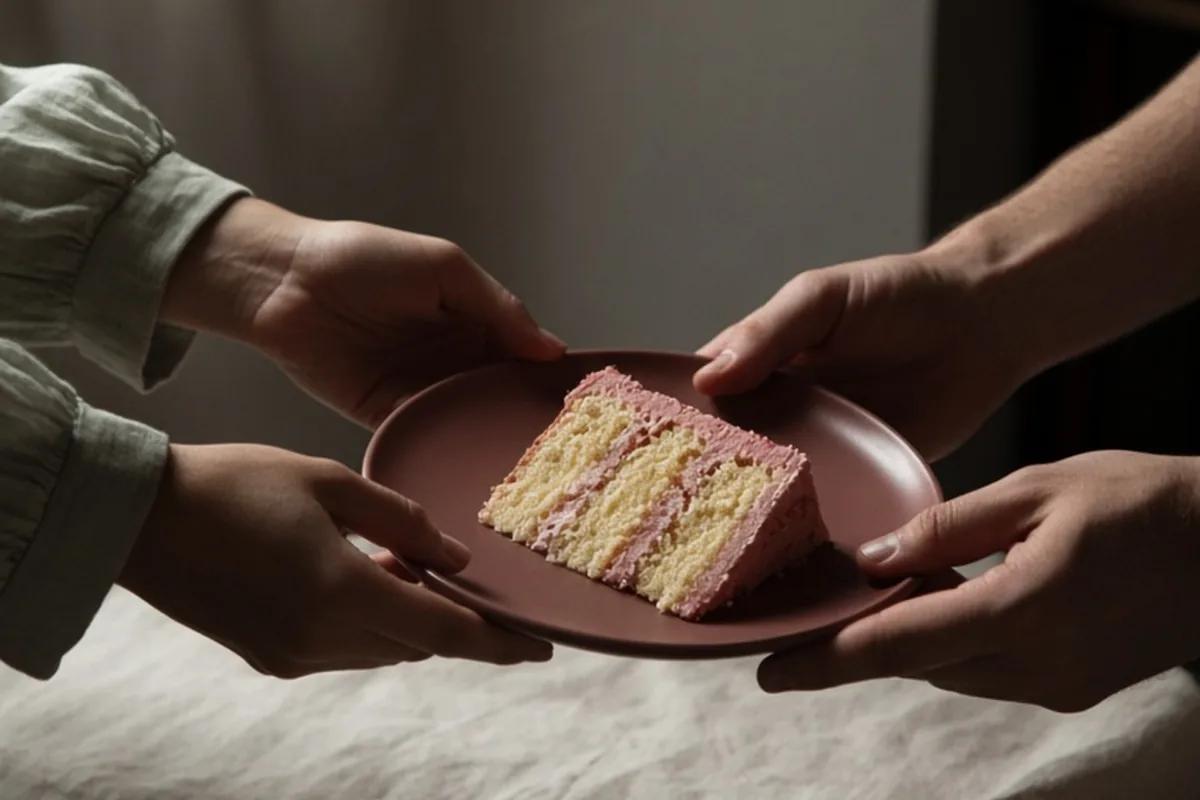
A fake wedding cake for cutting is a decorated foam display cake built with a small hidden compartment containing a fresh, edible slice. During the reception cutting ceremony, the couple cuts into this designated real section for photographs and symbolic feeding. Meanwhile, catering staff slice undecorated sheet cakes in the kitchen to serve guests quickly and uniformly, preserving presentation while managing bakery production and handling.
Couples often want the dramatic focal point of a grand, multi-tiered centerpiece without navigating the structural fragility, display melting risks, or tiered cake assembly logistics of serving an entirely fresh confection to a large room.
How a Hidden Cutting Nook Works in a Display Cake
A faux cutting cake relies on a simple structural trick executed during assembly. The cake decorator carves a small, precise rectangular or wedge-shaped cavity into the back or side of the lowest polystyrene dummy tier. Before the outer decorative finish cures, the baker lines this cut-out section with food-safe foil, wax paper, or food-grade acetate to ensure raw foam never touches edible food. A freshly baked, iced piece of genuine cake is inserted flush into the opening, and the decorator pipes the exterior frosting seams so the patch blends invisibly into the surrounding design.
To ensure the ceremonial moment proceeds smoothly in front of guests and photographers, the baker marks the cut location discreetly. Common indicators include a pearl-headed sewing pin placed just beneath the fondant border, a tiny piped sugar dot, a loose blossom on the cake stand, or a delicate satin ribbon placed on the back edge facing away from the audience. During the reception, the event coordinator or banquet captain briefs the couple on the exact placement so the knife slides cleanly into sponge rather than resistance from hard synthetic foam.
Display Cake Approaches Compared: Rental Dummies, Custom Replicas, and Hybrid Tiers
Couples choosing a non-traditional cake presentation typically select from three primary display schemes, each balancing visual permanence, kitchen logistics, and budget flexibility in distinct ways. The first option is an off-the-shelf rental dummy cake sourced directly from a bakery boutique or wedding stylist. These are pre-decorated, durable display structures surfaced in treated sugar paste, cold porcelain, or permanent plaster-like modeling paste. Because they are rented and returned intact, they do not accommodate an internal fresh slice; couples using this scheme either pose with the knife held against an unyielding back tier for photos or pair the rental with a separate, tiny, one-tier cutting cake positioned nearby.
The second scheme is a bespoke faux cake built entirely on polystyrene forms tailored to the couple's event color palette and theme, complete with a hollowed-out cutting insert. Because this piece is manufactured specifically for the wedding, the exterior can feature intricate piped royal icing, hand-rolled fondant, and genuine edible details identical to a luxury pastry display. The couple cuts directly into the integrated niche during the reception, after which the piece can be discarded or saved as an anniversary keepsake if non-perishable sugar flowers were used.
The third scheme is a hybrid tiered structure where structural foam and fresh cake coexist within the same tower. Typically, the bottom tier or tiers are formed from solid foam to provide stability, while the top tier is genuine sponge covered in matching icing. The couple cuts into the authentic top or middle tier, keeping the presentation entirely natural while avoiding the structural collapse risks associated with supporting multiple heavy tiers of delicate sponge in warm reception venues.
The Kitchen Sheet Cake Backstage System
A display cake serves primarily as a visual installation; guest hospitality relies on a coordinated backstage kitchen system. While the couple participates in the spotlighted cake-cutting ritual on the dance floor, kitchen staff simultaneously portion large sheet cakes that remain unseen by guests until placed on dessert plates. These sheet cakes use identical sponge recipes, fruit curds, and buttercreams as the cutting insert, ensuring guests receive the same culinary experience as the couple.
This split workflow provides significant operational advantages for reception timing. Slicing an authentic multi-tiered confection requires deconstructing dowel rods, separating tier boards, and cleaning sticky display platters in the dining space, which can create a noticeable delay in food service. Sheet cakes, by contrast, arrive in standard flat baker boxes, allow caterers to pre-portion uniform rectangular slices in advance, and can be garnished and served to hundreds of seated diners within minutes of the official ceremonial cut.
Cost Components and Bakery Billing Structure
A common misconception is that selecting a faux cake automatically reduces the bakery invoice to nominal materials fees. In reality, cake decorating billing reflects skilled artisan labor rather than raw ingredients. Sifting flour, sugar, and butter represents only a modest portion of a bakery quote; hand-sculpting sugar petals, painting edible gold leaf, and applying smooth fondant finishes demand the same craft hours regardless of whether the interior substrate is vanilla sponge or dense polystyrene.
When reviewing a dummy cake quote from a cake designer, the final bill typically comprises distinct service layers that couples should verify item by item before making deposits:
To obtain an accurate local quote, request an itemized proposal separating decorating labor from kitchen sponge volume. Compare this against an all-edible tiered quote from the same bakery to assess whether the labor savings of decorating foam justify the secondary expense of sheet cakes and cutting fees.
- Substrate materials: The raw expense of high-density foam cylinders, tier boards, and structural central doweling.
- Decorating labor hours: Piped royal icing, fondant covering, handmade sugar flowers, and texturing work, priced by design complexity.
- Fresh cutting insert: Preparation, sanitary lining, and installation of the single-portion real cake wedge inside the foam shell.
- Kitchen sheet cakes: The volume baking, filling, and flat icing of undecorated sheet cakes calculated by guest count.
- Logistics and handling: Delivery, setup, tiered display leveling, and any rental deposits for stands or reusable display bases.
Dummy Cake Construction: Polystyrene Cores Versus Fresh Foundations
The core structural difference between a genuine tiered cake and a faux presentation lies in the mechanical stability of expanded polystyrene versus baked flour matrices. Real cake sponge contains moisture, butter fats, and delicate air pockets that soften under ambient heat, high humidity, and physical vibration. Multi-tiered edible cakes require internal plastic or wooden dowels carefully cut to identical heights, supported by tier boards that distribute downward pressure evenly to prevent tilting or collapsing.
Polystyrene dummy forms, by contrast, offer rigid structural integrity that cannot melt, sink, or lean during warm outdoor receptions, beachside tents, or summer celebrations. Decorators can coat foam forms in royal icing, modeling paste, or rolled fondant weeks before an event without risking staling or structural decay. However, decorators must observe sanitary boundaries: unsealed foam releases small synthetic particles when cut, making food-safe barriers between the foam armature and any edible cutting slice an essential construction standard.
Venue Cutting Fees and Logistics Questions to Clarify
Before finalizing a dummy cake order, couples should review their venue or catering contract regarding outside dessert handling. Many event venues and independent caterers assess a flat cake-cutting fee per guest regardless of whether staff cut into an ornate tiered cake or simple kitchen sheet cakes. Because this fee covers plateware, silverware, table clearing, and dishwashing labor, switching to a faux display will not necessarily eliminate venue dessert service charges.
Couples should confirm critical coordination questions with both the decorator and catering manager in writing. Ask whether the caterer requires sheet cakes to arrive pre-sliced or whole, whether kitchen refrigeration space is available for temperature-sensitive buttercreams prior to service, and who assumes responsibility for removing the dummy cake from the reception floor after photographs conclude. Clarifying these operational responsibilities prevents confusion during the reception turnover.
Reception Timeline for the Cake Cutting Ceremony
A successful faux cake ceremony requires clear synchronization between the master of ceremonies, photographer, and banquet manager. The cake cutting typically occurs toward the conclusion of dinner service or immediately following formal toasts, signaling to guests that the dance floor will open shortly. The coordinator should escort the couple to the cake table, quietly pointing out the pre-marked niche so the couple positions their hands correctly without searching for the opening in front of guests.
The couple gently inserts the cake knife into the edible slice, extracts a modest portion with the server, and carries out the traditional tasting for the camera. As the photographer captures the portrait, banquet staff discreetly step forward to clear the knife and server. Rather than attempting to dismantle the dummy cake on the ballroom floor, staff leave the display intact for visual atmosphere while kitchen personnel immediately deploy the pre-cut sheet cake plates to dining tables.
Frequently asked questions
Can guests tell that the wedding cake on display is fake?
When professional decorators use rolled fondant, royal icing, or edible sugar florals, a faux cake looks virtually indistinguishable from an all-edible tiered centerpiece. Guests only realize a faux cake is in use if they notice kitchen staff serving rectangular sheet cake portions rather than wedges cut from the central tower.
Does a fake wedding cake save significant money?
Savings vary widely based on the intricacy of the decorative design. While kitchen sheet cakes cost less to produce than fully stacked tiers, elaborate custom decorating on foam requires substantial artisan labor hours, which may narrow overall savings compared to simpler, all-edible alternatives.
How far in advance can a fake cake be made?
Because the underlying structure is non-perishable polystyrene, decorators can construct and decorate a faux cake weeks or even months prior to the wedding date. However, the fresh cutting slice must be baked, prepared, and inserted immediately prior to delivery to maintain safety and flavor.
Can couples keep the fake cake after the wedding?
If the couple purchased a custom foam dummy rather than renting a display unit, they own the finished centerpiece. With proper climate-controlled storage away from moisture, direct sunlight, and heat, a fondant- or clay-finished dummy cake can be preserved for years as a decorative keepsake.
Your next step
Request itemized quotes from two local bakeries comparing an all-edible tiered cake against a foam dummy with matching sheet cakes, then check your venue contract for per-slice dessert service fees before paying a deposit.