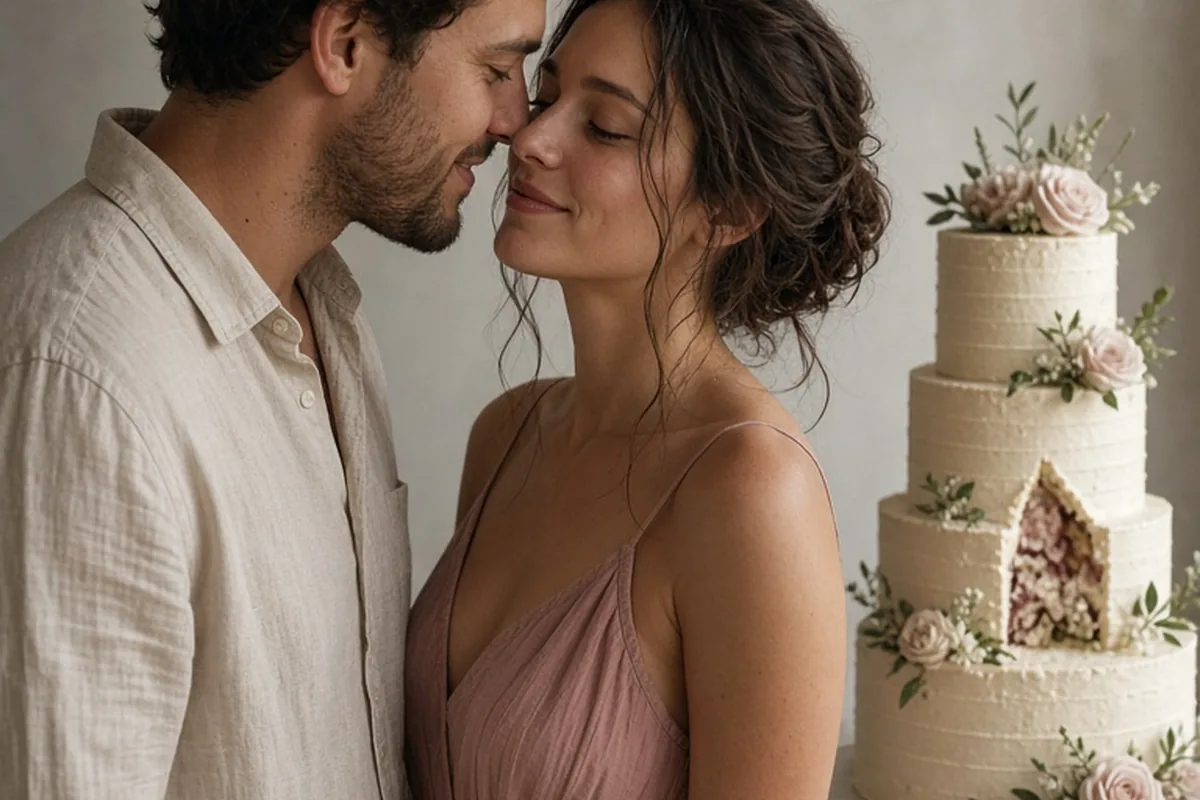
A fake wedding cake for cutting allows couples to showcase an elaborate display tier while serving hidden sheet cakes to 100 guests. The display structure uses decorated foam tiers with a designated real cake slice insert or a real tier for the ceremonial cut. Behind the scenes, the catering team slices pre-baked sheet cakes in the kitchen, ensuring all 100 guests receive fresh, identical portions quickly while reducing tier-stacking risks and visual collapse during warm weather.
Balancing visual grandeur with practical reception logistics is a central puzzle in modern wedding planning. Choosing a faux display cake paired with kitchen sheet cakes offers a strategic solution, preserving the traditional ceremonial cutting moment while streamlining kitchen service and dessert presentation for a hundred seated guests.
How a Cuttable Dummy Cake Works for a 100-Guest Reception
A dummy wedding cake, often called a faux cake, is constructed using high-density expanded polystyrene foam blocks shaped into standard cake tier dimensions. Professional decorators coat these lightweight foam cylinders with real fondant, royal icing, or stabilized buttercream, applying the same decorative techniques used on traditional edible tiers. From hand-piped lace and metallic leafing to sculptural sugar flowers, the exterior appears identical to a fully edible confectionery masterpiece. For a 100-guest event, this approach allows couples to present a towering three-tier or four-tier centerpiece without generating dozens of unwanted edible servings or compromising structural stability.
To enable the traditional cake-cutting ceremony and photo opportunity, the baker integrates a small edible section into the faux structure. The most common method involves carving a wedge-shaped cavity into the back of the bottom or middle foam tier, lining it with food-safe parchment or plastic wrap, and inserting a fresh slice of edible cake with matching frosting. Alternatively, the baker can construct a hybrid cake where the bottom or top tier consists of real sponge and buttercream, while the remaining tiers are decorated foam dummies. During the reception, the couple cuts directly into this designated edible portion, feeds each other a bite on camera, and leaves the remaining display intact.
Coordinating Kitchen Sheet Cakes to Feed Exactly 100 Guests
While the display cake commands attention in the reception space, the actual dessert served to your 100 guests comes from commercial sheet cakes prepared and held in the venue kitchen. Standard wedding cake portions measure approximately one inch wide by two inches deep by four inches high. When ordering kitchen cakes, commercial bakers generally supply full-sheet cakes (which yield roughly 75 to 100 wedding-sized portions depending on pan dimensions) or two half-sheet cakes (which yield around 40 to 50 portions each). Ordering two half-sheet cakes is often the ideal setup for a 100-guest headcount, as it provides a slight buffer for extra servings while simplifying kitchen handling.
Maintaining consistency between the display centerpiece and the plated dessert is essential for a seamless guest experience. The kitchen sheet cakes should feature the exact same sponge recipe, filling layers, and frosting flavor as the edible cuttable insert in the display tier. When banquet servers plate the slices in the back prep area, every guest receives an identically sized, cleanly cut portion with neat layers. This method eliminates the awkward, uneven wedges that often result from rushing to slice a towering tiered cake in front of a dining room full of waiting guests.
The Mechanics of the Ceremonial Cut on a Faux Cake
Executing the ceremonial cut on a faux cake requires clear visual cues and proper physical technique to avoid mishaps. Because high-density foam offers strong resistance against a standard cake knife, cutting into the wrong part of the display can push the cake off its pedestal or bend the serving blade. Experienced bakers mark the cuttable zone discreetly on the side facing away from the audience using a small pearl-headed pin, an edible sugar pearl, or a specific placement of fresh florals. When the couple steps up to the cake table, they look for this designated marker to guide their knife placement.
When positioning the cake for the reception, ensure the marked cuttable wedge faces slightly toward the couple and away from the primary photographer angle. The couple inserts the knife smoothly into the edible insert, cuts a small triangle or horizontal slice, and uses the server to lift the bite onto a dessert plate. The photographer captures the classic shot of the knife entering the cake, the lifting of the slice, and the couple sharing the first bite, all while the primary facade of the multi-tiered display remains pristine and unblemished for wide-angle room photos.
Cost Realities: Labor, Materials, and Venue Plating Fees
A common misconception is that choosing a faux wedding cake cuts the dessert budget to a fraction of the cost of a traditional cake. While raw ingredient costs for flour, butter, eggs, and sugar are lower when using foam dummies, the primary driver of custom cake pricing is artisan labor. Rolling fondant, smoothing icing, hand-crafting sugar florals, and painting intricate patterns require the exact same time and skill on a foam base as they do on real cake. However, dummy cakes do yield savings by eliminating the need for complex internal structural doweling and reducing the baker's risk of transit collapse.
When calculating the overall budget for 100 guests, couples must factor in venue and catering fees alongside bakery pricing. Many venues and full-service caterers charge a cake-cutting or plating fee per guest to cover the labor of unboxing sheet cakes, slicing them into uniform portions, providing clean china and dessert forks, and bussing tables afterward. To establish an accurate total cost, request itemized quotes from local bakeries detailing the dummy cake purchase or rental fee plus the cost per slice for kitchen sheet cakes, and confirm your venue's specific cake service policy in writing.
Display Durability and Climate Management During the Event
Faux wedding cakes offer distinct structural advantages in challenging event environments, particularly for outdoor, summer, or destination weddings. Real tiered cakes are prone to shifting, melting, or leaning when exposed to ambient heat, humidity, or direct sunlight over several hours. Foam dummies maintain their rigid geometric shape regardless of temperature, preventing catastrophic collapses. However, the exterior coating still requires environmental protection; real buttercream applied over foam can still melt, and fondant can form moisture blisters or sag under extreme heat or direct sun exposure.
Because dummy cakes are significantly lighter than dense, multi-layered sponge cakes, they present a unique stability risk: tipping. A lightweight three-tier foam cake can easily be dislodged by a gust of wind at an outdoor marquee reception or knocked askew by someone bumping the cake table. Professional decorators counter this by securing the bottom foam tier to a heavy, weighted cake drum using floral adhesive or royal icing, and using non-slip grip pads beneath the display stand. For open-air settings, the display table should always be placed on level flooring away from high-traffic walkways.
Dietary Accommodations and Flavor Flexibility Behind the Scenes
One of the greatest operational strengths of pairing a faux display cake with kitchen sheet cakes is the ability to offer diverse flavor profiles without complicating tier construction. In a traditional multi-tier cake, heavier cake flavors must be placed at the base, and lighter sponges on top, restricting menu creativity. With sheet cakes in the kitchen, couples can easily order two or three different flavor combinations—such as a classic vanilla bean with raspberry compote alongside a rich dark chocolate espresso cake—allowing catering staff to offer guests a choice during table service.
Managing dietary restrictions for a 100-guest gathering also becomes substantially easier and safer. Instead of attempting to make an entire towering centerpiece gluten-free, dairy-free, or vegan, the bakery can provide small, individually boxed specialty portions or a separate single-layer quarter sheet prepared in an allergen-controlled environment. Kitchen staff can plate and serve these specialized portions directly to designated guests, minimizing the risk of cross-contact and ensuring everyone enjoys a safe, elegant dessert.
Day-of Vendor Workflow and Venue Timeline Checklist
A successful faux cake presentation depends on clear coordination between your baker, venue coordinator, caterer, and florist on the wedding day. The display cake can often be delivered earlier in the setup window than a real cake because it does not require refrigeration, easing congestion during peak vendor load-in hours. If your design incorporates fresh flowers, schedule a specific time for the florist or baker to insert food-safe floral stems into the foam tiers before photographer arrival.
Communicate the dessert plan clearly on your banquet event order. The catering captain needs to know where the sheet cakes are stored, when to begin slicing (typically as soon as the ceremonial cut concludes or during speeches), and how slices will be distributed—either via direct table service or displayed on a self-service dessert station. Finally, establish who is responsible for packing up the display cake at the end of the night, especially if the foam structure is rented from the bakery and requires return to secure your security deposit.
Frequently asked questions
Will guests realize that our wedding display cake is fake?
In almost all cases, guests cannot tell the difference between a faux cake and a real one. Because the exterior is decorated with professional fondant, royal icing, or buttercream, it looks visually authentic, and serving plated sheet cake from the kitchen is already standard industry practice at large catered events.
Can we still save the top tier of a fake wedding cake for our first anniversary?
If your display cake is entirely foam, you will not have an edible top tier to freeze. Couples who want to preserve the anniversary tradition can either ask their baker to make the top tier out of real edible cake or order a fresh, matching mini-cake from the bakery on their one-year anniversary.
How far in advance should we order a cuttable dummy cake and sheet cakes?
You should reserve your date with a custom cake baker four to six months before your wedding date. Although dummy tiers do not spoil during construction, the hand-crafted decorative work requires significant advance studio time, and peak wedding dates book up quickly.
Are fresh flowers safe to insert directly into a foam dummy cake?
Fresh floral stems should never be pushed directly into untreated styrofoam because non-food-safe chemicals and moisture can compromise the structure. Professional decorators place stems inside food-grade floral water tubes or wrap them in floral tape before inserting them into the cake tiers.
Your next step
Contact three local wedding bakeries to request itemized pricing for a decorated dummy display cake with a cuttable insert alongside two half-sheet cakes, and ask your venue for their written cake-cutting fee schedule before finalizing your dessert budget.