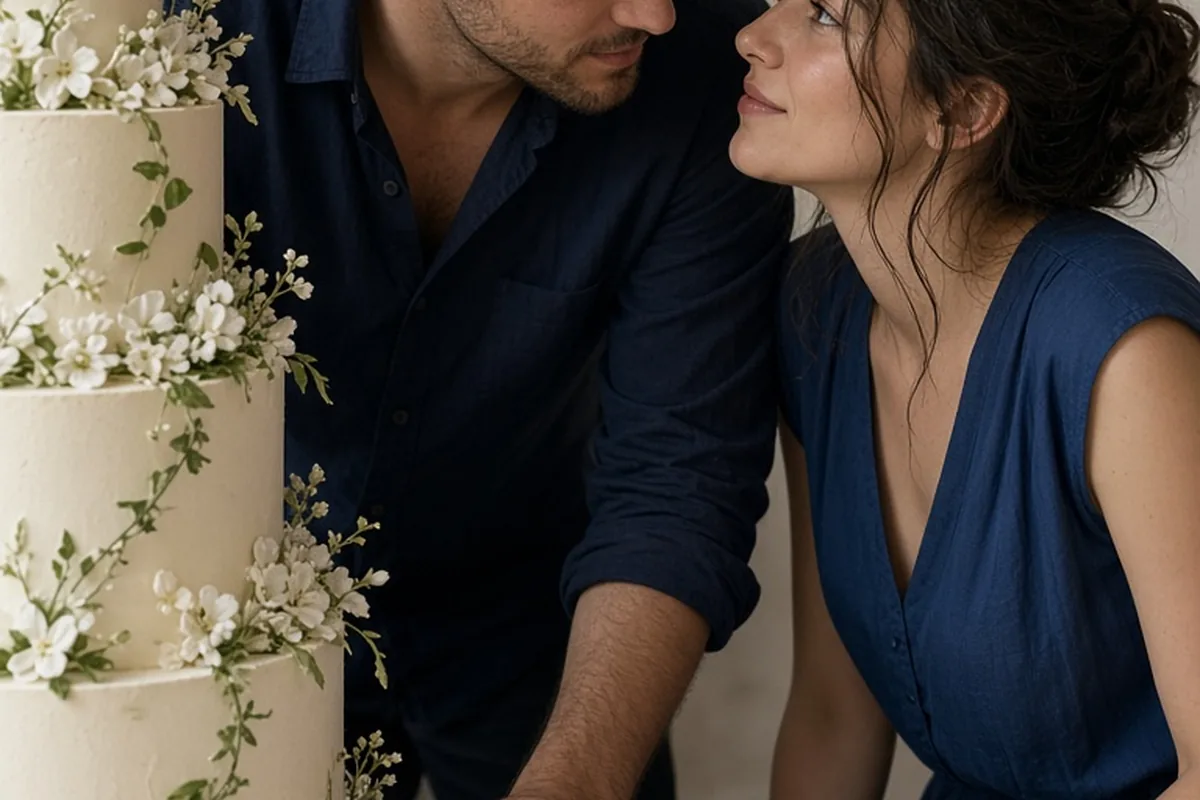
A fake wedding cake for cutting for 150 guests combines decorated styrofoam dummy tiers with a concealed compartment holding a real wedge of edible cake, paired with unadorned kitchen sheet cakes served from the back. During the reception, the couple cuts into the designated real portion for photos while catering staff slices and plates sheet cakes in the kitchen, allowing 150 guests to receive fresh dessert quickly.
Couples planning a celebration for 150 attendees often face a tension between dramatic reception aesthetics and practical dessert budgets. A display cake paired with sheet cakes offers a structured way to achieve the visual presence of a multi-tiered centerpiece without requiring an elaborate all-edible structure.
How a Display Cake with a Real Cutting Wedge Functions
A cutting-ready fake wedding cake relies on an intentional structural design that conceals edible pastry inside an artificial exterior. Professional cake artists typically build the structure using solid expanded polystyrene foam forms, commonly called cake dummies. To prepare the cake for the ceremonial cut, the baker carves out a precise wedge from the bottom or second tier, lines the empty space with food-safe barriers like parchment paper or thin plastic shielding, and inserts a freshly baked, frosted slice of edible cake just before delivery or during on-site setup.
The exterior of the dummy tiers is finished with real royal icing, fondant, or stable buttercream, allowing the artificial structure to blend seamlessly with the edible insert. Bakers mark the location of the edible wedge discreetly, often using a small decorative pearl, a ribbon fold, or a subtle floral placement so the couple and the banquet staff know exactly where to position the cake knife. When it is time for the formal cake cutting, the knife glides into the real pastry without hitting dense foam, producing clean, authentic photography and permitting the traditional symbolic taste for the couple.
Calculating Kitchen Sheet Cake Portions for 150 Guests
While the display cake commands attention on the reception floor, standard kitchen sheet cakes handle the practical responsibility of feeding 150 guests. Commercial bakeries define a standard wedding cake serving as a slice measuring one inch wide, two inches deep, and four inches tall. For 150 attendees, caterers generally plan for 140 to 160 portions, adjusting slightly based on whether the cake represents the sole dessert or shares the menu with a dessert table, plated fruit, or late-night snacks.
A full commercial sheet cake pan typically measures 18 by 26 inches and yields approximately 70 to 90 standard wedding-sized portions when sliced systematically in a grid. Therefore, a wedding of 150 guests generally requires two full commercial sheet cakes or three to four half-sheet cakes. Ordering unadorned or simply frosted kitchen cakes from the same bakery ensures that the flavor, sponge texture, and filling profile served to your guests match the slice tasted during the cutting ritual.
Designing the Right Visual Scale for a 150-Person Ballroom
The visual impact of a wedding cake depends on its proportions relative to the size of the reception room, the ceiling height, and the guest count. For a gathering of 150 people, an all-edible cake would naturally require three or four stacked tiers to yield enough portions. With an artificial structure, you can select the dimensions entirely based on aesthetic preferences rather than guest arithmetic, creating a grand silhouette that fits high-ceilinged ballrooms, open tents, or historic estates.
A balanced three-tier display cake often incorporates 6-inch, 8-inch, and 10-inch or 12-inch rounds, standing roughly 14 to 18 inches tall before adding a cake stand or floral topper. If the venue features dramatic architectural elements or expansive floor plans, you can opt for four or five dummy tiers, incorporating height enhancers like acrylic separators or foam spacers without risking structural collapse. Dummy tiers maintain sharp, crisp edges and plumb vertical lines throughout long indoor receptions or warm outdoor cocktail hours.
Choosing Materials, Fondant, and Buttercream for Fake Wedding Cakes
Decorating artificial cake tiers requires careful consideration of medium and climate. Fondant remains the industry standard for dummy cakes because it adheres smoothly to sealed styrofoam forms, creates sharp geometric edges, and hardens into a durable, non-melting finish. Intricate sugar flowers, piped royal icing lace, edible metallic leaf, and sculpted bas-relief patterns can be applied weeks in advance, giving the decorator ample time to execute detailed craftsmanship without the freshness timer of real sponge.
Couples who prefer the textured, rustic appearance of buttercream can request genuine buttercream finishes on foam tiers, though this approach requires specific handling. Real buttercream on a foam base must still be protected from direct sunlight, high ambient heat, and curious banquet room drafts that can melt or dry out the fat in the frosting. Alternatively, decorators sometimes use non-edible modeling pastes or permanent decorating clays for rental dummy cakes, but any surface intended to house an edible cutting wedge must be prepared using strictly food-grade materials.
Coordinating the Cake Cutting Ceremony and Banquet Plating
A seamless guest experience relies on clear operational handoffs between the baker, wedding coordinator, and banquet service team. The caterer must be informed well in advance that the display cake is non-edible except for the marked cutting slice. Banquet staff should never attempt to wheel the display cake into the kitchen to cut it for 150 people, as doing so leads to confusion, service delays, and ruined display rentals.
Prior to the cake cutting announcement, kitchen staff pre-slice the sheet cakes in the back prep area, arranging individual portions onto chilled dessert plates with complementary garnishes such as berry coulis or edible blossoms. As the couple completes their ceremonial cut and photographs at the display stand, waitstaff immediately emerge from the kitchen carrying plated sheet cake to guest tables. This parallel workflow shortens dessert service from forty-five minutes down to under ten minutes, keeping reception momentum steady.
Bakery Pricing Realities and True Cost Variables
A common assumption is that a fake wedding cake costs a fraction of an edible creation, but actual savings depend heavily on the complexity of your chosen design. Bakery pricing reflects two distinct categories: ingredient costs and skilled labor hours. While styrofoam forms and basic sheet cakes carry lower ingredient expenses than multi-tiered specialty sponges with complex fillings, intricate exterior decoration requires identical labor whether applied to foam or real cake.
Significant cost reductions occur when choosing simple exterior designs, renting a pre-made stock dummy cake from a bakery catalog, or utilizing standard sheet cakes from high-volume bakeries. To determine the financial viability for your event, request an itemized estimate comparing an all-tiered edible cake against a dummy display cake combined with 150 sheet cake servings. Ensure quotes account for display stand rental deposits, dummy tier return logistics, and venue cake-cutting or plating fees.
Handling Delivery, Setup, and Post-Event Return Logistics
Transporting an artificial cake presents unique physical dynamics compared to dense edible pastry. While dummy cakes are significantly lighter and immune to internal tier sagging, their low weight makes them susceptible to sliding or tipping in transit. Professional bakers secure dummy tiers to heavy wooden baseboards using food-safe dowels, industrial adhesives, and non-slip transport mats to maintain balance during vehicle transport and table placement.
Post-event logistics require clear assignments regarding the ownership of the cake structure. If the dummy cake is rented from your baker, assign a wedding party member or coordinator to safely box the tiers, salvage any personal cake toppers, and return the display unit according to the bakery contract terms. If you purchased a custom dummy cake as a permanent keepsake, store the tiers in an airtight, UV-protected container away from moisture, heat, and direct sunlight to preserve the decorative exterior for years.
Frequently asked questions
Can guests tell the difference between sheet cake and display cake?
When both the display wedge and sheet cakes are prepared by the same bakery using identical recipes, guests receive the exact same flavor and texture. Because sheet cakes remain sealed in kitchen boxes until plating, the cake often stays moister than a tiered structure exposed to ballroom air for several hours.
Where is the edible cutting slice placed in a fake wedding cake?
Bakers almost always place the edible slice in the lowest tier or the back quadrant of the second tier. This placement provides structural stability during cutting and keeps the couple's hands at a natural, photogenic height.
Does using a fake cake eliminate venue cake-cutting fees?
Not necessarily. Most venues and caterers charge cake-cutting or plating fees based on the labor required to slice, plate, garnish, and serve dessert to 150 guests, regardless of whether the pastry comes from a tiered cake or kitchen sheet pans.
Can I make my own fake cutting cake for 150 guests?
You can assemble and ice foam dummy tiers with craft supplies, but carving a sanitary, food-safe cavity for the real cutting wedge requires careful structural lining. If you choose this DIY approach, coordinate closely with your caterer so they know exactly how the sheet cakes will be delivered and served.
Your next step
Contact two local bakeries and your venue coordinator to compare an itemized quote for a dummy cake plus 150 sheet cake portions against an all-edible tiered design.