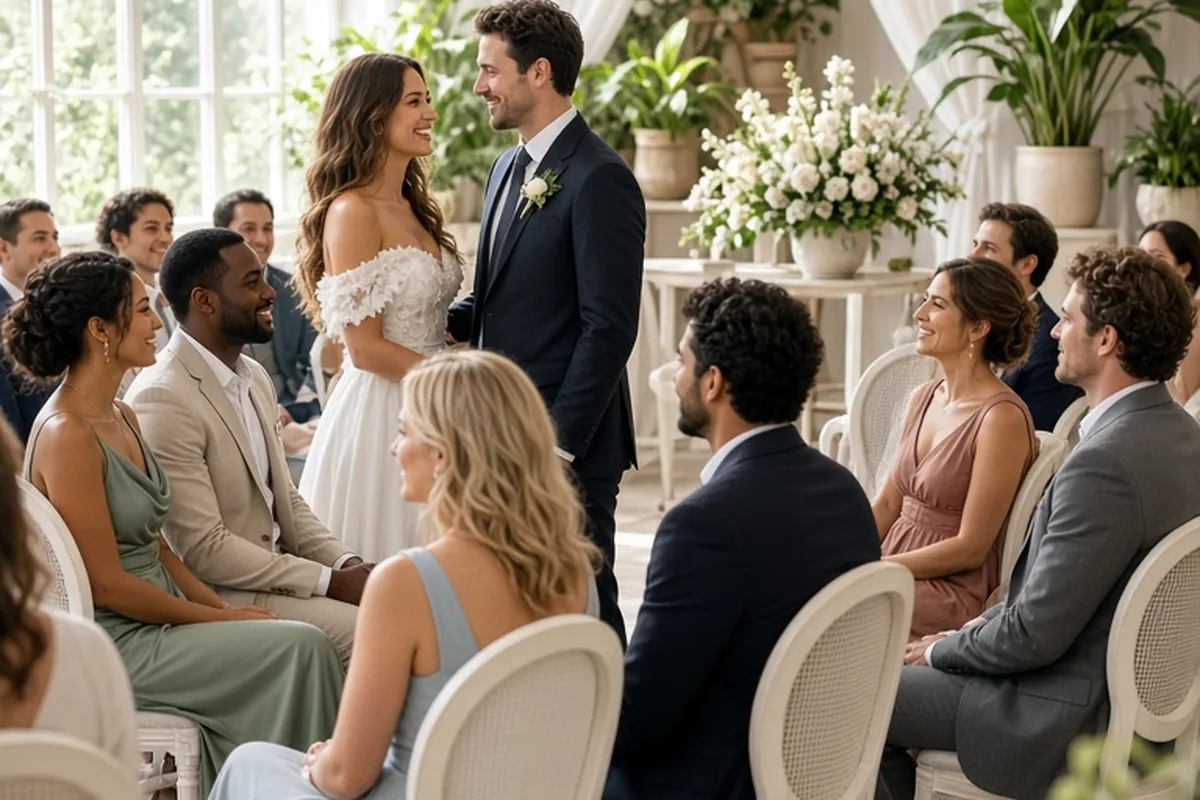
To incorporate Feng Shui into your wedding, focus on balancing energy flow, natural elements, and intentional symbolism. Choose an auspicious date aligned with both partners, orient ceremony seating toward open views, and harmonize the five natural elements through balanced decor palettes. Keep pathways clear of clutter so movement feels effortless, and arrange tables to promote warm conversation. These adjustments cultivate calm, joyful surroundings that support a harmonious start to marriage.
Planning a wedding involves hundreds of aesthetic choices, but couples often find that visual style alone does not guarantee a calm, grounding atmosphere. Integrating classic Feng Shui principles allows you to design your celebration around sensory comfort, emotional balance, and shared intentionality, turning your wedding environment into a supportive foundation for your new life together.
Selecting an Auspicious Date and Balancing Sun and Shade Timing
In traditional Feng Shui philosophy, timing is considered just as influential as physical placement. Rather than picking a date based solely on venue availability or calendar symmetry, couples look for dates that support mutual harmony and avoid days associated with heavy conflict or exhaustion. In Chinese metaphysics, practitioners frequently consult the Chinese almanac, or Tung Shing, alongside the birth charts of both partners to pinpoint auspicious calendar days. The goal is to select an occasion where the celestial energy, known as Qi, supports unity, longevity, and peaceful communication.
Beyond calendar calculations, daily timing plays a tangible role in how guests experience your ceremony. Auspicious timing generally favors daylight transitions that embody vibrant Yang energy, representing warmth, life, and forward momentum. A ceremony scheduled in the late morning or early afternoon naturally capitalizes on rising light, while twilight celebrations transition gracefully toward grounded Yin energy for dinner and relaxation. When evaluating your schedule, consider the physical trajectory of the sun at your venue. Positioning your ceremony so neither you nor your guests look directly into harsh, blinding light avoids visual tension and physical discomfort, allowing everyone present to stay emotionally present and at ease.
Mapping Venue Qi Flow from Guest Arrival to the Altar
Energy movement throughout a physical space mirrors the physical ease with which people move, breathe, and interact. When guests encounter cramped doorways, confusing signage, or bottlenecked entryways, nervous tension rises before the ceremony even starts. In Feng Shui, this stagnant or frustrated circulation is known as blocked Qi. To counter this, design your venue entryway to feel spacious, inviting, and clearly defined. Wide, unobstructed entry paths flanked by healthy greenery or soft lighting create an immediate sense of arrival, signaling to guests that they are entering a calm, intentional celebration.
The aisle itself functions as a primary energy channel leading directly to the altar, which represents the focal point of commitment. A wide, gently defined aisle allows the wedding party and couple to walk without feeling restricted or crowded by chairs. Avoid sharp, angular obstacles or decorative trip hazards placed along this central corridor. If your venue layout includes sharp architectural corners pointing straight down the aisle toward the altar, soften them with draped fabric, curved floral arrangements, or potted trees. Softening sharp edges diffuses harsh, cutting energy and keeps the visual and emotional focus squarely on the warmth of the ceremony.
Harmonizing the Five Elements Across Wedding Color Palettes
Feng Shui relies on the balance of five primary elements: Wood, Fire, Earth, Metal, and Water. Each element introduces distinct emotional qualities, and an overabundance or total absence of any single element can leave a space feeling either sterile or overwhelming. Wood encourages growth, vitality, and flexibility, embodied by living botanicals, fresh greens, and natural timber. Fire brings passion, celebration, and spirited connection, reflected in warm ambient candlelight, rich reds, corals, and gold lighting accents. Balancing these vibrant forces prevents the atmosphere from feeling either overly chaotic or uncomfortably subdued.
To balance the active elements, Earth, Metal, and Water provide grounding and clarity. Earth tones such as warm terracotta, ochre, sand, and taupe foster stability, trust, and lasting loyalty between partners. Metal elements, represented through crisp whites, cool silvers, brass flatware, and clean modern lines, encourage mental focus, pure communication, and organizational order. Water elements, introduced via flowing silks, deep navy tones, glass stemware, and reflective mirrored accents, invite emotional depth and intuitive understanding. When planning your wedding palette, choose two dominant elements that reflect your shared relationship temperament, then weave in accents of the remaining three to achieve an organic visual equilibrium.
Designing Balanced Ceremony Seating and Altar Backdrops
The physical altar serves as the energetic anchor of the entire ceremony. According to classic spatial principles, the couple should ideally stand with a solid, supportive structure behind them, a concept known in landscape Feng Shui as the black tortoise or mountain backing. A solid wall, a robust hedge, or an intentionally constructed wooden or floral arbor provides a subconscious sense of stability and protection. Avoid positioning your altar with an open drop-off, a drafty empty void, or an active service doorway directly behind your backs, as unsupported backdrops can generate subtle distraction and unease.
Guest seating arrangement equally dictates how warmth and communal celebration circulate. Straight, rigid rows can sometimes create an impersonal auditorium feel. Curving the outer rows slightly inward creates a gentle embrace, naturally gathering guest focus toward the center of the ceremony. This subtle horseshoe or semi-circular configuration encourages collective emotional resonance, allowing guests on opposite sides to see each other's joyful expressions. Ensure rows have ample legroom and generous central spacing so guests can sit, stand, and move comfortably without jostling one another.
Feng Shui Centerpieces, Flora, and Tabletop Energies
Reception tables are where guests spend hours conversing, eating, and connecting, making tabletop design vital to party cohesion. Round and oval tables inherently carry harmonious Feng Shui qualities because they eliminate sharp corners, invite equal conversational participation, and encourage circular movement. If your venue provides long rectangular banquet tables, you can soften their linear edges by using fluid fabric runners that puddle gently at the ends and positioning chairs with generous spacing so no guest feels boxed in.
Floral selections should emphasize life, vitality, and rounded elegance. Peonies are revered in Chinese tradition as icons of romance, honor, and prosperity, while orchids signify refined beauty and fertility. Incorporate lush, rounded blooms like garden roses, ranunculus, and lisianthus rather than overly thorny or spiky flora. Crucially, pay attention to centerpiece height. Centerpieces should sit comfortably below eye level or rise well above eye level on slender pedestals. Bulky, mid-height arrangements create an impassable physical and visual wall across the table, shutting down cross-table eye contact and suffocating spontaneous conversation.
Attire, Metals, and Meaningful Symbolic Details for the Couple
What the couple wears directly affects personal energy and composure during a long, emotionally demanding day. Select fabrics made of natural, breathable fibers like silk, fine cotton, or lightweight wool, which permit personal energy to breathe rather than trapping heat and static. While Western tradition favors pristine white, which Feng Shui associates with metal energy and fresh beginnings, integrating subtle accents of red, blush, or warm peach introduces vibrant life-force and joyful celebration. If bold colors do not suit your bridal style, subtle red embroidery inside a jacket lining, red soles, or garnet jewelry can offer personal symbolic blessings.
Jewelry and metal accessories carry grounding weight and symbolic unity. In Feng Shui, unbroken circles of precious metal like gold or platinum represent eternity, unyielding loyalty, and the seamless circulation of shared love. When selecting accessories, balance heavier pieces with open necklines or simpler silhouettes to avoid feeling weighed down. Traditional motifs such as the Double Happiness character, the dragon and phoenix pairing representing balanced Yin and Yang, or carved jade tokens for protection can be woven discreetly into invitation suites, ring boxes, or pocket squares to honor ancestral heritage with understated elegance.
Calming Chaos and Preserving Intentional Atmosphere on the Big Day
Even the most thoughtfully laid decor plans can stumble if the physical environment becomes noisy, rushed, or cluttered with event logistics. Vendor staging zones, sound equipment cords, and discarded vendor boxes carry chaotic energy that distracts from the serenity of the day. Work with your wedding planner or venue coordinator in advance to establish clean visual boundaries. All back-of-house supplies, extra dishware, and flight cases should remain fully concealed behind screens, drapery, or closed doors so guests encounter only serene, finished environments.
Sound and scent are invisible spatial dimensions that dramatically shift room energy. Gentle, acoustic instrumentals during guest arrivals establish a grounded, receptive baseline before the ceremony begins. In reception spaces, diffuse light, natural botanical scents such as subtle sweet orange, bergamot, or sandalwood to elevate spirits and promote relaxation, taking care to avoid synthetic, overpowering fragrances that could trigger headaches. By mindfully managing scent, acoustics, and visual stillness, you create an invisible sanctuary that lets you and your guests focus wholly on love, gratitude, and lasting connection.
Frequently asked questions
Do we have to use red decor for our wedding to have good Feng Shui?
No, you do not have to use red decor. While red is traditionally celebrated as the color of happiness and vitality in Chinese culture, Feng Shui is primarily about balance across all five elements. If your aesthetic favors neutral, pastel, or earthy tones, you can easily balance energy with textures, lighting, and living greenery without forcing bright primary colors into your theme.
What should we do if our venue layout has unavoidable architectural flaws like sharp corners?
You can remedy challenging venue features using soft styling adjustments rather than changing the room structurally. Position large leafy potted plants, curving drapery, or warm uplighting directly in front of sharp pillars or structural corners. Softening hard geometric angles gently redirects energy flow and creates a more comfortable visual line for seated guests.
Can Feng Shui principles apply to an outdoor wedding?
Yes, outdoor weddings naturally provide abundant natural light, living wood elements, and fresh air flow. The primary Feng Shui objective outdoors is creating defined, supportive boundaries so energy does not scatter in wide-open fields. Use structural arbors, defined aisle runners, and anchored seating perimeters to give the ceremony space an intimate, secure feeling.
How do we choose an auspicious wedding date if our favorite venue is only free on one weekend?
Balancing practical logistics with intentionality is completely normal in modern wedding planning. If venue availability restricts your date options, pick the day that allows you and your families the least amount of stress and rushing. You can bring auspicious energy into the day through intentional ceremony start times, balanced decor elements, and calm personal preparations.
Your next step
Take your current wedding floor plan and trace the path guests will walk from the entrance to their seats, removing any furniture, signs, or cords that narrow the walkway or block clear sightlines.