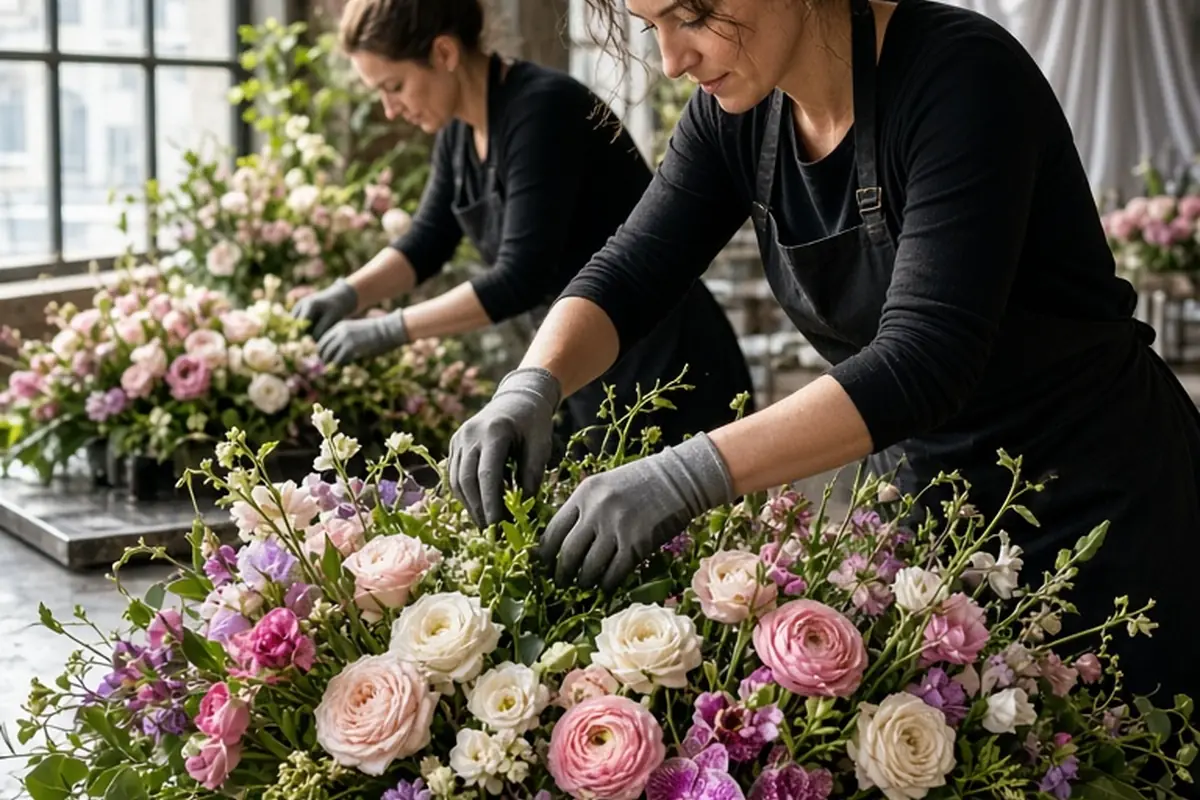
Wedding flowers and decor work best when designed around your venue's existing architecture, lighting, and timeline rather than isolated photo inspiration. Begin by securing your venue's setup guidelines and floor plan, then define focal points where guests spend the most time, such as the ceremony backdrop, dining tables, and bar. Balance fresh botanical arrangements with non-floral design elements like candles, specialty linens, and ambient lighting to build visual depth while managing overall production and breakdown costs.
Designing the aesthetic environment for a wedding involves coordinating living botanicals, architectural rentals, tabletop textiles, and ambient illumination into a cohesive guest experience. Because visual styling touches every part of the event schedule, thoughtful preparation prevents costly logistical misunderstandings between your florist, rental suppliers, and venue coordinator.
Evaluating Venue Architecture Before Booking Floral Installations
A common oversight during early planning is choosing decorative concepts before examining the permanent characteristics of the venue. A historic ballroom with carved crown molding, crystal chandeliers, and patterned wallpaper demands a completely different decorative strategy than an open industrial warehouse with exposed ductwork or a coastal garden with changing winds. When you visit your site, observe the ceiling height, wall colors, existing light fixtures, and floor finishes. Spaces with rich existing architectural character often require minimal floral intervention, allowing you to focus your floral investment on small, tactile moments such as guest place settings and personal bouquets. Conversely, cavernous spaces with neutral drywall or high steel rafters often require scale-driven choices, such as elevated hanging greenery or warm wash lighting, to prevent table arrangements from appearing dwarfed.
Take precise note of functional venue restrictions that directly affect floral installations and rentals. Inquire about the exact setup window granted to external vendors before guest arrival, as large-scale floral arches and complex suspended truss work require several hours of labor from an on-site team. If a venue only permits a ninety-minute vendor window prior to ceremony seating, elaborate on-site construction becomes impossible unless modular, pre-assembled mechanics are used. Additionally, request clarity on load-in paths, elevator dimensions, and dedicated water sources. A floral designer needs clean water access and a temperature-controlled prep space to maintain delicate cut flowers in warm weather, making back-of-house venue logistics just as critical to the final look as the front-of-house aesthetics.
Allocating Decor Funds Between Ceremony Backdrops and Dining Tables
Visual impact does not require placing extravagant floral pieces in every corner of the property. The most effective event designs establish a clear hierarchy, directing resources toward the focal areas where attendees spend the longest stretches of time and where photography naturally centers. The ceremony altar or arbor serves as the visual anchor for the emotional centerpiece of the day, making it a primary candidate for high-impact styling. However, because ceremonies typically conclude within thirty to forty-five minutes, investing the bulk of a decorative allocation exclusively into an immovable altar structure can leave dinner tables looking sparse during a three-to-four-hour reception meal.
To balance these competing priorities, distinguish between high-touch and low-touch guest zones. Low-touch zones include entry pathways, guest book tables, and cocktail highboys, where guests linger only briefly. In these areas, compact arrangements, potted greenery, or simple candlelight provide sufficient polish. High-touch zones, such as the dinner tables where guests sit for several hours, demand arrangements that offer rich texture up close without interrupting clear conversation across the table. When distributing design elements, determine whether your layout favors long banquet tables, which look cohesive with low floral troughs and candle groupings, or round tables, which benefit from alternating between low compact compote bowls and tall, elevated pedestal arrangements that preserve open sightlines.
Balancing Fresh Blooms with Candles, Linens, and Lighting Rentals
Fresh cut flowers are living agricultural products that require harvest labor, refrigerated shipping, professional stem conditioning, and skilled structural artistry, which naturally shapes their overall price point. A well-rounded design plan treats cut flowers as one component of a broader decorative toolkit rather than the sole vehicle for style. Combining organic flowers with textured linens, distinctive tableware, and layered candlelight creates a richer tactile ambiance than relying solely on dense, compact floral arrangements. Upgrading standard poly-blend banquet tablecloths to heavyweight slubbed cotton, Belgian linen, or textured velvet provides an immediate foundation of depth that elevates even simple floral arrangements placed above it.
Ambient lighting plays an equally transformative role in how floral colors and textures are perceived throughout the evening. Under harsh overhead fluorescent or unadjusted commercial lighting, vibrant petals can appear flat or clinical. Introducing dimmable pin-spot lighting focused specifically on dinner centerpieces makes petals stand out once the sun sets, while clusters of pillar candles, tapered candles in glass chimneys, or tea lights add dynamic movement to the room. When incorporating open flame, confirm local fire municipal codes and venue rules ahead of time. Many venues require candle flames to sit completely inside glass sleeves or hurricane cylinders that extend at least two inches above the wick to prevent accidental contact with clothing or passing service trays.
Selecting Resilient Stems and Weather-Appropriate Floral Varieties
Cut flowers respond rapidly to temperature, humidity, and direct sunlight, meaning that stem durability should directly inform your seasonal floral choices. Delicate, soft-petaled varieties such as garden hydrangeas, sweet peas, hellebores, and poppies drink large amounts of water and can wilt rapidly when exposed to hot afternoon sun or dry outdoor breezes. If your event takes place in a warm outdoor setting, prioritize hardy, woody-stemmed botanicals and structural blooms such as garden roses, lisianthus, ranunculus, orchids, protea, carnations, and sturdy tropical foliage. These varieties retain cellular turgor and structural form over many hours without continuous direct water immersion.
Your wedding florist can also employ technical mechanics that protect fragile stems without compromising aesthetics. Mechanics refer to the internal armatures that hold stems in place, ranging from traditional floral foam to eco-friendly options like reusable chicken wire cages, metal floral frogs (kenzan), and concealed water tubes. For outdoor arches subjected to heat, foam-free structures built with moss bags or water reservoirs keep individual stem ends hydrated throughout the ceremony. Discuss your climate expectations candidly during consultations, particularly if you are planning an open-air midday reception or a beachside ceremony where salt spray and wind accelerate water loss across broad petals.
Repurposing Ceremony Arches, Aisles, and Urns for the Reception
Repurposing ceremony floral designs into the reception space is one of the most practical strategies for extending the reach of high-grade floral investments. However, successful floral transitions require precise logistical planning rather than an impromptu decision on the wedding day. Ground-level floral meadows that flank the ceremony aisle can easily be lifted after the recessional and repositioned along the front of the head table or around the perimeter of the dance floor. Similarly, large floral urns on pedestals can be moved into the ballroom entryway or framed alongside the band stage to guide guest movement.
The primary challenge of floral repurposing lies in timing and labor. If the cocktail hour takes place in the same physical space as the ceremony, or if guests must filter directly through the reception doors immediately following vows, the moving crew must transport heavy, fragile, water-filled vessels discreetly and rapidly. Dedicated floral staff, rather than members of the wedding party or venue catering staff handling food service, should be formally assigned to this task. Ensure your florist contract accounts for the necessary team members to remain on-site through the ceremony conclusion to manage transitions cleanly without damaging fragile stems or spilling colored water on venue carpets.
Navigating Florist Contracts, Delivery Schedules, and Strike Fees
Reviewing floral and decor contracts requires looking beyond the itemized cost of bouquets and centerpieces to understand production and labor variables. A professional floral proposal generally divides costs between physical goods, design fees, delivery transportation, on-site installation labor, and post-event breakdown services, commonly referred to as 'strike.' Breakdown labor occurs late at night once the reception concludes, requiring crew members to return to the venue, dismantle towering frameworks, remove candle wax, pack rental glassware, and sweep plant debris so the space meets the venue's contractual turnover standards.
Clarify who retains ownership of the physical materials at the end of the evening. Flowers and foliage belong to the couple, meaning guests can take loose arrangements home if clear guidelines are established. However, decorative vessels, ceramic compotes, metal urns, floral risers, and glass candle sleeves are almost always rented inventory belonging to the florist or a specialty rental house. If guests carry away arrangements still housed in rented vessels, the couple is billed for replacement inventory. Ask your florist if they provide inexpensive disposable inserts or paper wrapping stations so guests can carry home loose stems at the end of the night while leaving all hardware behind for midnight breakdown.
Translating Visual Mood Boards into Concrete Seasonal Floral Recipes
Couples frequently gather visual inspiration from social media that features rare import varieties, digital color grading, or editorial arrangements assembled exclusively for photo shoots without functional longevity. When you present mood boards to a designer, articulate what you appreciate about each image: whether it is the loose, asymmetrical shape, the muted neutral palette, the dramatic contrast of deep hues, or the specific variety of flower. This allows your designer to understand your aesthetic intent while preserving the flexibility to select regionally accessible, peak-season blooms that achieve that exact mood without the volatility of rare imports.
Color behaves differently across living petals than on digital screens. Natural flowers contain undertones that shift across their lifecycle as buds open, and varieties described under the same color name can clash if not evaluated in person. For instance, 'blush' can range from a cool lilac-pink to a warm peach-cream. Ask your floral designer to describe the primary floral recipe using seasonal anchors, secondary bridge flowers that soften color transitions, and textural accents like seed pods, grasses, or delicate trailing greenery. Embracing seasonal availability not only ensures fresher, more vibrant flowers on the wedding day, but also cushions your plan against unexpected market shortages or transit disruptions.
Illustrative Scenarios
Repurposing Ceremony Florals for Reception Impact
A couple booking an urban loft with strict two-hour setup rules wanted both a lush garden ceremony backdrop and substantial dining table decor. Instead of commissioning separate installations, their floral designer constructed four modular, free-standing floral ground nests on heavy iron plates for the ceremony. Immediately after the recessional, two dedicated floral assistants transferred the nests to the reception room, placing two around the sweetheart table and two at the entrance of the lounge space.
Key point: Designing ceremony florals as modular, easily transportable units on stable bases allows couples to create major reception focal points without paying for duplicate floral materials or slowing down venue turnaround times.
Frequently asked questions
When should we begin booking our wedding florist and decor rentals?
Most couples secure their florist and key decor rentals between eight and ten months prior to the wedding date, immediately after confirming the venue. Because floral designers and custom rental companies often take on only a limited number of events per weekend, locking in your date early guarantees designer availability even if your specific floral recipe and table counts are adjusted closer to the event.
Can we mix real flowers with faux or silk greenery to manage expenses?
Mixing high-quality faux botanicals with fresh flowers is an effective option when applied strategically to elevated, out-of-reach areas like ceiling rafters or tall arbor frames. For tabletop centerpieces, bouquets, and settings where guests can touch, smell, and view arrangements up close, fresh florals generally provide a superior, natural presentation.
How are floral quotes calculated when final guest counts are not confirmed?
Florists initially issue estimates based on an assumed table count derived from your preliminary guest list, alongside fixed elements like personal bouquets and ceremony backdrops. Your contract will specify a cut-off date, typically thirty to forty-five days before the wedding, when final table counts and floor plans must be locked in so wholesale stem orders can be accurately placed.
What happens to the flowers after the reception ends?
Unless you make prior arrangements, leftover botanicals are broken down and composted or discarded during the venue strike. Couples can coordinate with local floral donation services that collect gently used arrangements the following morning for redistribution to community centers, or provide paper wrap stations so guests can take loose blooms home.
Your next step
Request your venue's vendor load-in guidelines, setup time limits, and flame regulations so you can share exact parameters with your floral designer before signing a decor proposal.