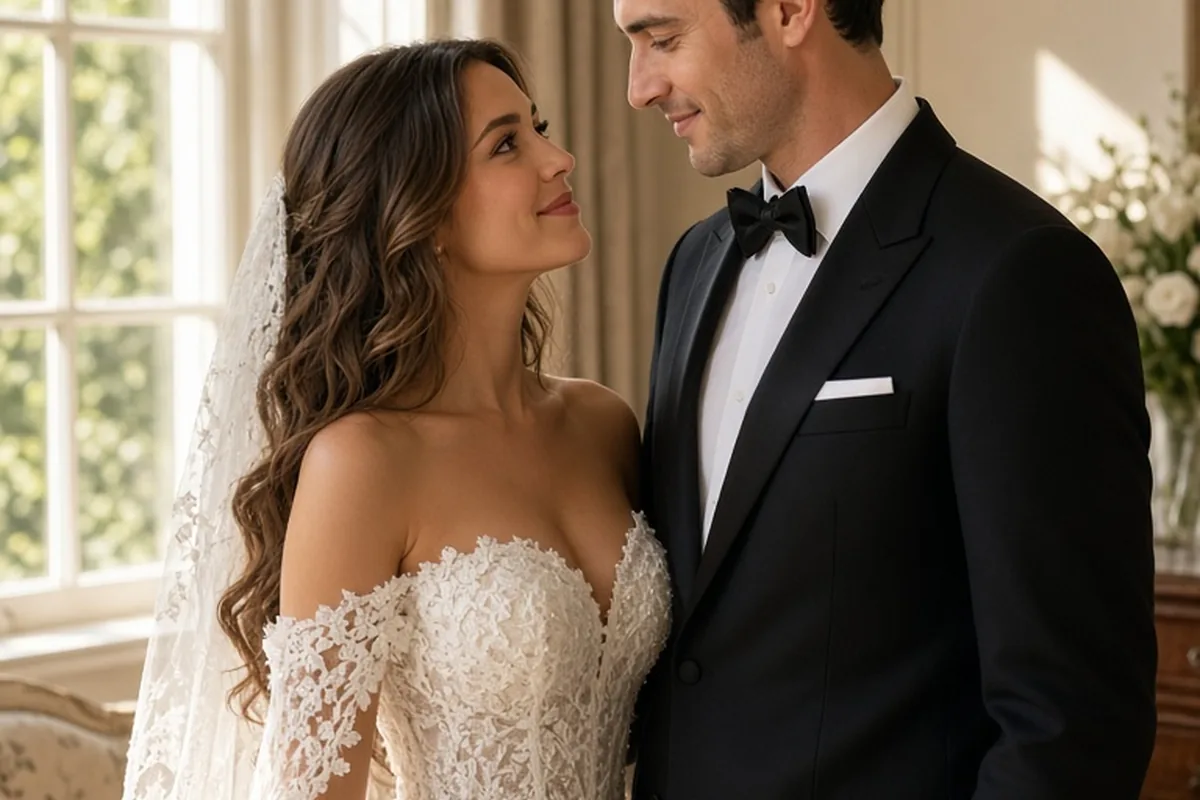
A foolproof wedding day timeline for an afternoon or evening ceremony anchors every event to two fixed points: your ceremony start time and local sunset. For a typical 4:00 PM or 5:00 PM ceremony, hair and makeup should wrap 90 minutes before photos begin, all formal portraits should conclude 30 to 45 minutes prior to guest arrival, and built-in 15-minute padding cushions must separate major transitions to absorb unexpected vendor or transportation delays.
Afternoon and evening ceremonies are the most popular formats for modern weddings, offering guests a smooth transition directly from the vows into cocktails and dinner. However, fitting getting-ready routines, multi-location travel, personal portraits, and formal catering courses into a single afternoon requires deliberate planning rather than optimistic guesswork.
Anchoring Your Afternoon Schedule: First Look Versus Traditional Timing
The single most important decision shaping your afternoon wedding timeline is whether you choose to do a first look or wait until the walk down the aisle to see each other. A first look shifts the bulk of your portrait session into the early afternoon, typically between 1:30 PM and 3:30 PM for a 5:00 PM ceremony. This approach allows the couple, the wedding party, and immediate family members to finish their formal posed photos before any guests arrive, freeing everyone to attend the entire cocktail hour immediately following the ceremony.
Choosing a traditional reveal preserves the emotional impact of seeing each other at the altar, but it compresses all couple portraits, wedding party groupings, and family formal combinations into the cocktail hour window. If you choose this route, cocktail hour must strictly run for 60 to 75 minutes, and your family photo list should be limited to roughly ten to twelve pre-assigned groupings. Without a first look, any portrait delays will directly cut into your time to eat, mingle, or take golden hour photos later in the evening.
Morning Hair, Makeup, and Getting-Ready Logistics for an Afternoon Wedding
Hair and makeup delays represent the most common cause of afternoon timeline collapse. When planning for a 4:30 PM or 5:00 PM ceremony, the entire wedding party should aim to be fully dressed and photo-ready at least two hours before the ceremony, or three and a half hours prior if you are doing a first look. Calculate the start time by working backward from that finish line: allocate 30 to 45 minutes per bridesmaid service and 60 to 90 minutes for the bride, ensuring your beauty team brings enough artists to service the group simultaneously.
Plan for the person getting married to complete hair and makeup second-to-last, rather than last. This prevents a scenario where the central person is still in a robe while the photographer arrives to capture getting-ready portraits. Build in a dedicated 30-minute buffer after the final touch-up for eating lunch, steaming dresses, pinning boutonnieres, and stepping into formal attire without panic. Photographers need this calm window to capture detail shots of stationery, rings, and wardrobe elements without pulling anyone away from their styling chair.
Sample 5:00 PM Ceremony Timeline: The First Look Run-of-Show
When you opt for a first look, the afternoon follows a steady, relaxed progression that knocks out the most structured photography requirements early in the day. A standard schedule starts around 9:00 AM with beauty services, moving steadily toward an early afternoon portrait block that concludes well before guests step foot on the property.
A reliable hourly breakdown for a 5:00 PM first-look wedding proceeds as follows: * 9:00 AM - Hair and makeup team begins on wedding party * 12:30 PM - Photographer arrives for stationery, accessory, and candid prep details * 1:15 PM - Bride and partner get dressed into formal attire * 1:45 PM - First look and private couple portrait session * 2:30 PM - Full wedding party group photos * 3:15 PM - Immediate family formal portraits * 4:00 PM - Portrait sessions conclude; couple and wedding party hide away to rest, hydrate, and refresh makeup * 4:30 PM - Guest arrival begins; prelude music starts * 5:00 PM - Processional and ceremony begin * 5:30 PM - Ceremony concludes; guests transition to cocktail hour while couple signs marriage license * 6:00 PM - Ten-minute golden hour couple portrait session (timed to local sunset) * 6:30 PM - Cocktail hour ends; guests are invited to find their dinner seats * 6:45 PM - Grand entrance and dinner service begins * 7:45 PM - Toasts and speeches delivered between dinner courses * 8:15 PM - First dance, parent dances, and dance floor opens * 10:45 PM - Last call for drinks and last dance * 11:00 PM - Grand exit and reception concludes
Sample 5:00 PM Ceremony Timeline: The Traditional Aisle Reveal Schedule
If you prefer to see each other at the altar, your morning and early afternoon become significantly more relaxed, but the post-ceremony window requires disciplined execution. Before the ceremony, you can photograph individual wedding party sides separately, along with solo portraits and individual family portraits that do not require both partners in the same frame.
A practical breakdown for a 5:00 PM traditional-reveal wedding follows this order: * 10:30 AM - Hair and makeup services begin * 1:30 PM - Photographer arrives for getting-ready details and final dressing moments * 2:15 PM - Side A individual portraits, wedding party photos, and immediate family groupings * 3:15 PM - Side B individual portraits, wedding party photos, and immediate family groupings * 4:00 PM - All pre-ceremony photos wrap; parties tucked away to ensure no accidental sightings * 4:30 PM - Doors open to guests; prelude music plays * 5:00 PM - Ceremony processional begins * 5:30 PM - Ceremony ends; guests proceed to cocktail hour * 5:35 PM - Combined immediate and extended family formal photos at the altar (strictly 20 minutes) * 5:55 PM - Full combined wedding party photos * 6:10 PM - Newlywed couple portraits during golden hour light * 6:35 PM - Couple takes a ten-minute private breather to eat appetizers and refresh * 6:45 PM - Cocktail hour concludes; guests take their seats in the dining room * 7:00 PM - Grand entrance, welcome toast, and dinner service * 8:00 PM - Formal toasts, cake cutting, and special dances * 8:30 PM - Dance floor opens to all guests * 10:45 PM - Music concludes and guests line up for the final send-off
Managing Family Formal Portraits and Room Flips Without Chaos
Family formals are the most volatile section of any wedding timeline because they involve coordinating multiple generations across varying attention spans and mobility needs. To prevent this 30-minute block from running over, compile a written shot list containing no more than 10 to 15 distinct groupings, listing the exact first names of everyone in each photo. Provide this list to both your photographer and an assertive, vocal friend or coordinator who knows both families and can call out names for the on-deck group while the current photo is being snapped.
If your ceremony and reception take place in the exact same physical space, known as a room flip, your timeline must give the catering and venue staff a minimum of 45 to 60 uninterrupted minutes to turn over tables, rearrange chairs, and light candles. During this window, all guests must be completely relocated to a separate cocktail area, patio, or foyer. Ensure your photographer is not trying to shoot family portraits in the main room while venue staff are moving heavy banquet tables around them.
Reception Flow: Balancing Toasts, Dinner Service, and Dancing
A common reception mistake is clustering all formal events—speeches, parent dances, cake cutting, and bouquet tosses—into a single massive block that stalls momentum. Spread these milestones strategically throughout dinner to maintain energy and give catering staff natural windows to serve and clear plates. For example, open with a short welcome toast from the hosts right after your grand entrance, schedule the main toasts between the salad and entrée courses, and cut the cake immediately after the main meal so staff can portion it while guests dance.
When scheduling dinner, consult directly with your caterer on their service style, as plated meals, family-style platters, and buffets require vastly different service durations. A plated meal for 150 guests typically takes 60 to 75 minutes from first plate to last clear, while a dual-sided buffet can move through the same crowd in 45 minutes. Never open the open dance floor until all primary speeches and formal dances are finished, as pulling guests off an active dance floor to watch a toast invariably flattens the room's energy.
Vendor Load-In, Travel Windows, and End-of-Night Logistics
A realistic timeline must account for background operational requirements that happen out of sight of guests. Most venues require outside vendors, including floral designers, rental companies, lighting technicians, and DJs, to complete setup at least one hour before guest arrival. Confirm that your venue contract permits vendor load-in at least two to three hours before the ceremony, especially if elaborate floral installations, chuppahs, or arch arrangements are involved.
Whenever travel between separate prep locations, ceremony sites, and reception venues is required, double the estimated driving time provided by map apps to account for loading wedding gowns, gathering bags, waiting on shuttle departures, and parking logistics. Finally, schedule your venue breakdown period carefully: if your rental contract ends at 11:00 PM, entertainment and bar service must stop by 10:00 PM or 10:30 PM so the vendor team can pack up equipment and clear personal belongings before overtime penalty fees kick in.
Frequently asked questions
What time should hair and makeup begin for a 5 PM ceremony?
For a 5:00 PM ceremony with four to six people receiving services, hair and makeup should generally start between 8:30 AM and 9:30 AM. If you are doing a first look and early portraits, aim to have all styling completely finished by 1:00 PM to allow time for dressing and travel.
How long should a standard afternoon wedding ceremony last?
Most non-religious wedding ceremonies run between 20 and 30 minutes, which includes the processional, readings, vows, ring exchange, and recessional. Religious ceremonies or formal mass services typically require 45 to 60 minutes, which must be reflected in your cocktail hour start time.
How much buffer time should be built into a PM wedding timeline?
Incorporate at least two 15-minute dedicated buffers into your afternoon schedule: one directly following hair and makeup completion, and another 30-minute buffer prior to the ceremony start. These cushions absorb small delays in dressing, missing items, or transportation without pushing back your vows.
When should golden hour photos be scheduled during an evening reception?
Golden hour portraits should be scheduled roughly 20 to 30 minutes before official sunset in your area. Check the exact sunset time for your wedding date and venue coordinates, and coordinate with your caterer so slipping outside for 10 to 15 minutes does not interrupt hot food service.
Your next step
Cross-reference your proposed ceremony time against the exact sunset time for your date, then share a draft timeline with your photographer and venue coordinator to finalize realistic buffers.