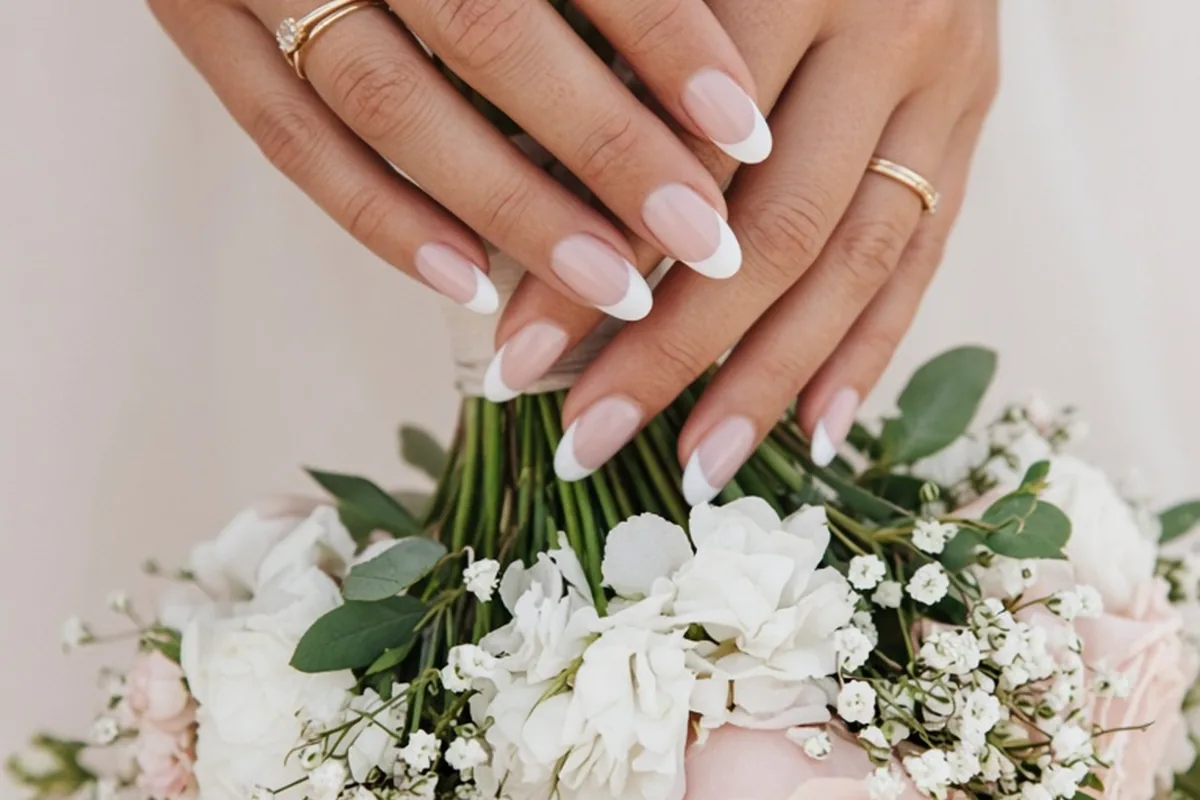
A French manicure for a wedding offers a clean, elegant look that pairs effortlessly with any bridal gown, bouquet, or ring style. To achieve the best results, select a base shade that complements your skin undertone, choose between crisp traditional tips, soft baby boomer fades, or modern micro-lines, and schedule your final appointment one to two days before the ceremony.
Bridal nail design often feels like a minor planning detail until the wedding day arrives and hands become the center of attention. From signing the marriage license and holding the floral bouquet to close-up ring photography, well-groomed hands complete your overall bridal look with subtle sophistication.
Exploring Modern Variations of the Classic Bridal French Tip
The traditional French manicure, defined by a sheer pink or neutral base paired with a solid white tip, remains a standard choice for weddings due to its simplicity. However, contemporary bridal styling offers several creative variations that adapt this foundation to different personal tastes. A popular modern alternative is the baby boomer or French ombré, which softly blends the white tip into the nude base without a harsh smile line. This gradient effect delivers a romantic, diffused appearance that looks exceptionally soft in natural light photography.
Another increasingly popular option is the micro French manicure, where the white border is painted as an ultra-thin line along the free edge of the nail. This works particularly well for brides who prefer short, functional nails or an understated minimalist aesthetic. If you want a subtle touch of radiance, applying a pearlescent chrome powder or a fine iridescent shimmer over a standard French base creates a glazed finish that catches candlelight during an evening reception without overpowering delicate ring details.
- Traditional French: Crisp, defined white smile line over a sheer translucent base.
- French Ombré (Baby Boomer): Seamless airbrushed gradient between white tips and soft pink bases.
- Micro French: Ultra-thin, precise border suited for shorter natural nail lengths.
- Glazed French: Subtle chrome or pearl dust applied over the finished design for reflective sheen.
Selecting the Right Base Shade for Your Skin Undertone and Gown
A common pitfall with bridal French manicures is choosing a base color that clashes with your skin undertone or your dress fabric. Sheer polishes are rarely one-size-fits-all; a shade that looks like a delicate blush on one person may appear chalky or sallow on another. Cool skin tones generally pair best with soft petal pinks or cool-toned milky whites, which prevent the hands from looking flushed. Warm skin tones harmonize with peachy nudes, warm beige tones, and soft sand shades that enhance natural golden undertones.
You should also evaluate how your nail base interacts with the color of your wedding attire. Crisp stark white gowns often look best when paired with clean, cool-toned sheer bases and bright white tips. Conversely, warm ivory, champagne, or antique lace dresses complement soft off-white tips, cream gradients, or warm honey-nude bases. When testing colors, place your polished sample nail directly against a fabric swatch of your dress under natural daylight to confirm that the tones flatter rather than contrast against each other.
Choosing the Best Nail Shape and Length for Bridal Practicality
While visual appeal is paramount, practical functionality should heavily influence your choice of nail shape and length on your wedding day. You will need to manage delicate buttons, clasp intricate jewelry, adjust your veil, and comfortably hold your partner's hands throughout the event. Almond and soft oval shapes are universally flattering because their gentle taper elongates the fingers while minimizing sharp corners that could snag delicate lace or tulle fabrics.
Square and squoval (square-oval) shapes provide a classic structure that suits medium-to-wide nail beds, though sharp square corners require careful buffing to prevent accidental dress snags. In terms of length, short to medium extensions offer the most reliable balance between elegance and ease. If you rarely wear long nails in your everyday routine, adopting extra-long extensions right before your wedding can feel clumsy and increase the likelihood of accidental breaks during setup or dressing.
Comparing Nail Systems: Gel, Dip Powder, Acrylic, and Regular Polish
Selecting the proper application method determines how well your manicure withstands the physical demands of wedding rehearsals, dressing, and celebrations. Hard gel and soft gel (gel polish) are popular bridal choices because they cure instantly under UV/LED light, produce a high-gloss finish, and offer enough flexibility to prevent cracking. Gel polish on natural nails is ideal if you are satisfied with your existing length and want smudge-free durability for up to two weeks.
Dip powder and acrylic enhancements provide superior structural strength, making them suitable for brides looking to add noticeable length or reinforce brittle, break-prone natural nails. Dip powder yields a very durable, chip-resistant finish without requiring UV light, though it can feel slightly heavier on the nail bed. Traditional regular nail lacquer is the least recommended choice for weddings because it requires extensive drying time and remains vulnerable to chipping or smudging during pre-ceremony preparations.
- Gel Polish: High shine, flexible feel, instant curing, zero smudge risk; lasts 10 to 14 days.
- Dip Powder: Highly durable, matte or glossy options, reinforces weak natural nails; lasts up to 3 weeks.
- Acrylic Extensions: Customizable length and structure, very rigid; requires professional fill-ins and removal.
- Regular Lacquer: Easy home removal, low cost, but high risk of chipping or denting within 24 to 48 hours.
Scheduling Your Nail Trial and Final Wedding Appointments
Timing your appointments properly prevents unnecessary stress and ensures your nails look flawless in person and on camera. It is wise to schedule a nail trial approximately three to four weeks before the wedding. Ideally, book this trial on the same day as your hair and makeup trial or a dress fitting. This allows you to evaluate how the manicure complements your complete look under various lighting conditions and gives you ample time to adjust the tip thickness, base tint, or shape if needed.
Schedule your final wedding manicure one to two days before the celebration. Booking two days prior leaves a buffer for minor repairs while keeping cuticles clean and edges crisp. Avoid scheduling your nail appointment on the morning of the wedding, as salon delays can disrupt your beauty schedule, and exposure to steam, hot water, or heavy styling products immediately after application can soften polish bonds.
Pre-Wedding Cuticle and Hand Care Routine
Even the most precise French manicure will look unpolished if the surrounding skin is dry, rough, or peeling. Beginning a consistent hand care routine four to six weeks before the wedding makes a substantial difference in high-resolution photography. Apply a nourishing cuticle oil containing jojoba oil, vitamin E, or almond oil twice daily to keep the nail matrix flexible and prevent unsightly hangnails from forming around the sidewalls.
Incorporate a gentle hand scrub once a week to remove dead skin cells, followed by a dense moisturizing hand cream before bed. Wear protective gloves when cleaning, washing dishes, or handling harsh household chemicals in the weeks leading up to your ceremony. Consistent protection prevents brittle nail plates, staining, and dry skin, ensuring your hands feel soft and appear naturally luminous when your photographer captures close-ups of the rings.
Day-Of Bridal Nail Maintenance and Emergency Solutions
Despite careful preparation, small nail accidents can occur while handling luggage, fastening shoes, or adjusting floral arrangements on the morning of the ceremony. Packing a compact nail emergency kit in your bridal suite provides peace of mind. Include a high-grit glass nail file for smoothing minor snags, a tube of fast-drying nail glue for securing any lifting enhancements, and a portable cuticle oil pen for a fast shine touch-up right before photos.
If you opt for a traditional lacquer and notice a tiny smudge or dull spot, avoid applying thick layers of fresh polish, which can cause uneven drying and bubbling. Instead, lightly smooth the surface with a drop of clear topcoat or gently buff the edge with your glass file. Remind your bridal party to handle heavy zippers, luggage latches, and car door handles using the pads of their fingers rather than the nail tips to preserve their sets throughout the day.
Illustrative Scenarios
Illustrative Scenario: Adjusting French Tones for Ivory Lace
A bride planning a garden ceremony initially requested a stark white traditional French manicure with a cool bubblegum pink base. During her dress fitting, she noticed that the crisp white tips clashed against the warm, warm-toned ivory undertones of her vintage lace gown. Working with her nail technician three weeks before the event, she transitioned to a soft baby boomer ombré featuring a warm champagne-nude base and an off-white tip.
Key point: Testing nail shades alongside your dress fabric under natural daylight helps you choose undertones that complement your gown rather than compete with it.
Frequently asked questions
How far in advance should I get a French manicure before my wedding?
The ideal window is one to two days before your wedding day. This ensures your cuticles remain fresh, your shine is at its peak, and you have time to fix any unexpected chips before festivities begin.
Can I do a French manicure on short natural nails for a wedding?
Yes, short natural nails look elegant with a micro French technique or a subtle baby boomer gradient. Keeping the white tip delicate prevents short nail beds from appearing visually compressed.
Should my toenails match my French manicure wedding nails?
They do not need to match identically, but they should look coordinated. A classic French pedicure or a matching sheer nude polish creates a cohesive aesthetic, especially if you are wearing open-toe bridal shoes.
What is the difference between classic French and baby boomer nails for weddings?
Classic French manicures feature a defined, crisp border between the white tip and the sheer base. Baby boomer nails use a soft, blended gradient that seamlessly fades the white tip into the nude base without a distinct line.
Your next step
To ensure your bridal nails look balanced and photograph beautifully, schedule a nail trial three to four weeks before your wedding to test base shades against your dress fabric, then book your final gel or dip appointment one to two days before the celebration.