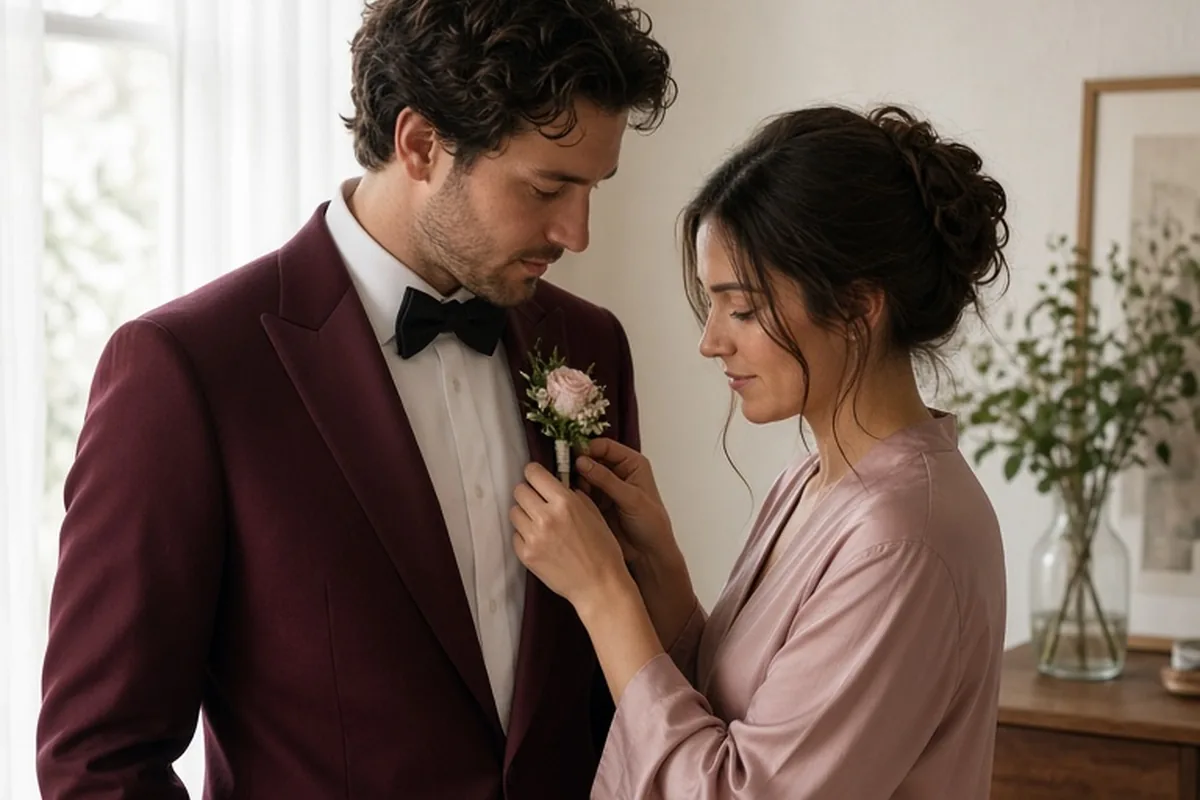
Groom attire costs in 2026 depend on whether you rent, buy off-the-rack, choose made-to-measure tailoring, or commission a bespoke suit. Base expenses cover the jacket and trousers, while alterations, dress shirts, neckwear, leather footwear, and specialty accessories shape the final total. To establish an accurate budget, solicit itemized written estimates from local formalwear specialists six to nine months ahead of your wedding date, accounting for potential rush charges and seasonal demand.
Establishing a realistic budget for wedding attire requires balancing stylistic preferences with the practical realities of formalwear commerce. While bridal gowns historically dominate wedding wardrobe discussions, a groom's garments involve distinct production tiers, rental logistics, and finishing expenses that can expand without careful advance planning.
Wedding Tuxedo Rentals: Component Breakdown and Package Terms
Formalwear rentals remain a traditional route for grooms who want black-tie elegance without the commitment of purchasing a garment they may rarely wear again. A rental agreement is fundamentally a short-term equipment lease applied to textiles. Most traditional rental houses package a tuxedo into bundled tiers, combining a single- or double-breasted dinner jacket, trousers with satin side braiding, a standard wing-collar or turndown-collar dress shirt, cufflinks, studs, a cummerbund or vest, and synthetic patent leather shoes. While bundled packages offer convenience, they also introduce trade-offs in fabric breathability, personal fit, and styling autonomy.
Rental contracts involve specific financial liabilities that go beyond the upfront booking fee. Suppliers routinely charge security deposits, mandatory damage waivers, and strict late-return penalties calculated on a per-day schedule. Because standard rental garments are engineered to withstand industrial laundering and repeated wear, their fabrics skew heavier and feature synthetic blends rather than natural lightweight wools. Fit adjustments are strictly non-permanent, limited to temporary hem tacks and sliding waistband clips. When evaluating a rental tier, examine whether the baseline price includes the required shirt laundering, insurance against accidental beverage spills, and extended multi-day possession windows for destination events.
Buying Off-the-Rack vs. Made-to-Measure Groom Suits
Purchasing off-the-rack formalwear provides an entry point into garment ownership, yielding an asset that can be restyled for corporate functions, galas, and future celebrations. Off-the-rack garments are manufactured in standardized sizing runs based on chest-to-waist drop measurements, typically using fused canvas construction where the inner interlining is heat-bonded to the outer shell. While commercially accessible and immediately available for initial fittings, these garments require separate post-purchase alterations to correct sleeve pitch, collar roll, trouser drape, and waist taper. The groom bears the combined cost of the retail garment and independent tailor fees.
Made-to-measure tailoring occupies a distinct middle ground between off-the-rack retail and artisanal bespoke craft. In a made-to-measure system, a clothier takes a comprehensive series of anatomical measurements and applies them to an existing base pattern block. The factory adjusts dimensions for shoulder width, posture balance, jacket length, and thigh circumference before cutting the fabric. Most made-to-measure programs utilize half-canvas construction, incorporating a floating horsehair canvas chest piece that drapes naturally over the wearer's torso while maintaining structure. This route eliminates the need for drastic aftermarket reconstructions, as initial alterations are largely integrated into the production cost.
Custom Bespoke Tailoring: Bench Craft, Cloth Origins, and Construction
Bespoke tailoring represents the highest echelon of menswear, governed by individual draft patterns created entirely from scratch for the groom's exact posture and musculoskeletal contours. A true bespoke garment involves multiple intermediate fittings on baste structures—preliminary skeleton garments stitched with temporary white thread—allowing the tailor to sculpt the canvas, shoulder pads, and chest drape directly onto the living body. Full-canvas construction is standard, meaning an unglued wool-and-horsehair inner foundation floats freely between the lining and exterior fabric, shaping itself to the wearer's body heat over decades of wear.
The cloth selected for a bespoke commission is the single largest variable determining its production fee. Mill prestige, yarn fineness, and raw material composition dictate wholesale textile prices. Traditional English and Italian mills produce fine worsted wools graded from Super 110s to Super 180s, where higher numbers indicate microscopic yarn diameter, extraordinary softness, and heightened vulnerability to abrasion. Incorporating luxury blends such as natural silk, kid mohair for black-tie sheen, or cashmere for cold-weather weddings directly influences total workshop hours. When investing in custom bench tailoring, you pay for master artisan labor, personal draft preservation, and heirloom-grade textiles.
Tailoring and Alteration Fees for Grooms
Alterations are unavoidable for any purchased suit and represent one of the most frequently underestimated expenses in groom attire planning. An off-the-rack suit cut for an idealized mannequin cannot account for asymmetry in natural human posture, uneven shoulder slopes, or varying arm lengths. Standard minor alterations include hemming trouser cuffs, letting out or taking in the waistband, and adjusting jacket sleeve lengths at the cuff. However, if a jacket features functional surgeon's cuffs with working buttonholes, adjusting sleeve length requires unpicking the sleeve from the shoulder head—a complex tailoring procedure requiring substantially higher labor rates.
Structural modifications compound alteration totals rapidly. Resetting a jacket collar to eliminate the fabric roll behind the neck, narrowing shoulder pads, reducing excess cloth across the shoulder blades, and tapering trouser legs require comprehensive deconstruction of interior seams. Grooms undergoing physical fitness changes leading up to the wedding may require multiple rounds of refitting. Working with a dedicated master tailor rather than an in-store department tailor provides greater nuance in balance and drape, but it requires independent invoicing and separate scheduling windows.
Accessory Packages, Footwear, and Essential Add-Ons
Completing wedding attire involves an extensive suite of secondary garments and accessories that can rival the cost of the suit itself if purchased piecemeal. The formal dress shirt serves as the architectural base; a proper tuxedo requires a formal pique bib or pleated front shirt with French cuffs and stud closures, whereas a lounge suit calls for high-thread-count Egyptian or Sea Island cotton with specific collar spreads chosen to flatter the groom's face shape. Skimping on shirt quality can cause discomfort during long wedding days, while cheap synthetic blends trap heat under venue lighting.
Footwear and hardware introduce distinct styling considerations and cost tiers. Traditional black-tie attire necessitates wholecut patent leather oxfords or velvet formal pumps, whereas classic suits accommodate calfskin balmoral shoes or double monks. High-grade welted footwear utilizing Goodyear or Blake stitch methods allows the shoe to be resoled for decades, transforming the purchase into an ongoing wardrobe investment. Additional accessories include silk neckties or hand-tied bow ties, suspenders, pocket squares, cufflink and shirt stud sets, belts, and specialized moisture-wicking undergarments designed to keep the groom comfortable across hours of photography and reception movement.
Practical Ways to Lower Groom Attire Expenses Without Cutting Quality
Managing formalwear expenses does not necessitate compromising fabric drape or visual dignity on the wedding day. One of the most effective cost-reduction methods is purchasing a versatile dark navy or charcoal two-piece worsted wool suit rather than a single-use tuxedo. A well-constructed navy lounge suit in an all-season mid-weight wool can transition directly into post-wedding professional wardrobes, job interviews, and anniversary celebrations, amortizing the initial financial outlay across years of utility.
Another practical approach involves strategic unbundling of accessories and taking advantage of non-bridal retail promotions. Bridal formalwear salons often mark up accessory items such as dress shirts, pocket squares, and leather dress shoes above standard retail rates. Sourcing staple accessories from independent heritage menswear brands, selecting mid-tier Italian wools over ultra-fine luxury fabrics that crease easily, and avoiding express production surcharges by ordering well ahead of seasonal deadlines will dramatically reduce your net expenditures. Coordinating matching accessories across the wedding party through collective retail orders can also unlock direct vendor courtesy discounts.
Questions to Ask Formalwear Clothiers Before Signing an Agreement
Before securing any garment order or placing a non-refundable deposit, clarify the precise scope of services included in your written estimate. Many clothiers present an appealing baseline garment price that omits essential tailoring sessions, fabric upcharges, or garment storage. Asking direct, structured questions during initial consultations ensures full transparency and prevents unexpected line-item invoices as the wedding week approaches.
Request comprehensive clarification on production timelines, fitting schedules, and contingency handling. Specifically inquire whether initial fittings include basic hemming and waist adjustments, how many distinct fitting rounds are permitted within the base quote, what fee applies if body weight fluctuates, and the exact policy if imported mill fabrics experience mill supply disruptions. For rentals, confirm the exact return time deadline after the reception and identify the financial responsibility should a minor seam tear occur during dancing.
Managing Your Fitting Timeline to Avoid Rush Charges
Navigating the formalwear timeline with discipline protects your budget against expedited manufacturing surcharges and express shipping tariffs. Custom made-to-measure and bespoke garments depend on international textile supply chains, where mills across England, Italy, and Scotland ship raw yardage to dedicated workshops before initial construction begins. For bespoke commissions, initiate the consultation process eight to twelve months prior to the wedding to accommodate cloth selection, initial basted fittings, intermediate adjustments, and final pressing.
Made-to-measure orders typically require four to six months from initial measuring to delivery, with an added two to four weeks reserved for post-delivery fine-tuning with a local tailor. Even standard off-the-rack purchases require at least two to three months of buffer time to ensure local tailor availability, especially during peak spring and autumn bridal seasons when alterations shops operate at peak capacity. Rental reservations should be formalized four to six months early to guarantee size and garment silhouette availability within rental inventories.
Frequently asked questions
Is it more cost-effective to buy or rent a groom's wedding suit?
Renting offers a lower immediate out-of-pocket payment for a one-day event, making it suitable for strict single-day wedding budgets. However, purchasing an off-the-rack or made-to-measure suit provides long-term value, as the garment remains a permanent wardrobe asset that can be reworn for future occasions.
Why do bespoke suits require a higher investment than made-to-measure?
Bespoke tailoring involves drafting an entirely new, individual paper pattern based on the groom's exact posture and physique, accompanied by extensive hand-sewn internal canvassing. Made-to-measure modifies an existing standardized base pattern, reducing manual drafting hours and bench tailoring time.
What common hidden fees should grooms expect when budgeting for attire?
Frequent unbudgeted costs include multi-stage alteration fees, functional sleeve buttonhole tailoring, formal tuxedo shirts, cufflinks, specialty dress shoes, garment preservation bags, and express production fees if orders are placed late.
How far in advance should a groom finalize their wedding wardrobe?
For bespoke garments, begin consultations eight to twelve months prior to the wedding. Made-to-measure suits require four to six months, while off-the-rack purchases and rentals should be finalized two to four months ahead to allow ample time for fittings and adjustments.
Your next step
Schedule consultations with three local formalwear providers this week to collect written, itemized quotes that compare rental packages, off-the-rack options, and made-to-measure programs against your wedding timeline.