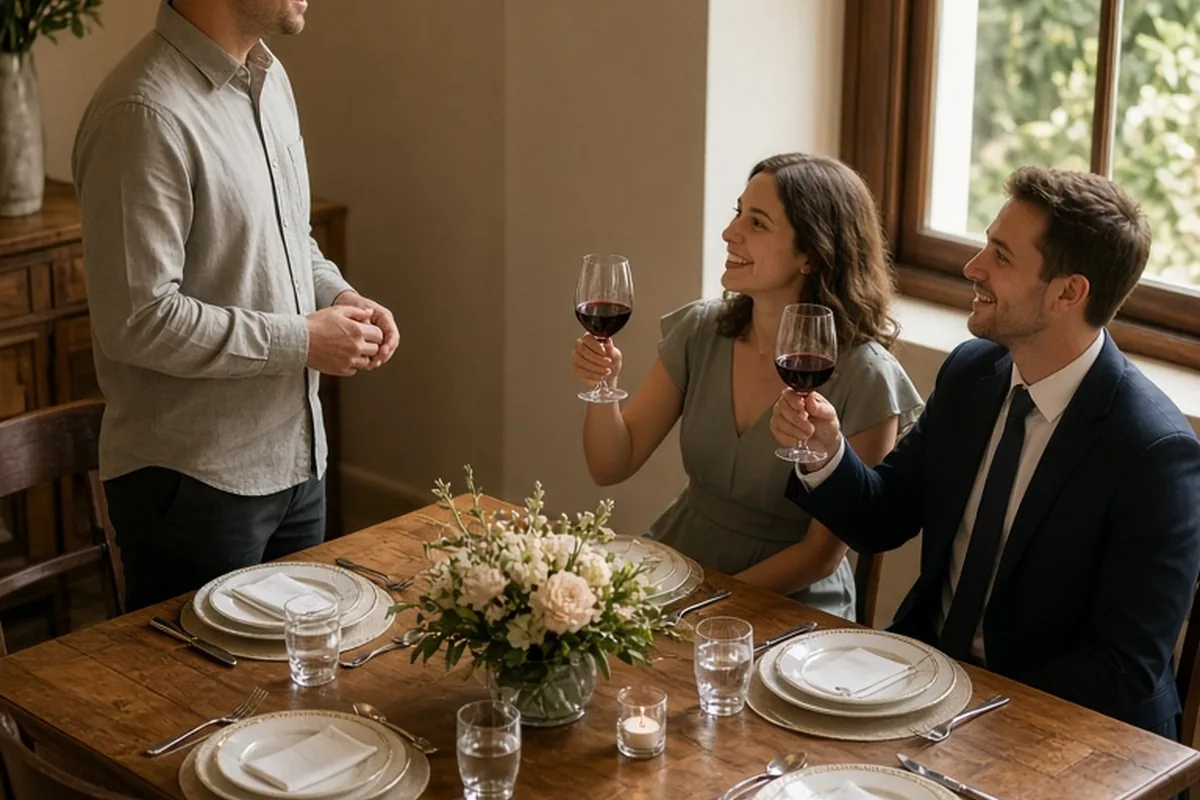
Heartfelt engagement poems capture the excitement, promise, and shared history of two people deciding to build a life together. The most effective engagement verses match the couple's personality, fit the specific setting—such as an intimate greeting card, a festive family toast, or a social announcement—and balance genuine emotion with grounded sincerity, avoiding generic clichés in favor of memorable, meaningful sentiment.
An engagement marks a distinct emotional threshold between dating and marriage, making it a unique moment where personal expression carries lasting weight.
Choosing the Right Tone for an Engagement Poem
Finding the right tone begins with understanding your relationship to the couple and the venue where your words will be experienced. A poem written inside a private greeting card can lean deeply into quiet memories, shared inside jokes, or reflective observations about how the pair complements one another. In contrast, a verse read aloud during a crowded engagement party or backyard celebration requires immediate clarity, steady cadence, and a celebratory tone that every guest in the room can easily follow without needing insider context.
Consider whether the couple naturally gravitates toward traditional sentiment, understated humor, or modern simplicity. If the couple values privacy and calm conversations, dramatic grand declarations about fate and destiny might feel jarring or performative. On the other hand, if they are vibrant storytellers who love expressive gatherings, a warm, rhythmic piece celebrating their shared adventures will resonate immediately. Taking five minutes to evaluate their day-to-day dynamic ensures your poetic message feels authentically tailored to them rather than pulled at random from a generic template.
Original Short Verses for Engagement Cards and Gift Tags
Short verses are ideal when space is limited, such as on a handwritten note tucked into a gift basket or a classic greeting card. A concise poem provides a lyrical focal point without crowding out your personal message of congratulations. Short poems work best when they focus on a single resonant theme, such as mutual support, everyday companionship, or the quiet joy of deciding on a shared future.
Here are three original short verses you can adapt freely for handwritten notes and cards:
Verse 1 (Classic Warmth): Two distinct paths that turned side by side, / Walking together with patience and pride. / A promise now spoken, a journey begun, / To weather all seasons as two living as one. / May your days hold deep laughter, your evenings bring peace, / As your friendship and promise continue to increase.
Verse 2 (Modern and Gentle): It started in quiet and grew day by day, / In the small, steady choices along the whole way. / Today brings the question, tomorrow the start, / Of building one home from the strength of each heart. / Congratulations on choosing forever.
Verse 3 (Short and Joyful): A ring on the finger, a spark in the air, / A lifetime of memories ready to share. / Here is to the laughter, the plans, and the cheer, / And every bright moment ahead in each year.
Heartfelt Engagement Poems for Speeches and Family Toasts
Delivering a poem as part of an engagement speech or dinner toast requires careful pacing and accessible imagery. Spoken poetry should avoid overly complex sentence structures or awkward rhyme schemes that trip up the speaker. The goal of a toast poem is to create a shared emotional moment that transitions smoothly into raising a glass with the entire room.
Parents, siblings, and close lifelong friends often want to acknowledge both where the couple started and the exciting road ahead. The following original longer poems are structured specifically for spoken delivery, with natural pauses built into each stanza:
Toasting the Newly Engaged Couple (For Parents or Siblings): We watched you both grow as the seasons went past, / Looking for something enduring and fast. / In each other you found what was steady and true, / A partner who listens, encourages, and stands beside you. / This ring is a symbol, but greater by far / Is the home you are making right where you are. / May your patience be endless, your humor stay bright, / As you walk hand in hand toward a future so bright. / Let us raise up our glasses and honor this start, / To two lives united in purpose and heart.
A Toast from Close Friends: Here is to late-night conversations and plans in the making, / To every bold step that you both are now taking. / You found your best teammate, your confidant, your guide, / The one person you want walking right by your side. / May the road hold adventure, easy smiles, and good grace, / And may happiness follow wherever you make your place. / Cheers to the engagement and the bright days to come.
Lighthearted and Modern Rhymes for Friends and Couples
Not every engagement celebration demands formal or solemn language. Many couples prefer messages that celebrate the fun, quirks, and practical realities of moving from dating into wedding planning. A lighthearted engagement verse can acknowledge the chaos of party planning, the relief of finally making it official, or the simple joy of finding someone who loves your eccentricities.
When using humor in a poem, keep the focus positive and uplifting. Avoid overused jokes about giving up freedom, ball-and-chain stereotypes, or past relationship history. Instead, highlight the fun of finding your favorite person to share mundane chores, weekend adventures, and spontaneous decisions.
An Original Playful Verse: The secret is out and the question is done, / The planning has started, the journey begun. / You found the one person who knows all your quirks, / Who shares in your coffee and knows how life works. / Through wedding checklists, seating charts, and tasting the cake, / Remember the simple commitment you make: / To laugh through the madness, to pause and high-five, / And enjoy every minute of being alive. / Congratulations on making it official!
How to Write a Custom Engagement Poem from Scratch
Writing your own custom verse for an engaged couple is often more memorable than borrowing a standard piece, even if you do not consider yourself a writer. The key to composing a successful custom poem is grounding the verses in real, observable details rather than abstract romantic phrases. Think about how the couple met, a hobby they enjoy together, a trip where they seemed exceptionally happy, or how they support each other during stressful weeks.
Start by writing down three concrete facts about the couple: a shared habit (like brewing morning coffee or hiking on weekends), an admirable quality they share (like calm generosity or fierce loyalty), and your genuine wish for their future. Next, arrange these observations into simple four-line stanzas (quatrains). You can use an AABB rhyme scheme (where line 1 rhymes with 2, and 3 rhymes with 4) or an ABCB scheme (where only lines 2 and 4 rhyme). If rhyming feels forced, free verse with strong descriptive language and rhythmic sentence lengths often feels even more sincere.
Delivery Etiquette: When and How to Share Your Verse
Timing and delivery format dictate how your poem will be received. If you are sharing the poem in a toast, coordinate in advance with whoever is organizing the engagement party schedule. Surprise interruptions can disrupt the flow of speeches or meal service. Keep spoken toasts under three minutes total, with the poem taking no more than sixty to ninety seconds of that window. Read slowly, speak clearly into the microphone or across the table, and make direct eye contact with the couple during key lines.
If you are printing the poem on decorative cardstock or framing it as a keepsake gift, choose clean typography and leave ample white space around the text. For social media captions accompanying engagement photos, select two to four lines from a poem rather than an expansive multi-stanza piece so mobile readers can easily absorb the sentiment while scrolling.
Always respect the couple's boundaries regarding sensitive personal topics. Never include references to private family disagreements, previous partners, financial costs of rings or weddings, or intrusive expectations about when they should have children. Keeping the poem centered entirely on their mutual love and happiness guarantees a warm reception.
Illustrative Scenarios
Tailoring a Toast to an Introverted Couple
Marcus was asked to give a toast at his sister Clara's engagement dinner. Knowing Clara and her fiancé Ethan preferred understated, quiet moments over dramatic public displays, Marcus initially worried that a dramatic romantic poem would make them uncomfortable. Instead of delivering a grand theatrical recitation, Marcus composed a short four-line verse highlighting their shared love of quiet weekend trail walks and patient mutual support. He delivered the lines warmly in under a minute before inviting everyone to raise a glass. Clara and Ethan appreciated that the tribute felt true to their quiet dynamic rather than exaggerated.
Key point: Matching the tone and scale of your poem to the couple's real personalities creates genuine connection without causing awkwardness.
Personalizing a Pre-Made Card Message
Elena bought a standard engagement greeting card for her close coworkers, Priya and Julian, but felt the printed verse was too generic to reflect their close-knit team friendship. Rather than sending the card as is, Elena wrote a custom four-line stanza on the left-hand page that mentioned their shared office coffee runs and praised how supportive they were during heavy project deadlines. Priya and Julian later told Elena that her personalized verse was the most memorable card they received from their colleagues.
Key point: Adding specific, everyday details turns a conventional greeting into a treasured personal keepsake.
Frequently asked questions
How long should an engagement poem be for a card versus a speech?
For greeting cards and gift tags, four to eight lines provide a complete, impactful thought without overcrowding your handwriting. For a speech or toast, an engagement poem should be between eight and sixteen lines, taking about sixty to ninety seconds to recite clearly.
Can I use an engagement poem if I do not know one of the partners very well?
Yes, but focus the poem on universal themes of partnership, companionship, and shared happiness rather than highly specific inside jokes. Acknowledging how happy your friend or family member looks beside their new fiancé ensures the message feels inclusive and welcoming to both people.
Does an engagement poem have to rhyme to be meaningful?
Rhyme is entirely optional. Free-verse poetry focused on genuine imagery, sincere blessings, and heartfelt congratulations often sounds more natural and emotionally grounded than forced rhyming lines.
Is it appropriate to send an engagement poem via text message or digital greeting?
A short two- to four-line verse is a lovely way to add warmth to a digital congratulatory text or social message. For longer, formal poems, a physical handwritten card or printed keepsake remains the most appropriate and enduring format.
Your next step
Select or write a short 4- to 8-line verse that reflects the couple's real dynamic, and handwrite it inside their engagement card today.