Heartfelt wedding poems for the bride honor her character, mark the gravity of the day, and express enduring love through vivid imagery and clear emotion. Whether spoken during the ceremony vows, read during a reception toast, or written privately in a morning-of note, the most meaningful poems avoid hollow cliches. Instead, they focus on specific promises, genuine appreciation, and the shared journey ahead.
Poetry captures feelings that everyday conversation often compresses into simple pleasantries, giving words the weight that a major milestone deserves. Finding or writing the right verses requires balancing sincere sentiment with practical delivery so the message resonates naturally with the bride and everyone gathered.
Selecting the Right Emotional Tone for the Bride
Every bride approaches her wedding day with a distinct emotional temperament and vision for the gathering. Some ceremonies lean heavily into reverence, tradition, and solemn devotion, while others celebrate warmth, laughter, and spontaneous joy. Choosing a poem begins by observing how the bride communicates her own feelings. If she appreciates understated affection and quiet gestures, an overly dramatic, baroque reading might feel foreign or overwhelming. Conversely, a bride who loves sweeping romance and classic literature will welcome expansive imagery, lyrical cadences, and deep emotional declarations.
Consider also the setting and acoustics of the venue, which subtly influence how verse is received by an audience. An intimate garden gathering naturally accommodates delicate, conversational rhythm, whereas a formal cathedral or historic ballroom lends itself to structured meter and timeless themes. Beyond the environment, consider the bride's personal comfort with public emotion. If she tends to become visibly moved when listening to speeches, selecting a poem with grounding warmth and occasional lightness can help her stay present without feeling overwhelmed in front of a room full of guests.
Original Wedding Poems from a Partner to the Bride
When written from one partner to another, poetry functions as an intimate declaration that can stand alone as a private morning letter or integrate directly into spoken vows. The focus should rest on intentional commitment, gratitude for who she is as an individual, and quiet anticipation for ordinary days as much as grand adventures. The following original verses can be adapted, spoken, or tucked into a handwritten envelope delivered before the ceremony begins.
You step into the daylight as a steady shore, A harbor built of kindness, grace, and something more. I loved you in the quiet before the music played, In ordinary moments where our foundation laid. Now standing at the threshold, my hand reaches for yours, Not promising mere stillness, but courage that endures. With every breath between us, through morning light and shade, I choose the life we carry, and the promise we have made.
If you prefer free verse without a rigid rhyme scheme, focus instead on concrete details and sensory memory rather than end-rhymes. Free verse often sounds more conversational and natural when spoken aloud during a ceremony, preventing the reading from feeling like a rehearsed school recitation. Here is an original free verse option that works well within custom vows:
Before today, love was an abstract idea, A word spoken in songs or written in old bindings. With you, it took on the sound of an open door, The warmth of coffee shared before the city wakes, The patience of listening when the day grew heavy. I do not take this vow lightly, nor do I take you as an assumption. I receive you as my partner, my equal, and my true companion, Honoring who you are today and every person you will grow to become.
Honoring the Bride with Words from Parents or Family
For parents and close family members, watching a daughter or sister marry brings together memories of childhood and the deep pride of witnessing her independent life unfold. The challenge in family poetry is celebrating the bond you have shared without clinging to the past or treating the marriage as a loss. The healthiest familial verses celebrate her autonomy, validate her choice of partner, and offer unconditional support for her future household.
Consider this original verse crafted for a father, mother, or guardian offering a toast or reading at the rehearsal dinner or wedding reception:
From the first unsteady step you took across the floor, To the quiet, capable grace you carry out the door, We watched you build a character of honesty and care, And find a love that answers every single silent prayer. Our home was made of memories we gladly keep in trust, Built not of fragile wishes, but of loyalty and trust. Go forward to this future with your head held high and clear, Knowing our pride surrounds you, both far away and near.
When delivering words from a sibling, the balance often tilts slightly toward shared history and genuine admiration for her evolution into womanhood. A sibling poem should feel warm and sincere, recognizing the bride's unique humor, generosity, and resilience while warmly welcoming her new spouse into the extended circle.
Celebratory Verses from the Maid of Honor or Close Friends
Friendship brings a distinct vantage point to a wedding day. A maid of honor, bridesmaid, or lifelong confidante has seen the bride navigate past heartaches, professional milestones, late-night doubts, and the initial spark when she first spoke about her partner. A poem written from a friend's perspective should avoid generic platitudes and instead validate how visible her happiness has become since finding real partnership.
Here is an original reading suitable for a reception toast or a bridal suite card from a best friend:
I knew you when your dreams were sketches on a page, When we mapped out our tomorrows from a younger, wilder stage. I watched your patience falter, then watched it rise again, Until you found a kindred soul, a lover and a friend. To see you standing radiant, so centered and secure, Is to know that genuine devotion is patient, kind, and pure. Here is to all our yesterday, which led you to this place, And to the bright tomorrow shining clearly on your face.
If a friend chooses to read verse during the ceremony itself, it is best to keep the tone reverent, joyful, and communal. The text should speak on behalf of everyone who loves the bride, affirming that her community stands behind her marriage and celebrates the beauty of the life she is building.
Weaving Poetry into Programs, Gifts, and Ceremony Moments
Poetry does not need to be limited to spoken readings behind a microphone. In fact, many of the most lasting poetic gestures occur on paper, where the bride can revisit the words long after the celebration concludes. One meaningful application is printing a short four-line stanza on the back cover of the ceremony program or on the welcome signage at the entrance, setting an intentional, romantic mood as guests take their seats.
Another classic approach is the morning-of gift exchange. A partner can write a dedicated poem in a leather-bound journal, embroider a couplet onto the inner hem of a handkerchief, or have lines engraved inside a piece of jewelry. For the bride, reading heartfelt verse in the quiet hours before hair, makeup, and photography begin provides a peaceful anchor amid an otherwise fast-moving morning. It reminds her of the core emotional reason for the gathering before the social festivities commence.
Delivering Spoken Poetry Aloud with Poise and Clarity
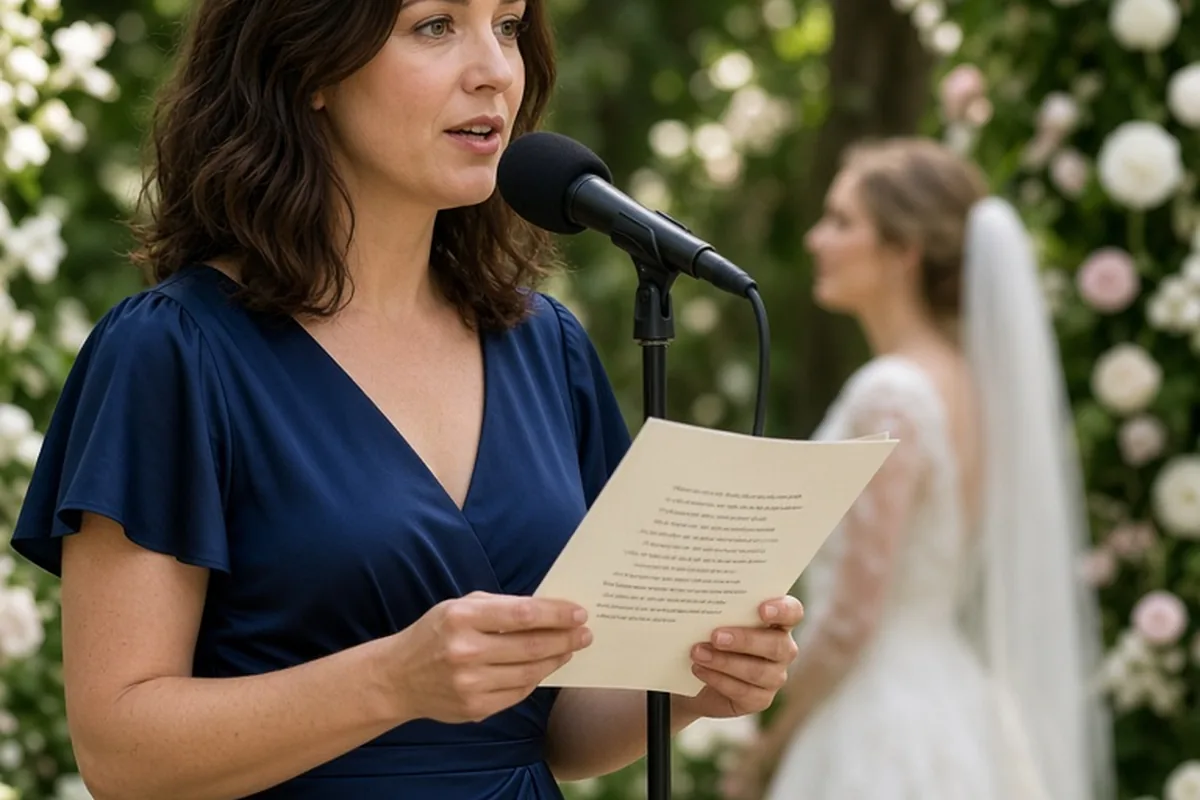
Reading verse aloud requires a different cadence than delivering a conversational speech. Because poems rely on rhythm, imagery, and intentional pauses, speaking too quickly is the most common pitfall for nervous speakers. When you step up to the microphone, pause for two full seconds before uttering your first word. Ground your feet, scan the room, and look directly at the bride rather than staring downward at your paper or phone screen.
Print your poem in a clean, high-contrast font on heavy cardstock rather than reading from a mobile device. A smartphone screen looks informal in ceremony photography and can lock unexpectedly, causing awkward delays. Mark natural breathing points on your card using small slashes. When an emotional line arrives, slow down your tempo rather than speeding up to get through it. If tears or emotional tightness catch your throat, take a sip of water, breathe through your nose, smile warmly at the bride, and let the moment settle before continuing.
Drafting Your Own Original Poem for the Bride
Writing a custom poem may feel intimidating, but authenticity always outweighs technical mastery in personal ceremonies. You do not need complex rhyme schemes or archaic vocabulary to create something lasting. Begin by listing three specific traits you admire in the bride, two shared memories where her character shone clearly, and one concrete promise for the future. Grounding your draft in physical items—like the smell of rain on a porch, the sound of her laugh in a car, or the warmth of her hand—makes the poem instantly relatable and distinctly yours.
Once your thoughts are on paper, read them out loud several times to check the natural flow. Eliminate words that feel forced solely to complete a rhyme. In poetry, an imperfect rhyme or rhythmic free verse carries far more emotional weight than awkward filler lines inserted just to match a rhyming sound. Keep your finished draft between eight and twenty-four lines; this length provides enough depth to tell an emotional story while remaining concise enough to hold the bride's and the room's undivided attention.
Frequently asked questions
Can I read a published classic poem instead of writing an original one?
Yes. Classic works by poets such as Elizabeth Barrett Browning, Pablo Neruda, or E.E. Cummings are traditional choices. If you choose an existing poem, review it thoroughly to confirm that every line resonates with the bride's personal values and your specific relationship.
How long should a wedding poem for the bride be during a ceremony?
A ceremony reading should typically last between one and two minutes, which translates to roughly 12 to 24 poetic lines. This duration allows the audience to absorb the language without disrupting the momentum of the service.
Is it appropriate to include humor in a wedding poem for the bride?
Gentle, affectionate humor works well if it highlights her quirks and joyful nature without embarrassing her or relying on inside jokes that isolate guests. If there is any doubt about whether a playful line might cause discomfort, replace it with heartfelt gratitude.
Should a partner tell the bride they are reading a poem before the ceremony?
You can mention that you have prepared a special reading or vow to ensure the officiant budgets enough time in the order of service. However, keeping the specific verses a surprise preserves the genuine emotional impact of the moment.
Your next step
Choose or write your preferred verses today, print them onto clean cardstock in a clear font, and practice reading them aloud at half your normal speaking speed.