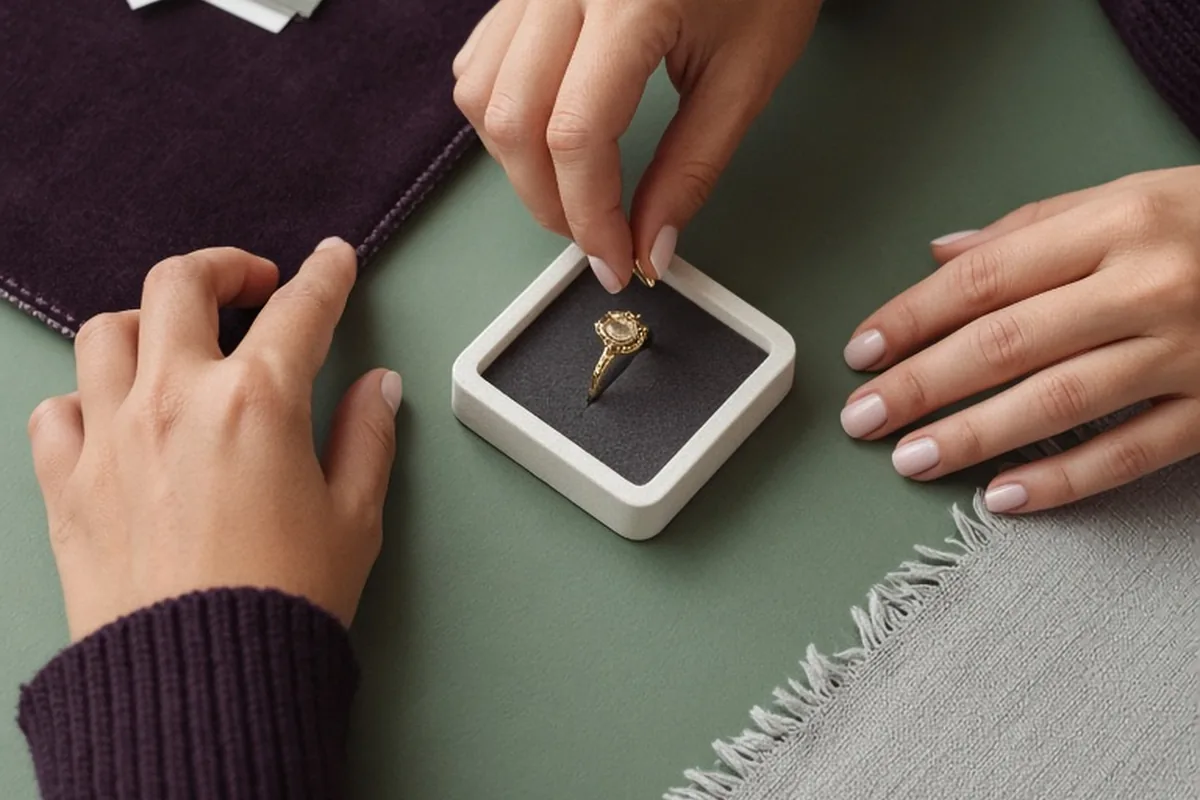
Most buyers should book engagement ring settings two to three months before their planned proposal date. A standard, catalog semi-mount setting where the jeweler only needs to order the metal mounting and set your center stone generally requires two to four weeks. Completely custom settings designed from scratch require six to ten weeks for CAD renderings, wax models, metal casting, stone setting, and final finishing. Adding an extra two to three weeks of safety buffer protects against resizing needs or supply delays.
Securing the right engagement ring setting requires balancing artistic craftsmanship with strict production lead times. Because a setting is rarely pulled off a shelf fully assembled to match your specific stone measurements and finger size, understanding how jeweler production cycles operate helps you avoid rushed fees or proposal delays.
Standard Stock Mountings Versus Bespoke Engagement Ring Settings
The timeline for acquiring an engagement ring setting depends heavily on whether you choose a stock mounting, a semi-mount from a designer collection, or a completely original custom piece. Off-the-shelf display settings in retail stores are typically model samples cast in standard sample sizes, often around a finger size six or seven. Unless your partner wears that exact size and you are purchasing the display piece as-is with a pre-set diamond, the jeweler must order a fresh casting from their manufacturer or alter the existing metal framework to accommodate your center gemstone's unique length, width, and depth ratios.
When purchasing a standard catalog semi-mount, the fabrication process generally takes between two and four weeks. During this window, the manufacturer casts the head and shank in your chosen metal, sizes the band, and ships the piece to your local bench jeweler or fulfillment center. Conversely, bespoke settings designed around an unusual gemstone shape, an heirloom stone, or unique design concepts require four to ten weeks. This extended duration accounts for preliminary sketch revisions, computer-aided design modeling, physical resin or wax prototyping, and hands-on fabrication at the bench. Knowing which category your concept falls under establishes whether a one-month or three-month booking window is necessary.
The Production Workflow: From Metal Casting to Final Stone Setting
Understanding what happens behind the bench clarifies why quality ring settings demand several weeks of turnaround time. Once you approve a design and place your deposit, the mounting enters the casting stage. In modern jewelry production, an artisan prints a high-resolution 3D wax or resin model of the ring framework. This model is encased in a plaster investment mold, burned out in a high-temperature kiln, and replaced with molten platinum, yellow gold, rose gold, or white gold through centrifugal or vacuum casting. Any imperfection in the mold requires restarting the casting process to prevent structural weakness.
After raw casting, the jeweler cuts off the sprue, cleans the raw oxidation, and pre-polishes the metal framework. Next comes the delicate phase of setting the stones. A skilled setter carves seats into the metal prongs, bezels, or channels to seat side stones, pavé halos, and the center gem securely. Each claw must be carefully burnished and shaped over the diamond girdle without chipping the stone or leaving uneven tension. Finally, the ring undergoes magnetic tumbling, ultrasonic cleaning, hand polishing, and rhodium plating if crafted from standard white gold. Rushing a jeweler through these intricate stages increases the risk of loose accent stones, uneven prongs, or weakened structural integrity.
Coordinating Loose Gemstones with Your Ring Setting Order
A common scheduling mistake occurs when buyers assume they can finalize a setting before selecting the stone that will anchor it. Bench jewelers build or modify settings around the exact millimeter measurements and carat dimensions of a specific diamond or colored gemstone. Even two diamonds sharing an identical carat weight can exhibit different table widths, pavilion depths, and girdle thicknesses. Attempting to book or manufacture a setting without the physical stone in hand or exact cert measurements often results in costly delays or prongs that do not seat flush against the stone.
If you are supplying your own heirloom diamond or purchasing a loose stone independently from a wholesaler, you should allow at least an extra week in your overall schedule for stone transit, intake inspection, and caliper verification. The jeweler must inspect your loose gem under a loupe or microscope to ensure the girdle has no hidden chips or stress fractures that could compromise setting safety. Only after verifying the physical gemstone can the bench jeweler confirm whether an existing mounting head can be modified or if a custom-fabricated basket must be produced to protect the gem properly.
Holiday Surges, Metal Sourcing, and Seasonal Calendar Bottlenecks
Jewelry workshop capacity shifts substantially depending on the time of year, directly impacting how far in advance you must book. The peak proposal calendar spans from late autumn through mid-winter, with November, December, and February experiencing the highest production volumes of the entire calendar year. Retailers, independent casting houses, and commercial gem laboratories face heavy backlogs leading into late November and Valentine's Day. If your target proposal falls between Thanksgiving and late February, booking your setting at least ten to twelve weeks in advance is advisable.
Summer and early autumn offer slightly more predictable studio schedules, but seasonal vendor shutdowns can still create unexpected interruptions. Many specialized diamond cutters, casting houses, and luxury design houses in major jewelry districts observe annual closures or reduced production schedules during mid-summer. Additionally, international metal shipping delays, delayed hallmarks from assay offices, or prolonged lead times for specialty recycled metals can add unforeseen days to your timeline. Building in a safety buffer ensures that sudden bench backlogs do not force you to alter proposal travel plans or intimate dates.
Reviewing CAD Renderings, Wax Replicas, and Modification Cycles
If you embark on a custom engagement ring setting, client review cycles represent one of the most flexible yet time-consuming portions of the timeline. After your initial consultation, a designer generally requires seven to fourteen business days to generate digital three-dimensional renderings illustrating the ring from multiple angles. While some buyers approve the first digital draft immediately, most clients request slight alterations, such as adjusting the band width, lowering the basket profile, or changing the style of the prongs from round to claw.
Each design revision cycle adds roughly three to seven business days while the designer rebuilds the digital geometry. Furthermore, many custom studios provide a physical wax or resin model for the client to inspect in person or try on before metal casting commences. Shipping a physical wax model back and forth for approval adds another one to two weeks to the project calendar. If you want the luxury of contemplating design iterations without feeling pressured to greenlight a prototype under a tight deadline, booking your custom setting eight to twelve weeks prior to your intended proposal date is essential.
Post-Production Sizing, Independent Appraisals, and Insured Delivery
The completion of the ring at the jeweler's bench does not immediately mean the ring is ready for the proposal box. Even with careful finger sizing calculations, subtle fit issues frequently arise. Ring bands wider than two millimeters fit more snugly than thin bands of the same numeric size, and surprise measurements taken from a partner's fashion ring can occasionally be off by a quarter or half size. If an immediate tweak is needed before the proposal, sizing can take anywhere from three days to two weeks depending on the complexity of the side stones and channel work.
Beyond physical fit adjustments, sensible ring procurement includes administrative steps that demand scheduling room. You should ensure the finished piece is evaluated by an independent gemological appraiser or accompanied by an official retail replacement appraisal for insurance coverage. Insuring the engagement ring through personal property insurance or a dedicated jewelry insurer requires documentation of replacement value, metal purity, and stone certifications before you take the ring out in public or travel. Finally, if your jeweler is shipping the completed ring across state lines, carrier shipping insurance, secure handoffs, and adult signature requirements necessitate a cushion of several business days to accommodate potential transit holds.
Comparing Lead Times: Independent Bench Jewelers Versus Online Retailers
Deciding where to buy your engagement ring setting also dictates your scheduling requirements. High-volume online engagement ring platforms often advertise fast turnaround times of ten to fifteen business days for standard catalogue mountings. These retailers operate streamlined assembly lines with prefabricated components waiting in inventory. However, online customization options are typically restricted to predefined drop-down menus, and any minor request for non-standard modifications can kick the piece into an extended custom production queue that stretches the timeline to five or six weeks.
Independent local bench jewelers generally offer superior hands-on oversight, direct communication with the artisan, and hyper-personalized craftsmanship, but their shop capacities are naturally smaller. A single master jeweler might only produce five to ten custom settings per month, meaning their production calendar can fill up months in advance during popular wedding seasons. When working with an independent boutique, contacting them three to four months before your proposal allows you to secure a slot on their bench schedule and ensures that stone acquisition, casting, and hand-finishing proceed without competition from earlier client bookings.
Frequently asked questions
Can I get an engagement ring setting made on an expedited rush order?
Many jewelers offer rush services for standard semi-mounts or existing inventory castings, shortening production to one or two weeks for an added expediting fee. However, intricate custom settings requiring hand-carved details, complex pavé, or multi-step casting rarely allow safe rushing without compromising bench quality. Always verify whether a shop's rush option guarantees arrival before committing non-refundable deposits.
What happens if the ring setting arrives and does not fit my partner's finger?
Most standard ring settings can be adjusted up or down by one to two full sizes within a few business days, provided the band does not feature continuous eternity pavé diamonds around the entire circumference. To prepare for this scenario, schedule your ring delivery at least two weeks before your proposal, or plan to propose with the ring as-is and visit the jeweler together for complimentary resizing immediately afterward.
Do I pay the full cost of the setting when booking or upon completion?
Standard jewelry industry practice requires a deposit of roughly thirty to fifty percent upfront when you approve the design or order the mounting from casting. The remaining balance becomes due upon final quality inspection and delivery. Clarify your chosen jeweler's specific deposit terms and cancellation policies before signing off on casting production.
How does setting an heirloom stone affect the booking timeline?
Using an heirloom stone typically adds one to two weeks to the intake timeline because the jeweler must unmount the gem, clean it, measure its exact physical tolerances, and assess any internal inclusions or girdle flaws. Once verified, the setting itself follows standard production windows of three to eight weeks depending on whether you pick a catalog mount or a custom design.
Your next step
Contact two reputable local or online jewelers today to request their current production lead times for your preferred setting style and confirm their bench availability for your target proposal month.