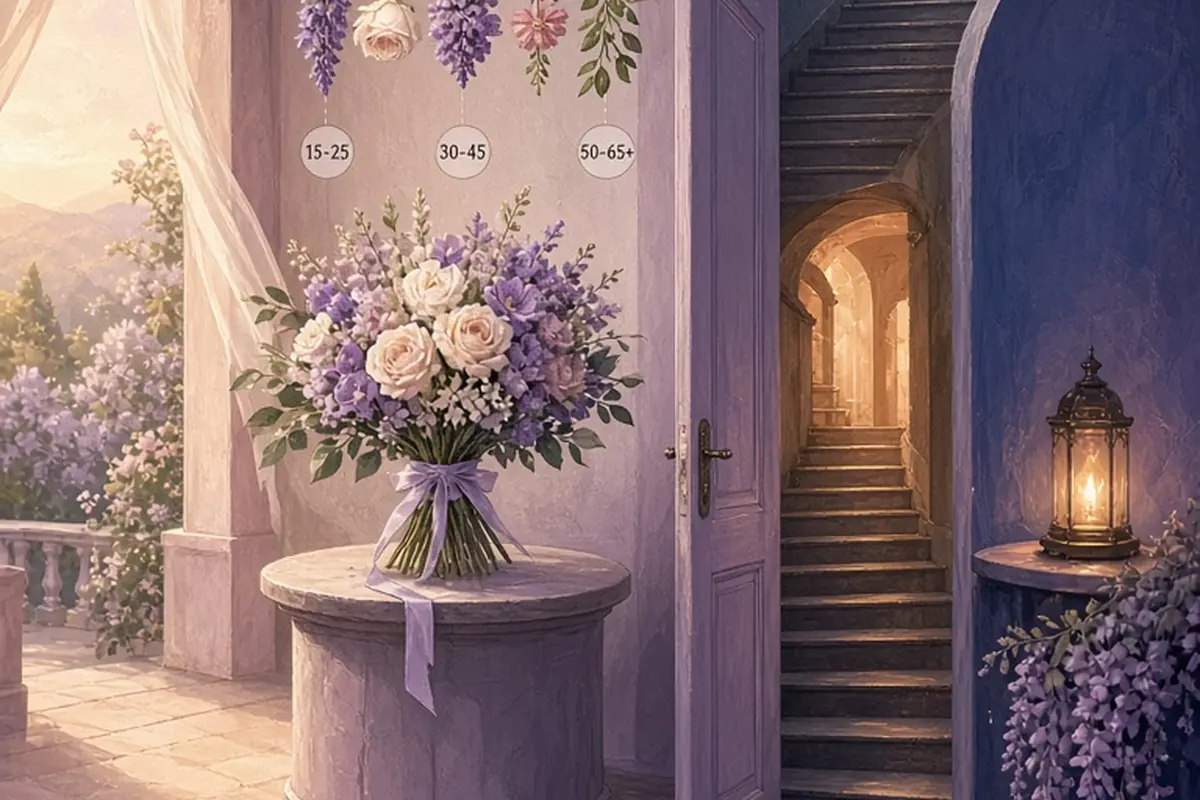
A standard bridal bouquet typically uses 25 to 45 stems, depending on the arrangement style, flower head sizes, and greenery volume. Compact or minimalist bouquets generally require 15 to 25 stems, classic medium hand-tied designs require 30 to 45 stems, and oversized, lush, or cascading arrangements often need 50 to 65 stems or more to achieve proper density and visual balance.
Designing a bridal bouquet involves more than gathering a random collection of blossoms. Determining the right stem count requires understanding how bloom diameter, foliage structure, and handle ergonomics work together to create a cohesive, comfortable floral piece for your wedding day.
Matching Stem Counts to Bridal Bouquet Styles
The overall silhouette of your bridal bouquet is the primary factor determining how many stems you need to purchase. Compact, structured styles such as posies or traditional round bouquets require tightly packed stems to maintain a uniform dome, usually demanding between 25 and 35 medium-to-large blooms. Because the heads sit closely together with minimal filler, every stem must be carefully positioned to avoid gaps in the surface curve.
In contrast, organic hand-tied and cascading bouquets rely on loose layering, varied stem lengths, and intentional negative space to achieve a natural, flowing appearance. An airy garden-style bouquet often incorporates 35 to 50 stems of mixed flowers and trailing foliage, while an elaborate cascading arrangement can require 50 to 65 stems to build a supportive central base and a graceful trailing tail. When planning your design, matching your stem target to the specific silhouette ensures the arrangement neither looks sparse nor collapses under its own weight.
- Petite posy or minimalist bouquet: 15 to 25 stems
- Classic medium hand-tied bouquet: 30 to 45 stems
- Lush garden or organic gathered bouquet: 40 to 55 stems
- Dramatic cascade or oversized presentation bouquet: 50 to 65+ stems
Focal Flowers Versus Fillers: Sizing by Bloom Diameter
Stem counts alone do not tell the whole story; the physical size of individual flower heads significantly dictates how many stems are necessary to fill a bouquet. A single large focal flower, such as a dinnerplate dahlia, open garden rose, or fully hydrated hydrangea, covers substantial surface area. Using large focal blooms naturally reduces the overall number of stems required to create a full appearance, allowing you to achieve high visual impact with fewer pieces.
Conversely, arrangements featuring fine, petite blooms like ranunculus, sweet peas, astilbe, or spray roses demand a much higher stem count to achieve identical coverage. For example, replacing three large peony heads might require eight to twelve individual ranunculus stems to achieve the same diameter. Balancing large focal flowers with smaller secondary blooms and delicate textural elements creates depth without requiring an unmanageable number of thick, woody stems at the base.
Establishing the Ideal Stem Ratio for Structured Design
A practical framework used by floral designers is the proportional distribution method, which divides your total stem count into focal flowers, secondary flowers, textural fillers, and greenery. Allocating approximately 40 percent of your bouquet to primary focal blooms gives the piece an immediate visual anchor, while assigning 30 percent to secondary flowers fills the surrounding mid-layer and provides color transitions.
The remaining 30 percent of the bouquet is typically split between textural elements and structural greenery, with roughly 15 to 20 percent dedicated to accents like sea holly, berries, or delicate grasses, and 10 to 15 percent to supporting foliage such as eucalyptus or ruscus. For a 35-stem bridal bouquet, this formula translates to roughly 14 primary blooms, 10 secondary flowers, 6 textural accents, and 5 greenery stems. This structured balance prevents the bouquet from feeling monotone or overly chaotic.
Hydration, Bloom Openness, and Seasonal Density
The blooming stage of your flowers at the moment of assembly drastically alters the visual density of the bouquet. Tight, unopened buds take up minimal space and can make an arrangement look stiff, requiring extra stems to fill voids. When flowers are properly conditioned and allowed to open over twenty-four to forty-eight hours, their petals spread outwards, effectively doubling or tripling their visual footprint.
Seasonal ambient conditions also influence bloom behavior and overall fullness. In warm, dry environments, soft-petaled flowers open rapidly and may lose turgidity if crowded too tightly, whereas cooler conditions keep blooms compact. Factoring in hydration timing ensures that you evaluate your stem count based on fully opened, stable blossoms rather than raw, freshly cut wholesale bunches straight out of shipping boxes.
Ordering Buffers and Managing Floral Stem Loss
When purchasing flowers for a bridal bouquet, ordering the exact number of stems you intend to use is a common mistake that leaves no room for natural imperfections. Cut flowers are perishable organic products subject to broken heads, weak stems, bent necks, and grading inconsistencies during transit and preparation. A standard buffer ensures that minor damage does not compromise the density or aesthetic of your final piece.
It is generally wise to order a 15 to 20 percent surplus above your planned stem count. For a 40-stem bouquet, purchasing 46 to 48 stems provides ample leeway to select only the strongest, most pristine blooms for the bridal piece. Any undamaged surplus stems that are not used in the main bouquet can readily be repurposed into boutonnieres, corsages, or cocktail table accent arrangements.
Bouquet Weight, Handle Ergonomics, and Support Mechanics
While an abundant, multi-stem bouquet looks stunning, physical weight and handle thickness are essential practical considerations. A bouquet containing sixty heavy, water-filled stems can easily weigh three to five pounds and create a handle too thick to hold comfortably in one hand during long photo sessions and the ceremony processional.
Proper stem preparation helps keep handle volume manageable without sacrificing floral fullness. Stripping all lower foliage and thorns reduces bulk beneath the binding point, allowing the stems to nest tightly together. Utilizing supportive mechanics, such as binding with waterproof floral tape before finishing with decorative ribbon, maintains stability and prevents hand fatigue while ensuring the bouquet retains its intended shape throughout the wedding day.
Illustrative Scenarios
Balancing Bloom Density in an Organic Garden Bouquet
A DIY bride planning a loose garden bouquet originally ordered twenty-five large garden roses, expecting they would create a lush, dimensional design. During test assembly, the arrangement felt heavy, flat, and overly rigid because it lacked layered textures and varying bloom sizes. By swapping eight of the dense garden roses for lighter spray roses, ranunculus, and branching eucalyptus, the total count increased to thirty-six stems while the physical weight decreased, creating the airy, balanced movement she desired.
Key point: Combining varying stem sizes and structural greenery provides greater dimension and easier handling than relying solely on heavy focal blooms.
Frequently asked questions
How many stems are typically needed for bridesmaid bouquets compared to a bridal bouquet?
Bridesmaid bouquets are generally designed to be smaller and lighter, using about half to two-thirds the stems of a bridal bouquet. While a bridal bouquet averages 30 to 45 stems, bridesmaid bouquets typically contain 15 to 25 stems in complementary colors.
Can a single flower variety make a complete bridal bouquet?
Yes, mono-botanical bouquets made entirely from one flower type, such as calla lilies, standard roses, or tulips, create a striking minimalist look. These arrangements generally require 20 to 35 uniform stems grouped tightly together to establish a clean, cohesive form.
How does greenery affect the total stem count of a bouquet?
Branching greenery like eucalyptus or Italian ruscus provides broad coverage with relatively few stems, reducing the number of filler flowers needed. Dense foliage can frame focal blooms effectively, allowing you to achieve a full silhouette with fewer individual flower stems.
When should flowers be trimmed and assembled before the wedding?
Flowers should typically be trimmed and hydrated in clean water two days prior to the event, allowing the blooms to open to their ideal stage. The bouquet can then be assembled one day before the ceremony and stored in cool water until the photography begins.
Your next step
Determine your preferred bouquet silhouette, calculate your stem counts using a balanced bloom-to-foliage ratio, and purchase a fifteen percent buffer so you have the right materials to assemble your arrangement with ease.