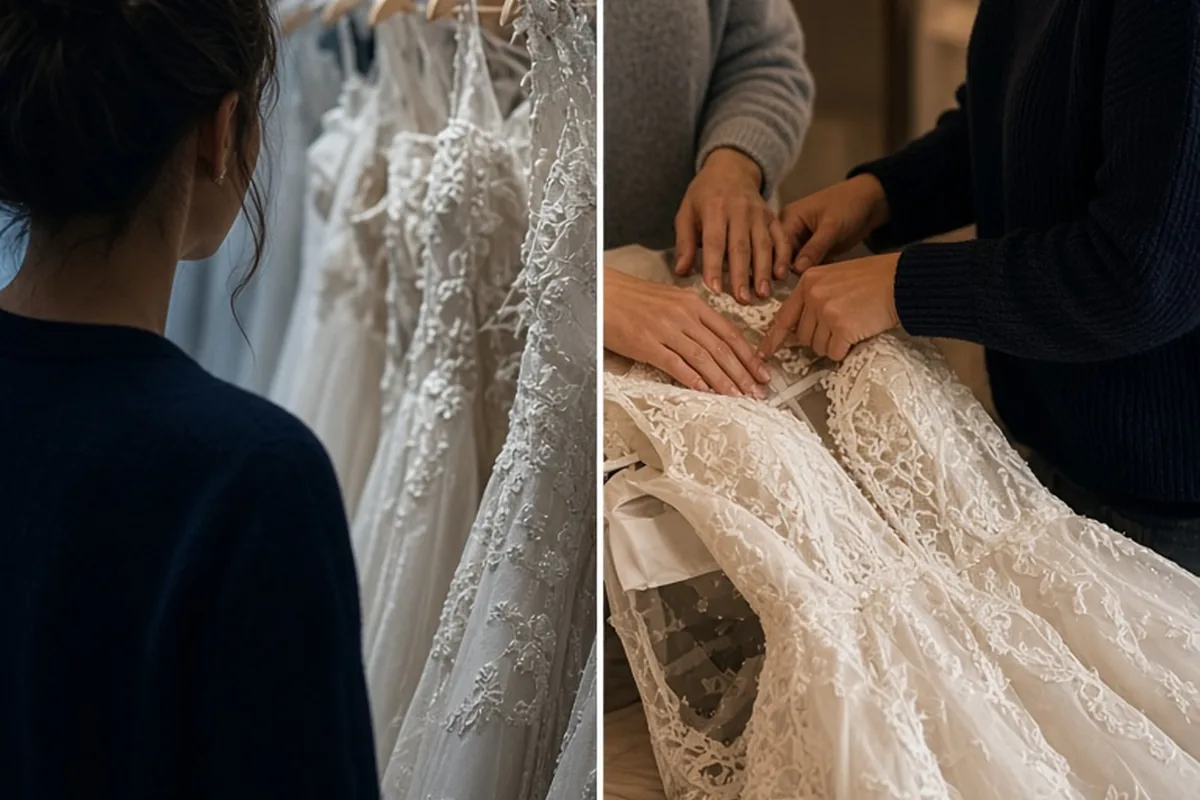
A wedding dress cost depends on the purchase route, designer tier, materials, and customization level. Off-the-rack and ready-to-wear dresses represent the most accessible price tier, standard made-to-order boutique gowns occupy the middle market, and couture or fully bespoke creations sit at the high end. Alterations, rush production, taxes, shipping, foundation garments, and cleaning will add significant expenses to your total bridal attire budget.
Setting an intentional wardrobe budget requires looking past the initial sticker price on a salon rack. A bride's final outlay covers not only the garment itself, but also professional tailoring, custom design adjustments, undergarments, and post-event preservation. Understanding how boutiques price their inventory allows you to allocate funds realistically without facing unexpected charges weeks before the ceremony.
What Goes Into the Price Tag of a Wedding Dress
The retail price of a bridal gown reflects several distinct production and business expenses. At the base level, raw material sourcing plays a primary role. Natural textiles such as silk faille, silk organza, and French Alençon lace carry higher manufacturing costs than synthetic alternatives like polyester chiffon, standard tulle, or rayon blends. Beyond raw yardage, the complexity of internal construction dictates labor hours. Gowns built with multi-layered corsetry, boning channels, integrated waist stays, and horsehair-reinforced hems require intensive technical assembly compared to unlined slip silhouettes.
Designer tier, operational markup, and brand prestige also shape the retail quote. Independent luxury ateliers that produce limited seasonal runs price each piece to cover manual pattern drafting, skilled seamstress wages, and custom sizing accommodations. Conversely, commercial bridal manufacturers produce standardized sizing in high volumes, which reduces the per-unit labor cost. Salon markups must also absorb freight shipping, import duties, sample garment maintenance, and dedicated appointment styling services. When evaluating an initial quote, recognize that you are paying for structural engineering, textile grading, and distributor logistics alongside aesthetic design.
Boutique Made-to-Order Gowns Versus Off-the-Rack Wedding Dresses
Choosing between a traditional made-to-order boutique gown and an off-the-rack retail dress directly determines your base spending and timeline requirements. Made-to-order bridal salons do not sell existing inventory off the floor. Instead, a stylist takes your bust, waist, and hip measurements, cross-references them against the designer's proprietary size chart, and orders a brand-new gown in the closest standard production size. This process involves standard lead times ranging from four to nine months, with prices scaling according to the designer label, fabric grade, and optional custom modifications like raised necklines or extended train lengths.
Off-the-rack and ready-to-wear alternatives follow an entirely different purchasing framework. Department stores, high-street bridal lines, and direct-to-consumer online brands manufacture inventory in advance, allowing you to purchase an in-stock garment immediately. While this path eliminates long ordering lead times and standard boutique markups, the range of silhouettes and internal structural support may be narrower. Off-the-rack gowns frequently require identical tailoring to achieve a bespoke fit, but they eliminate salon sample-ordering fees and allow brides with condensed planning schedules to secure a dress without paying expedited manufacturing charges.
Fabric Selection, Lace Details, and Hand-Sewn Embellishments
Fabric selection is one of the most visible cost drivers in bridal fashion. Heavyweight silk mikado, duchess satin, and silk crepe provide unmatched drape, breathability, and structural sheen, but their sourcing expenses position them firmly in luxury price categories. High-grade polyester crepes, georgettes, and synthetic satin blends have improved dramatically in texture and visual quality, offering crisp silhouettes at a fraction of the textile cost. Brides seeking voluminous ballgowns should note that multi-tiered skirts requiring dozens of yards of fabric naturally increase base wholesale and retail prices, regardless of whether synthetic or natural fibers are used.
Embellishment methods create an even steeper price gradient. Digital machine embroidery and pre-beaded mesh overlays keep production costs manageable for mid-market collections. In contrast, three-dimensional floral appliques, hand-placed Chantilly lace motifs, and individually hand-stitched glass crystals, seed beads, or pearls demand specialized handwork that quickly inflates production labor. If you want the visual richness of lace or sparkle without the associated hand-embroidery premium, consider gowns featuring graphic jacquard weaves, laser-cut brocade, or strategically placed focal lace appliques rather than full-body hand beading.
Alterations, Undergarments, and Hidden Gown Expenses
A standard made-to-order wedding dress is ordered to a standard size chart rather than custom-tailored to your exact proportions, making professional alterations nearly universal. Essential tailoring services include shortening multi-layered hems, adjusting the bodice through side seams or princess darts, taking in or letting out the waist, shortening shoulder straps, and constructing a functional bustle to lift the train after the ceremony. Complex alterations, such as resetting delicate sleeve caps, reshaping an illusion neckline, or moving hand-placed lace appliques along a hemline, involve substantial bench hours from an experienced bridal tailor and will add significantly to your bottom line.
Additional expenses outside the salon invoice frequently catch couples off guard. These include specialized foundation garments such as low-back bustiers, seamless shapewear, sewn-in bra cups, and waist cinchers. Bridal footwear, specialty veils, blushes, hairpieces, jewelry, and garment bags also contribute to your total attire budget. Furthermore, regional sales taxes, salon processing fees, insured shipping from overseas design houses, and post-wedding dry cleaning or archival museum preservation must all be calculated as part of your complete wardrobe expenditure.
Sample Sales, Trunk Shows, and Pre-Owned Bridal Gowns
Savvy shoppers can access high-end designer gowns below standard retail prices by timing their purchases around specific retail events. Bridal salons regularly host sample sales to clear floor inventory and make space for incoming seasonal collections. During these events, display dresses that brides have tried on in the showroom are sold directly off the rack at steep discounts. While sample sale gowns offer immediate savings on designer labels, inspect each piece carefully for loose beading, makeup stains along the neckline, torn illusion mesh, or stretched zipper seams, and confirm that cleaning and repair costs will not negate the purchase discount.
Trunk shows and the secondary pre-owned market offer additional cost-saving pathways. Trunk shows feature an extended collection from a specific designer for a single weekend, frequently accompanied by promotional event incentives, modest designer discounts, or waived custom measurement fees. Alternatively, verified pre-owned bridal platforms allow brides to purchase unworn wedding dresses from canceled orders or gently worn gowns that have already been cleaned and preserved. When buying secondhand, always request exact garment measurements rather than relying on labeled dress sizes, as bridal sizing differs significantly from standard contemporary street sizing.
Questions to Ask Bridal Salons Before Placing a Deposit
Before signing a bridal contract and paying a non-refundable deposit, clarify every financial and logistical term in writing. Start by confirming the exact production tier and sizing recommendation. Ask the salon consultant to show you their measurement chart and explain why they recommend a specific size, especially if your measurements fall across multiple categories. Inquire whether split-sizing is available directly from the designer to minimize bodice and hip alterations later, and confirm whether the salon charges an administrative fee for split-size ordering.
You must also clarify post-order policies, delivery commitments, and service boundaries. Determine whether in-house tailoring is offered, what their alterations pricing structure entails, or if they provide a vetted list of local independent seamstresses. Clarify the scheduled arrival window for the gown, what rush fees would apply if your wedding timeline requires expedited manufacturing, and the salon's formal liability policy if a dress arrives damaged, incorrectly sized, or past the contracted delivery date. Having clear written answers protects you from hidden add-on costs throughout the fitting lifecycle.
How to Request Detailed Gown Quotes and Verify Final Delivery Terms
To obtain an accurate, comprehensive estimate, request an itemized quote sheet from your salon before authorizing any transaction. Ensure the estimate explicitly itemizes the base dress price, designer pattern customization fees (such as lining a sheer bodice, raising a neckline, or extending train length), estimated freight and shipping costs, and applicable state or local sales tax. Requesting separate line items prevents salons from bundling unspecified surcharges into a single lump-sum balance.
Once your gown arrives at the boutique, perform a thorough in-person quality inspection before making your final balance payment or taking the garment home. Check all exterior seams, zip and button closures, boning channels, hem stitching, and embellishments under bright lighting to ensure there are no pulls, stains, or production defects. Verify that the designer tag, serial number, and size label match your purchase agreement. Finally, review your alteration fitting schedule, ensuring you have at least three scheduled fittings spaced out across the final eight to ten weeks before your ceremony.
Frequently asked questions
How much should I set aside for wedding dress alterations?
Alteration costs depend heavily on the gown construction, number of fabric layers, and extent of structural adjustments required. Simple tasks like a basic hem and strap adjustment cost far less than complex tasks like rebuilding an illusion bodice, moving beaded lace appliques, or installing a complex multi-point bustle. Requesting an in-person consultation with a bridal seamstress before finalizing dress customizations will give you the most accurate tailoring estimate.
When should I start shopping for a wedding dress to avoid rush fees?
Starting your search nine to twelve months prior to your wedding date allows for standard made-to-order production timelines without incurring expedited manufacturing charges. Traditional boutique gowns typically require four to nine months for production and shipping, followed by six to eight weeks for multi-stage fitting appointments. Brides with shorter timelines can avoid rush surcharges by purchasing off-the-rack inventory, showroom samples, or pre-owned gowns.
What is the difference between a trunk show discount and a sample sale?
A trunk show features the newest full collection from a specific designer, often offering a modest promotional discount or custom incentive on made-to-order gowns that will be newly produced. A sample sale involves purchasing existing floor display gowns directly off the rack in as-is condition at substantially higher markdowns, requiring you to handle any necessary cleaning, repairs, or tailoring immediately.
Your next step
Schedule consultations at two local bridal boutiques to review itemized dress and alteration estimates before committing to a non-refundable deposit.