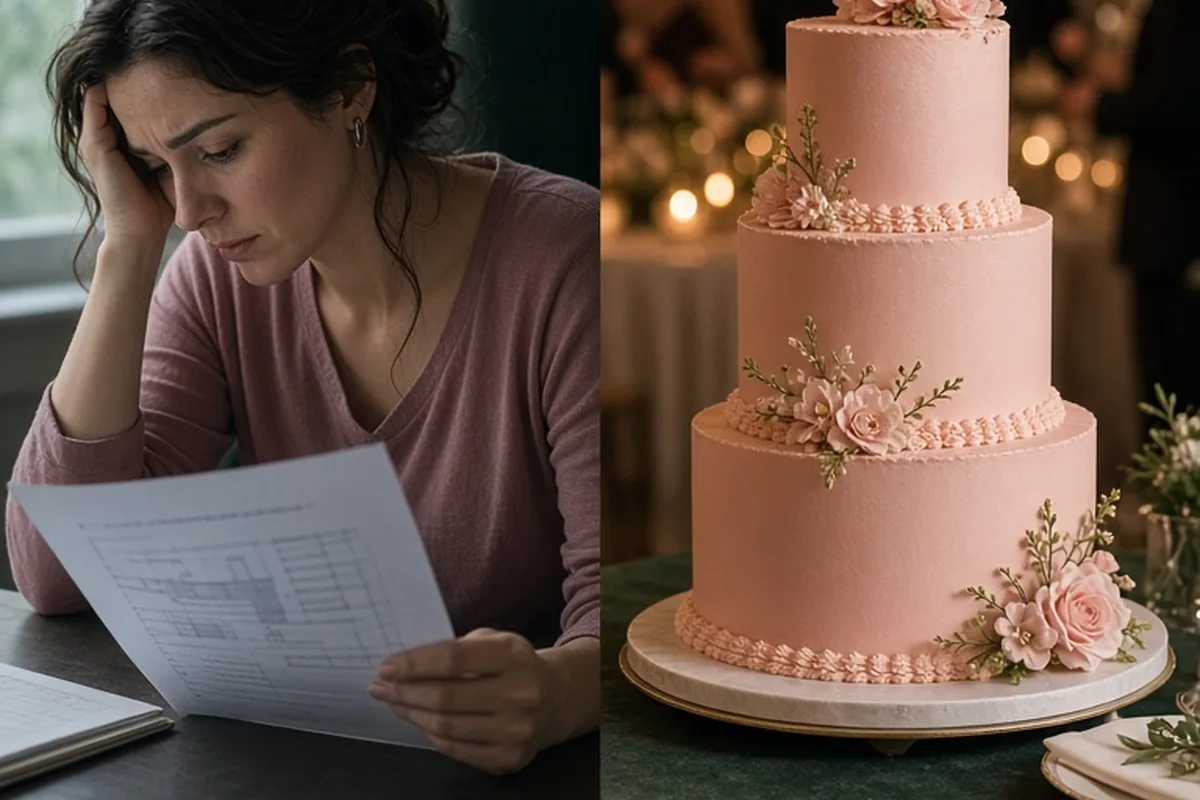
Wedding cake costs depend primarily on a per-slice pricing model determined by your final guest count, structural complexity, flavor customization, and decorative labor. Baseline pricing starts with simple buttercream tiers, while intricate fondant work, hand-crafted sugar flowers, specialty fillings, delivery distances, and venue cake-cutting fees significantly increase your total pastry invoice.
Budgeting for a wedding cake requires navigating a distinct blend of culinary craftsmanship, architectural engineering, and event logistics. Unlike standard retail bakery items, a wedding cake is a custom centerpiece designed to withstand hours of display while feeding dozens or hundreds of guests.
Calculating Guest Counts, Tier Dimensions, and Standard Slice Sizes
The primary foundation of any wedding cake quote is the portion calculation. Bakeries calculate pricing on a per-slice basis rather than charging a flat fee for the whole cake. However, wedding cake portions differ significantly from traditional birthday or restaurant dessert portions. A standard industry wedding slice measures approximately one inch wide by two inches deep by four inches high. If you intend to serve the cake as the sole dessert during a seated multi-course dinner, your caterer will typically portion the cake using these standard dimensions. If you plan to serve the cake as a standalone dessert station or during a casual buffet where guests slice their own portions, slice sizes tend to skew larger, requiring a higher overall cake volume.
Tier configurations also dictate the structural demands of the cake, which directly impacts the baseline cost. A standard three-tier cake featuring six-inch, eight-inch, and ten-inch rounds generally yields enough standard wedding slices for a moderate reception. As you add tiers to accommodate larger guest lists—such as four-tier or five-tier arrangements—the baker must construct internal support systems using food-safe central dowels, structural support plates, and reinforced base drums to prevent the bottom tiers from collapsing under the upper weight. Bakeries factor the hardware, construction time, and risk into their baseline tier quotes, making multi-tiered vertical structures inherently more expensive than single-tier cutting cakes or separated cake tiers.
How Exterior Finishes, Fondant, and Sugar Flowers Drive Labor Costs
The decorative exterior of a wedding cake accounts for the widest pricing variance across different bakeries. Smooth buttercream, textured rustic finishes, and semi-naked styles require the least amount of labor and raw material, making them the most economical baseline options. Buttercream can be applied with smooth spatulas, ribbed combs, or subtle watercolor effects relatively quickly. However, specialized piped buttercream work—such as vintage Lambeth piping, intricate scrollwork, or detailed basketweave patterns—demands hours of precise, continuous manual labor, which drives up the hourly production cost regardless of the frosting medium.
Fondant finishes represent a significant step up in overall cost due to the materials, preparation time, and technical skill involved. To achieve a crisp fondant exterior, a baker must first coat the cake in a firm chocolate ganache or stiff buttercream base, allow it to chill to a sharp edge, and then roll and drape the sugar paste without tearing, bubbling, or creasing. Beyond the basic covering, custom surface treatments like edible gold leaf, marbleized textures, hand-painted botanical murals, and geometric bas-relief molding require advanced pastry artistry. Handcrafted gum paste or sugar flowers represent the highest labor tier; each individual petal is rolled, shaped on wire, dried, hand-dusted with edible petal dust, and assembled into botanically accurate blooms over several days.
Specialty Fillings, Organic Ingredients, and Dietary Recipe Surcharges
The internal composition of your cake layers and fillings plays a substantial role in shaping the final quote. Standard bakery flavor profiles—such as classic vanilla sponge, rich chocolate devil's food, or basic almond cake paired with traditional fruit preserves or vanilla mousseline—serve as the foundation for standard per-slice pricing. When you request premium ingredients, such as real Madagascar bourbon vanilla bean paste, imported European fruit purées, fresh seasonal berry reductions, artisanal curd fillings, or liqueur-soaked sponges, the ingredient cost increases and is reflected in the per-slice rate.
Dietary modifications require specialized baking techniques and dedicated ingredient sourcing that often carry supplementary fees. Formulating gluten-free, vegan, egg-free, or refined-sugar-free cake recipes requires alternative flours, binding agents, and premium plant-based fats that cost significantly more than standard commercial wheat flour, butter, and eggs. Additionally, commercial bakeries that handle severe allergies must implement strict sanitation protocols, dedicated equipment, and isolated preparation schedules to prevent cross-contamination, which increases the labor required to produce the order safely.
Delivery Logistics, Travel Distance, and On-Site Assembly Fees
Transporting a delicate, multi-tiered structure in varying weather conditions introduces logistical challenges that are factored into your delivery quote. Most professional bakeries charge a dedicated delivery and setup fee based on the driving distance between the bakery and your reception venue, local traffic patterns, and the time required for on-site finishing. Transporting stacked cakes requires temperature-controlled vehicles to ensure buttercream and ganache stay chilled and firm during transit, along with specialized stabilization boxes and non-slip matting.
Once at the venue, the delivery team does not simply hand over a box. The pastry chef or trained delivery specialist must coordinate with venue staff, position the cake table away from direct sunlight or heating vents, assemble any unstacked tiers, and apply final decorative touches. These final adjustments often include placing fresh floral arrangements, inserting delicate sugar blooms, smoothing minor transport imperfections, and positioning rental cake stands. If your venue requires delivery during tight vendor setup windows or late-night stand retrieval after the event, bakeries apply overtime or off-hours logistics surcharges.
Understanding Venue Cake-Cutting Charges and Hidden Plating Fees
When calculating the total expense of serving wedding cake, couples often overlook the fees charged by the reception venue or catering company rather than the bakery itself. Many full-service venues and independent caterers charge a cake-cutting fee if you bring in a cake from an outside bakery. This fee is billed on a per-person or per-slice basis on your final catering invoice, covering the labor required for kitchen staff to deconstruct the tiers, slice the portions uniformly, arrange them on dessert plates, and serve them to your guests.
Cake-cutting fees typically cover more than just the physical slicing of the cake. They compensate the catering team for supplying the dessert plates, forks, and napkins, as well as clearing and washing the tableware after the dessert service concludes. Some venues also charge additional fees for chilling the cake in commercial walk-in refrigerators prior to the reception or providing accompaniment garnishes like berry coulis or whipped cream. Always review your catering contract carefully to identify these per-slice fees early, as they directly increase the total cost of serving your chosen dessert.
Smart Budget Alternatives: The Display Cake and Kitchen Sheet Cake Method
Couples seeking to balance high-end visual design with a controlled budget often utilize the display cake and kitchen sheet cake strategy. With this approach, you order a smaller, elaborately decorated two-tier or three-tier cutting cake that serves as the visual focal point for photographs and the ceremonial cake cutting. The decorative centerpiece provides enough portions for the wedding party or immediate family, while the remaining guest portions are baked as unadorned kitchen sheet cakes stored out of sight in the catering kitchen.
Kitchen sheet cakes use the exact same sponge, fillings, and basic frosting as the display cake, ensuring that every guest enjoys an identical flavor profile and culinary quality. However, because sheet cakes are baked in flat rectangular pans and frosted in simple bulk layers without intricate piping, fondant draping, or internal support dowels, the bakery can produce them with significantly less labor. When dessert service begins, the catering staff cuts and plates the sheet cakes behind the scenes and distributes the slices seamlessly to tables, offering substantial savings on decorative labor without compromising taste or presentation.
Reviewing Bakery Estimates, Tasting Deposits, and Contract Clauses
Before signing a contract and paying a retainer, ensure that your bakery quote includes a complete itemized breakdown of all potential expenses. A thorough estimate should separate the base per-slice cost from decorative add-ons, specialty filling upgrades, tasting box fees, delivery charges, and equipment rentals. Many bakeries offer cake tasting appointments or tasting boxes for a flat fee, which may or may not be credited toward your final balance if you book their services. Clarify whether your quote includes the rental and security deposit for display stands, structural risers, or cutting utensils.
Examine the bakery contract for critical protection and liability clauses. Review the cancellation and postponement terms, the final guest count deadline (usually two to four weeks prior to the wedding date), and payment installment schedules. Pay close attention to weather and environmental liability disclaimers; most contracts state that the baker is not responsible for melting, shifting, or structural failure once the cake is delivered and signed for, especially at outdoor venues with high heat or humidity. Understanding these terms prevents unexpected disputes and ensures both parties share clear expectations for delivery day.
Frequently asked questions
When should we book our wedding cake baker?
Most custom bakeries take on a limited number of orders per weekend to ensure quality and precision. It is best to schedule tastings and reserve your date six to nine months in advance, especially if your wedding falls during peak spring or autumn months. Booking early guarantees the baker's availability and locks in your date before their schedule fills.
Are faux or dummy tiers cheaper than real cake?
Faux tiers made of decorated Styrofoam do not always provide substantial savings compared to real cake. While fake tiers reduce ingredient costs, they require the exact same intensive decorative labor, fondant wrapping, and intricate piping as edible cake layers. Faux tiers are primarily useful for creating dramatic visual height when you have a small guest count.
Can we use fresh flowers on our wedding cake instead of sugar flowers?
Fresh flowers are generally much less expensive than handcrafted sugar flowers, but they require careful coordination. You must ensure that the blooms sourced by your florist are non-toxic, organic, and free from synthetic pesticides or chemical sprays. Additionally, stems must be properly wrapped with floral tape or inserted into food-safe floral tubes before touching edible cake layers.
How much cake should we order if we have other desserts?
If you are offering a comprehensive dessert table featuring items like macarons, pastries, cupcakes, or an ice cream bar, you typically only need enough wedding cake to serve 60 to 75 percent of your total guest list. Many guests will gravitate toward bite-sized options or sample multiple smaller treats rather than taking a full slice of tiered cake.
Your next step
Request itemized estimates from three local bakeries that separate per-slice pastry labor from delivery and stand rentals, and check your catering contract for external cake-cutting fees.