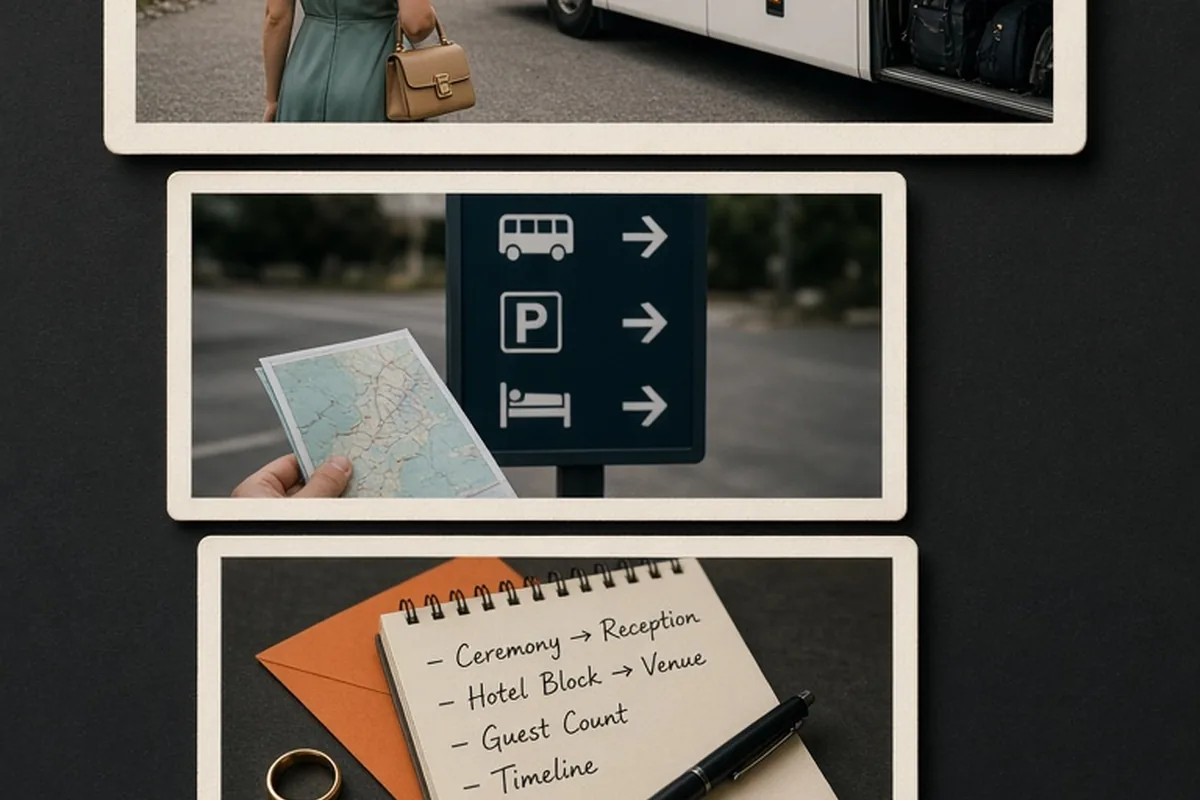
Wedding guest transportation costs vary widely based on your location, vehicle type, rental duration, distance, and booking season. Because charter companies price services using hourly minimums, mileage rates, or flat day packages, final totals depend on whether you rent executive shuttles, full-sized motorcoaches, standard passenger vans, or vintage specialty vehicles. To determine your exact budget, identify your passenger count, travel timeline, and route complexity, then collect itemized local quotes that account for fuel, gratuity, and driver accommodations.
Arranging group transportation for wedding guests solves significant logistical challenges, particularly when ceremonies and receptions occur in different locations, parking is severely restricted, or out-of-town guests stay in centralized hotel blocks. Evaluating transportation options requires understanding how rental operators structure base rates, contract minimums, and supplementary service fees.
Fleet Categories and How Vehicle Choice Shapes Your Rental Bill
The type of vehicle you select serves as the foundational variable in your overall transportation budget. Charter companies maintain diverse fleets ranging from standard twelve-passenger vans to fifty-six-passenger full-size motorcoaches, alongside specialized options such as open-air trolleys, luxury mini-coaches, and executive sprinters. A full-sized coach typically commands a higher base rate than a standard shuttle van, but it offers a much lower cost per seat when transporting large groups simultaneously. Conversely, smaller passenger vans feature lower hourly minimums but require multiple vehicles or repeat trips to move the same guest volume.
Specialty vehicles introduce distinct pricing premiums that go beyond simple seat counts. Trolleys, vintage school buses, and custom executive coaches often carry higher baseline hourly charges due to their niche aesthetic appeal, maintenance demands, and limited local availability. When evaluating vehicle options, match the fleet style to both your logistical needs and road conditions. Tight historic district roads, winding rural paths, or narrow venue driveways may physically prohibit full-length motorcoaches, requiring you to book multiple mid-sized shuttles instead.
Hourly Minimums, Garage Time, and Base Pricing Structures
Charter bus and private shuttle operators rarely bill strictly for the exact minutes passengers occupy the seats. Instead, most reputable transportation companies establish mandatory hourly minimums, particularly on peak weekend dates during wedding season. A standard contract frequently requires a four-to-six-hour minimum block of continuous service. If your timeline only requires a twenty-minute transfer before the ceremony and a twenty-minute transfer at the end of the evening, you will generally still pay for the full contracted block unless the vendor offers a specialized split-shift package.
Split-shift billing allows couples to pay for a morning or afternoon departure window and a separate late-night pickup window, avoiding billing for the downtime in between. However, split packages often come at a premium hourly rate, and many companies decline split schedules during peak months because the vehicle and driver cannot be booked for another event during the middle of the day. Additionally, many charter agreements incorporate portal-to-portal billing, also known as garage time, which charges the client for the time the vehicle spends traveling from the depot to the first pickup spot and returning to the garage after final drop-off.
Contract Surcharges, Mandatory Gratuities, and Incidental Fees
A base quote seldom represents the final sum you will owe on your wedding transportation invoice. Transportation contracts routinely feature mandatory line items that significantly modify the final balance. The most common mandatory addition is driver gratuity, which is often automatically calculated into the contract as a fixed percentage of the base subtotal. When reviewing proposals, always check whether the quoted price includes driver tips or whether cash gratuity is expected at the conclusion of the event.
Fuel surcharges represent another common contract variable, often tied to fluctuating regional fuel indices or calculated as a flat percentage of the rental fee. Additional incidentals to look for include state and local transportation taxes, highway tolls, commercial parking fees, and venue permit costs for staging large vehicles on municipal streets. Furthermore, nearly all charter agreements enforce strict interior cleaning deposits and excessive damage fees. If your timeline includes serving alcohol or food aboard the shuttle, expect an added cleaning surcharge or a higher refundable security deposit.
Routing Complexity, Deadhead Mileage, and Venue Access Limits
The geographic layout of your wedding directly impacts your final billing, both in terms of scheduled driving hours and mileage charges. When venues, partner hotels, and after-party sites are clustered within a compact geographic radius, drivers can execute efficient trips with minimal downtime. If your itinerary involves substantial distances between points, long transit times will rapidly consume your contracted hourly window, potentially forcing you to extend the rental block or lease extra vehicles to avoid guest delays.
Another key geographical cost factor is deadhead mileage, which refers to the distance a charter vehicle travels empty to reach your starting pickup location from its regional dispatch hub. If you host a wedding in a remote rural setting where no local charter operators exist, you will pay for the driver to travel from the nearest major metropolitan center. Moreover, remote venues with steep terrain, unpaved roads, or low-hanging tree branches may demand specialized vehicles or pre-event route scouting visits, which can appear as supplemental charges on your bill.
Shuttle Schedules: Continuous Loops Versus Staggered Departures
How you deploy your vehicles on the wedding day determines whether you can manage with a single shuttle or require an entire fleet. A continuous loop model operates on a set cadence, transporting smaller groups of guests back and forth over a short distance throughout the afternoon and evening. This approach maximizes the utility of a single mid-sized shuttle van, but it requires that transit times between the hotel and the venue remain brief. If a round trip takes forty-five minutes, a single vehicle cannot transport a hundred guests within an hour window before the ceremony begins.
Staggered or mass-departure schedules resolve tight turnaround times by deploying multiple large coaches at once, ensuring all guests arrive simultaneously before the processional begins. While this reduces logistical stress and ensures punctual guest seating, it naturally increases rental costs by requiring multiple independent vehicles and drivers. Evaluating guest density at each hotel and tracking expected carpool rates helps clarify whether continuous rotations or synchronized group departures represent the most cost-effective approach.
Guest Headcounts, Capacity Planning, and Boarding Realities
Accurately sizing your transportation fleet requires collecting reliable RSVP data rather than guessing total guest attendance. Booking fleet capacity based on your entire guest list almost always leads to paying for unused seats, as local guests frequently choose to drive themselves, use rideshare services, or stay at lodging outside your designated hotel blocks. Sending a quick digital survey or including a transportation checkbox on your formal RSVP cards will provide concrete passenger numbers for each pickup location.
When finalizing vehicle choices based on your confirmed headcount, build in a realistic capacity buffer without overpaying for empty space. Charter buses rarely run at absolute maximum capacity in comfort, particularly when guests carry coats, bags, or wedding favors. Aiming for an eighty-five to ninety percent vehicle fill rate prevents overcrowding while ensuring you do not pay for a second motorcoach simply to accommodate two or three overflow passengers. If your guest numbers fall on the borderline between vehicle classes, consider combining hotel pickup locations into a single centralized meeting point to streamline capacity.
Gathering and Comparing Itemized Charter Proposals
Because transportation rates and fee structures differ widely across independent operators and national brokerages, collecting three to four written, itemized proposals is standard due diligence. When requesting quotes, supply each vendor with a precise itinerary, including physical pickup and drop-off addresses, exact pickup times, expected passenger counts, and any desired mid-reception early departures. Providing identical parameters to all vendors ensures you can evaluate line-item pricing on a true apples-to-apples basis.
Examine each contract carefully for restrictive policies regarding schedule adjustments, overtime billing increments, and cancellation terms. Most charter operators bill overtime in full-hour increments at elevated rates, meaning a fifteen-minute delay at the end of the reception could trigger a substantial fee. Clarify whether your driver will remain on-site during the reception or depart and return, and verify that the provider carries proper commercial passenger insurance and licensing for all contracted vehicles.
Illustrative Scenarios
Illustrative Scenario: Comparing Fleet Choices for a Mountain Venue
A couple planning a 120-guest wedding at a hillside venue required transportation from a centralized downtown hotel 15 miles away. They initially considered booking four 14-passenger luxury vans on continuous loops. However, because the round-trip travel time exceeded 50 minutes including loading, a single van loop could not move all guests before the ceremony without starting three hours early. Instead, they contracted two 56-passenger motorcoaches for a synchronized pre-ceremony pickup and a staggered evening departure. By replacing multiple small vans with two large coaches, they eliminated driver overlap and kept all guests on schedule.
Key point: Evaluating total transit turnaround times alongside vehicle capacity prevents underestimating schedule delays and ensures you book the most cost-effective fleet configuration.
Frequently asked questions
When should we book wedding guest transportation?
Most couples reserve wedding transportation six to nine months in advance, especially for weekend dates during peak spring and fall wedding seasons. Booking early secures preferred fleet sizes and protects against limited vehicle availability caused by local festivals, sporting events, or proms.
Is driver gratuity included in the charter contract?
Many charter contracts automatically include a mandatory gratuity of fifteen to twenty percent within the itemized service fees. Always check your agreement details to confirm whether tips are prepaid or if cash should be provided directly to the driver upon completion.
How do overtime charges work for wedding shuttles?
Overtime is typically billed in half-hour or full-hour increments at a predetermined premium rate specified in your contract. If your reception runs late or guests delay boarding, the credit card on file is usually charged automatically for the extended driver time.
Can wedding guests consume alcohol on the charter shuttle?
Alcohol policies vary by charter operator and municipal regulations. Many companies permit open containers if all passengers are of legal drinking age, but they often require an additional security deposit or non-refundable cleaning fee to cover potential spills.
Your next step
Draft a timeline with exact pickup locations and estimated headcounts, then request itemized quotes from three local charter companies to compare base rates, minimum hours, and included fees.