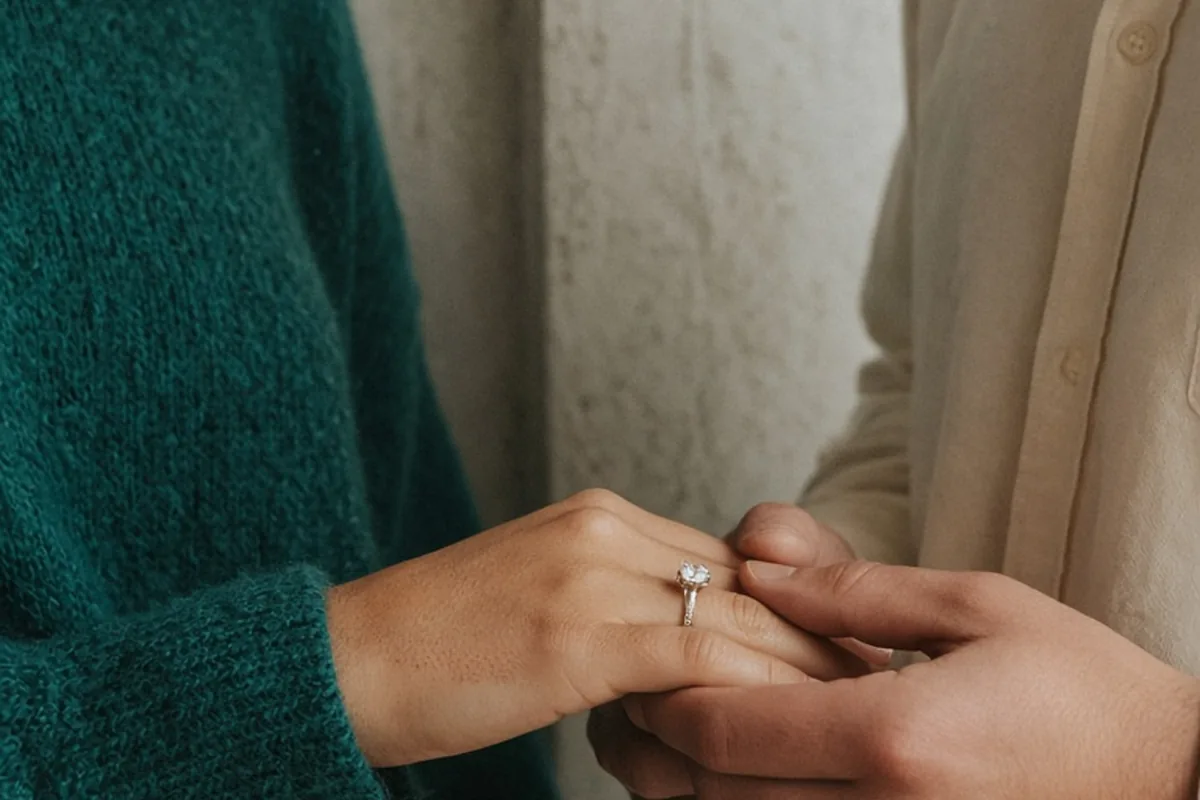
To budget for an engagement ring setting, establish your total ring expenditure first, then decide whether the mounting will be a minimalist backdrop or an ornate feature. Settings typically account for metal weight, design complexity, accent gems, and jeweler labor. Prioritize durable metals like platinum or gold that match your partner's daily routine, account for prong and sizing labor upfront, and reserve funds for ongoing cleaning, prong checks, and wedding band integration.
Purchasing an engagement ring often focuses heavily on the center gem, leaving the setting as an afterthought until the final bill arrives. The mounting is not just an aesthetic frame; it is the structural foundation that protects your investment, withstands decades of daily wear, and dictates how comfortably the ring sits on the finger. Approaching this purchase with a clear financial plan ensures you do not sacrifice structural integrity or overpay for design elements that offer little daily utility.
Balancing the Center Stone Allocation Against the Mounting
A common pitfall in ring planning is exhausting nearly the entire spending limit on a loose diamond or colored gemstone, only to realize that an adequately sturdy mounting requires a separate financial commitment. The setting must be engineered to securely hold the specific dimensions, depth, and girdle thickness of your chosen center stone. If you select a large or unconventional stone shape, an off-the-shelf lightweight basket may not provide sufficient support, forcing you into custom modifications that inflate the total price.
Instead of treating the setting as an incidental add-on, divide your target figure into two distinct categories: the primary gemstone and the mounting architecture. If your priority is an ornate, vintage-inspired design with detailed filigree, milgrain borders, and dozens of micro-pavé accents, the mounting will command a larger share of the total resources due to extensive bench labor. Conversely, if your goal is maximizing the visual presence of the center gem, an understated four-prong or six-prong wire solitaire minimizes setting expenses while directing available funds toward diamond clarity, color, and cut precision.
Precious Metal Purity, Density, and Lifetime Upkeep
The choice of metal directly influences both the initial ticket price and the long-term cost of ownership. Platinum is prized for its natural white luster, hypoallergenic properties, and substantial density. Because platinum is typically worked at ninety or ninety-five percent purity, it requires more physical metal by weight than gold alloys. Furthermore, platinum melts at a much higher temperature and requires specialized bench tools, meaning bench jewelers generally charge higher fabrication and repair fees for working with it. However, platinum does not lose material when scratched; the metal merely shifts, forming a rich patina over time that can be burnished smooth without thinning the shank.
Gold is alloyed with other metals to increase hardness and create different hues, most commonly fourteen-karat or eighteen-karat yellow, white, or rose gold. Fourteen-karat gold contains a lower percentage of pure gold than eighteen-karat gold, making it slightly more scratch-resistant and generally less expensive due to lower gold commodity content. White gold alloys, however, require rhodium plating to achieve a brilliant chrome-like finish. Because this thin electroplated layer gradually wears away from friction, lotions, and handwashing, white gold rings require periodic replating to maintain their cool color. When budgeting for white gold, you must account for this recurring maintenance cost over the life of the ring, or factor in whether your chosen jeweler includes complimentary lifetime replating services.
Setting Architecture: Solitaires, Pavé Accents, and Bezel Security
The physical layout of the setting dictates how much bench labor is required to assemble the piece. A classic solitaire mounting consists of a simple band and a central prong head. Solitaires represent the most economical baseline because they require minimal hand-setting of secondary stones and allow jewelers to work quickly from standard casting molds. Solitaires also leave ample room for easy cleaning, making them straightforward to inspect for loose prongs during annual checkups.
Designs incorporating secondary stones, such as halos, three-stone arrangements, side-stone channel bands, or french-set pavé, significantly elevate costs. Each secondary diamond or gemstone must be individually calibrated, drilled, seated, and secured under high-magnification optics. A halo setting featuring thirty tiny stones requires thirty miniature seats to be cut into the metal, along with sixty or more micro-prongs to be pushed over the stone edges. If your partner has an active lifestyle or works with their hands, delicate micro-pavé prongs can snag on fabrics or bend, leading to loose or missing accent stones. A bezel setting, which encircles the center stone in a continuous rim of protective metal, often requires precise custom fitting to your specific stone outline, but it offers superior snag-free durability that can reduce emergency repair bills over decades.
Factoring in Bench Labor, Resizing Limitations, and Custom CAD Fees
Beyond raw materials, jeweler labor is a major component of any ring setting estimate. When you request a fully custom setting, the jeweler must produce a digital 3D model using computer-aided design software, grow a wax or resin prototype, cast the metal through lost-wax casting, clean the rough casting, assemble the head, set the gems, and apply final polishes. These design and modeling steps carry non-refundable bench fees that exist regardless of the size or quality of the finished ring. If you alter the design mid-process, additional rendering or printing charges may be assessed.
Resizing compatibility is another financial detail that shoppers frequently overlook. Simple metal bands with plain lower shanks can be easily sized up or down by two or three full sizes with minimal bench time. However, full eternity bands with diamonds encircling the entire circumference cannot be traditionally cut and stretched without compromising the integrity of every stone seat. If an eternity band setting is ordered in the incorrect size, or if your partner's finger size shifts permanently in the future, the entire ring setting may need to be melted down and completely recast at significant expense. Choosing a three-quarter pavé band leaves a solid section of metal at the base, preserving the sparkling aesthetic while ensuring the ring can be safely resized later.
Planning Ahead for Flush Wedding Band Alignment
An engagement ring setting is rarely worn in isolation; it is eventually paired with a wedding band. How the engagement ring sits on the finger determines what style of wedding band will fit alongside it, which directly influences your total bridal jewelry expenditures. Low-profile settings, where the center basket rests directly against the skin, provide exceptional stability and lower the risk of bumping against doorways or counters. However, a straight wedding band cannot sit flush against a low basket, creating a visible gap between the two rings.
If your partner desires a seamless, gap-free look, a low-profile engagement setting will force you to purchase a custom-contoured or notched wedding band engineered to curve around the basket. Custom curved bands generally cost more than classic straight eternity bands and can look awkward if worn alone without the engagement ring on vacations or casual days. Alternatively, choosing a high-profile peg head setting or a cathedral mounting elevated above the finger plane allows an off-the-shelf straight band to slide neatly underneath the head. Deciding on this aesthetic early prevents the surprise expense of designing a matching bespoke wedding band twelve months later.
Evaluating Ready-Made Stock Mountings Against Custom Fabrication
Commercial jewelry suppliers produce extensive catalogs of pre-cast, ready-made settings designed to accommodate standard calibrated stones, such as standard round brilliants, princess cuts, or ovals. These stock mountings benefit from economies of scale, making them substantially more affordable than one-of-a-kind bespoke creations. If you purchase a center stone with standard millimeter dimensions, choosing a reputable stock mounting can save a meaningful portion of your budget without compromising precious metal purity or assembly standards.
Custom bench fabrication becomes necessary—and financially justified—when dealing with non-standard dimensions. Antique old European cuts, asymmetrical stones, or unique natural colored sapphires rarely fit cleanly into pre-manufactured stock heads. Forcing an irregularly shaped stone into a stock setting can create uneven pressure points that crack the gem during setting or leave prongs poorly seated. In these scenarios, paying for custom craftsmanship ensures that the metal supports the gem's exact girdle contours, safeguarding an irreplaceable heirloom or rare stone against catastrophic loss.
Requesting Itemized Jeweler Quotes and Warranty Terms
Because precious metals and loose stones trade on open commodities and wholesale markets, pricing transparency varies significantly between retail establishments. When obtaining quotes for a setting, insist on an itemized estimate that separates the cost of the raw mounting, any accent melee diamonds, custom design work, and bench labor fees. Ask the jeweler to specify the metal alloy grade, such as 950 platinum or 14k versus 18k gold, as well as the average color and clarity grades of all accent stones incorporated into the band.
Always review the fine print regarding ongoing care and warranties before placing a non-refundable deposit. Inquire whether the quoted price includes the initial setting of your center gem, especially if you sourced the stone from a different vendor, as many jewelers levy an outside-stone setting fee to cover their bench insurance liability. Confirm whether future routine services—such as prong retipping, claw tightening, sonic cleanings, and sizing adjustments—are covered under a store warranty or if each visit will incur out-of-pocket charges. Obtaining written terms allows you to evaluate competing offers accurately on both initial acquisition cost and lifetime protection.
Frequently asked questions
Can I buy a center stone and setting from different jewelers to save money?
Yes, but be prepared for outside-stone setting fees. Many bench jewelers charge a specific setting fee when mounting a gemstone they did not sell, and some may decline liability if an outside stone chips during setting, requiring you to carry third-party jewelry insurance beforehand.
Does a higher-karat gold setting cost more over its lifetime?
Eighteen-karat gold carries a higher initial cost due to its greater pure gold content, but it is softer than fourteen-karat gold. This softness means prongs may wear down and require retipping sooner, especially for individuals with active professions or hands-on hobbies.
Why are bezel settings sometimes more expensive than four-prong settings?
A bezel setting requires the jeweler to custom-shape a continuous collar of metal around the precise perimeter of your specific gemstone without cracking the edges. This process demands specialized bench technique and considerably more time than pushing standard pre-cast prongs over a stone.
How much should I reserve for ring setting maintenance over time?
Plan for regular cleaning and inspection checkups every six to twelve months, which are often free through your selling jeweler. For white gold, budget for periodic rhodium replating every one to three years, and expect occasional prong retipping or micro-stone replacement over decades of wear.
Your next step
Schedule an in-person consultation with two independent local jewelers to examine loose mountings in your preferred metal, asking each to provide an itemized quote that breaks out metal weight, side-stone labor, and future resizing coverage.