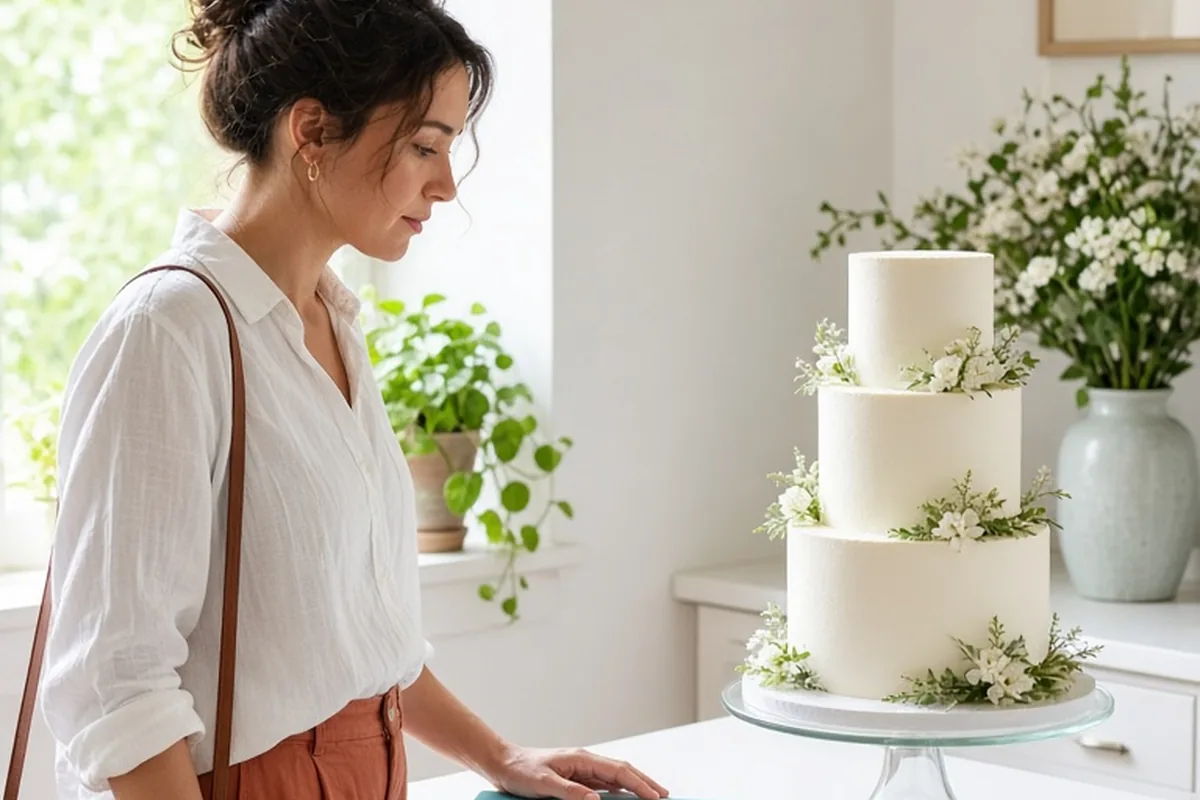
To budget for a wedding cake, calculate your total guest count, choose a service style, and account for bakery pricing models that charge per serving. Factor in structural design complexity, premium flavors, delivery and setup charges, stand rental deposits, and venue cake-cutting fees. To optimize your spending, consider pairing a smaller decorative display cake for ceremonial cutting with kitchen sheet cakes served from the back of the house.
A wedding cake acts as both a visual centerpiece in the reception space and a focal dessert course for your guests. Because custom cake design involves specialized culinary labor, structural engineering, and precise day-of logistics, establishing a realistic budget requires looking beyond the basic cost of flour and sugar.
Determining Your Total Serving Count and Portion Sizing
The foundation of any wedding cake budget is the total number of portions required. Commercial bakeries typically price their work on a per-serving basis, meaning every additional guest directly influences the base quote. However, wedding portion sizes differ significantly from casual birthday cake slices or restaurant dessert portions. A traditional industry wedding serving is generally standardized around a one-inch by two-inch rectangular slice cut from a multi-layered tier. If your caterer or venue plans to cut larger, generous portions, you will need to order more tiers or supplement the count to avoid running short during service.
Your dessert schedule also dictates how many total servings you actually need to purchase. If the cake is the sole dessert offered after dinner, ordering a slice count matching roughly ninety to one hundred percent of your confirmed adult guest count ensures everyone is served. Conversely, if you are providing a supplemental dessert bar, late-night sweet snacks, or a plated dessert included with your venue catering package, many guests will bypass the cake entirely. In mixed-dessert scenarios, you can comfortably order cake portions for seventy to eighty percent of your guest list without guests feeling overlooked.
How Bakeries Structure Base Pricing and Flavor Selections
Bakery quotes are built from a base rate per slice that covers standard sponge recipes, basic buttercream filling, and essential structural hardware such as internal support dowels, central stability rods, and food-grade tier boards. Multi-tiered structures demand internal architecture to prevent upper tiers from sinking into lower layers. As a result, the physical construction time and engineering required for tall cakes are inherently built into the starting per-portion rate.
Customization beyond basic recipes increases this baseline expense. Standard vanilla, chocolate, or almond sponges with traditional vanilla buttercream represent standard pricing at most bakeries. Introducing specialty sponge infusions, scratch-made fruit curds, salted caramel layers, mousse fillings, or liqueur-soaked sponges requires additional ingredient investment and production steps. Furthermore, accommodating dietary requirements—such as certified gluten-free, vegan, or nut-free preparations—often commands a surcharge due to dedicated equipment usage, allergen-safe ingredient sourcing, and segregated baking schedules.
Evaluating Exterior Finishes and Custom Decorative Artistry
The decorative exterior of the cake represents the largest variable in artisan labor. Smooth, rustic, or textured buttercream finishes generally serve as the most economical exterior choices because skilled decorators can execute them relatively quickly. When a design shifts to rolled fondant, the labor expands substantially. Fondant requires an initial layer of firm chocolate ganache or stiff buttercream underneath to achieve sharp, clean edges, followed by rolling, draping, and hand-smoothing the sugar paste, which significantly increases preparation time.
Ornamental elements add further custom labor charges to your estimate. Hand-sculpted sugar flowers, for example, must be wired, shaped, dried, and hand-dusted petal by petal, often taking dozens of hours for an elaborate floral cascade. Incorporating edible gold or silver leaf, intricate piping lace work, bas-relief molding, or hand-painted botanical murals will similarly escalate production costs. If you wish to achieve an ornate look within a strict spending cap, opting for food-safe fresh florals arranged by your wedding florist is typically far more affordable than commissioning handcrafted sugar botanicals.
Budgeting for Delivery Logistics, Rental Hardware, and Venue Fees
A complete wedding cake budget must account for logistical and venue-side costs that exist outside the baker's kitchen. Transporting a fragile, heavy, temperature-sensitive multi-tiered cake requires climate-controlled vehicles, specialized leveling equipment, and the presence of an experienced decorator to handle on-site assembly, final touch-ups, and floral placement. Bakeries routinely bill delivery fees based on mileage, drive time, and the complexity of on-site setup, with charges increasing if delivery occurs during peak weekend traffic hours or at remote venues.
At the venue, additional service fees may apply depending on your catering contract. Many reception venues and independent catering companies charge a mandatory cake-cutting fee per slice. This hospitality fee covers the staff labor needed to dismantle tiers, portion the cake in the kitchen, provide clean dessert plates and silverware, serve the guests, and wash the service ware. Additionally, if you do not purchase your own cake stand, plateau, or specialized cutting knife set, you may need to pay rental fees and refundable security deposits to the baker or an event rental company.
Pairing a Smaller Display Cake with Kitchen Sheet Cakes
One of the most practical strategies for controlling wedding dessert spending is the display-and-sheet combination. Under this approach, the couple commissions a modest two-tier or three-tier decorative cake that sits on display throughout the reception and serves as the centerpiece for the traditional cake-cutting photographs. The remaining portions needed to feed the wider guest list are ordered as undecorated, single-layer kitchen sheet cakes that stay in the back kitchen out of view.
Because kitchen sheet cakes bypass structural tiering dowels, complex decorative finishes, and intricate hand-piped detailing, bakeries produce and frost them in a fraction of the time required for tall display tiers. When cut behind closed doors and served on dessert plates, the sheet cake portions are visually and culinarily identical to the tiers sliced from the display cake. As long as you ensure the flavors, fillings, and sponge recipes match across both formats, guests enjoy the exact same tasting experience while overall artisan labor costs decrease substantially.
Tasting Appointments, Deposit Schedules, and Contract Terms
Before finalizing your budget, you should plan for consultation and booking administration. Bakeries handle tastings in various formats, ranging from formal in-person design sessions to boxed tasting kits packaged for pickup. While some bakeries credit the tasting fee toward your final balance upon signing a contract, others treat consultations as standalone charges. Clarifying whether tasting fees are deducted from the final invoice helps you track out-of-pocket expenses accurately during the vendor selection phase.
Carefully review the contract terms regarding payment schedules, date retention, and cancellation rules. Most custom bakeries require a non-refundable booking deposit to reserve your wedding date on their production calendar, with the remaining balance due between two to four weeks prior to the event. Check the contract for terms governing guest count adjustments. Reputable bakers allow you to adjust your final serving count up or down within specified percentage limits up until the final payment deadline, giving you flexibility once your official RSVP counts arrive.
Requesting Itemized Estimates and Comparing Local Baker Proposals
To make balanced financial decisions, collect detailed, itemized quotes from at least two or three licensed local bakeries. When requesting estimates, provide each baker with identical design inspiration photos, your projected guest count, delivery venue address, and preferred flavor combinations. Requesting a line-item breakdown that separates the base cake, specialty fillings, decorative labor, stand rentals, and delivery fees allows you to see exactly where your money is going and adjust individual design components to fit your spending target.
Evaluating itemized estimates also reveals distinct business practices between bakeries. One vendor might offer a lower per-slice baseline but impose higher delivery and on-site assembly fees, while another includes basic delivery within a certain radius. By comparing these itemized figures alongside reviews, portfolio consistency, and communication responsiveness, you can select a vendor who provides both transparent pricing and the technical reliability required for your wedding day.
Frequently asked questions
What is a venue cake-cutting fee, and how does it affect the budget?
A cake-cutting fee is a per-serving charge billed by venues or caterers to cover the labor of slicing, plating, serving, and cleaning up after an outside dessert vendor. This fee varies widely depending on venue policies and catering contracts. Always verify whether this service is included in your standard catering package or billed as a separate line item before setting your total dessert allocation.
Can I save money on my wedding cake by using fresh flowers instead of sugar flowers?
Yes, using fresh flowers is generally much more cost-effective than ordering handcrafted sugar blooms because sugar flowers require hours of skilled labor to shape, wire, and paint. If you choose fresh flowers, ensure your florist coordinates with your baker to provide untreated, pesticide-free blooms with food-safe stem preparation.
When should I finalize my cake design and serving count with the baker?
You should secure your wedding date with your chosen baker several months in advance, but your final serving count and flavor choices are usually locked in two to four weeks before the wedding. This timeline aligns with your final RSVP deadline, allowing you to pay for the exact number of portions needed.
Your next step
Review your venue and catering contracts to identify any cake-cutting or plating fees, then request itemized quotes from two to three local bakeries using your target guest count and preferred service style.