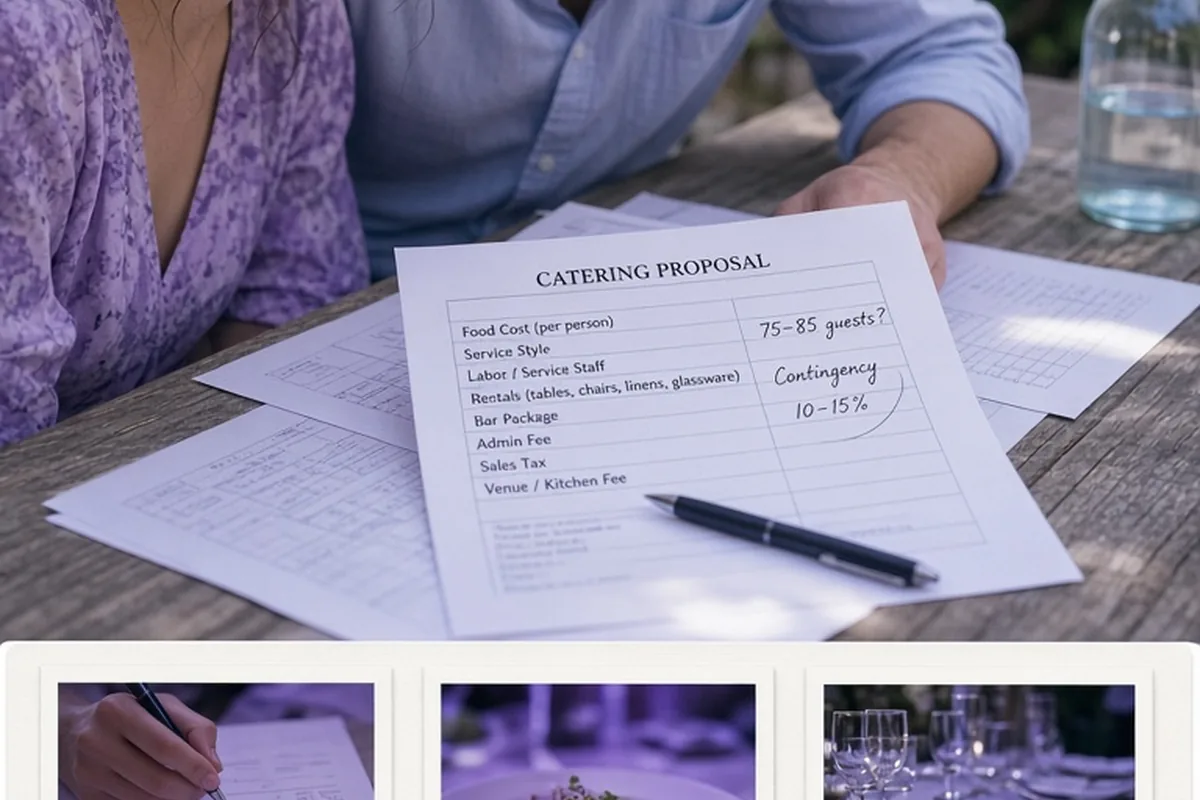
To budget for a wedding caterer, first establish your firm guest count range, as per-person pricing drives the baseline cost. Next, choose a service style like plated, buffet, or family style, then request itemized proposals that separate food, labor, rentals, bar service, administrative fees, and local sales tax. Finally, reserve a contingency buffer within your catering allocation to absorb final guest count adjustments, vendor meals, and venue-mandated kitchen setup fees.
Catering frequently accounts for one of the largest single commitments in a wedding plan, yet early estimates often overlook essential elements like service staffing, table rentals, and mandatory venue fees.
Establishing Guest Count Realities and Service Style Trade-Offs
Your guest count serves as the primary multiplier for almost every catering expense, which means small adjustments in attendance dramatically shift the bottom line. Before requesting formal quotes, establish a realistic minimum and maximum attendance range rather than relying on an optimistic single figure. Catering companies price food, place settings, table linens, glassware, and cleanup crews directly against these headcounts. Gathering an honest baseline from both families early prevents you from committing to an initial food tier that becomes unsustainable when final RSVPs arrive.
The serving format you select directly dictates both the ingredient preparation and the required staff headcount. Plated dinners require higher culinary precision and an extensive roster of banquet servers to deliver courses simultaneously to seated guests. Buffets often reduce service staff requirements on the floor, but they demand larger total volumes of food to maintain full, visually appealing chafing dishes throughout the reception. Family-style service creates an engaging communal atmosphere, yet it requires ample tabletop real estate, duplicate serving platters, and specialized servingware that can increase equipment rental costs. Stations and food trucks offer high personalization, but they often require extra prep staff and multiple cook lines to avoid long guest queues.
Decoding Line Items Beyond Food in a Wedding Caterer Quote
A common pitfall in wedding food planning is equating the menu price with the complete catering expense. A proposal stating a specific per-person rate for entrees rarely represents the final invoice. Full-service catering entails culinary preparation, on-site execution, logistics management, trash removal, and post-event cleanup. When reviewing initial quotes, look closely at how the vendor breaks down preparation labor, transportation charges, culinary equipment, and operational overhead.
Pay special attention to the difference between service charges, gratuities, and local administrative taxes. In the event industry, a service charge or administrative fee is frequently added as a percentage of food and beverage totals to cover operational costs, vehicle maintenance, and behind-the-scenes prep. This fee is distinct from a gratuity intended directly for floor servers and bartenders. You must also account for municipal and state sales taxes, which apply to food, beverage, and sometimes labor depending on local tax regulations. Asking caterers to provide an all-inclusive sample estimate showing all statutory fees ensures you compare real bottom-line figures rather than partial menu rates.
Calculating Beverage Packages, Bar Staff, and Corkage Options
Beverage service introduces its own set of cost variables that interact directly with your food budget. Caterers often offer tiered bar packages ranging from simple beer and wine offerings to premium spirits and signature cocktails. Full open bar packages provide predictable budgeting because you pay a fixed per-person rate regardless of actual consumption. However, if your guest list includes many non-drinkers or children, a flat per-person beverage package may result in paying full adult rates for low-consumption guests.
Alternatively, some venues and caterers permit couples to supply their own alcohol (BYO) while hiring licensed bartenders through the catering team. While sourcing alcohol independently from discount retailers can lower raw beverage costs, you must account for corkage fees, ice delivery, garnishes, mixers, and glassware rentals. A corkage fee covers the opening, chilling, serving, and disposal of bottles provided by the client. Calculate the combined cost of retail alcohol, delivery logistics, permits, and corkage charges before assuming the self-supply route is cheaper than an all-inclusive caterer bar package.
Accounting for Service Ratios, Working Hours, and Overtime Policies
Labor constitutes a substantial portion of any professional catering invoice, and understanding staffing ratios helps you evaluate whether a quote is realistic for your timeline. High-end plated dinners generally require one server for every ten to twelve guests to guarantee timely course delivery and water service. Buffet receptions can operate efficiently with one server per twenty to thirty guests, supported by dedicated busing staff. If a quote appears significantly lower than competitors, inspect the staffing line item to verify whether the vendor has understaffed the event, which could lead to slow service, dirty tables, and delayed transitions.
Labor costs must also account for total on-site hours rather than just the reception runtime. A four-hour reception requires staff to arrive several hours in advance for kitchen staging, table settings, and cocktail hour prep, followed by two or more hours of post-event teardown, kitchen scrubbing, and trash removal. Review your contract terms regarding hourly rates for setup and breakdown, meal breaks for the catering team, and clear hourly overtime rates in the event your speeches run long or your dance floor extends beyond the agreed timeline.
Evaluating Kitchen Limitations, Rentals, and Venue Coordination Fees
Your wedding venue directly influences your catering expenses through its physical infrastructure and vendor policies. Venues with fully equipped commercial kitchens—complete with convection ovens, warmers, walk-in coolers, and running water—allow caterers to prepare food with standard operational logistics. Conversely, raw spaces, historic estates, barns, and outdoor tented fields lack basic cooking equipment. In these venues, your caterer must construct a temporary field kitchen, adding costs for rental ovens, generator power, portable handwashing stations, and prep tables.
Furthermore, investigate whether your chosen venue imposes exclusive vendor lists or vendor buyout fees. Some properties require you to choose from a pre-approved list of caterers who pay a commission fee to the venue, which is typically built directly into the catering proposal. Other venues charge an outside catering fee if you bring in an independent vendor, alongside landmark preservation or clean-up deposits. Clarifying these venue-specific requirements before finalizing catering quotes prevents unexpected thousands from eroding your available budget.
Structuring Tastings, Payment Milestones, and Contract Contingencies
The timeline of catering payments requires careful cash flow management from initial booking to wedding week. Most caterers require an initial deposit to secure your event date, followed by scheduled milestone payments and a final balance due two to four weeks before the event when your final guest count is locked. Inquire upfront about the cost and policy for menu tastings. Some caterers include a complimentary tasting for two upon contract signing, while others charge a separate fee that may or may not be credited toward your final event balance.
Always maintain an unallocated buffer within your catering funds to handle contract adjustments. As planning progresses, you will need to provide vendor meals for your photographer, videographer, band members, and wedding coordinator, who work continuous eight- to twelve-hour days. Caterers typically offer discounted vendor meals consisting of hot entrees served during guest dining. Having an intentional reserve fund absorbs these vendor meals, late RSVP additions, dietary substitution surcharges, and last-minute linen adjustments without forcing compromises elsewhere in your celebration.
Frequently asked questions
What is the difference between a caterer service charge and a gratuity?
A service charge is a mandatory administrative fee retained by the catering company to cover operational overhead, equipment maintenance, and administrative labor. A gratuity is a discretionary tip distributed directly to the on-site servers, bartenders, and kitchen staff for their day-of performance.
How do dietary restrictions affect the wedding catering budget?
Most professional caterers accommodate standard dietary preferences such as vegetarian, vegan, gluten-free, or nut allergies within standard menu pricing when counts are provided in advance. However, highly customized individual requests, certified kosher meals, or specialized halal preparation brought from external certified kitchens can incur supplemental plating or handling fees.
When is the final guest count and catering payment typically due?
Most catering contracts require your locked final guest count and final balance payment between fourteen and thirty days before the wedding date. This deadline allows the culinary team to purchase ingredients, schedule accurate labor shifts, and finalize rental orders with suppliers.
Do we need to provide meals for our other wedding vendors?
Yes, vendors working on-site for extended durations—such as your photographer, videographer, event planner, and musicians—require a meal during the reception. Most caterers provide hot vendor meals at a reduced rate compared to standard guest per-person pricing.
Your next step
Draft your estimated guest range and request fully itemized proposals from three licensed caterers that clearly detail food, labor, rentals, taxes, and service fees.