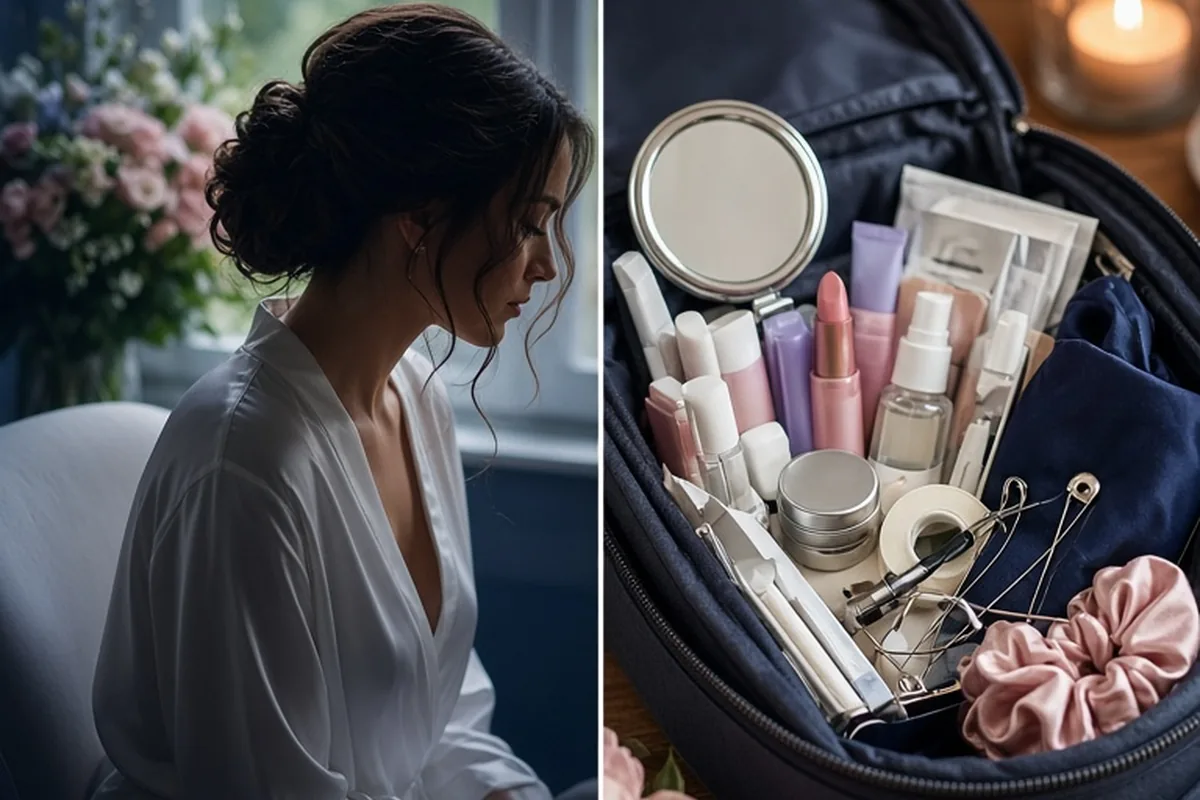
To budget for a wedding day emergency kit, allocate a small percentage of your miscellaneous wedding fund after deciding between a pre-assembled commercial kit and a custom do-it-yourself build. Begin by asking your wedding coordinator, venue manager, and beauty stylists what supplies they already carry on-site to eliminate redundant purchases. Next, divide your remaining needs across four primary categories: garment repairs, beauty touch-ups, personal wellness, and hardware or organization, purchasing travel sizes and multipacks to control final costs.
While high-profile expenses like catering, photography, and floral arrangements dominate wedding planning discussions, small logistical details often determine how smoothly the celebration unfolds. An emergency kit acts as an insurance policy against torn hems, sudden headaches, spilled beverages, and broken zippers, keeping minor inconveniences from derailing your schedule.
Deciding Between Pre-Made Bridal Emergency Kits and DIY Assembly
The first financial decision when budgeting for a wedding day emergency kit is choosing whether to buy a pre-packaged commercial kit or assemble one from scratch. Pre-assembled bridal kits are sold in varying sizes, ranging from compact clutch-friendly pouches to expansive multi-tiered cases marketed directly to wedding parties. The primary benefit of purchasing a pre-made option is convenience; you pay a single flat price and receive a curated collection of standard supplies without spending hours shopping across multiple retail aisles.
However, pre-packaged kits carry notable budgetary trade-offs. Manufacturers frequently include low-cost filler items, such as flimsy mini sewing sets with fragile thread or single-use bandages that may not suit your specific attire or skin sensitivities. Furthermore, pre-assembled options often charge a significant convenience premium for branded packaging. If you select this route, plan your budget around the base price of the kit plus an additional secondary fund to purchase missing specialty items, such as your exact foundation shade, specific prescription medications, blister shields, or fabric-safe adhesives tailored to delicate lace.
Building a DIY emergency kit requires more time and upfront planning but generally offers superior cost-to-value efficiency. When you build the kit yourself, every dollar goes toward products you will actually use on the wedding day or can easily repurpose at home afterward. A DIY approach allows you to purchase full-sized or bulk-packaged items that can be divided among several wedding party members, drastically reducing the per-person cost compared to buying multiple individual commercial bridal pouches.
Auditing Vendor Contracts to Prevent Paying for Duplicate Emergency Supplies
Before spending money on any emergency supplies, conduct a thorough audit of what your hired wedding professionals already bring to the venue. Professional day-of coordinators, full-service wedding planners, and bridal suite attendants routinely carry comprehensive professional-grade emergency kits as part of their contracted services. Purchasing duplicate heavy-duty steamers, professional sewing tools, or industrial stain removal chemicals is an unnecessary drain on your wedding budget if your planner already has those tools within arm's reach.
Schedule a brief check-in with your core vendor team approximately two to three months before the wedding date. Ask your hair stylist and makeup artist whether their contract includes touch-up kits with extra bobby pins, blotting papers, setting spray, and lash glue. Inquire if your venue or transportation provider maintains a basic first-aid station on the property. Once you have a clear list of what your vendor team provides, eliminate those items from your personal shopping list and reserve your kit budget exclusively for specialized personal items, hygiene products, and wardrobe specifics.
Allocating Your Wedding Day Emergency Kit Budget by Supply Category
A practical way to budget for a custom kit without overspending is to assign funds across distinct supply categories based on likelihood of use and potential impact. Dividing your shopping list prevents impulse buying and ensures that critical functional necessities receive financial priority over novelty cosmetic extras.
Wardrobe and structural fixes should represent the foundational portion of your spending. Garments worn during weddings endure friction, movement, photos on varied terrain, and delicate fastenings that are prone to sudden failure. Allocate funds for heavy-duty safety pins, clear dress tape, chalk or white fabric-safe stain sticks for concealing smudges, a seam ripper, sewing needles pre-threaded with neutral and dress-matched thread, extra earring backs, and a crochet hook for handling intricate bridal button loops.
Personal wellness and minor medical supplies form the second spending priority. A long wedding day involves physical exertion, irregular eating schedules, outdoor weather exposure, and footwear that can cause discomfort over hours of standing. Budget for items such as blister prevention balms, hydrocolloid bandages, ibuprofen, acetaminophen, antacids, motion sickness remedies, electrolyte powder packets, breath mints, and eye drops.
Beauty maintenance and hygiene products round out the remaining budget. Rather than repurchasing complete makeup duplicates, focus on compact maintenance tools: oil-absorbing blotting sheets, a miniature can of hairspray, travel-sized dry shampoo, a dual-sided compact mirror, nail glue for unexpected acrylic breaks, nail files, lint rollers, and travel-sized deodorant that dries clear without leaving marks on formal fabrics.
Controlling Sourcing Costs Through Household Inventories and Multipacks
You can significantly reduce the overall cost of your emergency kit by sourcing items methodically rather than buying everything in single-unit travel sizes at boutique retail stores. Begin by raiding your own household medicine cabinet and utility drawers. Standard supplies like cotton swabs, tweezers, standard safety pins, dental floss, scissors, and basic adhesive bandages are already present in most homes and can simply be transferred into your wedding kit at zero additional expense.
When purchasing remaining items, consider the cost efficiency of buying multi-unit travel packs online or at discount variety stores. If you need stain remover wipes, blister bandages, or tissue packets, purchasing a multi-pack allows you to create duplicate mini-kits for different locations—such as one for the bridal dressing suite, one for the groom's quarters, and one for the reception venue restroom basket—for a fraction of the unit cost of buying separate commercial items. If members of your wedding party express interest in having their own mini kits, pooling resources to purchase items in bulk can lower the overall expenditure for everyone involved.
Budgeting for Kit Organization, Portability, and Specialty Tools
A common oversight in wedding emergency kit budgeting is neglecting the cost of the container and hardware tools required to make the kit functional on the day of the event. A jumbled bag filled with loose supplies wastes precious minutes during a high-stress crisis. Your budget should account for a structured storage solution that keeps items visible, protected from liquid spills, and easy to locate instantly.
Clear, multi-compartment organizers—such as clear plastic craft boxes, tackle-style utility organizers, or hanging toiletry bags with transparent zippered pouches—provide the best functionality. These containers allow bridal attendants or coordinators to scan contents quickly without dumping items onto dressing tables. Factor in the cost of a few essential non-consumable tools, including a reliable pair of small fabric scissors capable of cutting thick threads, a portable handheld garment steamer, and a multi-plug surge protector or extended phone charging cables to keep communication devices operational throughout the event.
Adjusting Kit Expenses for Venue Environment, Weather, and Party Size
A one-size-fits-all emergency kit budget fails to account for environmental variables that introduce specific operational risks. Outdoor settings, seasonal weather extremes, remote destination venues, and large wedding entourages each require tailored budget allocations to address unique challenges.
For outdoor summer or beach weddings, expand your budget to cover sunscreen, bug-repellent wipes that do not degrade fine fabrics, handheld misting fans, anti-chafing sticks, and extra hydration salts. For winter or alpine weddings, reallocate those funds toward static electricity removal sprays, skin barrier creams to combat windburn, clear umbrellas, and disposable hand warmers. Similarly, if your wedding takes place at a remote estate or private barn far from retail centers, your kit must be more comprehensively stocked than a wedding held in a metropolitan hotel where a forgotten item can be purchased within minutes at a nearby pharmacy.
Post-Wedding Kit Value: Repurposing Leftovers and Minimizing Waste
When evaluating the true financial impact of an emergency kit on your wedding budget, consider its long-term utility beyond the reception. Unlike single-use decorative elements, floral installations, or personalized wedding stationery, the vast majority of non-perishable emergency kit components retain their value long after the wedding festivities conclude.
A well-assembled DIY kit effortlessly transitions into a comprehensive home first-aid station, an organized emergency travel pack for your honeymoon, or a vehicle safety kit. Clear compartmentalized organizers, portable steamers, sewing tools, and travel-sized hardware retain utility for years. By viewing these purchases as lasting household investments rather than disposable wedding-day overhead, you can justify selecting durable, higher-quality tools over cheap single-use alternatives without feeling like you are wasting wedding funds.
Frequently asked questions
How much should I expect to spend on a wedding day emergency kit?
Costs vary depending on whether you choose a basic pre-made pouch, a DIY kit using household items, or a comprehensive professional-grade kit. A simple, self-assembled kit made largely from existing household items costs very little, while expansive DIY or premium pre-packaged kits requiring specialized organizers and beauty duplicates will sit at a higher price tier. Check what your planner already carries before purchasing to avoid inflated spending.
Who is typically responsible for paying for the wedding day emergency kit?
Payment responsibility depends on your planning structure. If you hire a professional day-of coordinator or full-service wedding planner, their emergency kit is usually included in their service fee. If you are handling coordination yourself, the couple typically covers the cost, though wedding party members or close family occasionally build and gift a kit to the couple as a practical preparation gesture.
What is the biggest waste of money when assembling a bridal emergency kit?
The most common waste of money is purchasing duplicate full-sized cosmetics, redundant tools that hired vendors already supply, and pre-packaged commercial novelty items that never get opened. Focus your funds strictly on high-probability repair items, essential hygiene needs, and specific personal remedies tailored to your wedding environment and attire.
When should I begin purchasing items for my wedding emergency kit?
Start assembling your emergency kit roughly six to eight weeks before the wedding. This timeline gives you sufficient opportunity to consult your vendor team regarding what they provide, audit your existing household supplies, and order specialized travel-sized items or organizers online without paying for expedited shipping fees.
Your next step
Review your wedding planner and venue contracts today to list what emergency supplies they provide, then create a targeted shopping checklist for your remaining personal and garment essentials.