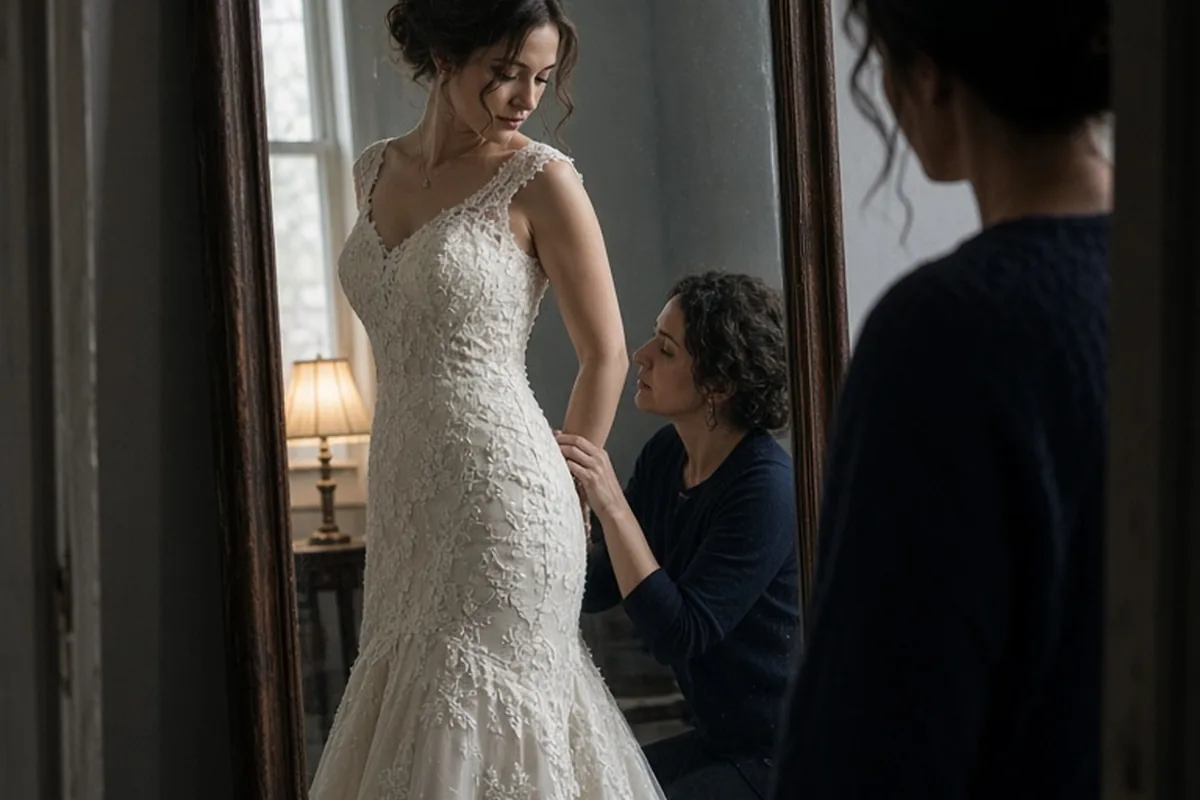
To budget for wedding dress alterations accurately, separate structural reshaping, hem adjustments, and bustling into individual expense categories before purchasing your gown. Contact independent bridal tailors in your geographic market for itemized price menus, factor in your dress's specific fabric complexity and lace construction, and set aside a dedicated line item in your master wedding budget that remains independent from the initial purchase price of the gown.
Most bridal shopping budgets focus almost entirely on the retail sticker price of the gown, leaving seamstress services as an unexpected afterthought late in the planning timeline. Understanding the mechanical labor required to fit a complex garment ensures you allocate sufficient funds early and avoid costly rush fees.
Core Construction Elements That Shape Wedding Dress Alteration Pricing
Wedding dresses are engineered differently from standard formalwear, relying on internal architecture such as boning, built-in bustiers, waist stays, and multi-layered petticoats to support heavy textiles. When a tailor alters a bridal bodice, they do not simply take in a side seam; they must systematically deconstruct exterior beading, detach delicate illusion tulle, release the internal lining, shift the boning channels, trim structural interfacing, and reassemble the entire framework stitch by stitch. Because bridal garments are assembled in reverse layers, modifying a single seam frequently requires five distinct technical operations, each demanding specialized hand-sewing skills.
The fabric choice significantly impacts the hours required to complete each modification. For example, solid silk crepe or unembellished mikado allows for clean machine stitching, but these materials show every needle mark, requiring absolute precision from the tailor. Conversely, heavily beaded lace, scattered sequins, and horsehair braid hems require individual hand-removal of embellishments along seam allowances before cutting, followed by meticulous hand-seeding of beads over the final stitches to hide the work. When calculating what your gown will require, examine the outermost decorative layer alongside the hidden structural foundations underneath.
Understanding this architectural complexity helps you evaluate why two dresses with similar silhouettes can yield dramatically different tailoring quotes. A gown with a clean A-line cut in simple satin might require only standard side-seam adjustments and a three-layer hem, whereas a multi-tiered ballgown with scalloped horsehair trim and hand-placed floral appliqués requires dozens of additional labor hours. Recognizing these labor dynamics helps you assess alteration needs before signing a sales contract at a bridal salon.
Standard Fitting Phases and Common Labor Components
Bridal fittings generally occur in three to four distinct appointments spread across several months, with each session targeting specific functional zones of the garment. The first fitting addresses foundational balance, specifically adjusting the bodice fit, taking in or letting out side seams, shaping the bust cups, and setting the shoulder straps or armscye depth. If the bodice does not sit properly against the torso at the correct apex, the skirt cannot hang evenly, making it counterproductive to measure the hemline or construct the bustle during the initial appointment.
Once the torso architecture is anchored securely to your body, the second fitting focuses on the lower half of the gown, establishing the finished floor clearance and pinning the bustle system. Hemming a bridal gown involves separate measuring, cutting, and stitching for every single skirt layer, which often includes the fashion fabric, crinoline netting, interlining, and silky inner lining. Meanwhile, bustling transforms the ceremonial train into a secure, dance-friendly length using hidden clear buttons, thread loops, ribbon ties, or heavy-duty brass snaps positioned across strategic anchor points.
The final fitting serves as a quality control inspection where you test your full range of motion, verify that the hemline clears your selected footwear, and confirm that the closures operate smoothly. Any minor micro-adjustments identified during this walk-through are completed prior to the final garment steaming and packaging. Recognizing that alterations represent a progressive series of hands-on appointments rather than a single alteration event helps you plan both your schedule and your cash flow allocations.
In-House Salon Alterations Versus Independent Bridal Tailors
Bridal salons often offer in-house alteration packages, which may be billed either as flat-rate service tiers or as itemized work orders. In-house departments provide the convenience of keeping your gown stored in the boutique from delivery through your wedding week, eliminating the need to transport a bulky garment across town. However, salon alteration rates frequently incorporate boutique operational overhead, and standard flat-rate packages may charge you for complex structural work even if your dress only requires minimal nip-and-tuck adjustments.
Hiring an independent couture seamstress or dedicated bridal tailoring shop allows you to receive customized estimates based strictly on the precise work your garment demands. Independent tailors often possess deep technical versatility with vintage gowns, major customizations, or non-traditional textiles, offering transparent price menus for individual operations like shortening straps, adding bra cups, or shortening individual underskirt tiers. The primary trade-off is logistical responsibility: you must transport the gown yourself, secure an appointment slot well in advance, and arrange external pressing or steaming services.
To decide which path aligns with your budget, request an itemized estimate from your salon before purchasing, and compare it against quotes from two vetted local independent specialists. Inquire whether the salon's in-house fee includes unlimited adjustment appointments, post-alteration pressing, and long-term garment preservation bags, or if those services incur separate accessory charges. Evaluating the full scope of inclusions prevents unexpected fees as your wedding date approaches.
Custom Modifications That Expand Beyond Basic Hem and Bodice Adjustments
Standard alterations aim to make a stock-size designer gown fit your unique proportions, whereas custom modifications alter the fundamental design, coverage, or silhouette of the dress. Adding custom detachable sleeves, lowering an illusion backline, raising a plunging neckline with modesty lace, or building internal corset backs where zippers previously existed represent design redesigns that require bespoke pattern drafting. These changes require dedicated toile mockups or extensive hand-draping sessions, which naturally increase labor time.
If you plan to incorporate heirloom elements, such as attaching antique lace from a family veil or reshaping vintage sleeves to match modern aesthetics, the seamstress must first evaluate fabric integrity before sewing. Fragile vintage fibers may require hand-stabilizing with archival mesh or delicate restoration techniques before they can bear tension on a fitted bodice. Communicating these creative ideas during initial consultations ensures your tailor accounts for fabric reinforcement alongside standard sizing adjustments.
When planning custom design elements, balance aesthetic additions against functional structural support. Adding heavy off-the-shoulder straps, for instance, requires internal boning reinforcement in the side bodice so the garment does not pull downward when you lift your arms. Discussing your design concepts with a professional seamstress before purchasing accessory materials prevents you from buying trims, appliqués, or zippers that are structurally incompatible with your dress's foundation.
Managing Timelines, Rush Surcharges, and Weight Fluctuations
Bridal tailoring calendars operate on strict capacity limits, especially during peak spring and autumn wedding seasons. Most professional tailors recommend scheduling your initial consultation roughly eight to twelve weeks before your wedding date, with your final pickup scheduled two weeks prior to the event. Booking outside these parameters or ordering a late-arriving gown often triggers mandatory rush fees, which can substantially increase your final invoice simply to expedite production time.
Weight fluctuations and body composition changes can also affect your overall tailoring costs. If you experience significant physical changes between your initial measurement session and your wedding day, a tailor may need to undo completed work, re-cut the bodice, adjust the bust cups a second time, or reposition the train bustle points to match a shifted hemline. Repeating structural steps doubles the labor hours for those specific zones, generating supplemental change-order invoices.
To manage both calendar constraints and physical consistency, schedule your fittings during a realistic phase of your lifestyle routine. Avoid planning extreme wellness overhauls between the initial fitting and the final collection date. Maintaining steady physical measurements throughout your fitting window protects the seamstress's progress, eliminates repeat fitting charges, and preserves your financial plan.
Essential Questions to Ask Tailors to Obtain Reliable Itemized Quotes
Securing an accurate quote requires asking direct, technically specific questions rather than requesting broad ballpark figures over the phone. Because seamstresses cannot assess internal seam allowances or fabric tensions without seeing the gown on your body, bring your dress, exact wedding day undergarments, and planned shoes to an in-person consultation before committing. Ask the tailor to break down their estimate into distinct line items covering the bodice, hem layers, bustle mechanics, and pressing services.
Clarify how the tailor manages unexpected complications discovered mid-process. Ask whether their quote represents a firm fixed price for the outlined scope or an open estimate based on hourly labor tracking, and determine what threshold triggers an authorization call before additional work proceeds. Understanding their policy on minor adjustments at the final pickup provides financial clarity and prevents unwelcome surprises at checkout.
Finally, confirm whether garment pressing, steaming, and breathable storage bags are included in your written proposal. Bridal gowns often become creased during rigorous alteration sessions, requiring commercial steaming or delicate hand-pressing to restore crisp pleats and smooth chiffon. Ensuring your quote encompasses both mechanical stitching and final presentation finishing protects your bottom line.
Frequently asked questions
When should I start booking my wedding dress alteration fittings?
You should reach out to reserve your spot on a bridal tailor's calendar two to four months before your wedding date, scheduling the first physical fitting roughly eight to ten weeks before the event. If your dress arrives later than expected, notify your tailor immediately to avoid rush scheduling fees.
What items must I bring to every bridal alteration appointment?
You must bring the exact shoes you plan to wear on your wedding day, along with the specific undergarments, shapewear, bra cups, and slip you will use under the dress. Changing heel heights or undergarment structures between fittings alters the gown's drape and requires costly re-hemming.
Can a wedding dress be altered if it is two sizes too large or small?
Taking a dress in by up to two sizes is generally achievable, though it may require extensive bodice reshaping and lace repositioning. Letting a dress out depends entirely on the existing internal seam allowances, which vary significantly by designer and manufacturing method.
Why does bustling a train add separate charges to an alterations bill?
Bustling is a custom engineering task tailored to your body's proportions, the weight of the train, and the fabric's movement. Tailors must hand-sew multiple reinforced attachment points, matching loops, and balanced hooks across several skirt layers so the train lifts evenly without tearing.
Your next step
Take your actual wedding shoes, foundation undergarments, and gown to an in-person consultation with a vetted local bridal tailor to obtain an itemized written quote covering every layer and structural seam before finalizing your wedding wardrobe budget.