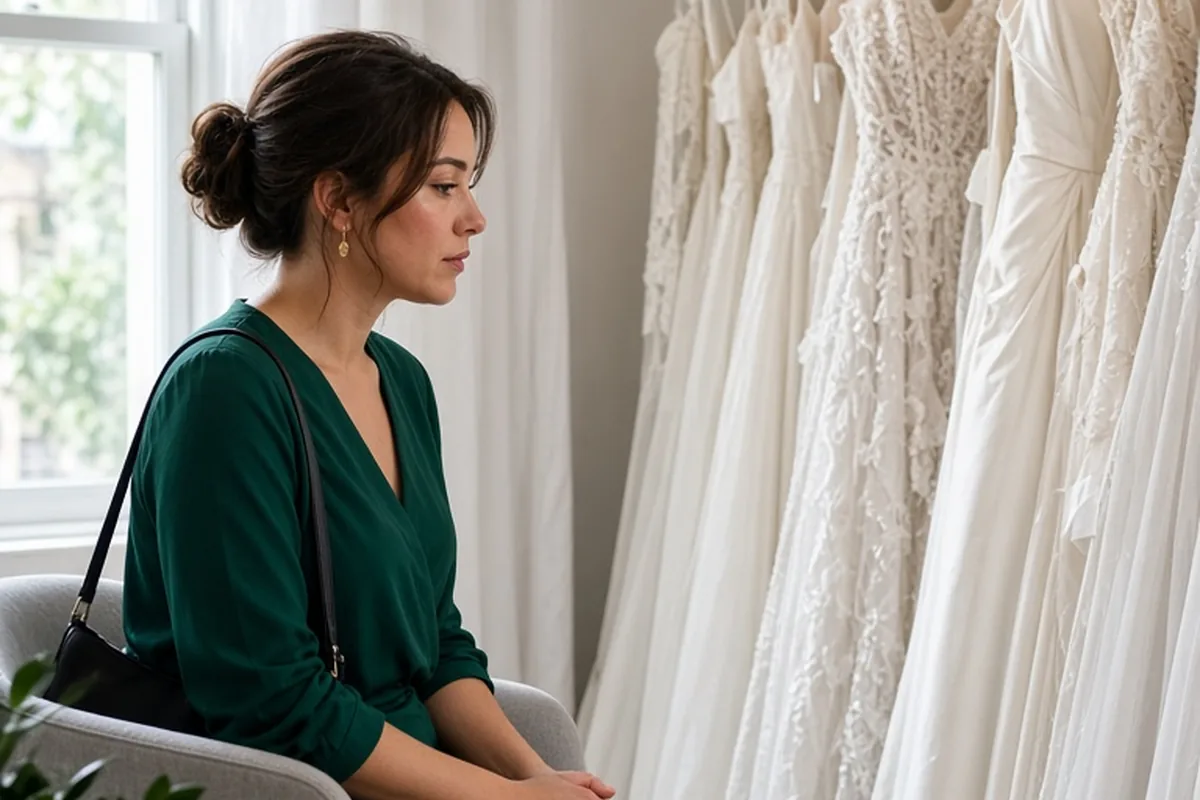
To budget for wedding dress shopping, establish a comprehensive bridal attire limit that covers the gown, professional alterations, accessories, sales tax, and appointment fees. Reserve a dedicated buffer for tailoring and undergarments rather than allocating your entire attire budget to the gown price tag. Contact boutiques in advance to confirm their starting inventory prices and appointment policies, and inform your stylist of your strict gown cap before trying on any dresses.
Stepping into a bridal boutique is one of the most anticipated milestones of wedding planning, yet the financial mechanics of bridal retail often catch shoppers off guard. Beyond the sticker price displayed on a designer hanger, the full cost of completing a wedding day look involves manufacturing lead times, multi-stage tailoring, specialized foundations, and local tax requirements. Establishing a clear, itemized financial plan before booking your first salon visit ensures you can make decisions confidently without jeopardizing your broader wedding finances.
Determining Your True Attire Spending Limit Before Visiting Boutiques
Before scheduling appointments or browsing designer lookbooks, you must define the total amount allocated to your wedding day appearance and clarify where those funds originate. Bridal attire is rarely a single transaction; it is a collection of interrelated purchases spanning the gown, foundations, veil, shoes, jewelry, and extensive customization. If family members or partners are contributing to the purchase, confirm the exact financial commitment and payment timeline in advance. Having a candid conversation about whether a contribution is a lump sum, a reimbursement, or a direct payment to the salon prevents uncomfortable misunderstandings at the checkout counter.
Once your total attire figure is set, divide that pool into discrete categories rather than allowing the dress itself to consume the entire amount. A reliable rule of thumb for bridal shopping is to designate a maximum gown price that sits comfortably below your total attire limit. This cushion protects your budget from the compulsory secondary costs that inevitably follow the dress purchase. Recording these figures in a dedicated planning sheet establishes an objective baseline that keeps your salon selections aligned with your actual financial boundaries.
Budgeting Beyond the Sticker Price: Alterations, Taxes, and Salon Fees
The price tag attached to a sample gown represents only the baseline manufacturing cost, not the finished garment ready to walk down the aisle. Standard bridal gowns are produced in standard factory sizing based on bust, waist, and hip charts; they are not custom-tailored to your exact proportions. Consequently, nearly every gown requires professional alterations. Tailoring work can range from basic hem adjustments, strap shortening, and bustle construction to complex modifications like taking in multi-layered bodices, resetting intricate lace appliqués, lowering backlines, or restructuring internal boning. Highly embellished fabrics, horsehair trims, and delicate silk tulles demand hand-sewing techniques that require substantial labor time.
In addition to tailoring labor, regional sales tax and boutique service charges can add a significant percentage to your final invoice. Depending on your municipal and state tax rates, sales tax alone can add hundreds of dollars to a premium gown purchase. Furthermore, many high-end or weekend-heavy bridal salons now charge non-refundable appointment fees to secure fitting rooms and dedicated stylists. While some boutiques apply this fee toward the purchase of a gown, others treat it as a standard service charge. Inquire about fitting fees, shipping surcharges from the designer to the salon, and garment bag costs before committing to an appointment.
Factoring in Veils, Shoes, Undergarments, and Post-Wedding Care
Completing your wedding ensemble requires multiple secondary items that should be accounted for in your initial attire budget rather than treated as last-minute splurges. Veils, for instance, vary dramatically in cost depending on their length, the quality of the tulle, and whether they feature raw edges, horsehair ribbon, pearls, or hand-stitched lace matching the gown. A cathedral-length lace veil can sometimes equal the price of a modest wedding gown. Similarly, headpieces, tiaras, specialty bridal jewelry, and customized hairpins add meaningful totals to your overall wardrobe spending.
Undergarments and footwear also demand careful financial consideration. Specialized seamless shapewear, low-back bustiers, adhesive cups, slips, and petticoats are essential for achieving the intended fit and drape of formal gowns, and these technical garments must often be purchased before your initial tailoring consultation. Footwear choices, whether you select luxury designer heels, custom flats, or a secondary pair for the reception, must also be acquired prior to your first hem fitting. Finally, budget for post-event garment care, including professional wet cleaning, stain removal, and museum-grade archival preservation boxing if you plan to store or resell the gown after the celebration.
Navigating Made-to-Order, Sample Sales, Off-the-Rack, and Consignment
Bridal gowns are sold through several distinct retail channels, each carrying its own pricing structure, lead time, and risk profile. Traditional made-to-order salons carry sample gowns for fitting, then order a new gown from the designer in your closest standard size. This route offers the widest selection of current styles and customization options, but it represents the highest price tier and requires the longest production timelines. Expect to pay a substantial initial deposit, typically around fifty percent, when placing the order, with the remaining balance due upon the gown's arrival at the salon.
For shoppers seeking lower price points or immediate availability, sample sales and off-the-rack boutiques allow you to purchase floor models directly at marked-down prices. While sample sales offer substantial savings on designer labels, you must inspect the garment meticulously for makeup stains, stretched mesh, broken zippers, missing beads, or torn lace. The cost to clean and repair a heavily handled sample gown can quickly offset the retail discount. Alternatively, reputable bridal consignment boutiques and authenticated pre-owned online platforms offer gently worn or canceled-order gowns at reduced prices, though return policies are generally strict and you must verify measurements carefully.
Communicating Your Budget to Bridal Stylists and Your Entourage
Clear, assertive communication is your strongest safeguard against overspending during boutique appointments. When completing your intake questionnaire or meeting your stylist, state your hard gown ceiling explicitly and clarify whether that number includes taxes and alterations. A practical strategy is to quote a dress limit that is slightly below your absolute maximum. This gives your stylist room to pull options that leave adequate financial space for post-purchase alterations, while preventing them from presenting gowns that stretch your limit to the breaking point.
Managing your shopping guests is equally vital for maintaining fiscal discipline. Well-meaning friends and family members often browse boutique racks during an appointment and pull gowns based on aesthetic appeal without checking the price tags. Before stepping into the salon, privately inform your guests of your financial boundary and ask that all garment selections go through your assigned stylist. If you fall in love with a sample that exceeds your spending plan, stepping away from the boutique for twenty-four hours allows the emotional high of the fitting to settle, enabling you to assess the purchase logically against your overall wedding plan.
Managing Production Timelines to Avoid Expensive Rush Surcharges
Time is a direct financial factor in bridal shopping. Standard made-to-order wedding gowns generally require several months for manufacturing, overseas freight, and delivery to the boutique, followed by an additional multi-week or multi-month period for custom alterations. If you begin shopping late in your planning timeline, designers frequently charge tiered rush fees to expedite pattern cutting, hand-beading, and air shipping. These rush surcharges are non-negotiable line items that inflate the base gown price without adding any tangible value to the garment itself.
Alteration specialists also impose premium rush rates if they must compress standard fitting intervals into a matter of days or weeks during peak wedding season. To protect your budget from expedited processing fees, aim to begin your salon visits nine to twelve months prior to your wedding date, placing your final order roughly eight to ten months out. This schedule guarantees sufficient manufacturing time and allows your seamstress to conduct the typical series of three to four fittings without requiring emergency overtime labor.
Auditing Bridal Salon Contracts and Alteration Estimates Before Signing
A bridal gown purchase is legally binding, and salon purchase agreements are almost universally final sale with zero return, cancellation, or refund provisions. Before signing any contract or charging a deposit, review every line item on the invoice with extreme care. Confirm that the document accurately records the correct designer name, style number, color variation, split sizing if applicable, custom neckline or hem length adjustments, and estimated delivery windows. Verify whether the salon includes complimentary steaming and storage, or if those services incur separate administrative fees upon delivery.
Similarly, obtain a clear understanding of how the salon handles tailoring. Inquire whether alterations are conducted in-house by salon staff or outsourced to an independent seamstress network, and ask whether alteration fees are billed as a flat-rate package or charged on an itemized, per-service basis. If the boutique does not provide in-house tailoring, contact established local bridal seamstresses in your area to request general estimates for standard modifications like hemming multi-layered skirts or building structural bustles. Having these estimates in hand before finalizing your gown order ensures that the full financial scope of the garment remains transparent and manageable.
Frequently asked questions
What is the biggest hidden cost when buying a wedding dress?
Professional alterations represent the most significant and frequently underestimated expense beyond the gown purchase price. Because made-to-order gowns are ordered according to standard sizing charts, structural adjustments, hem shortening, and bustle construction are almost always necessary and require specialized, labor-intensive tailoring.
Should I tell my bridal stylist my absolute maximum budget?
It is best to quote a gown budget that is slightly lower than your total attire ceiling. Giving a number that leaves room for local sales tax, accessories, and alterations ensures that any dress your consultant pulls remains genuinely affordable across the entire scope of your wardrobe expenses.
Are wedding dress appointment fees normal?
Yes, many bridal boutiques charge nominal appointment fees, especially for weekend slots, VIP suites, or popular holiday dates. Some salons credit this fee toward the purchase of a gown, but you should verify their cancellation and credit policies before booking.
When should I start shopping for my wedding dress to avoid extra costs?
Begin shopping nine to twelve months before your wedding and place your order at least eight to ten months in advance. This timeline accommodates standard designer production and shipping schedules while allowing two to three months for alterations, effectively avoiding expensive rush surcharges.
Your next step
Draft an itemized attire worksheet detailing your maximum gown price, alteration allowance, accessory funds, and tax buffer before scheduling your first salon consultation.