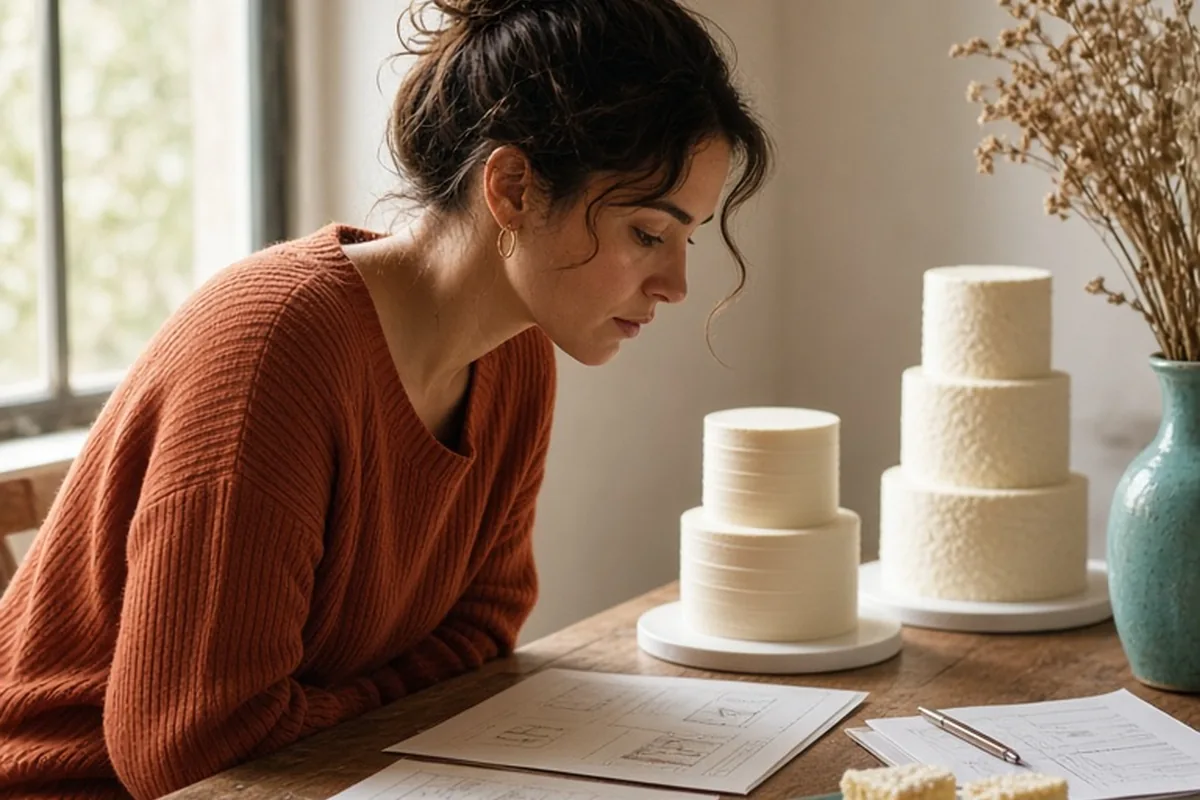
To compare wedding cake options effectively, evaluate bakeries across four core dimensions: portion sizing structure, decoration labor and frosting style, delivery logistics, and total quote breakdown. Start by standardizing your guest count into formal catering portions versus dessert servings. Then compare itemized estimates covering base cake construction, custom artistry fees, delivery setup, rental hardware, and venue cake-cutting charges to identify true overall value.
Choosing a wedding cake requires balancing visual design, dessert performance, guest appetite, and vendor transparency. Because bakeries calculate labor, ingredients, and delivery through different quoting models, comparing two seemingly similar proposals often requires looking beneath headline prices to examine serving dimensions, structural integrity, and hidden venue fees.
Determining True Serving Counts and Portion Standards
A common pitfall when comparing bakeries is assuming that a slice is standardized across all vendors. In the commercial baking and wedding catering industries, cake servings generally fall into two distinct sizing categories: wedding catering portions and standard dessert portions. A traditional wedding catering portion measures roughly one inch wide by two inches deep and four to five inches high. In contrast, a restaurant-style dessert portion is typically twice that width. When one bakery quotes a three-tier cake for one hundred guests and another recommends a four-tier cake for the same guest list, the difference often stems from which portion standard the baker uses to calculate tier yield.
To make an accurate comparison, ask each prospective baker for the exact tier dimensions (such as six-inch, eight-inch, and ten-inch rounds) and the projected slice yield per tier. If your wedding reception includes a multi-course dinner with other sweet items, such as a late-night snack or a plated dessert, standard wedding portions are usually sufficient. However, if the cake serves as the sole sweet course after a lighter meal or buffet, guests frequently expect larger slices. Verifying the physical surface area and tier height prevents running out of cake during service or unintentionally paying for surplus tiers that go uneaten.
Another practical consideration is the difference between total guest count and expected cake consumption. Standard event planning guidelines suggest that between seventy-five and eighty-five percent of attending guests consume cake, particularly at evening events with open bars or active dance floors. Comparing bakeries based on flexible serving strategies—such as combining a smaller decorative display cake with unadorned kitchen sheet cakes—allows you to evaluate how accommodating each vendor is toward optimizing your budget without sacrificing presentation.
Evaluating Frosting Types for Aesthetic and Climate Resilience
The outer finish of a wedding cake impacts both its visual texture and its physical resilience during transport and display. Bakeries typically specialize in specific exterior finishes, most commonly Swiss meringue buttercream, American buttercream, rolled fondant, ganache, or semi-naked scraped finishes. Understanding how these mediums behave under different environmental conditions is critical when comparing vendor portfolios and proposals.
Buttercream finishes provide a rich taste and clean edges when chilled, but they remain sensitive to ambient temperature and humidity. An outdoor summer reception in a warm climate can cause all-butter frostings to soften, shift, or melt if displayed for extended periods before cutting. Rolled fondant provides an airtight barrier that protects the interior cake from drying out and offers structural stability in warmer environments, but it requires higher labor costs to apply smoothly and may carry a texture that some couples find less appealing to eat. Chocolate ganache creates sharp, modern structural lines and holds firm at moderate indoor temperatures, yet it reacts quickly to direct sunlight.
When reviewing sample galleries and design proposals, assess whether a baker's recommended finish matches your venue conditions. A low quote for an intricate buttercream design may become a liability if the baker lacks experience engineering support dowels or cannot guarantee that the cake will remain refrigerated until an hour before serving. Compare how each baker plans to manage climate control, internal structural doweling, and food-safe support boards to ensure the design holds its form throughout the reception.
Dissecting Itemized Bakery Quotes and Add-On Costs
A base per-serving rate rarely represents the final invoice for a custom wedding cake. To perform an equitable cost comparison, you must collect itemized written estimates that separate raw baking costs from decorative labor, structural hardware, and day-of logistical fees. Transparent bakeries will break down their pricing into specific line items, whereas vague proposals combine everything into a single lump sum that obscures expensive add-ons.
Key cost variables that vary widely between bakeries include premium flavor combinations (such as infused curds, fruit preserves, liqueurs, or nut praline pastes), intricate surface techniques (like hand-piped lace, bas-relief modeling, edible gold leaf, or sugar flower craft), and structural hardware rentals. A bakery quoting a moderate base rate may charge steep surcharges for sugar flowers that take dozens of hours to sculpt by hand, whereas another baker might offer a higher base rate that includes fresh floral placement or basic textured piping at no extra charge.
Additionally, examine equipment deposit requirements and return terms. Many bakeries require professional-grade cake stands, internal tier separation pillars, or decorative platters that involve refundable security deposits. If a baker requires you to return hardware to their studio within forty-eight hours following the event, factor in the post-wedding logistical effort or potential deposit forfeiture when evaluating that vendor against one who uses disposable hidden internal drums or provides self-addressed return shipping.
Assessing Tasting Kits and Flavor Performance
Tasting sessions offer direct insight into a bakery's technical execution, recipe balance, and moisture retention. While visual appeal dominates social media portfolios, a cake's primary role at a reception is to serve as an enjoyable dessert. Evaluating tasting kits requires paying attention not just to sweetness, but to sponge density, crumb structure, filling stability, and the balance between fat and sugar in the frostings.
Notice how the sample is presented and how it holds up over time. Some bakeries offer in-person consultations with freshly assembled pairings, while others provide tasting boxes for off-site evaluation. When sampling cake at room temperature, check whether the sponge remains tender or feels dry, crumbly, or overly heavy. Sponges that rely heavily on artificial flavoring extracts often leave an assertive chemical aftertaste, whereas high-quality bakeries utilize real vanilla bean, citrus zest, reduced fruit purees, and quality chocolates.
Assess how flexible each baker is regarding flavor distribution across different tiers. Some vendors allow you to select a different sponge and filling combination for each tier at no additional fee, providing variety for your guests. Other bakeries impose customization surcharges for every additional flavor profile introduced into a single structure. If menu variety is a priority, this policy difference can substantially alter the final value proposition between two vendors.
Factoring Venue Cake-Cutting Fees and Service Logistics
The cost of your wedding cake does not end when the invoice with the bakery is settled. Reception venues and independent catering companies frequently charge a cake-cutting or cake-service fee, which covers the labor of slicing the tiers in the back kitchen, providing dessert plates, forks, and napkins, and clearing the tables afterward. These fees can range from minor flat service charges to significant per-slice fees.
When comparing cake options, check your catering contract to determine whether the venue waives this fee for specific dessert styles. For instance, some venues apply a cake-cutting fee exclusively to tiered cakes brought in from third-party bakeries but waive the fee if you order desserts directly through the venue's in-house pastry team or choose individual mini desserts and cupcakes that do not require staff slicing. Calculating the total dessert cost requires adding the venue's cutting fee to the bakery's invoice price.
Service coordination is equally vital. Ask your venue coordinator where the cake will be stored upon arrival. Tiered cakes require sturdy, level refrigeration space away from aromatic foods like onions or seafood, which can be absorbed by dairy-rich buttercreams. If a venue has limited walk-in cooler space on event days, you must select a baker whose delivery window coincides precisely with room setup and reception timing.
Comparing Display Tiers with Kitchen Sheet Cakes
One of the most practical strategies to evaluate when comparing wedding cake formats is the combination of a smaller decorative display cake and supplementary kitchen sheet cakes. A display cake—often two or three modest tiers designed for the ceremonial cake cutting and photography—provides the visual focal point in the reception space. The remaining portions needed to serve the full guest list are baked as unadorned, flat sheet cakes that remain in the commercial kitchen, where banquet staff cut and plate them out of view.
Sheet cakes use identical batter, soak, and filling recipes as the display piece, ensuring that guests receive an identical culinary experience. However, because sheet cakes require no exterior decorative artistry, structural doweling, or complex assembly, bakeries charge a fraction of their standard tiered per-slice rate for them. When comparing quotes, calculate the savings of reducing a four-tier elaborate cake to a two-tier centerpiece paired with two kitchen sheets.
Ensure you ask each baker whether their sheet cakes match the interior layer height of their tiered cakes. High-end bakeries construct sheet cakes with the same multi-layer, filled internal architecture as their display cakes, so the slices look identical on the plate. Lower-end operations may provide single-layer sheet cakes with simple top frosting, which will look noticeably different from the slice cut from the main display tier.
Delivery Protocol, Assembly, and Vendor Contract Safeguards
Transporting a delicate, heavy, multi-tiered structure across road traffic and setting it up safely requires specialized logistical expertise. When comparing vendors, delivery policies and contract protections are just as important as baking skill. A budget baker who asks you or a family member to pick up a stacked three-tier cake assumes zero liability once the box leaves their counter, shifting immense physical risk onto you.
Professional wedding cake specialists typically mandate full-service delivery and on-site assembly. Review the delivery line item to see whether it covers mileage, transit time, and on-site staging. Staging involves placing the cake on the display table, leveling the stand, piping final decorative seam borders, touching up transit imperfections, and styling fresh florals safely using food-grade floral tape or plastic safety picks. Inquire whether the lead baker personally manages delivery or delegates it to a courier service unfamiliar with structural cake repairs.
Carefully compare contract cancellation, date change, and damage indemnity clauses. A robust vendor contract will clearly state final guest count submission deadlines (typically two to four weeks prior to the date), payment milestone schedules, and weather contingency guidelines for outdoor venues. Confirm that the bakery carries commercial general liability insurance, as most established venues require a Certificate of Insurance (COI) from external food vendors prior to granting kitchen or ballroom access.
Frequently asked questions
How far in advance should we compare and book wedding cake options?
Most custom bakeries take on a limited number of elaborate commissions per weekend and book six to nine months in advance, especially for peak wedding seasons. Starting your comparisons early ensures you have time to order tasting kits, review itemized quotes, and coordinate logistics with your venue before popular vendors reach capacity.
Can we save money by using fresh flowers instead of handcrafted sugar flowers?
Yes, real fresh flowers provided by your wedding florist are almost always more cost-effective than sugar flowers, which require hours of skilled manual labor to sculpt and paint. However, you must verify that your florist uses non-toxic, pesticide-free blooms and that your baker utilizes protective food-safe floral stems or barriers so stems never make direct contact with the cake.
What is the best way to compare dietary and allergy-friendly cake options?
When evaluating bakeries for gluten-free, vegan, or nut-free requirements, ask whether items are baked in a certified allergen-free kitchen or in a shared facility with sanitization protocols. If cross-contamination is a health risk for sensitive guests, compare the cost of ordering an individually boxed, dedicated dessert from an allergen-specific bakery versus modifying the main cake.
What happens if our final guest count changes after we sign the bakery contract?
Most bakery agreements allow you to adjust your total portion numbers or tier sizing down or up until a specified final revision deadline, typically two to four weeks before the event. Review the contract to verify that your deposit applies toward the adjusted final balance rather than locking you into paying for unneeded slices.
Your next step
Request itemized written estimates from three licensed bakeries specifying tier dimensions, portion yield standards, delivery setup protocols, and all decorative surcharges so you can compare baseline value directly.